Disabling Crime

In the face of endemic violence in Mexico, Kevin Hartnett welcomes news of 20 deaf police officers hired to monitor security cameras in Oaxaca:

The deaf officers, nicknamed the "Angels of Silence," are considered an asset because of their ability to read lips, to detect visual cues that might suggest nervousness or suspicious activity, and to pay attention to the visual periphery as they stare at a wall of monitors displaying different camera feeds.

If using sensory impaired people to fight crime sounds like the premise of a superhero movie, that’s because it is. In 2003 Ben Affleck starred in a film version of the Marvel Comics series "Daredevil," playing the title character whose remaining senses grow to superhero proportions after he is blinded by toxic waste. There is a precedent for the Oaxaca experiment in real life, too: In 2007 the New York Times ran an article about "a blind Sherlock Holmes"—a visually impaired Belgian man named Sacha van Loo whose acute sense of hearing and knack for identifying foreign accents over wiretaps has helped Belgian police combat terrorism and organized crime.

Update from a reader:

Mexico makes wonderfully creative use of disabled persons in security roles. Passing through the Mexico City airport recently we observed that many security people in uniform were wheelchair-bound: the ones who check your boarding pass and ID as you enter the security line, who answer questions at the information booths, etc. Obviously they also have quick and easy mobility to different areas of the airport. This seems like a progressive and humane practice and I don’t know why the US and many other countries haven’t imitated it.

Outwritten By Source Material

John_Keats_by_William_Hilton

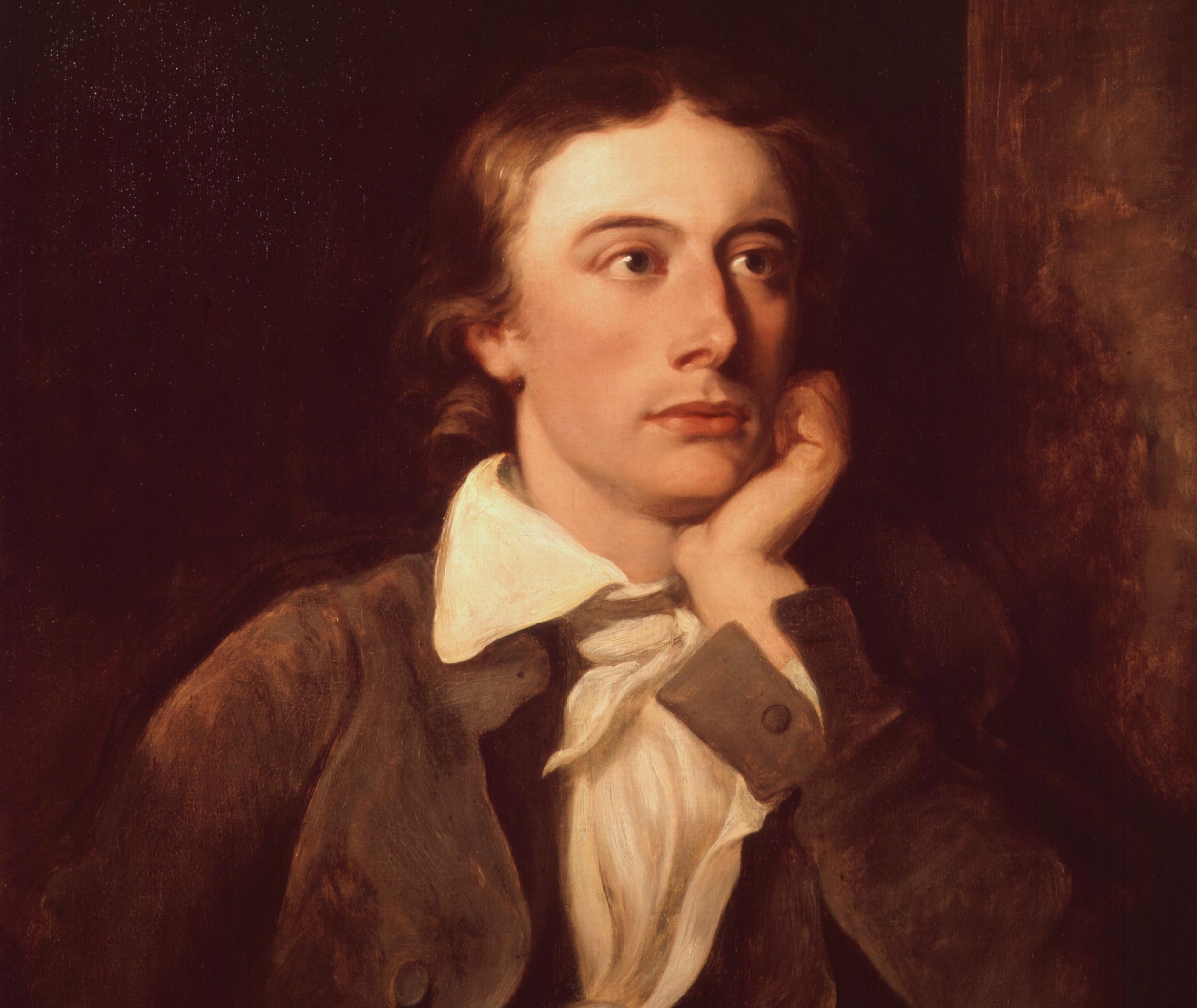
Jonathan Bate notes the great difficulty of writing a biography of the poet John Keats – his own letters are almost impossible to surpass:

Consider his dispatch to his brother George and sister-in-law Georgiana, begun on St Valentine’s Day, 1819, and finally signed off and sent to Kentucky on May 3. It is not so much a letter as a journal. The original holograph runs to some sixty pages, and can be inspected digitally on the website of the Harvard University Keats Collection.

You could use it as the basis for a whole book, which might readily provide as much insight into the poet’s creative life as is to be found in the many biographies that follow him year by year from his cradle in a Moorgate inn (or maybe stable) to his grave, a stone’s throw from that of P. B. Shelley’s three-year-old son, in the English Cemetery in Rome. And it is in this letter that Keats tells his brother and sister-in-law how he thinks a life should be turned into literature, which is to say how a biography should be written: "A Man’s life of any worth is a continual allegory – and very few eyes can see the Mystery of his life – a life like the scriptures, figurative . . . . Lord Byron cuts a figure – but he is not figurative – Shakspeare led a life of Allegory; his works are the comments on it". What was the "continual allegory" of Keats’s life and how do we read it through it the commentary of his works?

(Portrait of Keats via Wikimedia Commons)

Afraid To Vote

Seth Hill, Gregory Huber and Conor Dowling find that some Americans don't vote because they fear their votes will be made public:

[R]ecent research suggests that registrants who have never voted may not have done so because they fear that, if they were to vote, their vote choices would become known to others. Experimental data also show that reassuring those registrants that their votes are private and may be cast free of intimidation increases turnout in midterm elections by about 3.5 percentage points (from 17 to 20.5%). Thus, despite the longstanding institution of the secret ballot, a subset of Americans appear to doubt whether their vote choices are appropriately secret and, when such doubts arise, may therefore be vulnerable to the surprisingly frequent efforts by employers to shape voting choices.

A Clean Energy Breakthrough, Ctd

A reader writes:

I’m sure many others are writing about this, but that light device is not being powered by gravity. The energy is being supplied by the person who lifts the weight. It is a semantic quibble, but an important one since people who just see the headline will think that we will have gravity-powered perpetual motion hovercraft in the near future. None of this diminishes the genius of the Gravity Light, or other innovations like it (I also liked the plastic bottle solar light fixture that I think you linked to a while ago).

Another clarification:

It’s no different than a cuckoo clock.  Force needs to be applied externally to create the potential for gravity to do its work.   You could use a battery or an engine or electricity to apply that force, but in this case they’re using human power in the same way you would wind-up a watch.  Would you say a wind-up watch is powered entirely by spring force?

Another:

A wind-up spring has greater energy density, and can be placed anywhere and moved around while its working.  Wind-up lights have been available for a while.  I carry one with my camping gear.

Another delves further into the science:

While I hate to crimp your mirth, this is not a "breakthrough". Gravity is not powering these lights. Human beings lift a weight (injecting potential energy into the system), and gravity just "cashes it in". The humans can lift that weight because of chemical energy in their blood and muscles, which comes from food. This is no different than powering a light bulb by riding a bicycle with wheels attached to magnets, other than having the pulley system as a "buffer" to hold the energy.

The real innovation here comes from the low-power LED light bulbs. A big part of why they’re so low power is that all of their consumed energy is in the visible spectrum, whereas with a kerosene lamp, most of the energy is lost as heat rather than light. LED bulbs are getting cheaper, and they will soon start replacing incandescent bulbs worldwide. That will add up to a huge energy savings (eventually)

Anyway, the point is, while this is a great product for an African village (bravo to the inventors!), there’s no "breakthrough" here, and gravity is doing nothing special. Sorry to ruin your day.

One more:

Add me to the list of skeptics. "Light generated entirely by gravity" has been around at least  since the first hydroelectric power plant was connected to a lightbulb (according to Wikipedia, this took place in 1878, and as it happened, that first power plant powered exactly one arc light). Hydroelectric power is clean alright, but whether its environmental impact is altogether positive once it's scaled up is a more complicated matter (for an example, google the Three Gorges Dam).

As to the GravityLight, its energy is ultimately supplied by the person who lifts that bag – and if human physical labor were a viable source of mass-market electric energy, we'd be on it. The problem is that humanity's energy consumption, according to a back-of-the-envelope calculation, is 30 times the output of the global population's capacity for sustained physical labor. If we limit ourselves to a 40-hours-on-the-treadmill week and exempt children and the elderly, we need 200 humanities to satisfy humanity's current energy needs.

The GravityLight may well solve issues of availability, economy, and safety (the video doesn't say so, but I imagine that's a major problem with kerosene lamps), but its environmental impact is a different issue; it's made of plastic, and its manufacture may well consume more energy than it will emit as light over a lifecycle. In any case, it's no more a "clean energy breakthrough" than the idea, no doubt viable, of making all trips on foot, moving all goods by porter, and powering all lighting, heat, and industry with people on stationary bicycles.

Update from a reader:

Quite aside from anything to do with the "gravity light," I love the expression your reader uses here – "crimp your mirth." It's probably the best thing I've heard today and I can't wait to start using it.  Thanks.
Grounds For Concern

124538664

Landscape architects Laurie Olin and Avinash Rajagopal lament what 9-11 wrought on the National Mall:

The United States Capitol grounds were redesigned between 1874 and 1892 by the great landscape architect Frederick Law Olmsted. His fabulous design partook of the pastoral imagery of his earlier work in New York City’s Central and Prospect parks, with verdant spaces, clumps of trees, curvilinear paths, and free-flowing movement. The detail was Victorian, but quite lush, whether in the bronze casting, the stone carving, or the handsome low walls. Everything was a procession that guided movement, helped with grading, dealt with drainage, and produced a kind of sequence of views that led you to your government at work.

That’s the opposite of saying: "Stay out, keep away, don’t come near"—which is what happened to the grounds after 9/11.

The area is under the jurisdiction of the architect of the Capitol, who answers only to Congress. Therefore, they did things their way, and with their own contracts. Everything that Olmsted had designed was suddenly thwarted, cut off, blocked. Some changes are in the wrong place; many are unnecessary. They’re ugly. Today the whole crew that messed things up—that president and his staff, the architect of the Capitol—are gone. But no one has thought to undo the changes and make it right.

(Photo: The Lincoln Memorial is seen through a fence on September 10, 2011 in Washington, DC. Ahead of tomorrow's tenth anniversary of the September 11 terrorist attacks, officials have warned of heightened security threats. By Brendan Hoffman/Getty Images.)

Update from a reader:

The fence in that photo is not from 9/11 and has absolutely nothing to do with national security. It is because of construction going on at the reflecting pool.

Filming Between The Lines


Ian Crouch uses the new film Killing Them Softly, an adaptation of George Higgins novel, Cogan's Trade, to ponder the difficulties of rendering a book on the big screen:

Readers are certainly prone to outrage about any number of cinematic crimes, real and imagined, committed against their favorite books, yet the most common complaint centers on a movie’s manipulation of a novel’s plot. Change the story and piss a lot of people off. What can we say, then, of "Killing Them Softly," which is true to the novel’s narrative but somehow false to its spirit?

Crouch holds that Higgins' dialogue-driven novel means that interpreting it for film has "less to do with what is taken from or left out of the novel than what is added" – and that's where the problems begin:

In "Killing Them Softly," Dominik’s additions come in the form of visual flair: slow-motion gun fire; an extended scene involving a trippy heroin haze; lingering bouts of frightening and loud physical violence; and several heavy-thumbed soundtrack intrusions, including what is essentially a mini-music video for Johnny Cash’s “The Man Comes Around,” a harrowing and, in this context, too-apt song that nearly swamps the proceedings to become the most memorable thing about the movie.

The Six-Year Itch, Ctd

Charlie Cook argued that, after six years in the White House, voters tend to punish the incumbent party. Seth Masket runs the numbers:

[S]tatistically speaking, six-year itch elections don't appear to be any worse for the president's party than other midterm elections. 2014 may be a tough year for Democrats, but only because midterm elections are almost always tough years for the president's party.

Drum adds:

[U]nless Republicans do something genuine to react to their 2012 losses, I'm not sure they can count on generic exhaustion with Democrats to sweep them to victory in 2014. They need to up their game.

The Invisible Condom

Xlarge (1)

Science is working on it:

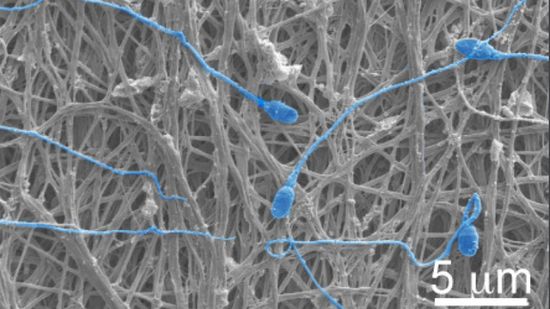
Basically, the [University of Washington researchers'] proposal is to spin ultra-thin female condoms woven out of cloth-like fibers and medicine. Above, you can see a magnified image of the resulting condom, complete with sperm who have tried to smash their way through it and failed miserably. The condoms can be woven out of medicines that prevent HIV infections, providing protection against disease while also stopping sperm in their tracks. The electrospun condoms can be designed to dissolve within minutes, or over a period of several days. Women can discreetly put them on before a sexual encounter — either directly, or on a diaphragm or ring — and protect against pregnancy, HIV, and potentially other sexually transmitted diseases as well.

The Bill and Melinda Gates Foundation just gave researchers a $1 million grant to develop the technology.

Quote For The Day

"I believe that federalism is, first and foremost, a protection of liberty. And I would just hope that people who say they believe that would be consistent … Without endorsing what they [Colorado and Washington] did, I think they had, under our system, a right to do it … A lot of the worst problems we’ve got in this country, and some of the worst divisions we have, came when the right of citizens in community and in polities, like their state, had those rights usurped by the federal government. And having disagreed with it when it happened on other occasions, I sure wouldn’t call for it here," – Mitch Daniels

Recent Dish on federalism and marijuana here.