Dissents Of The Day

A reader writes:

I'm sure you're getting a ton of well-deserved pushback against your lazy false equivalence of the Controlled Substances Act and DOMA. Your marriage is not recognized by the federal government, but it's not illegal. It might be bad policy for the FBI to swoop in and arrest pot smokers in Washington and Colorado, but they have the power to do this under federal law. Your marriage does not violate DOMA, and you can't be arrested or charged with violating DOMA by virtue of your marriage.

I'm on your side, on both gay marriage and marijuana legalization. These issues are important enough, and your soapbox is tall enough, to merit careful argument on both issues.

Another:

DOMA is not something that someone can be prosecuted under.  DOMA states:

No State, territory, or possession of the United States, or Indian tribe, shall be required to give effect to any public act, record, or judicial proceeding of any other State, territory, possession, or tribe    respecting a relationship between persons of the same sex that is treated as a marriage under the laws of such other State, territory, possession, or tribe, or a right or claim arising from such relationship.

This is not a criminal law of the kind Lawrence v. Texas struck down. States may not prosecute people for homosexuality or for getting married.

Another:

More generally, I think the marijuana-gay marriage analogy is a bad one. The day is long past when official persecution of gay people was either common or remotely acceptable. Thank god! Meanwhile, the persecution of people for cannabis possession is extremely common, profoundly destructive, and elicits only the faintest outrage from the general public, debates about decriminalization/legalization notwithstanding. Imagine police arresting hundreds of thousands of gays a year.

One more:

As to your more general response to Kleiman – that somebody can violate a federal law while being a law-abiding citizen as long as his conduct has been decriminalized in his state – this is torturing language in a way Orwell would despise.  Federal law is law in the United States.  People who break it are lawbreakers.  Moreover, federal law, criminal and civil, has as often been used to promote social ends that you would celebrate (see: Reconstruction, Civil Rights) in the face of retrograde state laws, as it has to promote social ends you abhor (marijuana prohibition) in the face of enlightened state laws.

What you are really doing when you call people who abide by state law but not federal law "law-abiding citizens" because they are law abiding "in terms of their own state" is saying that it is okay to be a federal lawbreaker.  At the level of generality stated, this is false.  It is also plainly in the service of rationalizing a narrow political preference of yours. (Orwell would say that's why your language has become imprecise.)  And it is hard to square with your purported conservatism, which should be careful in advocating violations of the law, not cavalier to the point of sloppiness.

Ask Moynihan Anything: A Libertarian Solution To Climate Change?

From his Wiki page:

Michael C. Moynihan is an American journalist and managing editor of Vice magazine. Before that he was a senior editor of the libertarian magazine Reason. Moynihan founded the English language magazine based in Stockholm, Sweden, the Stockholm Spectator. After censorship by Comedy Central of an episode of South Park in 2010 that featured a depiction of the Prophet of Islam, Muhammad, Moynihan announced his support for the protest movement, “Everybody Draw Mohammed Day”. On July 30, 2012, a Moynihan article appeared in Tablet Magazine showing evidence that New Yorker writer Jonah Lehrer had fabricated Bob Dylan quotations, led to Lehrer’s resignation.

Read Michael’s writing for the Beast here. In the answer above he mentions Bjorn Lomborg, who wrote about global warming this September:

Perhaps the cheapest and most obvious, which many economists and I have argued for, is to make cooler cities, since the most people and the highest temperatures are found in urban areas. Most cities are much warmer than their surrounding countryside because of the lack of greenery and water features (they cool through evaporation) and because of extensive black surfaces (asphalt and black roofs suck in heat). Tokyo in August is about 22.5 degrees F hotter than its surrounding countryside for this reason. Installing more trees, water features, and lighter colored surfaces would cost about $12 billion annually for the entire world, and it would dramatically cool the areas where 90 percent of all people will live.

Kathryn Bigelow, Torture Apologist? Ctd

158187139

Ackerman calls Zero Dark Thirty’s torture scenes “arguably the best and most important part of the movie”:

[The film] does not present torture as a silver bullet that led to bin Laden; it presents torture as the ignorant alternative to that silver bullet. Were a documentarian making the film, there would surely be less torture in the movie: CNN’s Peter Bergen deems the scenes overwrought, both in their gruesomeness and in their seeming estimation of their role in nabbing bin Laden. But that would also come at the expense of making a viewer come to grips with what Dick Cheney euphemistically called the “dark side” of post-9/11 counterterrorism. Meanwhile, former Bush administration aide Philip Zelikow, who termed the torture a “war crime” in a recent Danger Room interview, will probably find the movie more amenable than Cheney will. What endures on the screen are scenes that can make a viewer ashamed to be American, in the context of a movie whose ending scene makes viewers very, very proud to be American.

Spencer has, of course, seen the movie. I haven’t. And I respect his judgment and reserve my criticism until I’ve seen it. But I’m troubled by those last sentences:

What endures on the screen are scenes that can make a viewer ashamed to be American, in the context of a movie whose ending scene makes viewers very, very proud to be American.

But if the shameful actions are intrinsically connected to the proud actions, then Spencer may be relying on his own moral compass, rather than the movie’s.

Ag19

The core question for me: if this movie is about the hunt for Osama bin Laden, and those with the most information about it categorically say that torture had nothing to do with the success of the operation, then why is torture in there at all?

To recap the Senate Intelligence Committee’s statement:

“CIA did not first learn about the existence of the UBL (bin Laden) courier from detainees subjected to coercive interrogation techniques. … Instead, the CIA learned of the existence of the courier, his true name and location through means unrelated to the CIA detention and interrogation program. … The CIA detainee who provided the most significant information about the courier provided the information prior to being subjected to coercive interrogation techniques.”

So again: why is torture in there at all? Again, I have to see it to judge it properly.  But scenes of grotesque torture are apparently spliced with vivid audio from 9/11 in the opening of the movie: a morally fraught connection. Again, I haven’t seen the movie. If it merely reveals how the evil of that September day unleashed emotions of revenge and violence that led the US government to betray the Geneva Conventions, it’s one thing. But if the end of the movie is the successful capture of the perpetrator of 9/11, and torture is seen as part of that process (which is untrue), then this becomes a propaganda movie in defense of war crimes. That’s truer if the movie is a great work of art. It may be. But some great art is evil and abets evil. And the greater the art the deeper the evil it can propagate.
Capt4

Peter Bergen’s review troubles me even more:

The one time [president Obama] does appear in “Zero Dark Thirty” is in a clip from a “60 Minutes” interview in which he criticizes the use of “torture.” By this point in the film, the audience has already seen that the CIA has employed coercive interrogation techniques on an al Qaeda detainee that produced a key lead in the hunt for bin Laden. In the film, Obama’s opposition to torture comes off as wrongheaded and prissy.

If that’s true, Bigelow is indeed an apologist for evil, and this movie should be protested loudly. Greenwald notes:

That so many reviewers walked away with a pro-torture message from the film – that torture was key to finding bin Laden – means that large numbers of viewers likely will as well, regardless of the after-the-fact claimed intent of the filmmakers. That, by itself, is highly problematic and worthy of commentary.

It’s not just highly problematic. It’s a lie. Other reviewers see it quite plainly. Frank Bruni:

“The torture sequence immediately follows a bone-chilling, audio-only prologue of the voices of terrified Americans trapped in the towering inferno of the World Trade Center. It’s set up as payback. “And by the movie’s account, it produces information vital to the pursuit of the world’s most wanted man. No waterboarding, no Bin Laden: that’s what “Zero Dark Thirty” appears to suggest.”

And that’s just not true. And in her comments on the film so far, the director has chosen a defense that does not inspire confidence. As Glenn puts it:

As noted, she is going around praising herself for taking “almost a journalistic approach to film”. But when confronted by factual falsehoods she propagates on critical questions, her screenwriting partner resorts to the excuse that “it’s a movie, not a documentary.”

Since Bigelow and Boal (the screenwriter) put waterboarding at the crux of the hunt for bin Laden, they are not practising journalism. They are propagandists for the efficacy of war crimes against mere suspects handed over to the US often randomly. Bigelow and Boal are not just creating a work of art, if this is indeed the obvious lesson of the movie. They are enlarging the potential for evil – by justifying and celebrating it. If they manage to do so while also showing the full grotesqueness of the brutality the Bush-Cheney administration unleashed on prisoners, it’s even worse. They may persuade people that this kind of unconscionable brutality is justifiable and effective, when it is neither.

And, yes, I’m asking for a copy for review myself. I will give it a fair shake. I deeply admired “The Hurt Locker.” But the mere facts about the movie, as reported by many viewers, do not require a review. They demand a rebuttal.

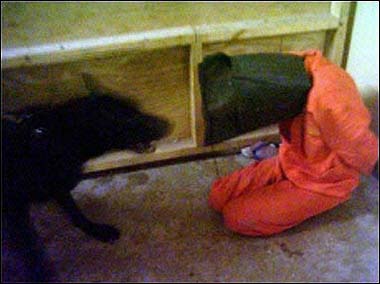
(Photos: Director Kathryn Bigelow, actress Jessica Chastain and Co-Chairman-Sony Pictures Entertainment Amy Pascal attend the after party for the premiere of Columbia Pictures’ ‘Zero Dark Thirty’ at the Dolby Theatre on December 10, 2012 in Hollywood, California. By Michael Buckner/Getty Images; victims of the Bush-Cheney torture program at Abu Ghraib prison in Iraq.)


Will Obama Keep Fighting The Dumbest War Of All?

Ethan Nadelmann, executive director of the Drug Policy Alliance, explains Obama's drug-policy dilemma:

Tim Dickinson lays out what Obama could do if he wanted to end the war on marijuana:

If Obama were committed to drug reform – or simply to states' rights – he could immediately end DEA raids on those who grow and sell pot according to state law, and immediately order the Justice Department to make enforcement of federal marijuana laws the lowest priority of U.S. attorneys in states that choose to tax and regulate pot. He could also champion a bipartisan bill introduced by Rep. Diana DeGette, a Democrat from Colorado, that would give state marijuana regulation precedence over federal law – an approach that even anti-marijuana hard-liners have endorsed. As George W. Bush's former U.S. attorney for Colorado wrote in a post-election op-ed in the Denver Post: "Letting states 'opt out' of the Controlled Substances Act's prohibition against marijuana ought to be seriously considered."

Sullum challenges Dickinson on another point – that the feds could legally prevent Colorado and Washington from implementing their laws:

It is notable that in the 16 years since states began legalizing marijuana for medical use, the Justice Department has never tried to overturn those laws in court with a pre-emption argument, even though it has interfered with the distribution of cannabis to patients (which began in yet another state yesterday) in many other ways. Perhaps that is because, contrary to what Dickinson says, a pre-emption argument would be anything but an "open-and-shut case." Last month Alex Kreit, a professor at the Thomas Jefferson School of Law who has studied the issue, told the Drug War Chronicle "opponents of these laws would love nothing more than to be able to preempt them, but there is not a viable legal theory to do that." Yesterday The New York Times noted that Gregory Katsas, who headed the Justice Department's civil division in George W. Bush's administration, likewise "was skeptical that a pre-emption lawsuit would succeed."

How To Succeed At Chipotle

William Hudson reveals the best hacks: 

1/2 meat + 1/2 meat = 3/2 meat. Forgetting is natural, like Chipotle meat, so let me remind you that when you add fractions you only add the top part, when the bottom part is the same number. Therefore, when you’re asked what type of meat, and you say "half chicken and half steak", it should equal one serving of meat. But it never does. Because a scoop of meat is kinda just a scoop of meat, and nobody in Chipotle management has yet introduced new “half” scoops with which to more precisely address this perfectly legal request. So use it. IMPORTANT: Unlike with the beans, you should make your position on the half meats clear from the beginning, otherwise they charge you for "extra meat."

How to game a holiday special:

From now until the end of the year, whenever you buy a $30 gift card, you can use that receipt to get a free burrito WITH ANYTHING ON IT through Jan. 2013. That is why I now have $180 of Chipotle gift cards, for myself. You see, it’s essentially a buy 4 burritos ($30), get one free deal. i.e. a 25% return on investment. Now you just have to use the gift cards through 2013, ideally running out of gift cards on Nov. 1st, 2013, when you can start investing in gift cards again.

Losing Our Way

09-BendlerBrowning_UpToSpeed_2011_Flasheand_Acrylic_Gouache_on_Tyvek_Vivia_122x116

With the ubiquity of GPS these days, Alastair Bland fears for our collective sense of direction:

A study conducted in Tokyo found that pedestrians exploring a city with the help of a GPS device took longer to get places, made more errors, stopped more frequently and walked farther than those relying on paper maps. And in England, map sales dropped by 25 percent for at least one major printer between 2005 and 2011. Correlation doesn’t prove causation—but it’s interesting to note that the number of wilderness rescues increased by more than 50 percent over the same time period. This could be partly because paper maps offer those who use them a grasp of geography and an understanding of their environment that most electronic devices don’t.

(Image: "Up to Speed" by Arden Bendler Browning, from the series "Clickpath" which opens at Bridgette Mayer Gallery on December 12th, via The Morning News.)

A Booze Cruise The Whole Family Can Enjoy

Over Thanksgiving week, Pareene sailed aboard "the Oasis of the Seas, billed as the largest cruise ship ever built." He noticed it was "full of parents having a blast":

This is how I realized why people do these ridiculous, pricey things. It’s quite difficult to enjoy yourself on vacation with children. I know because I was once the child ensuring that my family did not enjoy themselves too much. Maybe if you want to go camping or hiking or something, you can drag kids along, but if you want to go drinking and dancing and gambling and nightclubbing, you need to find somewhere to put your wretched kids, and simply leaving them to fend for themselves in Vegas hotel rooms is probably inadvisable. So you cruise. Your kids have an endless supply of their own amusements and no real opportunities to get into serious trouble, and you can relax and enjoy yourself like a childless person, or a person wealthy enough to hire help. It’s brilliant. (The only downside being the cost: Each child’s ticket is just as expensive as each adult’s.)

Powered By Gravity

An ingenious invention:

Red Ferret captions:

The GravityLight (featured in the video above) uses a clever belt and pulley system to generate light through the force of gravity. The idea is for the user to pull a bag up to generate enough energy for short periods of light. Because it uses ultra low power LED bulbs, this could mean up to 30 minutes of light for a quick 3 second hoist. It’s much cheaper than solar (which needs batteries to store the sun’s power) and easier to maintain than other more complex devices.

(Hat tip: Perry)

Letters From Millennial Voters

A reader writes:

I’m a bit shocked by something that has been missed entirely in this thread. One reader wrote, "We want the government to have a roll in education through pell grants and student loans," and there have been a few curt mentions of student debt, but … HELLO? We want the government to have a roll in education through … saddling the next generation with debt? How far have we come!

I’m 28, an attorney who graduated with over $100k in debt after attending a top-tier public law school. (It’s a funny joke in our culture that we call these schools "public.") I pay a mortgage that is about 50% less per month than I pay in student loan payments.

Now that’s fine; those are my choices. But when we’re speaking about generational redistribution of wealth, how can you not mention that we Millennials are starting the game with one leg cut out from under us? Previous generations enjoyed the benefits of "public" college (if you could get in) – college funded by the old guys paying taxes. We’re the generation that will finish paying for our own college in our fifties. So on top of paying for excesses in pensions and entitlements, we’re going to be footing the bill for our own schooling.

Another writes:

I was born in 1985. I'm the oldest of three and the only one to complete college (Class of 2008). Deciding to go to college has become one of the defining events of my life. Not because of the excellent education I received despite my learning disability (I have dyslexia), but because of the MASSIVE debt I now carry. I owe about $103,000 in student loans. I have 22 years to pay it off. Currently, my monthly payments on all of my loans is about $930/month. Do I think my college degree was worth $100,000? HELL NO.

But it has helped me in job interviews because it's a school that is well known. I was lucky enough to get a decent job right out of college (if you consider right out of college six months after graduation). In the five years since starting as a young professional, I have changed jobs three times. Even in my current position, as a project manager for a National Institute of Health contract at a major university, 50% of my paycheck goes to my student loans. That's on top of living expenses like rent, food, utilities, transportation costs, etc. My "extra" spending money comes to about $150 per month.

Because of my debt and monthly expenses, I probably won't be able to buy a house in the near future. Even with my husband's income, we can still only put away a few hundred dollars a month. I've read stories where the author stated that it's MY generation's fault that the housing market hasn't picked up. Maybe that is true, but how the hell am I suppose to save 20% for a down payment with my income? I also have family members who are Republicans and avid in their hatred for Obama. But even they admit that it'd probably be a good idea for a portion of my generations loans be forgiven so that the economy can pick up.

To read all the millennial letters, go here.