"In French, one can say Je suis seul (I am alone) or Je me sens seul (I feel alone), but nothing as baldly distressing as 'I am lonely' or 'I am lonesome.' Or, even worse, 'I am a loner.' My first poems were often about loneliness. My father was a military man and my brothers were athletes, so I was always looking for a different way to be a man. To look inward and explore the darker corners of the soul is one of the functions of the lyric poem. I think immediately of Hopkins, whose poems I love. I hate having to apologize for, or defend, inwardness. It was the American poet Marianne Moore who said that solitude was the cure for loneliness, but if I spend too much time alone, I am called égoïste, or selfish. Surely, it is impossible to be a writer without being égoïste," – Henri Cole.
Month: December 2012
The View From Your Window

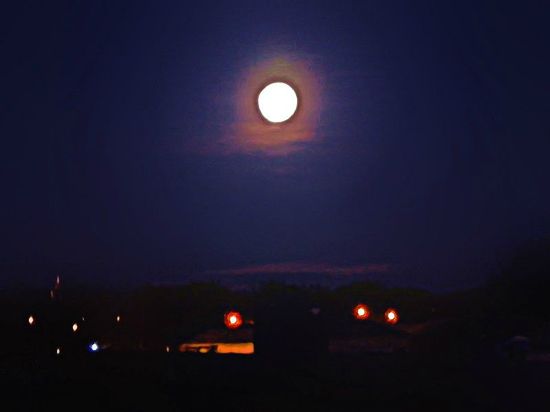
Northampton, England, 7.30 am
Darwinian Populism
Susan Jacoby profiles Robert Green Ingersoll, who travelled across 19th century America lecturing on behalf of secularism and the separation of church and state. His ingenious argument for Darwinism:
He told his audiences that when he first read On the Origin of Species (1859) and became acquainted with Darwin’s theory of evolution, his initial reaction was to think about “how terrible this will be upon the nobility of the Old World. Think of their being forced to trace their ancestry back to the duke Orang Outang, or the princess Chimpanzee.” This sentence demonstrates what a brilliant orator he was, here taking advantage of American hostility to Old World and especially British aristocracy—hostility that was still very much alive in the 19th century. He used the American disdain for unearned hereditary privilege (which, then as now, did not necessarily extend to inherited wealth) to make the idea of descent from lower animals more accessible and less threatening.
Poetry In The Trenches

In an interview, Faith Barrett, who describes the Civil War as a “poetry-fueled war,” points to the way verse was inextricably connected to the way Americans experienced the crisis of the house divided:
Poetry in mid-19th-century America was ubiquitous in a way that it just isn’t now. It was everywhere in newspapers and magazines, children were learning it in school… Americans were encountering poetry on a weekly basis, if not a daily basis, in the Civil War era, and that’s a profound difference from contemporary poetry and its place in our culture.
There are so many accounts in newspapers of soldiers dying with a poem in their pockets, poems written on a scrap of paper folded up inside a book; so many accounts of songs or poems being sung or read to political leaders at particular moments. For example, after Lincoln announced the second call for a draft … James Sloan Gibbons wrote this song poem called “Three Hundred Thousand More,” which he supposedly sang to Lincoln in his office one day. So there’s a kind of immediacy of impact, that poetry is actually, I suggest, shaping events, not just responding or reflecting on them.
(Photo from Wikimedia Commons)
Philosophical Self-Impovement
Riffing on the work of the French thinker Pierre Hadot, and reviewing a number of recent biographies about philosophers, Costica Bradatan channels an older, half-forgotten approach to philosophy – that it is a “way of life”:
In this understanding of the Western tradition, the chief reason for studying philosophy is not a desire to know more about the world, but a profound sense of dissatisfaction with the state in which one finds oneself at a given moment. One day you suddenly, painfully realize that something important is missing in your life, that there is a gap between what you currently are and the sense of what you could be. And before you know it, this emptiness starts eating at you. In a way, you don’t even exist yet. (It must have been in this sense that Socrates used the term “midwifery” for what he was doing; by subjecting those around him to the rigors of his philosophy, he was bringing them into existence properly.) Philosophy thus presupposes a certain degree of self-detestation. It may well be that philosophizing begins in shame. If you are a bit too comfortable with yourself, if there is nothing you are ashamed of, you don’t need philosophy; you are fine as you are.
Soaring Above Our Senses
Jessa Crispin unearths an old Nick Cave lecture on love songs. Cave insists that the Psalms and the Song of Solomon are two of the greatest love songs ever written:
The love song must be born into the realm of the irrational, absurd, the distracted, the melancholic, the obsessive, the insane for the love song is the noise of love itself and love is, of course, a form of madness. Whether it be the love of God, or romantic, erotic love – these are manifestations of our need to be torn away from the rational, to take leave of our senses, so to speak. Love songs come in many guises and are seemingly written for many reasons – as declarations or to wound – I have written songs for all of these reasons – but ultimately the love songs exist to fill, with language, the silence between ourselves and God, to decrease the distance between the temporal and the divine.
He adds:
Alas, the most endearing form of correspondence, the love letter, like the love song has suffered at the hands of the cold speed of technology, at the carelessness and soullessness of our age.
Update from a reader:
Love the Nick Cave song, "Into My Arms", you featured. Thought you might like to know that it's an even more complicated ode than it might seem at first.
It's not only about his love for God, or his love for a woman, but also his love for heroin, which he suffered/enjoyed a long-term addiction to. You should listen to the lyrics more closely. When he talks about "taking you into my arms", he's meaning not just the outer embrace, but the intravenous injection. His lack of interest in "an interventionist God", is not just theological, but literal. He didn't want an "intervention" in his heroin addiction. And "candles burning bright" refers not just to prayer candles, but the candle used for preparing heroin for injection. All three of these meld together in his mind and life as part of the same painful love affair. That's what makes the song so beautiful.
“It’s A Friggin’ Taco Fest In Here”
And other gender-swapping observations:
Alyssa finds kernels of truth in the parody:
As far as pointing out bad/lame behavior via gender role reversal, the video's an equal-opportunity expose. It's also a good advertisement for avoiding the meat market bars, and the social rituals that go along with them. Because the main takeaway from this video is that long lines, loud bad music, shots, and the pressure to meet someone by the end of the night drives everyone insane, no matter whether they're hitting the club in tight tank tops or collared shirts.
Banking With Bud
In an interview with Planet Money, John Davis explains the difficulties of running a legal marijuana business in Washington state. He also provides tips for the pot entrepreneur:
Buy three safes. One for "bulk product," one for "inventoried, ready-for-sale product," and one for cash. "If you put your cash in with the cannabis, it will end up smelling like cannabis, and when you go down to the bank, I guarantee you're going to have a talk with the manager of that bank."
Get an ATM — and be prepared to stock it with cash yourself. Credit card companies may not want to do business with you. Same goes for the companies that run ATMs in small businesses. "The companies that traditionally maintain ATMs will not stock your cash," Davis says. "Why? Because it's possible that the federal government will come, break down the door and take that cash."
A Poem For Saturday
“My Young Mother” by Jane Cooper:
My young mother, her face narrow
and dark with unresolved wishes
under a hatbrim of the twenties,
stood by my middleaged bed.Still as a child pretending sleep
to a grownup watchful or calling,
I lay in a corner of my dream
staring at the mole above her lip.Familiar mole! but that girlish look
as if I had nothing to give her—
Eyes blue—brim dark—
Calling me from sleep after decades.
(From The Flashboat: Poems Collected and Reclaimed by Jane Cooper. Copyright © 2000 Jane Cooper. Used by permission of W.W.Norton & Company. Photo by Flickr user mrsdkrebs)
The Nude Vanguard
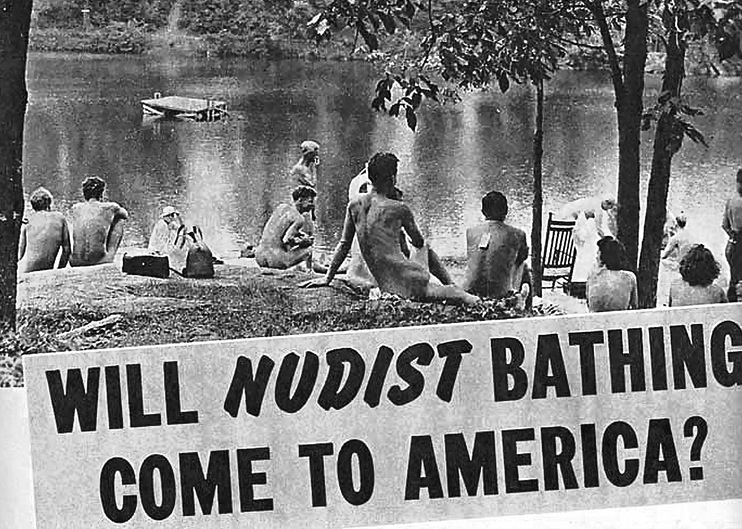
Debbie Nathan reviews How Sex Became a Civil Right. She explores how the ACLU shifted from defending speech about sex to defending the acts themselves:
The early ACLU leadership vacationed together at Martha's Vineyard. On isolated beaches there, many practiced nudism. Nudists today are largely winked at if not ignored. But in the 1930s and '40s, they saw themselves as an avant-garde movement. Going undressed, they believed, would strengthen democracy by challenging the class distinctions so visible in clothing. They also thought the sight of people casually strolling in the buff would cool the frisson of obscenity.
In 1934, ACLU started not just defending nudists' right to publish material depicting them and their families naked, but to gather that way in private. The organization thus entered a new arena. Heretofore it had defended speech deemed sexually inappropriate. Now it spoke up for acts in the privacy of the bedroom—including, a generation later, homosexuals' right to commit "sodomy."
(Detail from 1953 article on nudists by Flickr user x-ray delta one)
 The Dish
