 By David Ryder/Getty Images Friday on the Dish, Andrew warned Obama not to trifle with legal weed, agreed with Gleckman’s case for charity-deduction reform, supported the use of gender-neutral marketing by toy companies, recalled his testimony in the fight over DOMA, and envisioned the path forward for same-sex spouses, as well the possibility they could lead the way for their straight counterparts. In political coverage, we collected reactions to the mixed bag of today’s job numbers, looked at the (failed) liberal attempts at re-branding the fiscal cliff, and featured more letters from millennial voters (this time dealing with religion) before also airing some anti-millennial dissent. SCOTUS announced it would take up marriage equality and DOMA, Massie considered parliamentary politics for the US, Neil Irwin expected Superstorm Sandy’s unemployment toll, The Economist recommended we not be born in America, and like Andrew, Sargent took on Obama over legalized marijuana. Also, Matthew Bowman welcomed the higher profile and scrutiny that Romney’s candidacy brought the Mormon Church, and Scott Adams argued that we should stop calling people rich or poor and instead start identifying who was creating wealth and who was over-consuming. In foreign affairs coverage, Marc Lynch called attention to the Syrian refugee crisis, Greg Scoblete warned the US about the dangers of taking on Assad’s chemical-weapon stockpile, Ackerman counted the record number of US drone strikes in Afghanistan, and the continuing crisis in Egypt became vividly clear in our FOTD. In assorted coverage, two readers shared their personal experiences as subway heroes, Barry Petchesky celebrated the arrival of the New Orleans Pelicans, Sarah Garland graded desegregation “incomplete”, and Copyranter passed along an amazing Lego ad. Also: Facebook killed the Christmas card, Kelsey Campbell-Dollaghan went to a museum of damaged art, Tim Iacono tracked rising home prices, Liat Clark introduced us to the terrifying bullet ant, and Balko wanted all reckless drivers punished equally and independent of their sobriety, distractedness, or exhaustion. We also continued our ongoing coverage of the dangers of professional football, read a poem by Yannis Ritsos, saw Beruit’s skyline through the VFYW, and watched most of 2012’s movie trailers in our MHB. The rest of the week is after the jump:
By Stephen Brashear/Getty Images
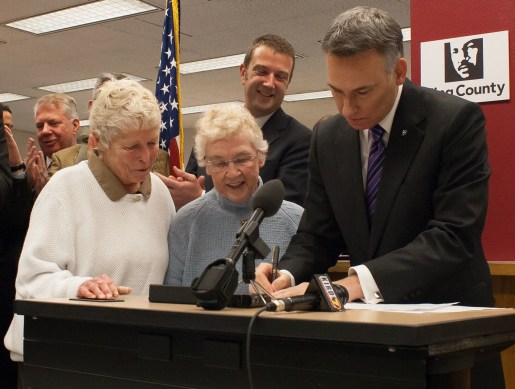
Thursday on the Dish, Andrew backed up Obama on his fiscal-cliff red lines, highlighted the importance of America’s neighbors both having national marriage equality, and celebrated the arrival of marriage (license) equality in Washington State, as did two men with wonderful beards, as did our FOTD.
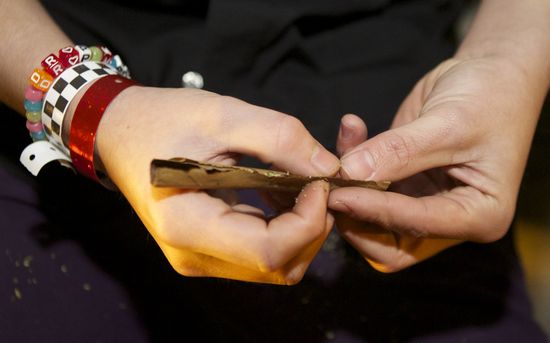
In political coverage, McKibben suggested ways capitalism can take on climate change, readers offered some additional thoughts on the difference between MSNBC and Fox News, Jonah Goldberg reviewed Mitt Romney’s authenticity paradox, the Right found a loony to champion “lunatic”, and Chait introduced the GOP to its rock and hard place regarding anti-tax absolutism. We also rounded up reactions to Jim DeMint’s exit from the Senate, a development Jennifer Rubin welcomed (drawing the rabid ire of other conservatives), while Washington State got its legal-weed on, Thomas B. Colby noted the difference between sympathy and empathy when it came to Obama’s judges, Nate Silver floated Alaska as a future swing state, Harry Enten bet on Hillary for 2016, and Peter Roskam’s acceptance of Obama’s revenue offer earned him an Yglesias nomination. In international coverage, Afghanistan’s corruption once again topped the world, Fallows checked in on the economic and social maturing of China, Nora Caplan-Bricker broke down the anti-gay situation in Uganda, and Joshua Landis picked the best of bad options when it came Syrian rebel leadership, while we kept our eye on Assad’s possible use of chemical weapons and also looked in on the continuing demonstrations in Egypt.
In assorted coverage, we paid tribute to Dave Brubeck while Kottke passed along the best 2012 photo galleries, Marc Smirnoff carved out a serious space for his Southern literary quarterly, Sumathi Reddy discarded thoughtfulness in the quest for appreciated-gift buying, and Will Schwalbe read to live. Also, Frank Jacobs explained the cartography of existential islands, Christine Flamsholt Jensen traced the pro-business ethos of hip-hop, Lydia DePillis emphasized the inherent waste of failed start-ups, Christopher Ferguson recommended we stop suspending kids from school, and Travis Waldron focused on the domestic violence aspect of NFL linebacker Jovan Belcher’s murder-suicide. Keith Humphreys let some air out of porn star happiness (or at least the study that had suggested it), Linda Holmes could not tolerate violence on television (and likely did not watch our zombie montage), and we considered what to do if we fell onto the subway tracks. John Travolta and Olivia Newton-John line-danced through a new Hathos Alert, a house dubstepped its way through our MHB, God tweeted, and there was snow in Seoul through the VFYW.
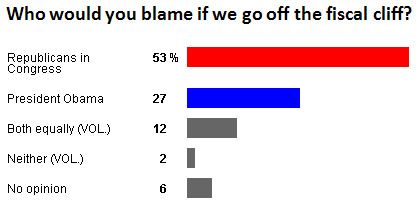
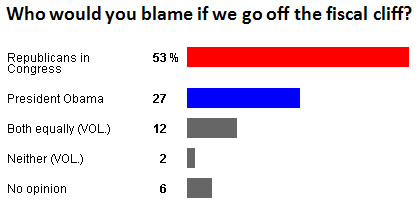
Wednesday on the Dish, Andrew reacted to new polling regarding the GOP’s durable-yet-delusional minority, weighed in on the fiscal cliff blame-game, noted the demographic tipping-point regarding weed prohibition, and though Douthat worried about our “retreat from child rearing”, Andrew wondered if the dropping birthrate was an environmental blessing-in-disguise, while others pushed back against Douthat’s claim that our decadence was at fault.
In political coverage, Roger Ailes told his Fox News puppets to start avoiding Karl Rove and Dick Morris, Tom Coburn earned an Yglesias nod for agreeing to raise tax rates, Neil Irwin anticipated market reaction to the fiscal cliff, and Hertzberg advocated for powering entitlements with a carbon tax. We also published yet more letters from our millennial readers, while Alec MacGillis checked in on simply-a-citizen Romney, Will Wilkinson took Obama to task over the less-than-clear rules for drone use, Waldman spoke out against mortgage interest deductions, and Paul Krugman favored broad thrusts over wonkiness. Looking overseas, Marc Lynch saw through Kim Kardashian’s trip to Bahrain and Massie shared his thoughts on Scottish independence.
In assorted coverage, Virginia Postrel broke down the idiocy of current copyright policy, Keegan Hamilton considered the cartel-impact of Colorado and Washington’s legal weed, Farhad Manjoo guessed at Walmart’s web chances, and James Surowiecki explained the popularity of Warren Buffett, though Felix Salmon wasn’t as impressed. Jen Doll ranted about excessive hyphen abuse, Matt Mendelsohn lamented the photographer-contrived staging of modern wedding photos, Sonny Bunch differentiated cult classics from “cable classics”, a 2010 Metafilter commenter summed up the web-user marketplace, and Ethel Merman helped us forget our troubles for three whole minutes. Also, Gary Marcus outlined how we’re still in the shallow end when it comes to understanding the brain, a Long Islander remembered a moment of impulsive heroism, James Polchin imagined the influence that Paris may have had on Edward Hopper, Cristina Nehring appreciated the differences between her and her daughter with Down Syndrome, and we again philosophized about the moral implications of The Walking Dead, while Alyssa started looking for a little less violence in her TV shows. Anne Helen Petersen brought us to a WWII-era nightclub where troops were waited on by celebrities, neither Nickelback nor Instagram survived today’s brilliant MHB, the durian fruit stunk almost as bad as Nickleback, California leaves were turning in the VFYW, we mourned one of Britain’s war dead with our FOTD, and we asked you to help us decide what to ask Michael Moynihan here.

Tuesday on the Dish, Andrew outlined the similarities between the movements for legal weed and marriage equality, reviewed new evidence proving that John McCain has been an intellectually-dishonest douche, and recommended a Quentin Crisp quote as representative of Israel’s settlement mindset – in addition to joining Koplow and Ibish to decipher Netanyahu’s related intentions. Our popular Roid Age thread continued with Andrew further elaborating on his support for legalized steroids. Also, he and others continued The Daily’s post-mortem and considered the best mediums for long-form journalism.
In political coverage, we featured more letters from millennial voters, rounded up reax to the GOP’s opening fiscal-cliff offer, and hoped for a second-term carbon tax, while John Judis put GOP moderates on the political endangered species list, Tom Ricks emailed in his disappointment with MSNBC, and Michael Moore fared-well in the making of his capitalism documentary. Looking internationally, Charles Kenny pointed out how the multi-allied US is a major reason there aren’t many invasions anymore, we surveyed the depressing (and largely neocon-enabled) worldwide terrorism stats, and in Syria the struggling Assad regime assembled some of its chemical weapons.
In assorted coverage, readers contributed their own examples of imperfect novel endings – a problem that another reader indicated applies to video games as well. Alyssa applauded how the unborn royal will inherit the throne no matter its gender, Frank Dikotter explored Mao’s Stalin fixation, Scott Sherman highlighted how a 1962 press strike changed the course of the media industry, and while Leslie Jamison tried out gangland tourism, Julia Phillips mushed along on a 685 mile dog sled race in Russia. Jazz was not dying as readers responded to last week’s post about the Great American Songbook. Munchausen syndrome flourished online and Cienna Madrid explained why. We also heard arguments for including servicewomen in combat, lamented the possible loss-by-consolidation of Virgin Atlantic, and profiled the Amazon e-threat to brick-and-mortar retail. Then Jon Michaud noted how peanut butter was originally an upper-class health food, McKibben shared his concerns about the health of our oceans, The Economist looked at the self-centered salaries of powerful men, Maria Popova looked to literature for the meaning of love, and Alexandra Lange tracked the rise of the butter knife.
The 2012 mega-mashups have started and our MHB looked at the year’s pop music, readers narrowed down this week’s VFYW contest to Sausalito’s Glen Avenue, Germany’s president mulled over his punch in our FOTD, Monte Carlo dawned through the VFYW, and honestly, the last Batman movie really did suck.

Monday on the Dish, Andrew responded to a reader who had rejected his conflation of MSNBC and Fox News, backed up Stephen Walt in favoring containment of a nuclear Iran, reminded June Thomas that marriage equality gives her something to actually reject, and we revisited the brain-injury disaster that is professional football, the morals of which Andrew compared to the gladiatorial times of old.
In political coverage, we weighed the gravity of the fiscal cliff, which Bruce Bartlett thought was a faux problem when compared to the debt ceiling, while Daniel Gross noted the GOP’s lack of a pre-cliff game plan. Also, our thread of letters from millennial voters continued to outline their political evolutions, Massie reflected on covering American politics from abroad, John Sides wished the GOP luck winning the hearts of minds of middle-class voters, and we analyzed the deluded polling that led to the Romney campaign’s election-day whiplash. Looking overseas, Netanyahu gave the finger to Obama and the world by doubling down on settlements and messing with Palestinian revenues, while Max Fisher tried to see through the fog of Syria’s YouTubed atrocities.
In assorted coverage, we previewed the potential of doctor e-visits and gauged the legitimacy of studying sports, while McArdle pondered the death of social couponing, Emily Badger surveyed the rise of condo-mania, Claude S. Fischer explored the connection between wealth and happiness, and Michael Dirda reviewed the benefits of early retirement for writers. Barbra Streisand and Jason Gould wondered how deep the hathos was, Michael Anton appreciated Tom Wolfe’s view of California from afar, VICE shamed LA for its complicated, driven-to-DWI nightlife, Chris Taylor advocated for a Center for Facebook-Scam Control, and a reader highlighted the progress regarding anti-sex attitudes when considering the happiness of porn stars. Also, a royally entertaining Twitter account was unborn, The Daily died and we rounded up why, Adelaide Docx withstood an old-and-unimproved Bob Dylan, and as we ourselves got older, we joined Sam Ro to spend less on men’s underwear. In coverage that is at least partially related to food, Adam Higginbotham tried out emotion-sensing technology built to improve Doritos commercials, Dan Savage found pound cake “vagestic”, and Nicola Twilley revealed the secret of year-old OJ (the kind you likely buy). Israeli ultra-nationalists populated our FOTD, 2-D leapt off the page in our MHB, and we saw Amsterdam’s canals through the VFYW.

by Kevin Dooley
Last weekend on the Dish, Andrew analyzed the state of play as America approaches the fiscal cliff, provided reality checks on both climate change and legalizing marijuana, highlighted the British foreign secretary’s thoughts on new Israeli settlements, and noted Timothy Geithner’s economic optimism.
In matters of faith, doubt, and philosophy, Neil deGrasse Tyson wasn’t sure if the universe has a purpose, Edward J. Blum explained how artistic depictions of Jesus mirrored America’s fraught racial history, Adam Roberts argued that atheists have something to teach the followers of Jesus, Yoram Hazony deconstructed our attempts to describe God, and Glenn Loury told his son why he goes to church despite doubting God’s existence. Leszek Ko?akowski wondered if human beings can be truly happy, Deirdre McCloskey critiqued economics for not understanding love, and Elena Passarello listed the ways human speech is a miracle.
In literary and arts coverage, Stephen Marche declared that we’re living in a golden age for writing and writers, Robert Zaretsky pondered Albert Camus’s continuing relevance, Ben Schwarz detailed Virginia Woolf’s romance with reading, and Joanna Scott recounted William Faulkner’s trouble with horses. Joan Acocella asked why so many great books have bad endings, Leslie Jamison explored the function of faulty memories in memoir writing, Hephzibah Anderson dissected the origins of clichés, and Rob Orchard broke down the sex scenes in the Fifty Shades of Grey trilogy. William Deresiewicz contended that food wasnt art, Jerry Saltz put out a call on Facebook for artists to create fake paintings, and those noted artists of our time, pornstars, proved to be happier than most of us. Read Saturday’s poem here and Sunday’s here.
In assorted coverage, we asked Bill McKibben anything here and Alex Massie here. Ben Yagoda considered the resurgence of the word lady, Fran Abrams reflected on the increasing anxiety about the children in our midst, Life Hacks taught us to open wine bottles without a corkscrew, Darius Kazemi created the Amazon Random Shopper, Linda Besner appraised a study suggesting that maternal grandparents are the more important ones, Randall Munroe did the math that shows its not worth your time to pick up a penny, and Lindsay Abrams summed up research on the health benefits of coffee. MHBs here and here, FOTDs here and here, VFYWs here and here, and the latest window contest here.
– C.D. & M.S.



 The Dish