Fox News vs MSNBC, Ctd

Tom Ricks writes in:

My response to those who claim a "false equivalency" is this: When I told the guy from MSNBC that if I went on his network, I would say they were just a less competent version of Fox, they should have invited me on to discuss that. That would have underscored the difference, if it were there. The fact that they shied away from the criticism indicates to me that they are indeed similar.

The Lifeblood Of Jazz, Ctd

A reader writes:

I know this is unlikely to be a topic that garners much interest, but Benjamin Schwartz's recent review of Ted Giola's new book represents everything that's been wrong with jazz journalism since the 1980s. The theme here is all too familiar: "Is Jazz Dead?," "Jazz is Dead," "the End of Jazz," etc. etc. What all of these cookie-cutter articles have in common beside their total inaccuracy (jazz has plateaued for some time now while enjoying a substantial presence in university music departments across the country) is their indefensible cabining of jazz to the music produced pre-1960.

The Great American Songbook referred to by Schwartz is indeed a great cultural legacy of this country and gave jazz music some of its most vital material for the early years of its existence (great exceptions loom, such as Duke Ellington and Thelonious Monk). But the ever-restless innovators who defined this artform were unwilling to confine their progress to the music of others. The period of 1960-1980 was marked by incredible artistic fertility.

If Schwartz is looking for a book of standards from this era, he will likely be frustrated (though Ken Vandermark may beg to differ with his Free Jazz Classics Vols. 1 – 4). Instead he will find that the musicians, building off of 1940s bebop, argued that jazz was fundamentally an improvisational artform. What would become canonized was the art of improvisation developed by such masters as Cecil Taylor, John Coltrane, Ornette Coleman, Albert Ayler and the Art Ensemble of Chicago, not to mention their European peers like Peter Brötzmann, Evan Parker, Derek Bailey, andthe ICP Orchestra.

Schwartz's failure to mention this aspect of the music is mystifying, but certainly convenient as it undermines his entire point.  "How oh how," he laments, "can jazz ever progress without a new songbook?" Well, just as it has since the songbook became passé in the 1960s: through the creative improvisational forms that continue to place jazz at the forefront of the American (and international) avant-garde.

Another writes:

The "Songbook" is the basis of Jazz in that its songs have melodies and chord changes. Jazz musicians usually/basically play the melody (the "head") take turns improvising over the chord changes and then play the head again. The exceptions to this rule are where I find jazz most exciting, however. Take the Miles Davis Quintet's 1964 version of "My Funny Valentine" at Lincoln Center. The melody isn't really recognizably quoted until the end of George Coleman's (saxophone) solo. Our knowledge of how the song should sound informs the way we hear this version, but in this case the musicians' improvisation clearly transcends the composition. I think that this is frequently the case (albeit to a less obvious degree) when jazz musicians (and I am one, by the way) play standards to my greatest satisfaction.

To me, jazz is chiefly about improvisation, particularly the musicians and the meeting of their minds. It relies upon songs as starting points, as things to provide context and at least the expectation of structure. But – and this is my opinion – it's not really about the songs. I find that the lyrics to most standards make me want to gag and I rarely enjoy jazz singing (Ella and Sinatra have qualities as singers/musicians that, IMHO, can't be ignored by any musician. I've never gotten the Billie Holliday thing.) The chord changes to standards are more complex than basic "rock n' roll" changes but they're actually not too far off harmonically. In short, I find much of Hendrix's "Electric Ladyland" or the Band's "Music from Big Pink" to present more "sophistication" to "musically knowledgable adults" than the Broadway versions of many of the standards the quoted author praises.

The View From Your Window Contest: Winner #131

Vfyw_12-1

A reader writes:

A flat roof, so no snow. No fallen leaves, so we must be in evergreen country – Seattle? Distant mountains – the Cascades? View looks north of northeast, I'd guess from the satellite dishes. No ferries, container ships, navy or cruise ships, but lots of facilities for leisure sailing. OK, a few mins on Google Earth should pin down this one …  [Some considerable time later… ] I'm going to be tactically vague and say Puget Sound.

Another:

My gut reaction when I saw this week's contest was somewhere in the Puget Sound region.  The populated hillsides surrounding the water, the mix of evergreen and deciduous trees, the Interceptor parking patrol vehicle, the color of the recycling bin, mix of house colors and middle class car types all spoke Northwest to me.  With only a bit of time to search, the best I could come up with is Port Orchard, with its several recreational vessel piers filled with sailboats.

Another:

A "no search" guess here: it’s got to be somewhere on the west coast of North America, although if the cars were going the other way I would have liked it to be some place like the Bay of Islands in New Zealand or a bay on the Southeast Australian Coast.  Just too many boats here.  With no time to ponder satellite maps, I’ll guess Victoria to cover the amount of hillside development (more than in the US’s San Juan Islands). And it goes without saying that I’d rather be there than here; three weeks of snow and temperatures around zero make me a very cranky Alaskan …

Another:

I'm sure this is Dunedin, New Zealand, somewhere between Ravensbourne and the city, looking across at the port hills (Shiel Hill/Highcliff on Google Maps). Buggered if I can be more accurate than that – and I've spent about an hour of my Sunday morning trawling Dunedin's street views.

Another:

The town is really beautiful – I really don't have any idea where it is.  All I know is that it looks like the town from The Goonies, which according to the Internet is Astoria, Oregon.  Probably not correct, but a good childhood memory all the same!

Another:

I can't figure out quite where this is, but everything about it – the sailboats in the harbor, the other side of the bay so close, the twin piers – screams Monterey to me. I think it's in the neighborhoods up the hill from the water, behind the International School, though the exact address – Franklin Street? Jefferson? – eludes me.

Another nails it:

Wow, to know the feeling of setting down the google map man right where you think the VFYW is and have the exact scene unfold in front of your eyes is quite the thrill.

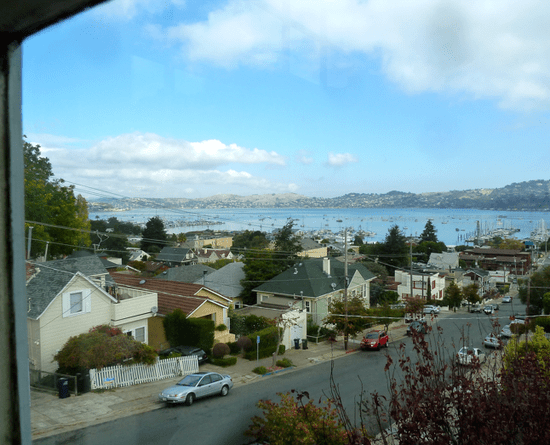
Back when I lived by the Bay, I went to beautiful Sausalito, passing by that low brown building and marveling at the gorgeous bay scenery with the numerous sail boats lying in wait many, many times. I am sure the sender at 520somethingorother Johnson St. appreciates just how good they have it. I couldn't for the life of me find away to get around a branch obscuring the address, but please find attached the requisite screen grab with window outline and street view:

Saus

Close to 300 readers got Sausalito, California. Another:

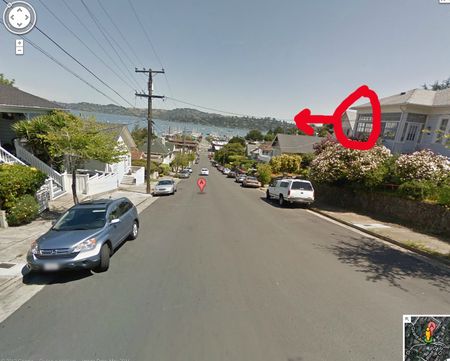
After seeing your VFYW shots week after week for as long as you've been doing this, I can't believe I immediately knew this one!  And anyone in the San Francisco bay area should figure it out pretty quickly.  (But maybe I'm the first?) The hills, the water, it's obvious:  it's Sausalito, CA. Specifically, I'm guessing the address is 520 Johnson Drive, looking out the big picture window to the north with the lovely view of Richardson Bay and the Tiburon/Belvedere hills in the background:
StreetView2

Obviously taken in the summer or early fall, judging by the golden color of the hills.  I'm so psyched that I got it!

Another:

One of the prettiest towns on the West coast.  Lived there for years, loved every second of it.  Sushi Ran is a two blocks from here and is one of the best sushi spots in the US.

Another:

The barren hills initially had me thinking Arizona, but the size of the marina and the steep street in the foreground led me back to California. This week's view shows an inlet of San Francisco Harbor, Richardson Bay, as seen from Sausalito. The bay itself is a fairly important ecological sanctuary, and the Audubon Society is responsible for its' protection and day-to-day management. Overhead view attached:

VFY Sausalito Overhead Cropped Marked - Copy

Another:

Less than a mile away is the US Army Corps of Engineers' Bay Model, a truly unique 1/1000 scale model of the entire San Francisco bay. This thing is enormous: almost three acres. Until computers became powerful enough, it was used to simulate tides and currents in the bay, for instance to determine the impact of oil spills. It's oddly mesmerizing, and I highly recommend a visit if you're in the area.

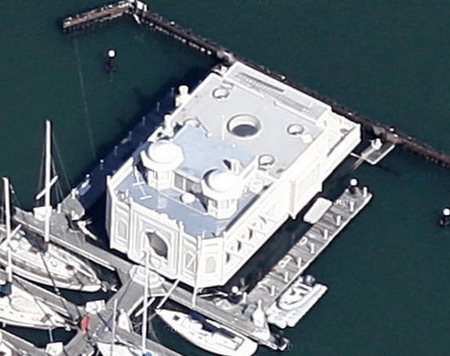
The piers on the left side of the photo used to be a major Liberty ship building area. By the end of the war, they had 70,000 workers cranking out a ship every 13 days. You can't see them very well, but there's also a bunch of cool boat houses docked towards the middle and right of the photo, including what has got to be one of the weirdest floating things ever (see attached photo – yes, that's actually a boat):
Screen Shot 2012-12-01 at 11.56.04 AM

Another:

I was lucky enough to have an uncle with a small sail boat berthed in the marina on the right side of the image. This was back in the late '60s and early '70s when there were still piles of rotting wooden ferry boats – common along the waterfront back then.  Oh, and most of the hills in the distance were sparsely populated. Yes, nice memories of Sausalito.

Another:

This is from the glassed-in porch of 48 Glen Drive, Sausalito, California, looking out over the red-leafed plum trees at the Belvedere portion of the Tiburon peninsula. We live in town and have walked our greyhound past there more times than I can count! I'm pretty sure that the folks who live there own Eyeitalia, an Italian import and gifts shop, at 43 Princess Street in Sausalito. They also have a Dalmatian who likes ear scratches. We don't know these folks personally, but Sausalito's a small town, especially for dog owners. Hi, neighbors!

I ran over today to take a couple of pictures: one looking at the house from the street, and one of the street view, with my poorly-focused smartphone showing the VFYW contest pic. The photo was taken from one of the east-facing panes, facing down the hill in the house photo:
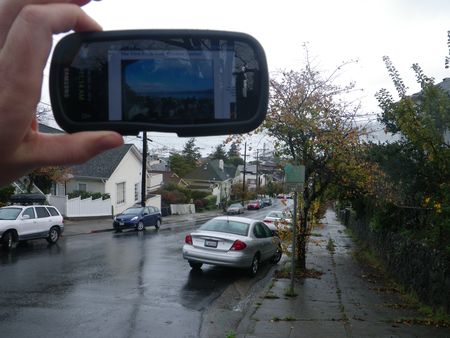
48 Glen street view

Funnily enough, you featured our own VFYW almost exactly a year ago.

Another:

I have lived here since 1965, except for a couple of years in Manhattan.  Perhaps Sausalito thought of as a tourist town, but that is true only for Bridgeway,  the "main drag."  It is a very settled community:  we could have a 1967 Sausalito Nursery School car pool reunion if so inclined.   We all care for one another. But we have the Welcome Mat out at all times for visitors from other countries and from elsewhere in the U.S. of A.  I am a member of the Sausalito Volunteers in Public Safety – "The VIPS" - we work closely with the Sausalito Police Department –  and it is a unique pleasure to meet and individually welcome people from all over the world on every public occasion.

I sailed competitively for many years in the Knarr fleet. The opportunity to sail on San Francisco Bay is beyond price. If you don't find an opportunity to do that, the Golden Gate Ferry to San Francisco will at least give you an interval out on the water, "away from it all."

And yes, we live with extra supplies and a "Plan B" because we are close to the San Andreas fault. There are small earthquakes all the time.  As for "The Big One" – the geologic stratification of Sausalito is interesting, with advantages to living "up the hill."

To select the winner among the hundreds of correct entries this week, we turned to a reader who has gotten several difficult window views in the past without ever breaking the tie, including a few recent close-calls:

As a resident of the Bay area, I instantly recognized this as a view from the East side of Marin County over Richardson Bay to Tiburon. However, even if I hadn't known where it was taken from, this shot is unique amongst the puzzles I've worked on in that, based on obvious features of the image and geography, it could literally have only been this one place. Here is why:

1) It's unambiguously California. The overall appearance of the hills, water and car strongly suggest it. But the definite tell is the campaign sign in the foreground for California Proposition 37 – the hotly contested GMO labeling bill:

37

2) It's a view looking east based on the direction of the south pointing satellite dishes.

3) The water in the foreground is protected – not open bay or sea. 

With those three things, it has to be Marin. There is no other place in California with an east view of mountains over a protected body of water in a reasonably populated area. So then we're left with figuring out the exact location. It's Sausalito. The green awning identifies the street as Johnson St., and the house is clearly 48 Glen Dr.

(Archive)
Bibi Is Bluffing?

E1_GT

Michael Koplow doubts the new Israeli settlement expansion will ever materialize:

[W]hy even make the announcement about planning and zoning if the building phase is never going to arrive? Following the embarrassingly lopsided U.N. vote and the criticism from his right that he did not go far enough during Operation Pillar of Cloud, Netanyahu needed to make a big gesture before the January 22 election to demonstrate that he is committed to settlements and that he will not take the PA’s new statehood status in stride. E1 is an enormous deal to the settler wing of Likud, and declaring a new planning and zoning stage is red meat to Israeli right-wing partisans in a variety of camps, whether they be pro-settlements or have a religious or nationalist attachment to an eternal undivided Jerusalem.

I'm sorry but saying this is due to pre-election politics is not an excuse. In fact, it's precisely because Netanyahu needs these religious fanatics to win elections (and in my view pretty clearly believes in Greater Israel for ever) that the settlements continue to proliferate and grow. The only thing that can sustain an Israeli government is the very thing likely to isolate Israel even further from its European allies: more aggressive settlements. Ibish:

Britain, France and Sweden are reportedly considering withdrawing their ambassadors from Tel Aviv if building goes ahead. UN Secretary-General Ban Ki-moon called the plan a potentially "fatal blow" to a two-state solution, because Palestinians will not sign to a peace agreement that does not allow East Jerusalem to serve as their capital.The New York Times reported that the announcement came as a "rude shock" to the Obama administration, particularly since they had specifically warned Israel in advance against precisely this form of "retaliation."

But we know how Bibi Netanyahu views the US: as an "ally" that can be pushed around and treated with consistent contempt. If this latest outrage doesn't prove that definitively, what would?

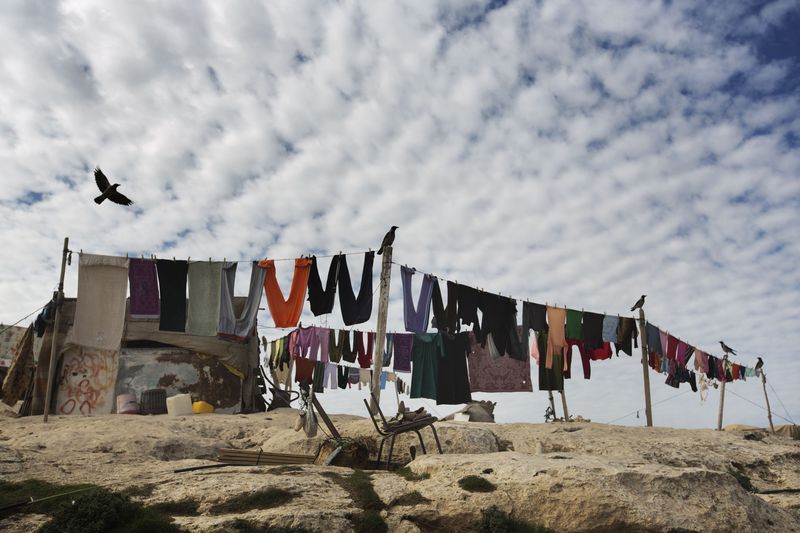
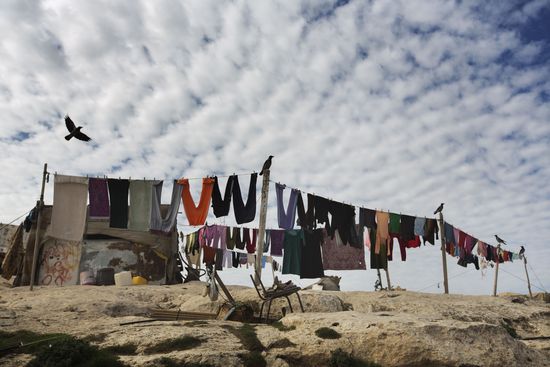
(Photo: A Bedouin camp is seen in the E1 area, between Jerusalem and the Israeli West Bank settlement of Maale Adumim, on December 3, 2012. Paris and London called in Israel's envoys for consultations as the Jewish state faced mounting diplomatic pressure over plans to build 3,000 settler homes in E1 and east Jerusalem and the West Bank. By Menahem Kahana/AFP/Getty Images)

The Roid Age, Ctd

1765977

Readers continue the popular thread from last week:

What especially troubles me is how un-conservative your claims about steroid use appear to be.  Since when do conservatives (under your definition of that term) celebrate unconstrained libidinal desire?  You write that "the new male is here to stay. And that is largely because it's hotter. Get used to it."  Really?  This is the answer?  Men want to be shredded, steroids meet that want, and the only solution is simply to acquiesce?  In a later post you write, "I'm a libertarian when it comes to doing what one wants with one's own body."  Fine – it's one thing to say that the government shouldn't be in the job of prohibiting people from taking risks with one's own body.  But is that all there is to say?

Shouldn't a conservative regard attempts to change the basic biological character of the human body – and for fundamentally superficial, rather than medical, reasons – with wariness rather than enthusiasm?  Shouldn't a Burkean conservative seek to mitigate potentially destructive desires through existing cultural traditions and norms?  Shouldn't conservatives direct us to the well-worn values that can help us safely and gradually adopt and manage the risky technological and social developments of the rapidly changing modern world – values like modesty (don't show off), hard work (come by your physique honestly), and integrity (be the person you are)?

We can. But my point is that I truly do think it's futile given the power of the substance and the impact it has on self-esteem, social power, and vanity. My own view is that a Burkean conservative starts by not deluding himself into thinking the state can stop – or should stop – a technological and social change that is being powered by far stronger forces than the law can throw at it. We do not think of banning the web, for example, because it has ensnared countless people into forms of addiction, pornography, isolation and paranoia – as well, of course, as liberating discourse from its old shackles of legacy media. I take the same approach to steroids. I wouldn't argue for Prohibition as we now have – precisely because so many men want them and use the drugs, with relatively minor repercussions (and none if done right and under medical supervision). The abuse comes largely from the unregulated, unmonitored abuse of the drugs. If we admit that many men want to look like the steroid models we have in much of Hollywood, then we should find a way to have doctors monitor and prescribe. Yes, it's all cosmetics – but who is proposing to shut down the breast implant industry?

Yes, in the end, I find modesty a virtue in a man – as well as hard work and integrity. Women do too. Those values and virtues are worth celebrating and encouraging – and they will endure long past the ripple of delts. And that's also the point: my view as a conservative is that human society is adaptable. We can trust it to get things right … in the end. As we adopt new technologies, we make mistakes and learn. Leaving aside the legitimate medical uses of testosterone – for those with long-term HIV, for example – I think we'll slowly adjust. Even now, the Jersey Shore dudes are mocked for the crudeness of their giant arms. (They remind me of the boy in The Christmas Story who can't put his arms down in his puffy coat.) The cult of the huge bodybuilder in gay culture has also definitely shifted from the 1990s "I Don't Have AIDS" monster into a leaner, smaller but still ripped body – which requires a sophisticated use – and non-use – of steroid cycles in the gym. I have confidence this kind of thing will work its way out, and the virtues that my reader espouses and that I believe in will slowly win out. But can we start from the same understanding that a) this drug is not that dangerous and b) impossible to stop being sold on the black market? Facing reality is the first conservative principle. Making the best of it is the second.

Another reader:

I work out at the same gym you went to in DC (I'd see you there on the weight floor regularly, but was always too shy to say hello and didn't want to interrupt you). I also work out with a trainer at the gym. I asked her months ago how many men at the gym were on steroids, in response to one guy working out near us who had an obvious steriod enhanced body. Her response? Almost all of them.

The bigger guys, the smaller guys who are just incredibly toned and sculpted, and most of the in-between guys to some extent. (She also noted that there are many women at the gym who, while not on steroids, are on human growth hormone.) She's a certified nutritionist, a woman who has made a career out of health and physical training, and with all of her information and advanced degrees fully agrees with your view that it's now hard to pick out a guy who's not on steroids. That doesn't mean that she likes the trend or agrees with its safety; she just can't deny that it's there, and she fully understands the draw of taking steroids among the gym's clientele.

As a straight woman, I second those readers who have said that they don't like the sterotypical steroid look. But I have to admit, the bodies of most of the guys at the gym are pretty nice to look at (which I can do pretty openly, as my 30-something womanhood renders me practically invisible when I'm working out at Vida.) Low body fat, great muscle definition, and no intimidating bulk.

Another:

I'm a female in my late twenties, and maybe the "roid-age" look has affected me. Anything from a swimmer's build to an Alistair Overeem turns me on. I told my boyfriend of four years at that time I was leaving if he couldn't drop the gut. (He already had strike one against him since he is a decade older, but you can't have everything you want. He succeeded and two years later we're engaged.)

But I think it's more female empowerment than the media that drives men to try and look hotter. I did sports in middle school, high school college, and now. I've done team sports, individual sports, and weightlifting. Maybe back in the day, when women were judged too weak to run marathons or play five sets of tennis, we were happy with a guy in a nice suit who kept a roof over our heads and food on the table, but nowadays I can do all that myself right down to the suit. Now that I'm an equal everywhere else, I want an equal in the eye candy department.

But don't do steroids. The health risks aren't worth it. The average young guy has more than enough testosterone if they eat right, exercise right, and get sufficient rest/recovery.

(Photo: Man flexing bicep, close-up, by Zoran Milich/Getty Images)

Ask McKibben Anything: The Other Scary Environment Problem?

Bill recently spoke with Marc Maximov about the attention we’re not paying to the ocean:

The ocean is already 30 percent more acid, and that’s causing havoc already with marine creatures. One oceanographer last month at the close of the big conference on ocean acidification in California said that by century’s end, at this pace, the oceans of the world will be “hot, sour and breathless.” Which seemed to me a pretty powerful statement. Most frozen things will have melted or be in the process of melting. And we’ll see a huge increase in severe weather, to the point where my guess would be that civilization will just be a series of emergency responses to things.

Bill’s previous videos are here, here, herehere, here, here and here. Read some of his Sandy-related coverage featured on the Dish here, here and here. His campaign against the fossil fuel industry, Do The Math, is catching fire across the country.

Chart Of The Day

Screen Shot 2012 12 04 at 10 49 30 AM The Economist extracts the good news from the Institute for Economics and Peace’s newly released global terrorism index:

[W]hile the number of incidents there have climbed since 2007, deaths have actually declined…. If there is any small cause for comfort, it is that terrorist incidents have plateaued since their peak in 2008.

Though terrorist attacks are surprisingly widespread – only 31 out of 158 countries surveyed have not experienced any since 2002 – Iraq has fared the worst:

Iraq ranks first based on a five-year weighted average of the number of incidents, deaths, injuries and estimated property damage. It has suffered from the most attacks, including 11 of the world’s worst 20. Indeed, Iraqis comprised one third of deaths from terrorism between 2002 and 2011…. Other terrorist hotspots include Pakistan, Afghanistan and India. The worst attack over the period was in Nepal, where 518 people died and 216 were injured.

It’s worth recalling that the US was formally responsible for the security of Iraqis for almost this entire period. Which is to say that George W. Bush unleashed a wave of terrorism far more devastating to human life than in any other country. I wonder if he or Rumsfeld or Cheney ever examine their consciences on that. When incompetence means just loss of money, it’s one thing; when it means the deaths of tens of thousands, it’s quite another.

Stopping The Press

Scott Sherman investigates how the 1962 New York newspaper printer strike presaged today's media industry struggles:

At its core, the New York newspaper strike was a battle over technology. The 1950s and 1960s saw the emergence of computerized typesetting systems that would revolutionize the newspaper composing room…. Newspapers with union contracts, including those in New York City, faced tempestuous resistance from labor leaders, who could easily see that automation would cost jobs.

Today, new technology is again shaking American newspapers as the Internet drains away more and more advertising revenue. Cities with dailies may soon face a newspaper blackout much darker than what New York experienced a half-century ago. For a brief period, New York was a laboratory that demonstrated what can happen when newspapers vanish. 

He also notes how this proven vulnerability catalyzed the independent writing careers of many now-famous New York journalists:

For some New York newspaper veterans, even a brief mention of the episode is enough to summon rage and melancholy. “This was an absolutely foolish strike,” says Tom Wolfe, who was a reporter at the Herald Tribune at the time. “There was a stubborn union leadership that was not going to give in, no matter what. So they managed to kill off four newspapers out of seven.” Jimmy Breslin, then a Tribune columnist, says, “Bert Powers was fucking crazy! He disliked newspapers.” If the strike hastened the decline of newspaper culture in New York, it also changed the landscape of literary journalism: the void created by the news blackout helped to launch and solidify the careers of Gay Talese, Nora Ephron, Pete Hamill, and Wolfe himself. “The freedom that came with that strike,” says Talese, who was then a 30-year-old Timesman, “made me, for the first time, know what it was like to be a writer rather than a reporter whose life was owned by the Times.”

China Isn’t Going To Invade America Any Time Soon

Charles Kenny argues that we are safer than ever:

As Tufts professor Michael Beckley points out, the U.S. now "formally guarantees the security of more than 50 countries," which means the U.S. has more allies in the world than at any time in its history. More broadly, war between nation states has been incredibly rare since 1945. Europe is the most obvious beneficiary of Pax Americana: Before today, the last time the Rhine had gone this long without being crossed by armies with hostile intent was more than 2,000 years ago, according to economic historian Brad DeLong. The painful and often violent process of building independent nation states out of colonies was often stoked into civil war by the competing powers of the Cold War. But with the decline of that global struggle, and the growing legitimacy of the new countries, even civil wars are on the wane.

He believes that sustained peace among great powers is making military cutbacks more palatable:

In Harris polls since 2008 the percentage favoring defense cuts has risen from 35 percent to 42 percent. Of five areas of expenditure—Social Security, Medicare, food stamps, Medicaid, and defense—the military was only area where a majority (60 percent) suggested spending should be cut to reduce the deficit.