Mental Health Break

Jobson's jaw drops:

Master of optical illusion Brusspup has a new video … showing some really fun optical illusions using anamorphic projections. The trick is pretty simple: the photographs are skewed but then filmed at an angle where everything looks normal, but when the illusion is revealed it’s still pretty mind-bending. Brasspup also provided downloadable high resolution files of the Rubik’s cube, shoe, and tape so you can print them out on 8×11″ paper, trim, and try for yourself.

Reading, Writing, Aerobics

David Pargman urges colleges to let athletes study sports:

These athletes are as honest in recognizing and divulging their aspiration as is the student who declares a goal of performing some day at the Metropolitan Opera or on the Broadway stage. Student athletes wish to be professional entertainers. This is their heart's desire. … Why not legitimize such an academic specialty in the same manner that other professional performance careers, such as dance, voice, theater, and music, are recognized and supported?

Travis Waldron is onboard:

In Pargman’s view, an athletics major would consist of the standard two years of general studies that most undergraduates take as freshmen and sophomores. After that, it would get more specific to their field, as they would take classes like anatomy and physiology, exercise science, contract and business law, and public speaking. 

Howard Wasserman pushes back:

Pargman argues that not forcing student-athletes to pick a major in which they are not interested–when they really want to study their sport and become a professional athlete–is "integral" to a good portion of the other travesties that surround college sports. But is forcing a football player to major in, say, "Leisure Studies" really integral to all the other problems? Or are the real problems that 1) many of these people have no interest in being in college or studying at all, regardless of what classes they can take or what they can declare as a major, and 2) universities and coaches are making boatloads of money because of the skills of these students and the students are not seeing a dime. Honesty in their major does not change that.

Which is not to reject the proposal out of hand. It is just to emphasize that the problems inherent in college sport go much deeper than this.

Condo-mentum

Screen shot 2012-11-29 at 10.47.08 AM

Emily Badger tracks the rise of multi-family properties:

One in five homeowners in American cities and suburbs now lives in a multifamily property. In the New York metropolitan area, that number is one in three, taking townhouses into account. In 1920, about one in 25 apartments nationally was owned; now it’s about one in four. Co-ops, condos and townhouse complexes account for virtually all of America's growth in homeownership over the last half-century (the share of American households in owner-occupied single-family houses has remained flat over all that time, at 49 percent; the national homeownership rate, meanwhile, increased from 62 to 68 percent).

Why don't we talk about condo ownership more?

Part of the problem, [Matthew Lasner, author of High Life: Condo Living in the Suburban Century] suggests, is that the trend is invisible. “You can’t talk about an architecture of co-ownership,” he says. You can’t tell walking by a building if the people living inside own or rent it.

(Image: partial view of "Pixel City II 01, 2012" by Atelier Olschinsky via Flavorwire)

The Computer Will See You Now

A new study tested e-visits against regular, in-person doctor's visits for minor ailments. Katherine Harmon reports their findings:

Researchers analyzed some 5,000 doctor visits for sinus infections and 3,000 visits for urinary tract infection. Less than 10 percent of all visits were electronic. One possible e-visit drawback: doctors were more likely to prescribe antibiotics after an e-visit than a face-to-face. But patients with an e-visit had just about the same rate of follow up as those who had an office visit. Which suggests that there was not a higher rate of misdiagnosis or treatment failure online. E-visits were also cheaper.

Walter Russell Mead supports e-visits:

Massive, top-down reforms like Obamacare get most of the attention, but it is smaller innovations like these will do the most to shape the healthcare of the future. It also seems clear that letting consumers benefit from cheaper prices is a way to push the health care system as a whole toward less costly methods. E-visits for routine problems (and ultimately, perhaps, e-visits to nurses rather than to physicians) can offer better, faster, more convenient service at a lower price. Moving in directions like this is the kind of health care reform we desperately need.

Earlier this year, Vinod Khosla explained why he thinks algorithms will eventually prove just as accurate, if not more so, than real doctors.

Face Of The Day

157157736

Ultra-nationalist Israelis hold posters depicting Israeli Prime Minister Benjamin Netanyahu and Foreign Minister Avigdor Lieberman carrying the UN seat for the Palestinians with a slogans reading in Hebrew, 'Abu Mazen's (Mahmud Abbas) labourers' during a demonstration in Jerusalem, on November 29, 2012. By Ahmad Gharabli/AFP/Getty Images.

The Party Without A Plan

Daniel Gross thinks the GOP is losing the fiscal cliff fight:

The reality should be seeping in to viewers of the Sunday shows that the Republicans don’t have a game plan. They don’t have a single, specific proposal to avoid the fiscal cliff. And even if they had one, they don’t have a roadmap to get there. They keep expecting Obama to come back with something more to their liking, which they’d also reject. Many Republicans literally don’t understand what is happening. Sen. Charles Grassley tweeted over the weekend that he was frustrated that President Obama hadn’t embraced the recommendation of the Bowles-Simpson Commission. Apparently, he is one of the many people in Washington who doesn’t understand that Bowles-Simpson recommended letting the Bush tax rates on the wealthy expire, while also proposing to cap or eliminate deductions primarily enjoyed by the wealthy.

I mentioned this before but it bears mentioning again. Bowles-Simpson assumed the Clinton tax rate for the wealthy would return before the real work could be done on balancing the budget. And a reader notes that my own suggestion last night that Obama simply ask the GOP to offer in deductions the same amount as raising the top rate would … is already in the record. To wit: Obama's November 14 presser:

With respect to the tax rates, I — I just want to emphasize, I am open to new ideas. If the Republican counterparts, or some Democrats, have a great idea for us to raise revenue, maintain progressivity, make sure the middle class isn’t getting hit, reduces our deficit, encourages growth, I’m not going to just slam the door in their face. I want to hear — I want to hear ideas from everybody.

What's left of my critique, then, is that if I wasn't fully aware of this explicit offer. As a blogger, that's my bad. But I'm pretty sure the American public isn't aware of that offer either.

The president has said his main problem in his first term was not providing a clear enough narrative. Problem not yet solved.

The Death Knell For Football? Ctd

Tumblr_lv6ozmvRNh1qzcf71o1_500

Looking at another problem underlying Jovan Belcher’s murder-suicide, Amanda Marcotte goes after media coverage:

I’m deeply upset about the way that Belcher’s suicide is being forefronted in the coverage over his resorting to murder when he couldn’t control his girlfriend. Like [Ta-Nehisis] Coates, I think it’s just bad business to use terms like “tragedy” while avoiding terms like “murder” and “domestic violence”. I realize the hesitation is due in part to not knowing if Belcher was violent to Perkins prior to shooting her multiple times, but it’s still irresponsible.

She adds the context:

Death at the hands of a male partner is a leading form of murder for women. Belcher’s crime has to be understood in this context. Considering that this story is being widely reported in sports media, where domestic violence is rarely covered, it’s especially important to remind audiences that what Belcher did is sadly all too common.

Combing through the San Diego Union-Tribune’s database on arrests of NFL players, Justin Peters calculates that of the 1,700 active NFL players, around 2 percent have been charged with abuse or domestic violence charges. He reflects:

[I] think it’s stupid to say that football causes players to become abusive; after all, the vast majority of NFL players don’t take their work home with them. Last month, Craig Stevens of Northeastern University’s Sport in Society group reviewed much of the literature on the topic of male athletes and violence and concluded that there was no definitive proof that contact sports foster violent behavior.

But football can attract violent people, many of whom lack the skills to work through their anger. Many of the NFL players charged with domestic violence had traumatic-sounding childhoods.

Peters points to an important – and, so far, neglected – step the NFL might take:

After the Jovan Belcher murder/suicide, there’s been a lot of talk about making more and better counseling services available to NFL players. And certainly, Commissioner Roger Goodell has made clear his goal of reducing domestic violence in the league. … But what Goodell has done to address this pattern as of now is unclear … Hopefully [Saints defensive end and alleged batterer] Will Smith got the help he needs. And perhaps the case of Belcher and Kasandra Perkins will lead other NFL players to seek counseling—and for the NFL to take action to make sure they do.

Meanwhile a new study of men who died with chronic traumatic encephalopathy (CTE) has some sobering findings as well as some caveats:

Those categorized as having Stage 1 of the disease had headaches and loss of attention and concentration, while those with Stage 2 also had depression, explosive behavior and short-term memory loss. Those with Stage 3 of C.T.E., including Duerson, a former All-Pro defensive back for the Chicago Bears who killed himself last year, had cognitive impairment and trouble with executive functions like planning and organizing. Those with Stage 4 had dementia, difficulty finding words and aggression.

Despite the breadth of the findings, the study, like others before it, did not prove definitively that head injuries sustained on the field caused C.T.E. To do that, doctors would need to identify the disease in living patients by using imaging equipment, blood tests or other techniques. Researchers have not been able to determine why some athletes who performed in the same conditions did not develop C.T.E.

The study also did not demonstrate what percentage of professional football players were likely to develop C.T.E. To do that, investigators would need to study the brains of players who do not develop C.T.E., and those are difficult to acquire because families of former players who do not exhibit symptoms are less likely to donate their brains to science.

It’s becoming an inescapable conclusion that football is spreading a horrible brain disease – and that those who run the sport and watch the sport know it. It either has to change or keep generating headlines like those around Jovan Belcher. The NFL has to decide whether it is in the business of sport or turning men into depressive, explosive and ultimately incapacitated human beings, for whom suicide is sometimes a mercy. More fascinating detail on the disease here. Photo from this Tumblr well worth perusing.

We think our civilization is superior to previous ones who sent gladiators into arenas to die. We’re finding out it may be a difference in degree rather than kind.


Discounting The Coupon Companies

Groupon and Living Social have problems. McArdle wonders if they are doomed:

If one of these companies survive, my money's on Living Social; at least from my customer perspective, they've done the best job of pushing into markets that actually have some potential, sustainable revenue.  But it's quite possible that none of them will.  They may just be this generation's Kozmo.com, a service that was hugely popular with venture capitalists, and New Yorkers–but only as long as it was selling its product at a loss.

America’s Moment Of Truth

Boehner_GT

William Dudley, President of the New York Fed, puts the fiscal cliff in context:

When I meet with economic leaders across the globe they do not doubt the underlying strength and dynamism of the U.S. economy, or the entrepreneurialism and inventiveness of our people. Nor do they doubt that we have the resources and capability to overcome the challenges we face. But they do wonder whether our political system is capable of putting the national interest above partisan interests and making the tough choices needed to address these challenges.

If a credible bipartisan agreement is reached, it will strengthen global confidence in the U.S. and underscore to the world that our country remains a great place to do business and invest in. Failure would suggest a degree of political dysfunction that could undermine U.S. economic leadership and could encourage global corporations and investors to invest elsewhere.

Along the same lines, Neil Irwin compares the fiscal cliff to the Eurozone crisis:

The Europeans were trying to create new institutions on the fly in the face of a crisis. The United States is testing whether our centuries-old institutions are up to modern challenges. Europe bungled the process enough so that its standing as a credible, global leader is in doubt. The goal for the United States is to achieve a better result.

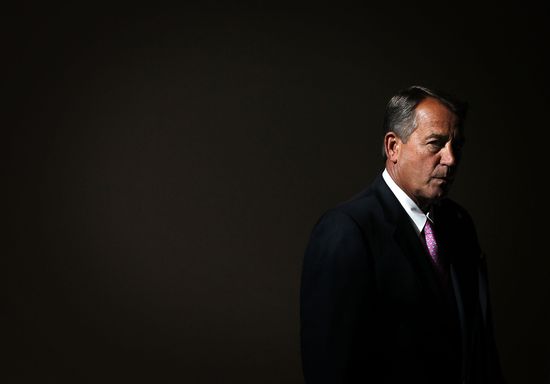
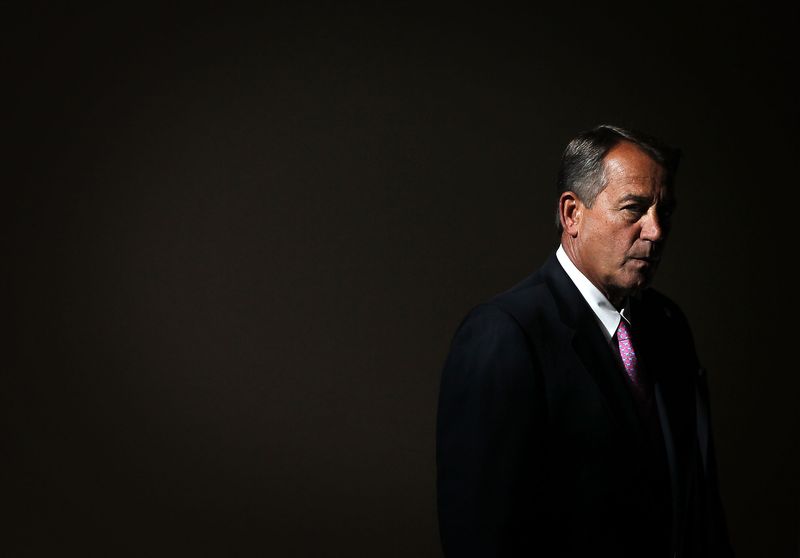
(Photo: Speaker of the House Rep. John Boehner (R-OH) arrives for a news conference November 30, 2012 on Capitol Hill in Washington, DC. Speaker Boehner held a news conference to respond to U.S. President Barack Obama on the fiscal cliff issue saying, "There is a stalemate. Let's not kid ourselves." By Alex Wong/Getty Images)

The Daily Is Dead

The iPad-only newspaper is folding on December 15th:

The project needed about 500,000 subscribers to break even, and did not get a chance to come close, hovering around 120,000 weekly readers last year, while opting not to say how many people were actually paying subscribers. 

Will Oremus thinks it never made any sense:

The Daily missed the whole point of digital publication, which is that you can reach a vast, worldwide audience across a wide array of platforms without having to design entirely separate products for each one. It's one thing for general-interest magazines like Slate, Salon, Buzzfeed or the Huffington Post to do away with the huge costs and constraints of a print product. Once you've done that, narrowing your focus to a single device limits your audience far more sharply than it limits your expenses.

Yglesias has a different perspective. He looks at "Marco Arment's new startup, The Magazine, which is an iOS exclusive that's simply operating on a much smaller scale with lower costs than The Daily":

From Arment's perspective, one advantage to going iOS exclusive that he alluded to in a recent podcast is that as an app maker you want to make apps that Apple wants to promote. By going exclusive, you give up some revenue opportunity, but you not only simplify your own business, you hope to attract some marketing cross-subsidy from Apple. But this is a strategy that doesn't really scale very well. The Daily was far too big and ambitious to be getting so little from exclusivity. But exclusivity itself isn't a crazy idea; it's just that you'd need to be attracting a large cross-subsidy for it to make sense.

Elsewhere, The Awl just launched a subscription-based weekly for iPad and iPhone.