Reality Check I

Peer-reviewedpapersagw.preview

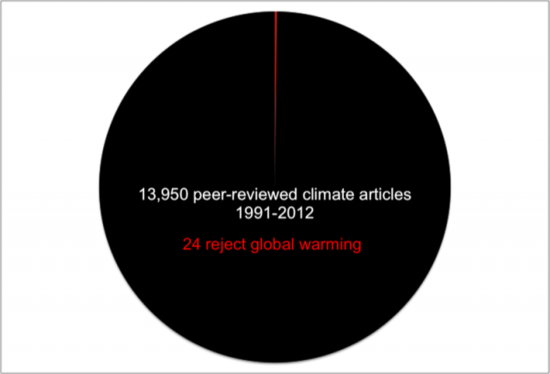
There really is no credible alternative to the fact that climate change is occurring as a result of human carbon emissions. The question is what we can do about it. As the Dish looks toward the New Year, we intend to devote more attention and focus on this issue. We want to crowd-source a conversation that can help clarify the sanest, feasible options.

Cliff Notes, Ctd

Chait cuts to the chase:

That’s the core problem with Bowles-Simpson: It’s a delusional belief that a theoretical agreement for tax reform that lowers rates and ends deductions would translate into a real plan. The fiscal scolds cling to this because the tax reform alchemy is the whole thing that makes their plan appear to work. That’s why the Peterson network proclaims that lower tax rates are a key principle for tax reform – they think this will produce Republican votes for more revenue, even though it won’t. The only way to get Republicans to agree to higher revenue was to maneuver them into a situation where they had no choice — which is what is happening now.

CliffThe trouble with this analysis, it seems to me, and with the Obama administration's current bargaining position, is that Speaker Boehner has already conceded that he is prepared to raise revenues. So I don't see why Chait is insisting he hasn't. 

And tax reform is good for the economy anyway, regardless of its impact on the deficit. If that can also be a way to get the GOP to increase revenues, why not?

One approach Geithner and Obama could have chosen would have been simply to demand that the GOP propose specific deductions to make up for the lost revenue of keeping the top rate where it currently is. Calling their bluff on tax reform in this precise way, getting them to propose ending deductions to make up for this fiscal gap, could begin a process of further tax reform. And that is, to my mind, more reasonable than insisting that the Clinton era top rate return, period, even if it means tipping the US and the global economy into another swoon.

Then again, all this may be all part of a negotiating strategy – in which Obama is finally not negotiating with himself. And so we should take neither Boehner's nor Geithner's current positions as anything but a game of chicken. It's a long way from Obama's first term attempts at pre-emptive centrism.

Someone asked me the other night what odds I'd give on whether we'd go over the fiscal cliff. All I can say is that they seem to have increased since the election. And that troubles me.

A Poem For Sunday

Candlesmoke

"Alone" by Siegfried Sassoon (1886-1967):

"When I’m alone"—the words tripped off his tongue
As though to be alone were nothing strange.
"When I was young,” he said; “when I was young. . . ."

I thought of age, and loneliness, and change,
I thought how strange we grow when we’re alone,
And how unlike the selves that meet and talk,
And blow the candles out, and say goodnight.
Alone. . . . The word is life endured and known.
It is the stillness where our spirits walk
And all but inmost faith is overthrown.

(Photo by Flickr user The Ewan)

Quote For The Day

"I think we're in a much better position than, actually, I thought was realistic, in those darkest days of this financial crisis, when there was a real risk of catastrophic collapse. And I think all Americans should be much more confident today than at any time in the last four or five, six years. I'm very proud of being part of that, even with all the challenges we have ahead," – Timothy Geithner, Treasury secretary.

The Write Time

Stephen Marche declares that we're "living in a golden age for writers and writing":

The essay — long or short, literary or plain — has never been stronger. Practically every week, some truly fantastic piece of long-form nonfiction appears. This is not the normal state of affairs, no matter what nostalgics pretend. It's easy to imagine that in the past every New Yorker had Hannah Arendt on the banality of evil or every Esquire had Nora Ephron on small breasts. Go back and look at those old magazines and you will discover something shocking: They're mostly boring; they're also often just plain sloppy. With a few notable exceptions, almost every magazine in the world is in its best shape ever, right now. Good old-fashioned competition — from the Internet and the expanding marketplace — has forced them to improve. They're better written. Vastly better designed. More entertaining. More accurate. Richer. Finding great writing — and getting stories in front of eyeballs — has never been easier. Try going to Longform.org or Byliner and not losing yourself in their labyrinths of entirely free, entirely superb stories.

The Fates Of Rebellions

Egypt_Tear_Gas

Robert Zaretsky believes French philosopher Albert Camus's writings on rebellion illuminate "the potential tragedy of the Arab Spring":

In The Rebel, Camus depicts rebellion, grounded in our shared humanity with others, including our foes, as modest and bounded by self-imposed constraints, while revolution, bound to abstract goals, is totalizing and without limit. Camus had in mind the Terror of the French Revolution and the gulag of the Soviet Union, but he would not have been surprised by, say, the Iranian revolution of 1979 or the path that the Arab Spring may take. Now, as then, "triumphant revolution" reveals itself "by means of its police, its trials, and its excommunications."

Are all rebellions fated to take this path? Must they be unmade by the very same dynamic that led to their making? Camus places a desperate wager on the rebel's persistent humanity, but he does not explain how rebellion can be maintained without spilling into either revolution or reaction. At times he even seems to suggest that rebellion is, by its very nature, a noble but impossible ideal. For Rieux, the taciturn hero of The Plague, resistance against disease amounts to little more than "a never-ending defeat." For that reason, Camus insisted that there was no reason for hope but little reason for despair—a sentiment perhaps better suited for the ancient tragedians than modern political theorists, but one whose hard-won wisdom will always abide.

(Photo: An Egyptian protester recovers from tear gas inhalation on November 27, 2012, during clashes with the Egyptian Riot Police in Omar Makram street, off Tahrir Square in Cairo. By Gianluigi Guercia/AFP/Getty)

The Savior’s Skin Color

Edward J. Blum, co-author of The Color of Christ, explains how depictions of Jesus mirror America's fraught racial history. When the idea of a blond-haired, blue-eyed Christ took hold:

Up until the late 1800s, Blum says Americans were comfortable with Jesus' Semitic roots and depicted him with brown eyes. But as waves of Catholic and Jewish immigrants came to the United States, some Americans "became concerned that it was changing the face of America too much, changing it racially, changing it religiously." In the early 20th century, there was an attempt to distinguish Jesus from his Semitic background. Religious writers and artists who were advocating for immigration restrictions began to depict Jesus with blond hair and blue eyes.

And the origins of a black Jesus:

During the 1920s and 1930s, we see people out of W.E.B. Du Bois' circle drawing Jesus as a Southern black man who is lynched, basically. And then the second time we see it is during the civil rights movement, during the mid- and late-1960s and the 1970s … that Jesus is more Africanized. He might have an Afro, he might wear a dashiki.

Following The Faithless

Adam Roberts argues that atheists have something to teach the followers of Jesus:

God is happy with his other creations living their lives without actively believing in him (which is to say: we can assume that the whale’s leaping up and splashing into the ocean, or the raven’s flight, or the burrowing of termites is, from God’s perspective, worship; and that the whale, raven and termite embody this worship without the least self-consciousness). On those terms, it’s hard to see what He gets from human belief in Him — from human reduction of Him to human proportions, human appropriation of Him to human projects and battles, human second-guessing and misrepresentation.

He goes on:

What should believers do if they discover that their belief is getting in the way of their proper connection to God? Would they be prepared to sacrifice their faith for their faith? For the true believer, God is always a mysterious supplement, present in life but never completely known, always in essence just beyond the ability of the mind to grasp. But for a true atheist, this is even more profoundly true: the atheist embraces the mysterious Otherness of God much more wholeheartedly than the believer does. To the point, indeed, of Othering God from existence itself.

Pursuing The Impossible

Yujihonbori2-e1343068061510

Leszek Kołakowski wonders if human beings can be truly happy:

Both Buddhism and Christianity suggest that the ultimate liberation of the soul is also perfect serenity: total peace of the spirit. And perfect serenity is tantamount to perfect immutability. But if my spirit is in a state of immutability, so that nothing can influence it, my happiness will be like the happiness of a stone. Do we really want to say that a stone is the perfect embodiment of salvation and Nirvana?

Since being truly human involves the ability to feel compassion, to participate in the pain and joy of others, the young Siddhartha could have been happy, or rather could have enjoyed his illusion of happiness, only as a result of his ignorance. In our world that kind of happiness is possible only for children, and then only for some children: for a child under five, say, in a loving family, with no experience of great pain or death among those close to him. Perhaps such a child can be happy in the sense that I am considering here. Above the age of five we are probably too old for happiness. We can, of course, experience transient pleasure, moments of wonderment and great enchantment, even ecstatic feelings of unity with God and the universe; we can know love and joy. But happiness as an immutable condition is not accessible to us, except perhaps in the very rare cases of true mystics.

(Image: "Butsu Hall with Buddha", made from cardboard, by Yuji Honbori via Hyperallergic)