Te’o claims he was totally unaware of the hoax until shortly before the Deadspin story broke:
“When (people) hear the facts, they’ll know,” [Te’o] said. “They’ll know that there is no way that I could be part of this.” In the interview, Te’o also said that:
• He lied to his father about having met Kekua, prompting his father to tell reporters that the two had met. Several media stories indicated that he and Kekua had met. Te’o insisted they never did.
• He tried to speak with Kekua via Skype and FaceTime on several occasions, but the person at the other end of the line was in what he called a “black box” and wasn’t seen. …
Te’o said he “catered” his stories so people would think he “met her before she passed away.” “I knew that — I even knew that it was crazy that I was with somebody that I didn’t meet,” he said. “And that alone people find out that this girl who died I was so invested in, and I didn’t meet her as well.”
Despite this, he seems to hold no ill will toward Ronaiah Tuiasosopo, the man behind it all:
“I hope he learns,” Te’o said. “I hope he understands what he’s done. I don’t wish an ill thing to somebody. I just hope he learns. I think embarrassment is big enough.”
Reader speculation on the bizarre story here. Another:
I saw on Facebook where you were asking what readers thought about the story. My answer grew to be too long so I decided to email it instead:
I like college football, but I do not follow it as closely as I once did and I tend to focus on my almae matres (Tennessee and Georgia) and their conference (The SEC). I don’t live in the south any longer where the sport truly is religion. As such my interest has waned. It likely won’t surprise the other casual college football fans (especially casual SEC fans) among your readers to hear me say I never cared about Te’o’s girlfriend before the Deadspin story. Why? Because I didn’t know a thing about her. I did, however, know who Manti Te’o was. I know I can’t be alone – knowing of Te’o and not knowing a thing about Lennay.
Despite not caring one iota before, I find myself strangely interested in Te’o’s “girlfriend” now. I find myself in the strange position of agreeing with Malcolm Gladwell for once. It’s the freaking story. As Klosterman said in a Grantland piece, “It’s the goofiest ‘non-sports’ sports story since Tonya Harding.” How many of us cared about or knew who Tonya Harding or Nancy Kerrigan were back then? Before that goofy-ass story? Not many of us. But for one silly winter many of us were so oddly transfixed to that story that we knew Jeff Gillooly was.
This Te’o thing is just so dumbfounding on so many levels. I’ll tell you why I’m interested now where I wasn’t before.
1.) The sports media truly failed here. Major media outlets were covering this “human interest” story about Manti Te’o, but no one tried to find this poor girl’s family? Seriously…they are going to write about some girl’s tragic death but not seek out a comment from family or friends? Just like me, they didn’t know who Lennay Kekua. Nor did they care. This was hero worship, plain and simple. Sports writers wanted to bask in the glow of golden boy Manti Te’o. And it revealed something that many readers at Deadspin have thought for a long time…ESPN, Sports Illustrated and others are lapdogs to sport superstars and power brokers.
2.) Te’o clearly lied at some point, but we don’t know when. He may even be in on the hoax. Perhaps he was attempting to galvanize support for a Heisman campaign. Perhaps it was some elaborate attempt to cover up his sexuality gone awry. Or perhaps he just lied because he was humiliated at being Catfished and thought the story would die along with the dead fake girlfriend.
3.) His Mormon faith might matter a lot here. Was he so naive and unlike any other star athlete on a college campus that worships their Touchdown Jesuses? Finding a real life woman to date – even if it were a hands free kind of dating – should not have been difficult for the guy. Yes, Notre Dame is full of devout Catholics that may not be interested in a Mormon. Too, he may have been so devout to only be interested in Mormons. But come on… He never met the girl over a 2 year period??? If this is the true story, his faith is as much the culprit as the hoax perpetrator(s). But I don’t believe this to be the case. I’m again probably not alone here. Where his faith might play a bigger role is if he did this to cover up his sexuality. Which brings me to…
4.) His sexuality. If it turns out he is gay as some are beginning to speculate, what does this say about the pressure put on this guy? He is a Mormon at Notre Dame most likely on his way to the NFL. Not exactly the most welcoming organizations for gay individuals. Organizations where it most definitely “needs to get better”. Here is someone that may be able to bridge some of those gaps. Of course…this is all just speculation.
5.) Notre Dame football has skirted severalscandals recently. This goofy-ass scandal/hoax/tragedy is much ado about Manti Te’o’s personal life (and I hate that have this macabre interest in what should be private), but it also may be bringing more attention to these past events. Two actual people died and another was allegedly raped. These stories weren’t blowing up twitter and facebook. My hope is that as this story lingers, people keep asking questions about these other stories. That the right people with enough clout will get around to asking why Notre Dame immediately began to investigate on behalf of Te’o but attempted to sweep these other stories under the rug. I mean, the answer is clear…in all cases they were protecting that which is most sacred at Notre Dame – Notre Dame football. That’s my hope at least. This thing could also suck up all the air in the Fighting Irish universe. But that would bring us full circle. Media failure.
Friday on the Dish, Andrew cut to the heart of Lance Armstrong’s maliciousness, which was not the athlete’s doping but his vicious campaign against those brave enough to speak the truth. He reflected on David Remnick’s latest dispatch from Israel and discussed with readers his reaction to Jon Stewart’s interview with Zero Dark Thirty’s lead-actress Jessica Chastain. Elsewhere, Andrew gaped at the latest conspiracy theory from the far right and picked apart Piers Morgan’s rather suspect claim to represent journalism before pre-empting the talk show host’s next insult in today’s Angry Bird Watch.
In political coverage, we assembled reax to the news of a freshly raised debt ceiling, debated the importance of Obama’s inaugural speech, and shook our head as the GOP picked a strange location for their upcoming meeting on minorities. Gopnik expressed optimism regarding America’s gun problems, Mike RiggsenrichedRolling Stone’s list of famous prohibitionists, Phil Plait refuted a persistent trope of global warming skeptics, and a reader clarified the government’s role in informing the makers of Zero Dark Thirty. We heard from other readers who didn’t sympathize with Aaron Swartz’s means to free up information, while the young man’s trial led us to scrutinize the rationale behind plea bargaining as Balko showed how overbearing laws enable overbearing prosecutors.
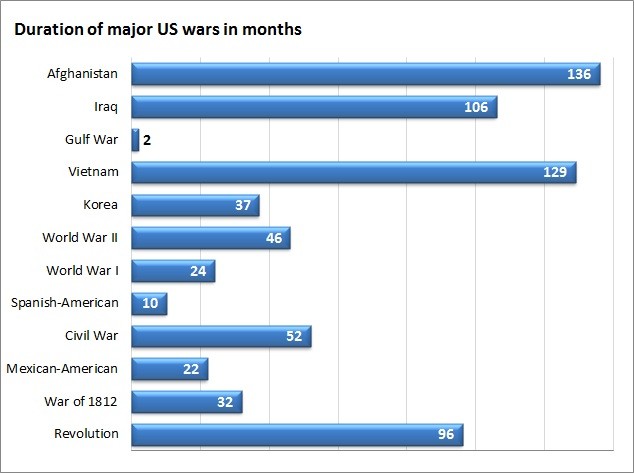
On the foreign beat, we rounded up reactions to French intervention in Mali, as Marc Lynch repeated his view that a similar operation by the US in Syria would be a quagmire, which Waldman demonstrated by tallying up the costs of 136 months in Afghanistan.
In miscellanea, we met gold medalist Nicole Cooke, a cyclist whose accomplishments served a noble cause rather than an ego trip, collected some reader thoughts on the curious case of Manti Te’o, as Mona Gable wrestled with the likelihood of inheriting a family illness. Helen Rittelmeyer saw flashes of Dostoyevsky in Arrested Development, readers fact-checked an old story about the origin of the piggy bank, and we zeroed in on the human body’s smelly allele.
After the Dish earned a hat tip from Roger McNamee, we wondered if Heaven is here online, before John Tooby gave us a stellar reason to lose sleep tonight. We also tracked further developments in online-education, observed the self-correcting tendency of science, as Nilofer Merchant thought up ways to avoid the health risks of prolonged sitting. An Indonesian businessman trudged through flood water in the Face of the Day, we sang the blues of a hound dog during the MHB, watched the clouds rush over Rio de Janeiro, Brazil and spent a moment with a brave reader in Chicago during today’s VFYW.
– B.J.
The rest of the week after the jump:
Thursday on the Dish, Andrew tried to make sense of the Daily Show’s recent segment on Zero Dark Thirty, expressed his disgust with the double standards of the DOJ, and called out the MSM for not quizzing McChrystal on his alleged involvement in torture. Andrew kept pushing Dreher on the normalization of pot and stood by Goldblog as he faced slander from left and right. He also answered more reader emails about Jodie Foster’s speech, assured heterosexual readers that they understand more about gay love than they know, and nodded in approval at a sexy gallery of beards.
In political coverage, we gathered a stack of reader emails about the NRA’s latest ad and rounded up reax on Obama’s ideas for sensible gun reform. We then charted the recent rightward drift of the GOP, traced the decline of cap-and-trade, and looked ahead at the future of the abortion debate. Douthat issued a word of wisdom to both Democrats and Republicans comfortable with the ongoing brinkmanship, offered a two-part reality check on both Obama’s favorables and party alignment since the election, assessed the current gains and losses for labor in a world of runaway technology, and cringed at a WSJ cartoon feeling sorry for wealthy people paying a little bit more in taxes.
We also surveyed a horrifying week’s worth of grinding violence in Syria, poked a hole in the logic behind persecuting Bradley Manning, and Jonnie Freedland expertly analyzed the disconnect between American and European understanding of anti-Semitism.
In assorted coverage, we wondered how the media botched the Manti Te’o story and tried to size up Te’o’s own role in the mess. James Wolcott suited up with digital trackers during exercise, Alex Klein chronicled Scientology’s latest shameful scheme, and readers voiced strong thoughts regarding Jon Brodkin’s piece on the future of broadband. We aired the dispute over Amazon’s trickle-down partnerships, discovered a non-boozy use for the breathalyzer, and spotted heavy fracking activity from space. Later we fleshed out a reader’s story about his war hero father, got lost in a purple trance during the MHB, and spent a crisp moment in Burlington, Vermont for today’s VFYW. Finally, we continued our direct discussion with readers about the future pay-meter of the new Dish, which you can still become a part of here.
Wednesday on the Dish, Andrew pursued the larger implications of “native ads” after The Atlantic’s apology for its Scientology spot. He digested Kathryn Bigelow’s remarks on Zero Dark Thirty’s veracity, and asked her whether she appreciates all the praise from torture-mongers like Hannity. Disgusted by Egyptian President Morsi’s unearthed remarks on Isrealis, Andrew lamented the effect of the Hagel smears on calling out real anti-Semitism. He also took on more readers for his criticism of Jodie Foster, and introduced us to his friend Norma Holt.
In political coverage, we assessed both the past and future of Obama’s debt-ceiling strategy and wondered whether the return of pork might satisfy Congress’s appetite for progress. Frum and Tomasky counted the ways the NRA blew their latest anti-Obama ad, but not without some pushback from readers. Meanwhile, Jamelle Bouie wasn’t ready to count the South out of politics, Drum took his lead-crime argument all the way to the question of race and Yglesias pondered the economic effects of a super-sleep drug.
On the foreign beat, we looked at why Malians are supporting French boots on their ground, Michael J. Totten weighed the benefits of monarchy against democracy, and Liam Hoare traced the latest spat over the Falkland Islands. Also, we studied Israel’s increasing drift to the right and remembered a time when American cities looked quite a bit like smoggy Beijing.
In assorted coverage, we reflected on the real crux of the Lance Armstrong scandal, figured out what to make of Coke’s fresh ad campaign, and promised that this video from NASA will keep you glued to the screen. Trevor Butterworth envisioned the death of punditry in the new era of automated content analysis, as Tom Vanderbilt explored the streaks of bigotry in Google search queries. Rebecca Greenfield waxed pessimistic about Amtrak’s WiFi overhaul while Aymar Jean Christian downplayed the potential for web series to innovate TV.
While Shalom Auslander struggled to reconcile his rabbis loving words with his awful deeds, Rebecca J. Rosen glanced at the new biggest object in the universe. We witnessed film critics and skateboarders overcome their blindness, and Freddie searched the English language for the singular “their.” We trekked up to Fairbanks, Alaska for today’s VFYW, watched an old game take on a new rhythm in the MHB, and had to tip our hat to The New York Post’s penchant for black comedy.
Tuesday on the Dish, Andrew recoiled at The Atlantic’s egregious Scientology advertorial, voiced his discomfort at the dark side of “native advertising” in general, and made note of one crucial Hagel endorsement. He agreed with Blake Hounshell about the perils of withdrawing from Afghanistan but urged a stoic departure in the face of danger. Andrew also responded to more reactions over his critique of Jodie Foster’s coming-out, turned up the pressure on Dreher’s agnosticism on pot legalization, and joined George Packer in bemoaning Dixie’s long-term effects on the GOP.
In political overage, Bill McKibben singled out climate change as an exponentially worsening policy problem, while we brought some of the nuances of climate change debate into focus and tried to measure the effects of NYT’s shaking up its environment desk. The US manufacturers’ lobby ended up buying Chinese while Llewellyn Hinkes-Jones shined a light on the seedy business of incarceration. We glanced at the scoreboard of the debt ceiling standoff and made use of a handy death-calculator to look at the Supreme Court’s future.
Later we read a first hand account of the human aspect to the drug war and walkedthrough the average day of an addict in the city. We were also pleased to help circulate the petition to unseat Aaron Swartz’s prosecutor, and we rubbed our eyes in disbelief at a sober, reasoned exchange on gun control. Looking abroad, Evan Osnos coped with some particularly bad air in Beijing, we took Tunisia’s post-authoritarian temperature, and watched U.S. guns spike the homicide rate in Mexico.
In miscellania, Tim De Chant reimagined local newspaper coverage while Martyn Daniels revealed that Ebooks hovers over our shoulders as we read. Alyssa Rosenberg praised FX for shows’ honesty about the modern male and Erika Christakis reviewed proper sneezing etiquette. We enjoyed The Onion’s red carpet realism, confirmed the toxicity of comment sections, and discovered that the metric system may rest on shaky ground. We peeked into a garden in Cardiff by the Sea, California, surveyed the south of France from Mirepoix in announcing this week’s VFYW winner, pulled quite a stunt during the MHB, and welcomed nightfall with a poem by Catherine Barnett.
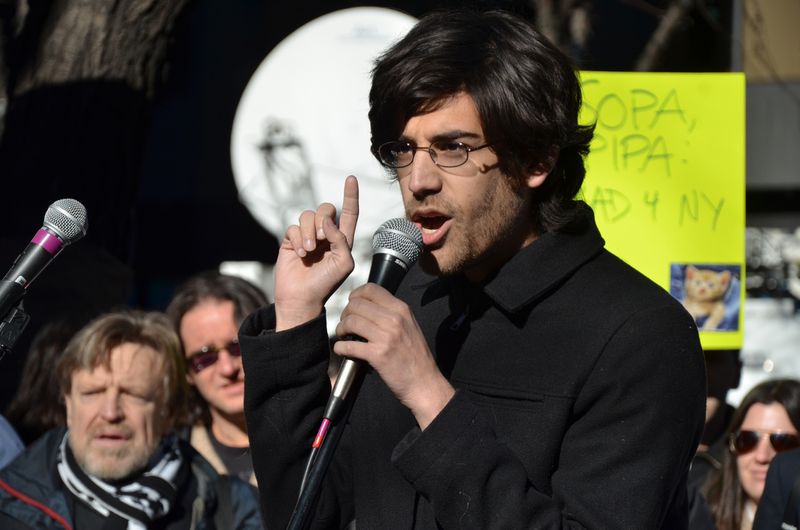
Monday on the Dish, Andrew denounced the undue viciousness of Aaron Swartz’s prosecutor at DOJ, and wondered whether academic literature could be made a public good. He applauded Matt Stone and Trey Parker breaking free of Hollywood studios and called out Jodie Foster on her narcissistic coming-out speech at the Golden Globes. He chided Dreher and Frum on their arguments to shield the poor from pot, continued to ruminate on the legacy of Richard Nixon and sang the praises of DC bear culture. Elsewhere he urged popular opposition to the GOP’s ongoing economic terrorism, which will likely earn them the scorn of the public.
In political coverage, we questioned whether or not guns are a safeguard against Big Brother and circled back to Drum’s original evidence connecting lead and crime. We juxtaposed two quotes in which a former member of the Knesset sighedat Israel’s swing to the right while an American senator called Israel our hands-down greatest ally. Seth Masket joked about Obama’s vulnerability on intergalactic defense, readers sounded off on Anne Lowrey’s unkind portrait of the nation’s capital, and we revisited the data about movies and violence in light of Tarantino’s recent outburst on the subject.
In assorted coverage, we compared the hazards of driving drunk to driving stoned, got a taste of the power of tea in Pakistan, and revealed the one word that will burn Brits’ grits. We remained diligent about flu vaccination, and kept up with the debate over the benefits of bare feet while running. Jane Shilling argued that power of the Internet would make Socrates glow, while Geoffrey Nunberg saw Amazon users’ book annotations as a window into their collective consciousness.
Meanwhile, we rounded up some more insightful reader reax to impending Dish independence, followed a famed photographer duo as they scouted locations via Twitter, all as the great showdown between mutant ducks and tiny horses raged on. An old MHB received an update from a talented music class, while we gazed over the red rooftops of Malacca, Malaysia in the VFYW and watched the doors of a health clinic close on the Face of the Day.
Last weekend on the Dish, Andrew castigated Piers Morgan’s “dumb, disgusting desperation” and defended Washington, DC, from its condescending critics. We also provided our customary coverage of religion, books, and culture, high, low, and in-between.
In matters of faith, doubt, and philosophy, David Bryant elaborated on faith in an unknowable God, Mark Galli meditated on grace and parenting, and Casey Cep remembered the idiosyncratic Christianity of Reynolds Price. John Jeremiah Sullivan considered his secular appreciation of gospel music, Lorin Stein praised the understanding God of Psalm 139, and Justin Erik Haldór Smith ruminated on the unlikely places he finds God. Jim Shepard thought about Flannery O’Connor and epiphanies, Richard Feynman riffed on the beauty of a flower, and Daniel Baird wondered just what justice requires.
In literary and arts coverage, David Mikics uncovered how Emerson and Freud compete for Harold Bloom’s soul, Greg Olear argued that Nick Carraway of The Great Gatsby was gay, and Anthony Paletta detailed Oscar Wilde’s trip to America. Rebecca Lemon showed how Shakespeare deployed alcohol in his plays, James Hall traced the difficulties the artist Raphael poses for biographers, Emily Elert highlighted the experiences for which English has no word, and Marcy Campbell plumbed her book club for insight into today’s literary market. Megan Garber found a novel in your outbox, Michael Thomsen was disappointed by drug writing’s inability to capture the psychadelic experience, readers continued our thread on fonts, and Stephen Marche believed the art bubble might be ready to pop. Read Saturday’s poem here and Sunday’s here.
In assorted news and views, a Dish reader honored the activist and polymath Aaron Swartz, Joshua Coen appreciated the public beauty of Central Park, and Dave Bry earned an Yglesias nomination for his thoughts on Chief Keef’s latest album. The White House dashed the hopes of Star Wars fans, Daven Hiskey let down drinkers who think booze can keep them warm, and Devendra Banhart narrated the story of a great and crazy soul singer. Julian Baggini theorized why Nespresso won a taste-test, Gregory Ferenstein offered a cautionary tale about Wikipedia, Jon Brodkin reported on satellite companies providing broadband Internet access, and Derek Workman mused on the vagaries of foosball in a flat world.
We asked the Leveretts anything here and here. MHBs here and here, FOTDs here and here, VFYWs here and here, and the latest windown contest here.
Character by character, Helen Rittelmeyer compares the soon-to-be-relaunched Arrested Development to Dostoevsky’s The Brothers Karamazov:
Michael is Ivan. He is the smartest and most self-aware Bluth, a decidedly mixed blessing considering that it makes him the only one able to grasp just how awful everyone is. Most people think of Michael as the nice brother, but that’s only half right, since on an intellectual level he believes the ethical rules he lives by are idiotic. You shouldn’t put so much work into keeping together a family that isn’t worth it, his brain keeps telling him, just as Ivan keeps telling himself that he shouldn’t love a God who doesn’t deserve it.
But both of them do the right thing in the end. As Ivan’s devil predicted, “You’re going to perform an act of great virtue, and you don’t even believe in virtue—that’s what keeps eating away at you.” This internal contradiction drives Michael to exasperation; if he were Russian, it would have driven him mad.
The words of Jim Gilliam, in a spiritual tribute to the Internet that will probably make your eyes mist:
On a similar note, Valarie Tarico suspects that religion’s appeal will diminish in the generations that find interpersonal meaning through the Internet rather than faith communities:
The web showcases the fact that humanity’s bad and good qualities are universal, spread across cultures and regions, across both secular and religious wisdom traditions. It offers reassurance that we won’t lose the moral or spiritual dimension of life if we outgrow religion, while at the same time providing the means to glean what is truly timeless and wise from old traditions. In doing so, it inevitably reveals that the limitations of any single tradition alone.
She argues that the web has also played a huge role in normalizing nonbelievers:
Before the internet existed most people who lost their faith kept their doubts to themselves. There was no way to figure out who else might be thinking forbidden thoughts. In some sects, a doubting member may be shunned, excommunicated, or “disfellowshipped” to ensure that doubts don’t spread. So, doubters used keep silent and then disappear into the surrounding culture. Now they can create websites, and today there are as many communities of former believers as there are kinds of belief. These communities range from therapeutic to political, and they cover the range of sects: Evangelical, Mormon, Jehovah’s Witness, and Muslim. There’s even a web home for recovering clergy.
[O]f course it’s true that the internet has played a role in killing religion in certain people’s lives, or maybe even in the lives of certain (small, fringe) religious communities. It’s made many people more aware of the pluralism of the society they live in, and brought previously far-flung differences close. Those can be powerful things. But it has also provided a means for even the craziest to disseminate their “ideas” and find like-minded followers. Social media allows people to shape their information-world with people and sources who reinforce what they already believe. So is one particular technological revolution “killing” something as huge, and something with such a long history, as “organized religion”? Maybe a little, probably not much.
Ki Mae Heussner checks in on the Minerva Project, which is trying to bring a “Harvard-level education to the Web”:
The company is for-profit but announced a plan to create a non-profit Minerva Institute for Research and Scholarship to create new programs to finance students’ education and recruit top-level teaching talent. Led by former Senator and Governor Bob Kerrey (D-NB), who was also the former president of The New School, the Institute will emphasize Minerva’s commitment to a business model that doesn’t leave college graduates with a crushing debt load and that provides new opportunities for professors in a tough academic job market.
Daniel Luzer, meanwhile, focuses on the University of California’s foray into online education:
The one sucker person who signed up was a high school girl who paid $1,400 for an online precalculus course offered through UC Irvine.
The trouble is that at the same time the UC system created its rent-seeking online program to “knock people’s socks off,” the whole world got all excited about, and signed up for, Massive Open Online Courses, or MOOCs, the college courses Stanford, Michigan, Princeton, Harvard, and the University of Pennsylvania are now offering Americans for free. It’s pretty hard to “market” a $1,400 product when a whole lot of other places seem to be offering a pretty similar product at no cost.
Reflecting on the Aaron Swartz case, Tim Lee argues that plea bargaining is a “corrupt practice”:
If Ortiz thought Swartz only deserved to spend 6 months in jail, why did she charge him with crimes carrying a maximum penalty of 50 years? It’s a common way of gaining leverage during plea bargaining. Had Swartz chosen to plead not guilty, the offer of six months in jail would have evaporated. Upon conviction, prosecutors likely would have sought the maximum penalty available under the law. And while the judge would have been unlikely to sentence him to the full 50 years, it’s not hard to imagine him being sentenced to 10 years.
Why are you hearing that Swartz faced 35 or 50 years if it was not true?
First, government press releases like to trumpet the maximum theoretical numbers. Authors of the press releases will just count up the crimes and the add up the theoretical maximum punishments while largely or completely ignoring the reality of the likely much lower sentence. The practice is generally justified by its possible general deterrent value: perhaps word of the high punishment faced in theory will get to others who might commit the crime and will scare them away. And unfortunately, uninformed reporters who are new to the crime beat sometimes pick up that number and report it as truth. A lot of people repeat it, as they figure it must be right if it was in the news. And some people who know better but want you to have a particular view of the case repeat it, too. But don’t be fooled. Actual sentences are usually way way off of the cumulative maximum punishments.
Waldman puts the Afghanistan war in perspective with a series of charts. On the cost of the war:
To date, we’ve spent over half a trillion dollars in Afghanistan, a figure that includes only the direct yearly costs for both military expenditures and civilian aid. It doesn’t include the cost of replacing materiel and weapons used in Afghanistan, nor the long-term costs of caring for the thousands of servicemembers who were wounded there. Those factors will add hundreds of billions of dollars to the tally in the years to come. And today, keeping a single servicemember in Afghanistan costs upward of a million dollars per year.
Edge is holding a forum on the question. John Tooby’s contribution:
The average G-type star shows a variability in energy output of around 4%. Our sun is a typical G-type star, yet its observed variability in our brief historical sample is only 1/40th of this. When or if the Sun returns to more typical variation in energy output, this will dwarf any other climate concerns.
People wade through floodwaters in Jakarta’s central business district on January 17, 2013 in Jakarta, Indonesia. Thousands of Indonesians were displaced and the capital was covered in many key areas in over a meter of water after days of heavy rain. By Ed Wray/Getty Images.
A talking point from denialists is that “there’s been no significant warming trend since the fall of 1996.” Phil Plait rebuts with the above video and explains why these talking points are so troubling:
You can make up any old nonsense and state it in a few seconds, but it takes much longer to show why it’s wrong and how things really are. This is coupled with how sticky bunk can be. Once uttered, it’s out there, bootstrapping its own reality, getting repeated by the usual suspects.



 The Dish