“Enhanced Advertorial Techniques”

I have to confess that the term “native ads” was new to me as I read the Atlantic’s spokesperson, Natalie Raab, explain the magazine’s propaganda page for Scientology – right next to journalists of the highest integrity, from TNC to Fallows. You might be too. Here’s what I found out about them from one man who played a part in coining the term last year:

“a form of media that’s built into the actual visual design and where the ads are part of the content.”

A little more Googling and I found this:

Launched three years ago, Native Solutions creates ad programs that have the look and feel of The Atlantic’s content. The goal: help brands create and distribute engaging content by making the ads linkable, sharable and discoverable. For example, take a look at the work it did with Porsche on the image-heavy sponsored post, “Where Design Meets Technology,” which was shared 139 times on Facebook and 80 times on Twitter. The Native Solutions programs has been so successful that it now accounts for half of digital ad revenue, which is up over 50 percent so far this year.

So you can see how letting advertizers drive content is lucrative and expanding. The Atlantic isn’t alone. Buzzfeed, Gawker, Forbes and HuffPo are all in the game – because online banner ads really are dead. But I can’t help but feel troubled by this development:

Like BuzzFeed, [Jay] Lauf has a 15-person creative team that helps brands create content and develop distribution strategies… Fidelity Investments is working with The Atlantic to find what Fidelity’s best assets are to tell its story. Fidelity, which uses its own in-house creative services team to create content, has a couple of campaigns on The Atlantic — one’s a video and accompanying infographic, the other is a series of pictures. Each is a branding mechanism, tying back to the financial company’s “Thinking Big” campaign.

Jay Lauf, again, is a great guy and a business genius. But when a magazine is actively working with an advertizer to “create content” that has “the look and feel of The Atlantic’s content” … well, all I can say is that if that is the future of online journalism, we should all be alarmed.

The View From Your Window Contest: Winner #136

vfyw

A reader writes:

The wrought iron railing, the cypress trees, the terra cotta tile roof, the church spire in the valley, the nicely and boringly groomed farmland, the swimming pool crap haphazardly left lying around on the deck – all scream “Italy.” The mountains in the background look like they could be the Alps. I have no more specific guess than this because, well, I have a life. It’s Saturday, I’m buzzed on red wine, trying to get my younger son to finish eating his horse steak (yes, I live in Sardinia!) and I can’t wait to go to bed, so no Google searches for me! LOVE your blog! Will subscribe soon!

Another:

I don’t have the computer savvy like your other readers to pinpoint the location, but nothing screams California to me like this photo: standard swimming pool fencing, tall junipers, Spanish-tiled beige stucco house, with a flat valley surrounded by snow-capped mountains in the distance.  Forget all those typical beach scenes. This is California!

Another:

Shifang, China? Really just winging it based on a quick google-earthing of the area. The closest actual landmark I’d guess is the Shifang Huilan No.1 Middle School. After lurking around for a while, I finally decided to enter.

Another:

Although I’ve had several of my window photos appear on your site, I’ve never tried to guess one before, but this looks so familiar. I lived in and around Barcelona for over twenty years and this looks like home (or at least, the country homes of friends). Those could be the Pyrenees in the background, or more likely the Montseny. The pool suggests it’s a summer place for some wealthy Catalan family – probably the house where the parents and grandparents grew up. The larger building is the typical Catalan masia, the large, dark, thick walled, small windowed farm house typical of that region. There are no doubt butifarras cooking over the fire…

Another:

I never bother to try with these contests because I have neither the skills nor patience of your regulars. But I lived in Bern, Switzerland for four years, and this just looks familiar. When you first started posting VFYW (before the contest existed), the view from my then-window in Bern was the fourth (I believe) that you posted. Anyway, happy to be a founding member of your new venture. Bonne chance et bisous de Paris.

Another:

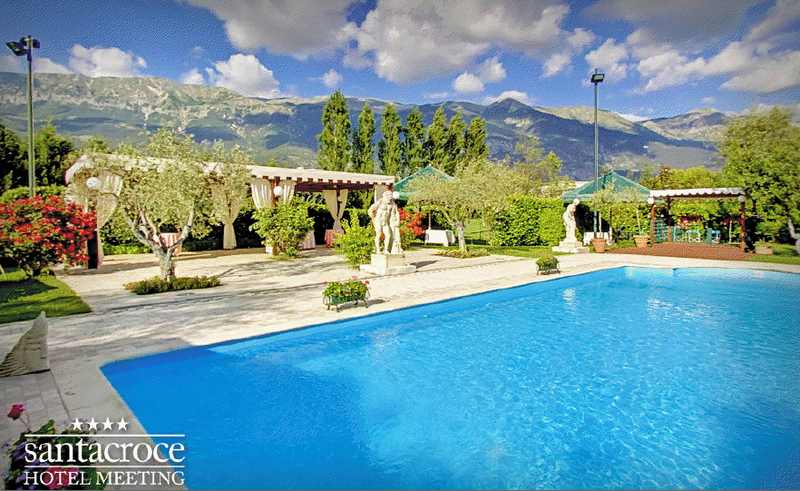
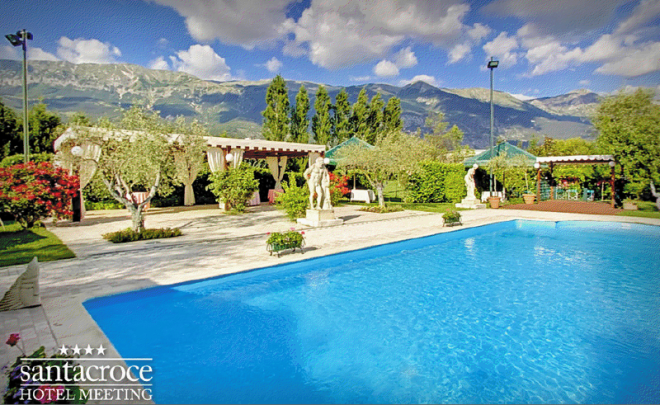
Hotel Santa Croce, Sulmona, Abruzzo, Italy? I think it’s this hotel with a pool and if it isn’t, I’d like to stay there anyway:
vfyw-2

Another:

Happy New Year!


Well, this is the last attempt by this particular geography class as the semester ends this week, so we’d like to at least be close. Though other possibilities came to mind, my class quickly settled on northern Italy because of the architecture, cypress trees, church steeple in the town, and (hopefully) the Alps in the distance. Further research turned up images of the Piedmont region in northwestern Italy that looked a lot like this, with the rolling hills and perhaps vineyards. But it looks like the local town is too small to be Turin, so we’re thinking on the eastern outskirts of Ivrea, Italy. Here’s hoping.

Another:

This was one of those pictures which almost suckered me into losing a night’s sleep comparing silhouettes of distant church steeples, but I successfully resisted – this time. My (thankfully) brief thought process: Europe, but not the Alps (mountains not steep and dramatic enough). Pyrenees. The relatively lush green, rolling hills and angle of sun say more France than Spain. Maybe the large mountain on the right is Aneto (highest in the Pyrenees)? A rough approximation of the view’s potential source puts me somewhere around the town of Saint-Girons in Ariège.

Very close. Another:

vfyw-3

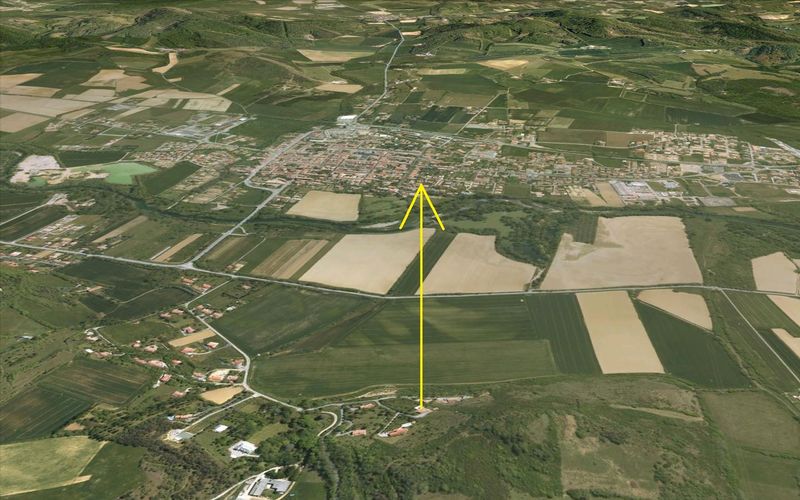
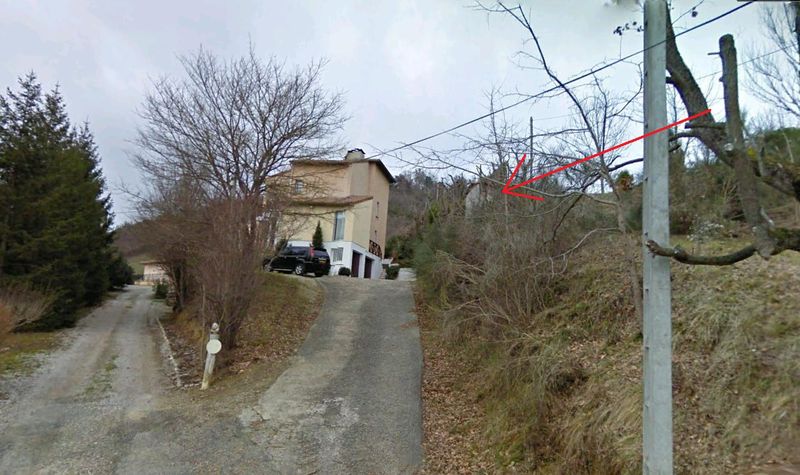
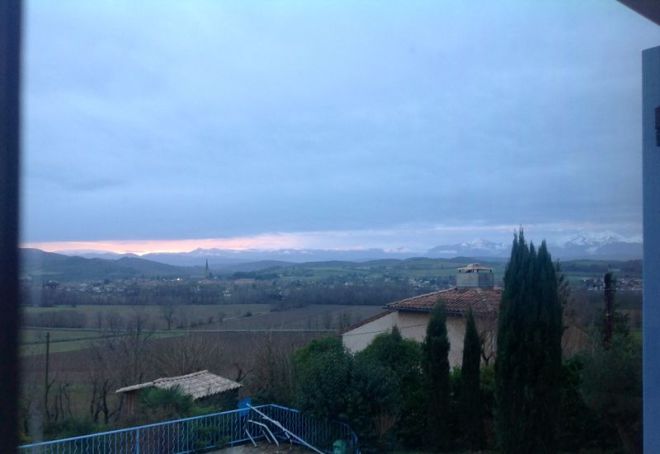
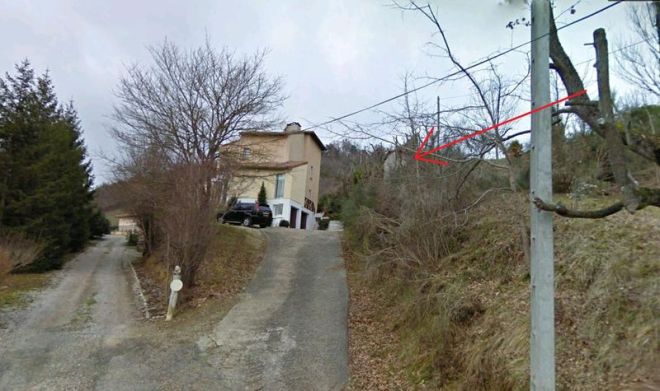
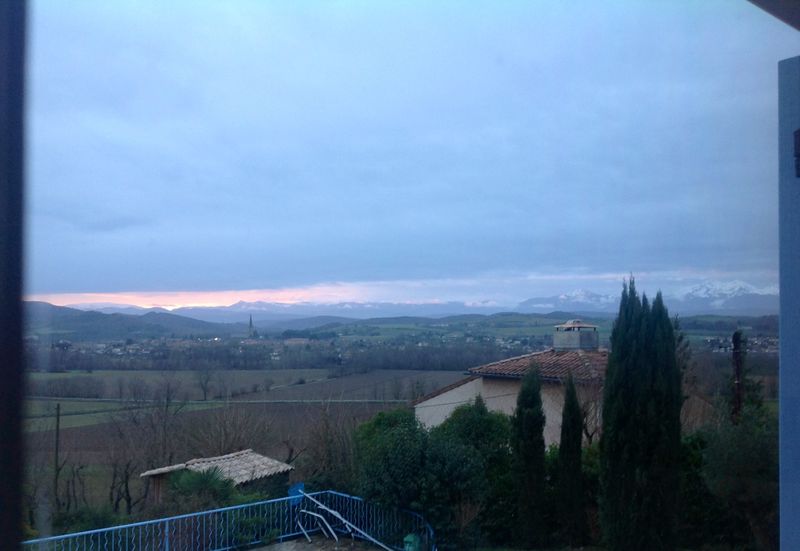
Looking at the cypress trees and the building in the foreground one might guess that this is Italy, but the church steeple and the mountains in the rear point squarely to the Pyrenees. This week’s view shows the medieval town of Mirepoix, France. The view looks south, south east from a building about half a mile outside of town, just off of the D106 road. Oh, and that pole with the blue net leaning against the railing? It’s a pool skimmer, with the pool deck lying just out of sight below your viewer’s window. Images of overhead and bird’s eye views are attached, as well as a partial shot of the viewer’s building marked with a red arrow:
vfyw-4

Mirepoix it is. But that reader has previously won a contest and is the only one this week to get the exact town, so now we have to go to proximity for a tie-breaker. Of the half-dozen readers who guessed France, the following entry was the closest in kilometers to Mirepoix (other than the Saint-Girons reader, who has also won a book already):

Too run-down for California, plus the old-style church, too flat for Italian alps, too fertile for Spain, so that puts me in France. Valleys near Pyrenees seemed broader than Alpine valleys, that brought me to Lourdes.

Congrats, we’ll get a VFYW book to you shortly. The photo’s owner writes:

It’s from my parents’ new house in Mirepoix, France, looking towards a view of the Pyrenées. I took it yesterday morning at 8:23 am (sunrise comes late here!). Thanks for giving me a reason to get out of bed for the sunrise, even while jet lagged!

One more reader:

You used a photo I submitted for the View From Your Window contest on June 7, 2011, from Portugal. I was very new to the Dish at that point and didn’t really know the rules of the contest regarding how specific I should be, so I gave you the town where the photo was taken.

What I should have done was mention that the photo was taken from the Colina Flora B&B, in Pa de Serra, near Sintra. The B&B belongs to my aunt and uncle, and it’s been eating me up to think of the missed opportunity to give a boost to their business. It would probably be odd to publish a correction for a VFYW a year and a half old, so my request is simply that if you happen to make another VFYW book and use that photo, that you include the name of the B&B. I would be extremely grateful.

Of course, if you ever are visiting Portugal, I highly recommend it as a place to stay. It is hands-down one of the most beautiful locations I have ever been to, the B&B is an extremely peaceful place to stay, eco-friendly and dog-friendly.

Our reader follows up:

Thanks for publishing the correction to my VFYW submission from a year and a half ago! Having read this blog for a couple years now, I shouldn’t have been surprised, but given the vast amount of emails you must receive on a daily basis I did not expect such a silly request to be honored. I don’t know of any other blog that can give such personal attention to such a large audience. Thank you.

P.S. That was the sound of me subscribing.

(Archive)
The Atlantic‘s Resort To Advertorials

Well, it seems pretty clear where the editorial staff stands. Goldblog touts Lawrence Wright’s new book on the subject (which, if it is anything like as good as his past work, will indeed be a must-read); Fallows tweets diplomatically but obviously with some concern. To its credit, the magazine pulled the pro-scientology propaganda advertorial pronto (if you call 11 hours pronto). Eric Wemple has a good summary here. My immediate thought was that this was overblown, and then I saw the sheer extent of the piece:

Atlantic-Sponsor

Look, these are extremely tough days for magazines and what David Bradley and Justin Smith have done to resurrect this pillar of American letters is quite something: a tour de force financially. James Bennet’s editorship has been a model for others. But advertorials in the Atlantic? For cults? What I’d like to know is how extensive the use of advertorials now is at my former beloved home. Maybe this was a one-off, quickly ended. Or maybe it wasn’t. But the integrity of a great magazine needs defending. Wemple ominously notes from his reporting:

Natalie Raabe, a spokeswoman for the Atlantic, says that such “native ads” are making their way onto TheAtlantic.com on a “regular basis,” though figures weren’t immediately available. Native ads are critical to The Atlantic’s livelihood. They are one element of digital advertising revenue, which in 2012 accounted for a striking 59 percent of the brand’s overall advertising revenue haul. Unclear just how much of the digital advertising revenue stems from sponsor content. We’re working on that.

The heart sinks.

The Real Parameters Of The Global Warming Debate

One way to think about climate change:

Elsewhere, Mark Boslough pushes back on the idea that "the science is settled" on the question of climate change, citing the need to "recognize the difference between a scientific debate and other forms of disagreement":

The calculation of the mass of CO2 produced from burning a gallon of gasoline was the subject of a vigorous debate on the Albuquerque Journal letters page a couple years ago. This is a question that a decent high school chemistry student should be able to answer, but the highly-opinionated letter writers were not able to resolve their differences–despite the fact that reaction stoichiometry is indeed settled science. Likewise, a competent high school physics student understands how the greenhouse effect works, which is based on the first law of thermodynamics (conservation of energy). This is also settled science.

He continues:

What is not settled is the degree of climate change.

In the peer-reviewed scientific literature there is a healthy, open, honest, and vigorous scientific debate. The best scientific estimate of the amount of warming (when CO2 levels double, which is likely to happen this century) is about 6 ºF. There are those who disagree, and have published the basis for their disagreement. The most useful assessments are not limited to the best estimate, but include quantification of the uncertainty, which is one of the hallmarks of honesty in science. There is a broad range of possibility, from below 4 ºF to greater than 11 ºF.

The Second Amendment Goes South

Charles Kenny looks at how lax American gun laws impact Mexico:

Mexico provides a case study of what happens when more guns meet weak institutions. In the four years following the lapse of America’s assault weapons ban in 2004, 60,000 illegal firearms seized in Mexico were traced back to the U.S. Luke Chicoine, an economist at the University of Notre Dame, estimates that the expiration of the federal assault weapons ban led to at least 2,684 additional homicides in Mexico. Similarly, a study from New York University researchers found that homicides spiked in Mexican border towns after 2004, particularly those most involved in narcotics trafficking. The spike was far less dramatic in towns that bordered California, which had a state-level assault weapon ban that remained in place after the U.S. ban lapsed. A survey of court cases reported in their paper found that 3 percent of trafficked guns came from California, vs. 29 percent from Arizona and 50 percent from Texas.

Maybe In America

Tumblr_m6naca21Ew1rncagco1_500

The Alliance of American Manufacturing, a lobbying group, tried to furnish their office only with appliances manufactured in the US. It proved harder than they thought:

Trash cans, light switches, and even furniture were all readily available from well-known domestic companies. But if you want a U.S. dishwasher compliant with the Americans with Disabilities Act, you’ve got one choice: a single model from a line that German-based Bosch manufactures in North Carolina. It cost AAM $1190. Need computers, televisions or phones for your home or office? A coffee maker or a compact fluorescent light bulb? No such luck. Those products simply aren’t manufactured stateside, [the group’s executive director Scott Paul] said.

“We Are Confused And Absolutely Terrified”

Molly Davies pens a letter to the president arguing that her husband Matt Davies, a California dispensary owner indicted last year for cultivating marijuana, is not the "bigger fish to fry" in the war on drugs:

[M]y husband is not a criminal and shouldn't be treated like one. Matt is not a drug dealer or trafficker. He's not driving around in a fancy car and living in some plush mansion–trust me. My husband is a regular guy, and we're a regular, middle-class family. Yet even though Matt took great pains to follow state and local law, he is currently facing a severe prison sentence. This all seems so surreal. …To protect his family, Matt spent thousands of dollars on lawyers who would ensure that he complied with every part of state law. When I saw how careful he was, I eventually became comfortable with what Matt was doing. He felt like he was offering a valuable service to people in need, many of whom are vulnerable and terminally ill. Matt truly believed that he was doing a good thing.

Matt Welch wonders where it ends:

As (former pot smoker) John Kerry gets ready for his confirmation hearings to be the next secretary of state, let's rephrase his most famous quote: Who will be the last law-abiding father to die behind bars for this mistaken war?

Reading With Big Brother

Ebooks can track how, and sometimes where, you read. Martyn Daniels explores the ways these technologies are being used:

Eli Horowitz has developed a story app ‘The Silent History’, which is about a generation of unusual children born without the ability to create or comprehend language but who have other skills. The work is released in daily episodes like a Japanese Keitai novel. For readers who wish to explore more, Horowitz has created hundreds of GPS locked ‘Field Reports’ that can only be read when the reader takes their device to the specified place. The location-based stories can be accessed across the U.S. and around the world.

The Climate Clock Keeps Ticking

Melt-pond-121129

Bill McKibben explains why climate change isn't like other political issues:

Physics couldn't care less if precipitous action raises gas prices, or damages the coal industry in swing states. It could care less whether putting a price on carbon slowed the pace of development in China, or made agribusiness less profitable. … And unlike other problems, the less you do, the worse it gets. Do nothing and you soon have a nightmare on your hands.

We could postpone healthcare reform a decade, and the cost would be terrible — all the suffering not responded to over those 10 years. But when we returned to it, the problem would be about the same size. With climate change, unless we act fairly soon in response to the timetable set by physics, there’s not much reason to act at all.

Recent Dish on McKibben's "Do The Math" tour here and his "Ask Anything" videos here.

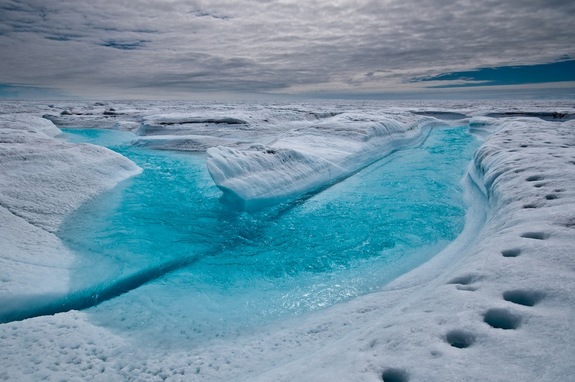
(Photo: "A stream of meltwater flows across the ice surface in Greenland" by Ian Joughin via LiveScience)