Dick and Lynne Cheney went public today with their support for Liz in her opposition to her sister’s right to a family like hers. As I said, earlier, the political opportunism here is deep and rich. And what does it profit a woman to gain the whole world if she lose her sister’s love? But for 17 percent support in Wyoming?
Year: 2013
If The Good Jobs Never Come Back
Reihan faces America’s economic predicament:
If the labor market position of less-skilled workers is going to get even worse in the coming decades, we have to think seriously about finding new ways to make work pay.
For example, we could try to streamline the various benefits federal and state governments have used to raise incomes at the low end to foster a more work-friendly approach to fighting poverty. Oren Cass, domestic policy director of Mitt Romney’s 2012 presidential campaign, recently outlined such an approach in National Review. The basic idea is that while the non-working poor will continue to receive in-kind transfers, channeled through state governments, the working poor will receive cash transfers instead. Low-income households will receive support in either case, but they will receive support with fewer strings attached if they find and hold on to gainful employment.
University of Arizona sociologist Lane Kenworthy, author of the forthcoming Social Democratic America, has called for an expanded employment-conditional earnings subsidy that would rise in sync with economic growth. And in Switzerland, a coalition of activists are campaigning for a basic income, an idea that has been championed by left-libertarians, egalitarian socialists, and even a number of pro-market conservatives who see it as a less bureaucratic, more straightforward alternative to the welfare state. This basic income would not be employment-conditional, which raises the danger that it would encourage people to exit the workforce, as Annie Lowrey observes in the New York Times. But some still find the idea compelling.
Trolling Tunes
Walter Shapiro has argued that Double Down wasn’t meant to be read; it’s meant to foster discussion on cable news shows. Robin James wonders if some pop songs – such as Lily Allen’s latest – play a similar role in the blogosphere:
It seems like music videos and/or performances are increasingly common fodder for so-called “thinkpieces.” There’s Allen, Miley’s VMA performance, Robin Thicke’s “Blurred Lines,” Lorde’s “Royals” [seen above], Macklemore’s “Same Love,” and on and on and on. But what’s interesting to me is that most of these thinkpieces discuss the social and political implications of these pieces without talking about the actual music–as though the music was somehow separable from the social and political work these songs and videos accomplish. … So, here is a demand for material about which to write thinkpieces. Maybe one function of the contemporary pop star is to supply this material? Music is part of the social media supply chain?
What does it take for a song to make a good thinkpiece? James thinks novelty isn’t enough:
[T]here’s a distinction, I think, between Gaga-style shock and the “trolling” I identified in my previous post. Gaga courts fame by performing excess – weirdness, disgust, avant-garde fashion, etc. But trolling isn’t about excess or vanguardism. In fact, these troll-gaze songs are more ambiguous than avant-garde. To crib a bit from Le Tigre, troll-gaze songs have to straddle the “What’s your take on XYZ? Misogynist? Genius?” line. There have to be at least two irreducible, individually defensible positions or sides. That allows there to be ongoing back-and-forth debate. These songs court that debate.
Protecting The Pets From Abuse Too
Kathryn Joyce lauds a new program, People and Animals Living Safely, which allows domestic violence survivors to bring their pets to shelters:
Earlier this year, a New York City woman – I’ll call her Mary – tried to leave her abusive husband. She contacted a shelter, but the shelter wouldn’t take pets. Nor would any other shelter in the city. Mary’s son said he couldn’t leave his three cats behind. And so, since Mary couldn’t leave without her son, she stayed outside the shelter system.
Pets do not get much attention in research on domestic violence, but there is reason to believe that situations like Mary’s are amazingly common.
A 2007 summary of available research, published in the journal Violence Against Women, found that in the dozen or so shelters in the country that collect data on the issue, between 18 and 48 percent of women said they had delayed leaving their abusers because it meant leaving their pets. In one study conducted in upstate New York, researchers found that among women who had seen their pets abused, 65 percent had put off seeking help. Presumably, many others with pets never leave home at all.
In 2008, there were only four shelters in the country that accommodated domestic animals. Today there are 73, but that’s still only about three percent of shelters nationwide, and to date, no program in a city as large or dense as New York has allowed women to “co-shelter” directly with their animals. That might be changing. In June, Mary, her children, and their cats became the first participants in a program called People and Animals Living Safely, a six-month pilot conceived by the Urban Resource Institute, a non-profit that runs four shelters in New York City, and the Mayor’s Alliance for NYC’s Animals, a nonprofit coalition of animal rescue groups. Now Mary, kids, and pets live together in a sparsely furnished third-floor apartment in the Urban Resource Institute’s biggest shelter.
The program likely has a side benefit of preventing cruelty to animals. More than 70 percent of pet owners entering domestic-violence shelters report that their batterers threatened, injured, maimed or killed their family pets, according to the American Humane Association.
Mental Health Break
Can We Make Obamacare’s Plans Cheaper?
Douthat doubts the fix Obama announced last week will have much of an impact. As an alternative, he suggests rewriting Obamacare’s regulations “to allow insurers to sell less comprehensive plans on the exchanges”:
What partial deregulation would accomplish … is to allow some of the lower-cost plans the law abolishes to be actually revived and made available on the exchanges as “bronze” options in 2014 and 2015, rather than just temporarily grandfathered for a year or so outside them. And this would have two potential upsides for Obamacare. First, it would ease the rate shock that people with cancelled plans experience when they go shopping for new coverage on the exchanges (and in the process hedge against potential further rate increases in the new few years). And second, it would offer a carrot, in the form of cheaper options than the exchanges currently provide, to lure in some of the uninsured who might otherwise be more inclined than the White House expected to just pay the fine (or dodge it) and continue without coverage. (If you want more people to buy a product from your website, figuring out a way to lower the price is a time-tested method …)
Barro pushes back:
We should expect that catastrophic plans will be about 5% cheaper than bronze plans.
Opening these plans up to the broader market would help a little with sticker shock, but not very much. The insurance consultancy Milliman warns that ACA rules “may make it hard to differentiate” between catastrophic and bronze plans, since the catastrophic plans and bronze plans must both limit out-of-pocket expenses to $6,350 for an individual subscriber.
[Harold] Pollock’s suggestion is to tweak the definition of “essential health benefits” under the Affordable Care Act. In other words, he’d hold down premiums by letting insurers exclude more items from coverage. But it’s not clear what these exclusions could be, and Pollack doesn’t make specific suggestions. The additions that add lots of cost (mental health coverage, prescription drugs, substance abuse treatment) tend to be pretty important components of health care.
We can tinker a little with the comprehensiveness of coverage, both in terms of what services of covered and what fraction of the bills the insurer will pay. But there is no “fix” to the fact that the ACA creates a shadow fiscal transfer by charging higher health insurance premiums to healthy people in order to subsidize coverage for the sick.
China’s One-Child Loopholes
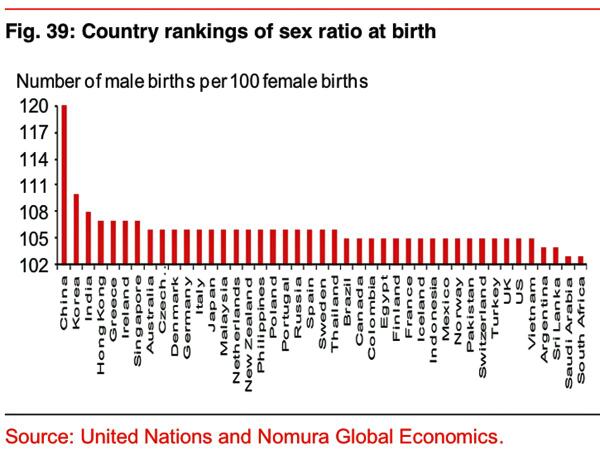
Keating details the new change to China’s one-child policy (OCP):
Under the new system, couples will be allowed to have a second baby if either parent is an only child—a significant slice of the population given that the policy has been in place since 1980. This isn’t quite as dramatic a change as it sounds. China has been gradually adding exceptions to the rule for years amid concerns about the country’s aging workforce.
In rural areas, couples were already allowed to have two children. Many other couples were allowed two children if the first was a girl. Different rules also applied to China’s ethnic minorities—about 8 percent of the population. Authorities already claimed that since 2007, the strict one-child policy has applied to less than 40 percent of the population.
Fisher looks at how the OCP has been enforced:
The awful persistence of forced abortions, sterilizations and infanticide in China reflect a contradiction in the Chinese system — and in the one-child policy itself. The senior leadership in Beijing may set national policy, such as today’s relaxation of the one-child policy, but it’s local- and provincial-level officials who choose when, whether and how to actually enforce those policies. If those mid-level officials want to do things differently — say, in the above case, by continuing to use forced abortions to control birthrates, even though Beijing banned that years ago — they often do.
This is probably the thing that Americans most misunderstand about China: It may be run by a giant authoritarian bureaucracy, but the system can get really messy. The people at the top have a lot less control over mid-level officials than outsiders often assume. Local officials will sometimes go their own way. So the question for Beijing becomes, How do you steer all those local officials to do what you want? The one-child policy is a study in how that can go wrong.
Yglesias calls the OCP an “unmitigated disaster”:
It’s a huge impairment of human freedom, but it’s also left China with a rapidly aging population and a severe gender imbalance among its younger cohorts. We’ve also learned more broadly that birth rates fall pretty dramatically in basically all societies that feature birth control technology, women with some modicum of autonomy from their male partners, and access to global popular culture. Which is to say that even without population control measures, most developed countries have birth rates below replacement level and most developing countries are rapidly converging.
Bloomberg’s editorial puts the relaxation of the OCP in context:
The rest of the world may celebrate this as the loosening of an odious infringement of liberty. For the Communist Party, the issue never even arises. It seeks only to fine-tune the rules for demographic purposes: China needs more children — but not too many. (The change is listed alongside another technocratic tweak: “Allow doctors to have a license to work in more than one hospital.”) A step forward for human liberty, no doubt — in a system that still doesn’t understand what liberty means.
Previous Dish on China’s one-child policy here.
(Chart from Nomura via Business Insider)
Francis Embraces His Critics
Mario Palmaro, a traditionalist Catholic who has strongly criticized Pope Francis, is gravely ill. How Palmaro describes an unexpected phone call from Francis, who contacted Palmaro after learning of his illness:
“I was astonished, amazed, above all moved: for me, as a Catholic, that which I was experiencing was one of the most beautiful experiences in my life. But I felt the duty to remind the Pope that I, together with Gnocchi, had expressed specific criticisms regarding his work, while I renewed my total fidelity [to him] as a son of the Church. The Pope almost did not let me finish the sentence, saying that he had understood that those criticisms had been made with love, and how important it had been for him to receive them.” [These words] “comforted me greatly.”
Dreher, who has had his differences with the Pope, reacts:
Theological considerations aside, Pope Francis is a total Catholic mensch. Can we agree on that? I think we can.
One of Dreher’s commenters adds:
The following is one of my favorite quotes, and it applies, to some degree, to this situation:
“The only sign of humility is the love of one’s enemies. When one loves his enemies, he says in effect that they are as worthy of life as he is, that the Kingdom of God does not depend upon the vindication of one’s own cause. When one loves his enemies, he has accepted the fact that he is not the center of the universe. He is willing to admit that the grace of God may be at work, even in his own behalf, in the resistance and rejection he encounters from others. By love of enemies and by this standard alone can the humility of Jesus be measured. The ‘humble of heart’ whom Jesus admires are those whose hearts have no hatred for their opponents.”
(“Free to Be Faithful” by Anthony Padovano, page 16)
Humility, I believe, consists of more than loving those who oppose or hurt us, but this act is an acid test of the virtue. Good for the Pope.
Sharing His Wish With A Whole City
Alyssa calls the Make-A-Wish Foundation’s Batkid event last Friday “a fascinating watermark in America’s obsession with superhero culture, and in our relationships to various aspects of geek culture”:
Miles’ wish offered San Franciscans the opportunity to participate in an act of kindness in person. And the specific nature of Miles’ request gives participants something more than warm fuzzies: it’s an opportunity to participate in a fantasy of their own on a grand scale, or to excuse indulging in a fantasy on the grounds that it’s philanthropic.
The vast expansion of comics and gaming conventions have provided fans of genre fiction with more opportunities to and spaces in which to cosplay, or to dress up as their favorite characters. But there’s an understanding that the convention floor is special space to assume a different identity that you can’t carry with you out of the center, at least not very far. And cosplaying is often relatively stagnant, an opportunity to pose for pictures, and maybe engage in a casual lightsaber duel. As much as individuals might dream of turning into an entire city into a canvas for their dreams of living out their identification with certain characters, it’s almost impossible to imagine having the clout to step into not just the clothes from a piece of fiction you love, but scenarios that could possible happen in the world where it’s set.
Miles’ request to Make-A-Wish provides an exceptionally rare opportunity not just for him to dress up as Bat Kid and liberate Lou Seal, the San Francisco Giants’ mascot, from the clutches of The Penguin, but for people who aren’t ill to jump in on the game.
“Repeal Is A Fantasy. Reform Is The Task Ahead.”
David Frum wants the GOP to face reality:
Obamacare is a fact— a malfunctioning fact, like so much of the rest of the American healthcare system, yet a fact all the same. Its beneficiaries are rapidly coalescing into a vested interest, as the pharmaceutical companies and hospital insurance corporations and other providers are vested interests. Policy cannot realistically be made by dismissing such interests. They have gained something they will think is worth protecting. They will have the votes to protect it. If reform is needed, and it is, they will have to be offered something better.
Paul Howard and Yevgeniy Feyman recommend Republicans “make Obamacare a Trojan horse for conservative health-care reform”:
Based on data available for about 85 percent of exchange plans, about 77 percent have deductibles of more than $1,250 and qualify under Internal Revenue Service rules for a health savings account. For a 27-year-old purchasing coverage, the median HSA-eligible plan costs about $238 a month and typically comes with a deductible of about $3,600. The median plan without a high deductible, however, costs almost 30 percent more ($310) for a 27-year-old, though it has a significantly lower deductible (about $600).
Over the course of a year, the choice of an HSA plan can lead to significant savings. Here’s why: The typical 20-something with insurance spends a median of $770 annually on health care (excluding premiums and over-the-counter drugs). Opting for an HSA-eligible plan costing $238 a month ($2,856 a year), the median 20-something ends up spending $3,626 in one year on health care ($770 plus $2,856). However, with a traditional plan, total spending jumps to $4,320 in one year ($600 in out-of-pocket spending plus $3,720 in premiums). In other words, the HSA plan holder comes out about 20 percent ($694) ahead. That savings can then be funneled into an HSA or other spending.

