"I will continue to listen to Chief Keef’s music, and I reserve the right to praise it. But I probably won’t get off this easy. Or I shouldn’t, anyway. As much as I’d like to consider rap music, and all art, in a moral vacuum, that’s not possible. Not in America, not with our history. The past is still with us, and we share—to widely varying degrees—in the pain and the guilt. Chief Keef serves as a reminder to those of us who may have forgotten: There are some things that should make us uncomfortable. But that’s exactly why we should confront these things, all of us," - Dave Bry, reviewing a new, stylized and violent album by rapper Chief Keef.
Year: 2013
The Weekly Wrap
(Brendan Smialowski/AFP/Getty Images)
Friday on the Dish, Andrew called for the US government to bear the same legal accountability for torture as the defense contractors at Abu Ghraib, and reaffirmed the precise definition of the word. He was stunned at hearing that Chuck Schumer isn’t finished with Hagel – and noticed that WaPo isn’t, either. Andrew spotlighted Richard Blanco, this year’s Inaugural poet, and told NYT that Matt Drudge is a business mentor for the Dish. He verified that pot doesn’t kill, decided the real solution to obesity has got to be more than tax on sugar, and urged everyone to get the flu shot, ASAP.
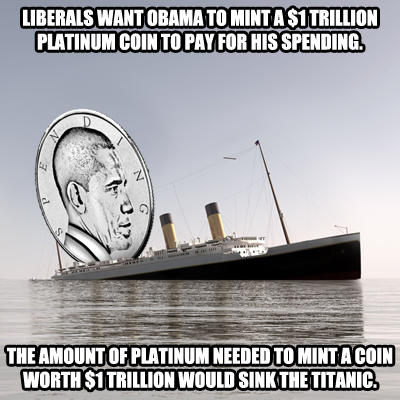
In political coverage, we kept up with anxieties over the Brennan nomination, Ezra Klein called the platinum coin a surrender to GOP intransigence, and Rep. Dana Rohrabacher accused China of disguising spies as journalists. The Leveretts argued that Obama should engage Iran like Nixon engaged the People’s Republic, and we addressed reader criticism of our interviews with the couple here. Sam Harris painted a nasty picture of a gun-free globe, we evaluated the dearth of climate change coverage in the MSM, and set ourselves apart by taking some tips from the Dutch on flood-management.
In assorted coverage, Alyssa Rosenberg praised Netflix’s fresh approach to online TV, Alex Pasternack took a closer listen to the background music in Zero Dark Thirty’s torture scenes, while David Sessions emphasized that flexible minds produce better writers. Dhairya Dand invented a stylish way to avoid drinking past her limit, we rolled our eyes at mandatory tracking devices for school kids, and Megan Cohen explained the piggy bank. We flashed-forward a few years to see if self-driving cars will be on the market, James Temple floated a new way to cool the earth, while David Roberts linked economic growth to reliable air-conditioning.
Readers came down hard on the music of Les Miz, took up the Reddit question that Obama wouldn’t touch, and gave more advice about how to work the pay-meter when the Dish goes solo in February. We also discussed the value of the Dish’s reverse-reporting, and bemoaned the stinginess of legacy media. We had to look twice at today’s cool ad by Garnier Fructis. watched the sun rise at Big Sur during today’s VFYW, and flipped out during the MHB.
The rest of the week after the jump:
Thursday on the Dish, Andrew questioned why it should matter if Hagel is in the "mainstream" of the Washington consensus, while having a chuckle over DC culture. He addressed the different sides of the administration’s Louie Giglio imbroglio, and reflected on the enigma of Nixon on the man’s would-be 100th birthday. Andrew also traded blows with Dreher and Frum over nanny-state drug policy, engaged with Jonathan Glick over how to run the pay-meter at the new Dish and surveyed reader thoughts on this week’s cage match between Piers Morgan and Alex Jones.
Elsewhere, the debate over the mega-coin rolled on, Adam Ozimek debunked the mythos of small business, and Ronald Bailey made the case for fracking. We aired more thoughts on Brennan’s nomination, and parsed a poll that put Congress’s favorability ratings somewhere between poser-rock and STDs. We expressed concern over Obama’s lack of presidential pardons, and Jim Manzi dove even further into Drum’s lead/crime conundrum. Looking abroad, the Leveretts made their case for Iranian uranium enrichment, we asked whether a full withdrawal from Afghanistan is in the cards, and Armin Rosen exposed the moral hazard of U.S. aid to North Korea.
In assorted coverage, we checked in on scientists’ grasp of the human genome, took the country’s temperature during this nasty flu season, pushed away overbearing new "smart forks," and spotted some pushback against homophobia in the Boy Scouts. Michael Santos struggled to catch up with technology after serving time while the late Paul Fussell pointed out the significance of that college sticker on your rear window.
We also kept up with Canadian standup as Beck sprinkled his new album across the Internet. Elaine Blair marked the difference between romance in rom-coms and sitcoms, Ta-Nehisi and Marc Ambinder parted ways on Django Unchained and Mikl-Em reminded us that "Happy Birthday" isn’t public domain. After gazing at an overcast Usheaia, Argentina in today’s VFYW, we witnessed some badass table tennis during the MHB, and paused for a poem by Bei Dao here.
(Ilya S. Savenok/Getty Images)
Wednesday on the Dish, Andrew put into context Hagel’s remarks on gays, continued to skewer Socarides’ opportunism, and marveled at the Log Cabin Republicans’ pact with the anti-Hagel left. He also reconsidered yesterday’s quarrel with Goldblog over AIPAC and noticed support for the nomination within Israel. Then he defended his position on Brennan’s nomination and joined Waldman in demanding a definition of torture from its apologists. Andrew shook his head at Frum’s case against legalized pot, sparred with Steinglass on the limits of taxation, and recoiled at the standoff between Piers Morgan and Alex Jones.
In foreign coverage, Ali Abuminah bemoaned disproportionate concern over Hagel’s commitment to Israel over other allies, the Leveretts declared that Israel has nothing to fear from a nuclear Iran, and Mike Giglio showed how Syrians refugees are just as brutalized by the harsh winter as by Assad’s regime. Back on the home front, we questioned whether the Obama campaign had much to do with its own victory and asked whether cliff negotiations have pushed the president toward legally dubious solutions. Keith Hennessey brainstormed some debt-limit strategies on behalf of House Republicans, William Voegeli observed how moderates tend to stoke extremism, David Roberts diagnosed lead exposure as the latest pollution requiring regulation, and we followed up on the one issue Obama ducked during his Reddit interview.
In assorted coverage, Robert Krulwich taught us how to live weightlessly in space, Seth Stevenson gained a newfound appreciation of the fonts in everyday life, and Mike Bebernes confessed the agony of ADHD. While Californians continued to honor the late Huell Howser, we shuddered at some research on concussions in American football and considered the potential benefits of hecklers. Seth Horowitz explained the rapid-response of the human ear – and we put it to good use by weighing the merits of Les Misérables as music. We also indulged ourselves in a few philosophy puns and an economic limerick about the platinum coin. Lindsay Abrams cautioned how to interpret BMIs and health, while natural storyteller Noah St. John pulled at our heartstrings with a tale of two mothers. We spent a quiet VFYW moment in Georgia, appreciated Expedia’s cool ad, and drifted away to some trip hop during today’s MHB.
Finally, we reminded readers that an independent Dish will still feature about 80% free content, and continued to air reader views about advertising, though the new site will remain ad-free come February. If you haven’t already pitched in to help us fund that venture, you can do so here.

Tuesday on the Dish, Andrew continued to dispute neocon qualms about Hagel’s foreign policy realism and found signs that their philosophy’s prestige is on the wane. He took apart Richard Socarides’ hypocrisy regarding Hagel’s record on gay rights and pondered whether or not the whole affair has humbled AIPAC. Looking at the bigger picture, Andrew pegged the nomination as the latest move in Obama’s long game, where Hagel will allow for sensible defense cuts in order to sustain our spending at home.
In other political coverage, we rounded up more thoughts on the platinum coin and revisited Drum’s connection of lead and crime. Meanwhile, even the conservative-leaning Rasmussen registered the Tea Party’s decline, while Paul Waldman wondered if Obamagate will ever arrive. Goldblog spoke up for conceal-carry permits while Pareene updated us on the lucrative trade of right-wing snake-oil.
In foreign affairs, Assad’s latest speech contained the hubris of fallen dictators. Flynt and Hillary Mann Leverett insisted that the West ignores the progress on women’s rights in Iran, Jada Yuan outlined the danger of filming polo in Afghanistan, and André Barcinski measured the huge strides in the Brazilian economy.
In assorted coverage, we studied the possible benefits of hunting on the ecosystem and surveyed the amount of climate-driven damage that battered the US in 2012. Hélène Mialet described how a systematized community can spark a singular moment of genius, Gary Marcus insisted that it’s never too late to pick up a new skill, and Bruce McCall counted the comedians from Canada. Christoper West reflected on the sensual and the divine while Roxana Robinson celebrated the stillness of the morning. We paused for a tribute to California’s TV personality Huell Howser. We then charted the ludicrous rise of college textbook prices, Laura Vanderkam found that the people who buy self-help books aren’t the ones that really need them, and Norm MacDonald asked whether New Year’s resolutions could be ignoble.
In more miscellania, we took at tour of that diner from every movie, slowed down to hang with sloths during our MHB, overviewed some VFYW construction in Wan Chai, Hong Kong, witnessed two sad faces seeing their dad off to deployment, and pinched our noses at an Ayatollah air freshener. The winner of this week’s VFYW contest, featuring Tehran, is here. We also continued to take on more thoughts from readers about the .99 pricing scheme for Dish subscriptions and delved into the continued evolution and improvement of online advertising. But we still have no plans to host ads on the new Dish, so you can help support us here.

(The Hagel brothers in Vietnam)
Monday on the Dish, Andrew explained why Chuck Hagel’s nomination signals a more honest foreign policy, viewed it as a strike against anti-Semitism, and looked forward to the debate it will spawn in the Senate. He fielded the stream of neocon objections to the nomination throughout the day, from Hewitt-nominee Ed Koch to Elliott Abrams to Bill Kristol (who actually recommended Hagel for George W. Bush’s VP once upon a time). He also found Hagel’s evolution on gay rights as encouraging rather than cause for concern. Similarly, Andrew saw the nomination of John Brennan – one-time torture apologist – as a promising influence on the runaway drone war. Andrew also revisited the defense of Zero Dark Thirty - which Glenn Kenny praised as art precisely for its moral ambiguity – and he saw eye-to-eye with Maggie Gallagher on digital media.
In other political coverage, we sketched a gloomy picture of the GOP’s continued scorched-earth policy in fiscal cliff negotiations and lamented the lack of courage in either party to face up to the necessity of shared sacrifice. In contrast, a visit to The American Conservative and The American Prospect’s new shared office gave us a glimpse of actual political civility. We also surveyed a new study on climate change and learned that the biggest obstacle to action is – surprise! – politics. Drum came down hard on the platinum coin, Evan Soltas considered some alternatives to raising minimum wage, and Bill Bishop noted how few counties switched parties this past election season. We explored some reasons why so few women identify as libertarian while Glenn Reynolds earned himself a Yglesias Award nomination by offering the GOP a choice between intolerance and reality. Beinart pointed to signs that the Republican candidate in 2016 will likely make this choice and run against the party.
Looking abroad, Neil Shea anticipated that Afghan leaders will have a seriously difficult time adjusting to US withdrawal, while Jason Miklian tracked the passage of conflict diamonds through India. Finally, Green Movement skeptics Flynt and Hillary Mann Leverett argued that Ahmadinejad leaves behind a significant economic legacy.
In assorted coverage, we took a look at Michael Apted’s ambitious attempt to document the better part of people’s lives in the British class system in his series 56 Up, and Stephen Marche analyzed the TV series Girls as a reflection of this generation’s "new narcissism." Caitlin Bruner introduced us to Iamus, an artificial intelligence that writes classical music, and we caught up with an older friend, the World's Best Pickpocket, who divulged his methods. Esther Inglis-Arkell gave us an idea of what might produce the perfect spacecraft fuel. We felt a warm breeze from Granada, Nicaragua in today’s VFYW, pumped iron during our MHB, and urged readers to scroll through lackluster alternative book covers for today’s Hathos Alert.
In Dish independence news, we continued to air questions and commentary about the new model and let you know that we passed the $440,000 this afternoon. We still have a long ways to go to hit our target, so please consider becoming a member of an independent, ad-free Dish here.

(Tehran, Iran)
Last weekend on the Dish, we provided an array of religious, books, and cultural coverage. In matters of faith, doubt, and philosophy, David Attenborough recalled his vision of nature without man, T. M. Luhrmann emphasized the spiritual dimension of drug-induced altered states, Victoria Beale lambasted recent books from Alain de Botton's "School of Life" imprint, and readers responded to Maurice Sendak's moving thoughts on death. Walter Russell Mead reflected on the entrepreneurial spirit of American religion, Jay Michaelson critiqued the new film adaptation of Jack Kerouac's On the Road, and Christian Wiman explored the language of faith. Beth Haile dissected the moral theology of Les Mis, Katy Waldman hailed Milton's Paradise Lost as a progenitor of science fiction, and David Bentley Hart contemplated the religious contours of modernity.
In literary and arts coverage, Jacob Leland mused on the meaning of gluttony in famous books from the early 20th century, Hannah Rosefield deconstructed the role of obesity in literature, and Edith Zimmerman argued there's no such thing as good advice. Amy Whitaker stalked Harper Lee, Zadie Smith offered insight into how books impact the way we view ourselves, Hamilton Nolan ripped into the narcissism of young writers, Ed Park located the source of the P.G. Wodehouse's enduring popularity, and John Banville ruminated on Rainer Maria Rilke's Letters to a Young Poet. Carolyn Abbate explained how opera has evolved, Laurie Fendrich appreciated the rogue art critic Dave Hickey, and Norman Lebrecht eviscerated the Mozart industry. Read Saturday's poem here and Sunday's here.
In assorted news and views, William Pesek assessed the evolving political crisis sparked by the gang-rape and death of a 23-year-old woman in India, Amanda Marcotte pondered the implications of Internet vigilantism, James Panero put the digital age in the context of other information revolutions, Jesse McDougall explicated the science of time and space, and NASA considered lassoing an asteroid to bring it into the moon's orbit. Ben Robinson revealed the secrets to success on The Price is Right, Justin Amirkhani went behind the scenes at Medieval Times, Christian DeBenedetti tracked the rise of a black market for craft beer, Megan Garber remembered the Swedish physician who invented the exercise machine, and new research supported the case for nature's cognitive benefits. FOTD here, MHBs here and here, VFYWs here and here, and the latest window contest here.
In case you missed it, read Andrew's declaration of Dish independence and all other coverage and explanation of the decision here. Find out about our core strength – amazing readers – here. And please consider becoming a member here.
– B.J. & M.S.
The Question Obama Ducked, Ctd

Urtak composed the above chart of reader opinion by state and determined that "72% of Dish readers agree that taking on a BFD [big fucking duck] is a dumb idea! More than 1000 people answered the question." We will provide a final tally soon, along with more reader thoughts. Meanwhile, Conor Friedersdorf gets John Eadie, who "chairs the Department of Wildlife, Fish and Conservation Biology at the University of California, Davis, where his areas of expertise include avian ecology and waterfowl" to weigh on in the duck/horse question. Why Eadie suspects Obama would choose the horse-sized duck:
After engaging his graduate students in conversation, he came to realize that it would be politically disastrous for President Obama to fight the duck-sized horses. Think about it. In America, the duck lobby is composed of duck hunters. The horse lobby is made up of horse lovers who succeeded in stopping Californians from buying horse meat. The young women voters essential to the Democratic coalition are far more sympathetic to veritable ponies than a giant, rape-obsessed mallard. Shooting the duck would be perfectly legal under existing law, or would at worst result in a citation for hunting without a license.
But killing the duck-sized horses?
"If Obama killed just one of the hundred 'dorses', he would be subject to legal action and huge fines under existing federal law (e.g. The Wild Free-Roaming Horses and Burros Act of 1971, the animal welfare act and, based on a recent case, even the National Environmental Policy Act)," Eadie points out.
A reader writes:
It's worth noting that your readers aren't answering the actual question: Would Obama rather fight the 100 duck-sized horses or one horse-sized duck. The obvious answer is that Obama would farm this out to the drone program, where it clearly makes more sense to use one drone to kill the larger horse-sized ducks than deal with the problems presented by multiple smaller targets.
The logical follow-up question then becomes "Has this happened yet?" Frankly, the accountability mechanisms are either not in place or not adhered to for us to know.
Earlier reader thoughts here.
Self-Driving Sticker Shock
Drive-thrus may take awhile to adjust to self-driving cars:
Owen Thomas argues that a “a true self-driving car is far from hitting the market” because “the massive array of sensors Google has to install in its cars alone costs $250,000 or more.” Timothy Lee disagrees:
Obviously, most people can’t afford the monthly payments to buy a $300,000 self-driving car outright. But lots of people could afford to buy 10 or 20 percent of a $300,000 vehicle’s time. And most people don’t use their cars more than 10 or 20 percent of the time. So many modestly affluent consumers will find it practical to sell the BMW and just take a self-driving taxi everywhere they go.
Bill Howard describes how Audi and Toyota are taking a more incremental approach:
[Both] are displaying cars that are self-driving at times, and showcase the building-block technologies available today that can assist drivers, especially on limited access roads or on crowded city streets… The building blocks help avoid accidents in urban areas; on limited access highways, they guide, correct and warn. Both automakers are also trying to control expectations for anywhere, anytime self-driving cars. Lexus likens its robocar to a “co-pilot” while Audi talks about “piloted driving,” as in auto-pilot functions on a plane.
The Personal Touch, Ctd
David Sessions takes the debate over the narcissism of young writers a step further, broadening the issue from revealing personal secrets to that of deploying a writerly persona:
Plundering your own perspective for material is also a way of spending the principal. Your current perspective, especially if you are young, is pretty limited, and the world it encompasses is constantly shifting and evolving. Maybe if you’ve worked in a field or government position for decades, your perspective is substantial enough on that particular issue to sustain a lifetime’s worth of blogging. But for most of us that’s not the case, and our perspective very quickly becomes a shtick, a rote performance, a reflexive mechanism for avoiding critical thought that rivals the "ritualized viewlessness" of traditional journalism. Pretty soon, you’re saying the same thing over and over, and realizing how often you use the same arguments, back them up with the same old links, etc. I realize this problem is not the internet’s fault, as many print-newspaper opinion columnists are some of the worst incarnations of it, but I think the pace and exposure of blogging intensify it.
To be a fresh and relevant writer means, I think, that you have to be something like a fresh and relevant person, one who reads slowly and widely, has idiosyncratic interests, goes new places, meets new people, and regularly changes their mind. Feeling my own perspective plundered and empty over the years has pushed me to appreciate the value of, if we use Nolan’s terms, "building up the principal."
He concludes:
The more you can be forced past your current perspective, and not just by other bloggers and journalists, the better. The more you can participate in something besides consuming media and blogging, the better. The more you can really learn about something the better; good writing can’t survive all that long on nothing but voice and other people’s reporting.
Musicals, Then And Now, Ctd
A reader writes:
Megan McArdle is way off base on this one. What is precisely so depressing about Les Miz – a titanic bore on stage and a risible film now snookering viewers at a cinema near you – is that the work of Rodgers, Hart, Lerner, Loewe, etc. once represented popular taste. This was the music to which my working-class parents listened, daily. They knew many of the songs by heart. The joys of that music is that it communicates to all audiences. To see the public turn to shows like Les Miz, with their sledgehammer melodies and thudding lyrics is to weep for what once was.
It’s a paradox of the American theatre: One the drama side, things are looking very good indeed. The current crop of young playwrights is among the best I’ve ever seen. But the creation of an effective mainstream musical of any sophistication and taste is, increasingly and unhappily, a lost art.
I must add that it is rather strange to hear these sentiments from David Denby, who once wrote a bizarre essay in which he tried to explain the theatre was worthless – and, most of the time an embarrassing experience – whereas film eternally retained the potential for greatness. But maybe he’s had a Saul of Tarsus experience about the stage.
Another:
To a more sophisticated musical ear, Les Mis is a snore. It's basically a Popera, pop music with operatic passion. Modern ears are less trained to harmonic nuances of past composers (Kern, Rodgers, Loewe, Loesser, Bernstein, et.al; most of these composers trained classically, or had arrangers who had). You only need to look at the state of music education in this country to see why.
When I first heard Les Mis 20 odd years ago, while in grad school for music, I was appalled at its harmonic simplicity. Watching it on Christmas Day, I wept through the the whole thing, not minding so much that Hugh Jackman was singing a part much too high for him, or that Russel Crowe seemed like a somnambulant on a precipice half the time and was ahead of the beat constantly. Les Mis isn't about nuance, chic style, harmonic sophistication, even necessarily good singing!. It's the emotional impact that matters, hitting you relentlessly with it's hit themes over and over again. Knocking away the hard places in the heart and like opera, bringing about a catharsis.
Another:
Sorry, McArdle doesn't get it. Denby isn't talking JUST about "musical comedies of yesteryear." Has she never heard of West Side Story, Gypsy, Company, Sweeney Todd? They all have dark moments and characters. It's not that Denby wants silly, frothy musical soufflés and McArdle, and by extension "ordinary people," want sentimental work. It's about craft and language. Denby's point is that the composers he mentions were far more inventive, rich, sophisticated, surprising, and interesting than the Les Mis guys.
I'm all for simple (versus simplistic) and what great musical theater is/was is even more impressive that is was often done as musical comedy. Ever sit and play through Loesser's Guys and Dolls? Yes, compared to Les Mis it's practically Wagnerian in harmonic and melodic complexity and richness. But: it's clear in concept, and it sings. West Side Story was deemed unmelodic by many when it opened. The success of the movie four years later had more to do with it's canonization.
McArdle is correct that time, and familiarity can make art understood and accepted. Familiarity breeds comfort. I doubt Les Mis' stock will rise in coming decades. If anything it has already been overexposed and added time won't shore up it's surfacey quality. The problem with Les Miz has nothing to do with what they attempted to do, that was admirable and right in the tradition of the greatest musicals. It's that they did it so … mediocrely. It's all in the execution. If I want big, self-important works that grind me into submission with their earnest artlessness I'm sure I could find many a 19th Century opera to do that (cue Meyerbeer!), with the added benefit of even more length!
You tell me ultimately who is a more interestingly drawn and full-bodied character: Rose from that "trifle" Gypsy or the very serious Javert?
Update from another:
I nominate the entire Les Mis thread for a Poseur Alert. What snobbery.
Face Of The Day
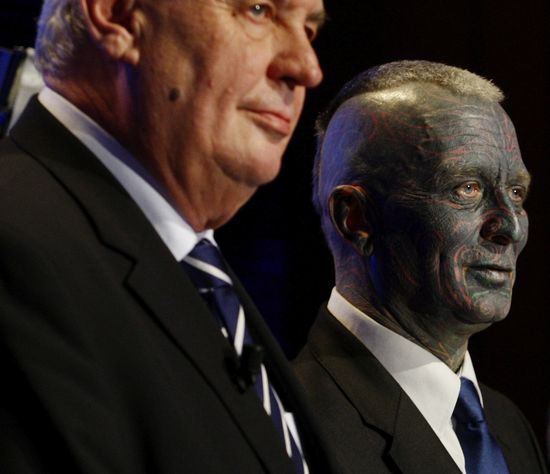
Presidential candidates Milos Zeman (L) and Vladimir Franz (R) attend the last television pre-election debate of all nine candidates ahead of the presidential elections on January 10, 2013, in Prague, Czech Republic. Czechs will choose their next president from nine candidates in the first direct presidential elections on January 11 and 12. By Martin Divisek /VLP/isifa/Getty Images.
Brennan: Second Time Around, Ctd
After reading Dan Klaidman's reporting and my reasoning, Conor still has qualms about Brennan:
Many critics of the drone program, myself included, regard these alleged, proposed changes as improvements on the status quo, but let's be clear about exactly how little that actually means. Internal executive branch procedural changes may be prudent, but that does not make them a "check" on President Obama, who can reverse them at his pleasure, as can any of his successors in the White House. If Brennan were truly an advocate of "checking the president's power to kill by drone," he would be calling for constraints to be imposed by the judiciary or the legislature.
Tim Weiner sees the Brennan nomination differently:
Brennan has a once-in-a-generation opportunity to make the CIA what its creators intended: a small, smart, sharply focused espionage organization providing the president with the best intelligence billions of dollars can buy. Let’s hope he succeeds. Because if intelligence fails us again, and we are hit with a third Pearl Harbor, get ready to kiss your cherished Constitutional liberties goodbye.
The View From Your Window

Big Sur Coastlands, California, 7.05 am
Most Vulnerable, Least Culpable
David Roberts digs up an old paper [pdf] on the relationship between temperature fluctuations and economic growth in different countries and considers its implications:
Data from the past can tell us something important: countries’ baseline vulnerability to heat… Normal heat fluctuations hurt poor countries but not rich countries. Why? Part of it is that poor countries are more dependent on agriculture, which is sensitive to heat. But the biggest reason is access to energy, or more specifically, something wealthy countries take for granted: air conditioning. It’s hard to exaggerate the effect air conditioning has had in unlocking economic growth. (Of course, burning coal to air-condition buildings also accelerates climate change, so, ha ha, irony!)
Poor countries… are getting screwed right here and now. And they will get screwed harder and harder in coming years, suffering the effects of carbon emissions for which they are not responsible.
 The Dish