Stalking Harper Lee

In search of the famously reclusive author, Amy Whitaker arrived in Monroeville, Alabama, on the weekend of Lee’s birthday, where she met a friendly guide from the local museum:

Dawn is at her lemonade stand when I arrive in the town square. I will later realize that Dawn was an outsider herself, and this status makes her — through holistic and simple empathy — part of the welcoming committee or membrane of the town. Museum volunteers surround her, already staged around the courthouse to welcome visitors for that evening’s sold out show of the To Kill a Mockingbird play the town puts on each spring. Dawn, who has only just met me, makes introductions. They ask if I have heard about the "mystery guest" at lunch today. I have missed Harper Lee’s cameo by two hours. Apparently, the Alabama Writers Symposium — idiot-savant stalker luck, take two: it is the weekend of their meeting — gives an annual Harper Lee Award, this time to Fannie Flagg. Miss Lee was not expected. They tell me that someone stopped by to visit her that morning and told her they were giving the award. She replied, "That sounds nice. Can I have one too?," and then came along.

Whitaker didn't meet Lee, but she didn't consider the trip a bust either:

Harper Lee’s own life sounds fascinating, and I start to fantasize that she is a person I would have liked to be friends with, or even who is a little bit like myself. But to make her a character instead of a person — even inside her own mythology — is not as interesting as the living breathing life-as-art practice of all the townspeople who guard her privacy fiercely, who work as the bank CEO by day and play Atticus by night, and who print me a volunteer nametag even though I can’t give directions to anything but the ladies room, and offer me Styrofoam cups of Malibu Tropical Mojito out of a giant Capri-Sun container as we chat with Miss Stephanie backstage during the play.

For another great take on stalking a writer's hometown, revisit Mira Ptacin's pilgrimmage to E.B. White's cabin.

Nature Without Humans

David Attenborough recalls his own vision of it:

We built a hide on a big billabong and got there at about three o’clock in the morning, a couple of hours before sunrise. And the sun comes up, and you see this billabong thronged with magpies, geese, herons, cockatoos, kangaroos, coming down to drink, marine crocodiles. You had a vision of the natural world, a Rousseau-esque kind of thing. You suddenly held your breath, because you were in a strange, godlike thing; you saw the world as it was without humanity in it. And then suddenly something happened – I forget what it was, someone made a noise or something – so the whole thing was gone. But that was a moment of perception which haunts you.

You can watch the unembeddable trailer for his new series on the Galapagos here. After producing 60 years of programming, Attenborough admits he is still "flabbergasted" by nature all the time:

I wasn’t involved in filming it, but a friend of mine was up in the Andes filming the courtship display of a particular hummingbird, a high-altitude hummingbird. The female was trying to advance, and the male was coming and going, "prrrrrrt", and then it was gone. You think, "Oh, that’s OK" – but then my pal had the wit to shoot it at 250 frames [a second] and you suddenly saw the complexity of the display. It was astounding, all at this very, very high speed.

The moment you say that, you think of the timescale of hummingbirds, the speed of their hearts and the temperatures at which they operate. Their timescales are quite different. You suddenly realise your own limitations: how your sensory perceptions are governed by your heart rate. I thought that was so exciting, and it taught you so much, not only about how complex nature is, but about how impoverished your perceptions can be, governed as they are by your human condition.

Fat In Fiction

Hannah Rosefield deconstructs the role of obesity in literature:

In 2010, 33.3 percent of American adults were overweight, and another 35.9 percent obese. Yet fiction has largely ignored this worldwide expansion of waistlines. The average character in today’s novel is no fatter than the average character in a novel published 10, 50, or 200 years ago. In "On Being Ill" (1926), Virginia Woolf notes how strange it is that illness should feature so little in fiction. Her explanation for why this might be applies equally to fatness — not because fat is or is not an illness, but because both are species of physical experience, and literature, for the most part,

does its best to maintain that its concern is with the mind, that the body is a sheet of plain glass through which the soul looks straight and clear, and, save for one or two passions such as desire and greed, is null, and negligible, and nonexistent.

Woolf knows, as every one of us does, that this is nonsense, that "all day, all night the body intervenes; blunts or sharpens, colours or discolours." But it is hard, almost impossibly hard, she suggests, to convey physical experience in words. To record in language "the daily drama of the body" — healthy or sick, fat or thin — would need "the courage of a lion tamer; a robust philosophy; a reason footed in the bowels of the earth."

Jessa Crispin broadens the conversation: 

The question might be reworded from "Where are all the fat characters in literature?" to "Where are all the fat characters in literature whose fatness is not the central issue of the novel?" I'm kind of blanking on that one. It's like abortion in literature. Where are the abortions in literature that are not the central problem of the book? Can a character just have an abortion and not have it be like the worst thing that has ever happened?

D.G. Myers pushes back against Crispin's analogy.

A Literature Of Consumption

Jacob Leland hypothesizes from the numerous examples of gluttony he finds in famous books from the early 20th century:

This obsession with what people put in their bodies shows us literature and culture doing what became, in the years between the World Wars, their job: to create a better consumer. After all, a nation of consumers needs a nation of salespeople telling it what and how much to buy. Modernism made a more prolific consumer by making sense of and often glorifying the shift from production to consumption. It created a more discriminating one by distinguishing serious art, or "high modernism," from mass culture and mechanized entertainment.

This may be the readiest association that most of us have with literary high modernism: Joyce, Faulkner, Eliot, Dos Passos, et al are good because they’re difficult. We are taught it takes an entire liberal arts education just to learn to appreciate and discuss them—that is, to consume them correctly.

The Rape Uproar In India

GT INDIANGANGRAPEPROTEST 20130104

William Pesek assesses the evolving political crisis sparked by the gang-rape and death of a 23-year-old woman in New Delhi:

The immediate focus is on the six men accused of torturing a medical student so sadistically that they destroyed her internal organs. The issues of women’s rights, safety and respect have seldom been the stuff of headlines in the biggest democracy. It’s also a complicated issue prone to unhelpful generalities. But the rape cast a spotlight on something well-known to India watchers but given little heed globally: how badly India often treats its women, how sexual harassment is tolerated and the extent to which backward attitudes must be stamped out. Misogynistic comments from a variety of officials suggesting the victim may have encouraged the attack based on her dress and mannerisms don’t help.

But he thinks the outrage will probably transform the country's politics:

It is telling that so many young, urban men are among the aggrieved denouncing the rapes. That is a nod to the important role that gender equality plays in eradicating poverty. But these demonstrations are also shaking the conscience of middle-class Indians who sense that their leaders have lost their way. 

Max Fisher points to other consequences of the rape problem in India:

[Y]ou don’t expect to see violence against women translate into immediate and quantifiable national economic damage. But, in a sign of just how serious India’s problem really is, that may already be happening. A study across several cities found that a staggering 82 percent of Indian women say that they are reducing their working hours, leaving the office early because they don’t want to be traveling after dark, when the risk of assault could be higher. Some quit outright, afraid that commuting has become too dangerous.

Mira Kamdar explains how the rise of women in Indian society is making their lives more dangerous:

A woman who can be seen is seen as a woman available for violation. 

Rapid modernization and urbanization in India have made women, especially young women, visible as never before. More and more women are seeking education and employment. They go out to school, to work and to socialize with friends. They, like the young woman who was gang raped in Delhi, go out to movies. Increasingly, they go out with men, and, increasingly, they, instead of their parents, choose their life partners.

The young woman who was attacked had come to Delhi from a small village where her enlightened parents had scrimped and saved to educate her. She was studying to become a physical therapist. She was making her own life on the new exciting terms offered by India's changing society. While these opportunities have increased, they can't meet the volume of raised aspirations. Competition for slots in the better schools and for jobs remains fierce. The competition for women is also fierce. In India, girls are too often seen as temporary members of their families who will one day marry and join a new family. Male children are preferred, and sex-selective abortion, female infanticide and the sheer neglect of girls have made for a growing gender gap. Too many young men simmer with aspirations and desires that are simply not likely to be realized.  

Erika Christakis elaborates on the link between sex-selection and violence:

Growing evidence suggests that in countries like India and China, where the ratio of men to women is unnaturally high due to the selective abortion of female fetuses and neglect of girl children, the rates of violence towards women increase. "The sex ratio imbalance directly leads to more sex trafficking and bride buying," says Mara Hvistendahl, author of Unnatural Selection: Choosing Boys Over Girls, and the Consequences of a World Full of Men. A scarce resource is generally considered precious, but the lack of women also leaves many young men without marriage partners. In 2011, the number of cases of women raped rose by 9.2 percent; kidnapping and abductions of women were up 19.4 percent. "At this point, we’re talking correlation, not causation. More studies need to be done….[But] it is clear from historical cases and from studies looking at testosterone levels that a large proportion of unmarried men in the population is not a good thing," says Hvistendahl.

Update from a reader, who caught an error in the post that we immediately fixed:

The 23-year-old victim did not commit suicide. She died from her injuries, which included brain damage, heart failure, internal organ failure (including her disembowelment at the hands of the attackers), and subsequent gangrene and sepsis. It took her the better part of two weeks to die after surviving multiple surgeries, getting on her feet once, and being transferred to a hospital in Singapore where doctors thought she had a better chance. As a result of her death, the six accused men are now being charged with murder in addition to rape and kidnapping. 

You were perhaps thinking of the 17-year-old gang rape victim who did commit suicide after being pressed to drop charges and marry one of her attackers. Her suicide took place while the world waiting to see if the 23-year-old medical student could beat the odds and recover. 

One of the more interesting and horrifying aspects of the case has been the employment of euphemism to cover it. I have noticed that most articles discuss the victim "having internal injuries" or "having some of her intestines removed", but most seem to suggest that these injuries resulted from her being beaten with an iron rod. Some may, but one or two stark reports have given the full truth, which is that after being penetrated by six attackers (a horror I cannot imagine), one or more inserted an iron rod into the woman and partially disemboweled her. I can't help but think that had such treatment occurred as part of a military operation, we'd be getting the graphic details in every report. 

My point here is that as horrific as the crime was, I don't think the reporting on it has been up to the task. If we can't bring ourselves to fully discuss the violence and torture that sometimes accompanies rape – if we can't discuss what such an invasion is capable of inflicting in terms of pain and injury – how can we possibly stop it?

(Photo: Indian students of various organisations hold placards as they shout slogans during a demonstration in Hyderabad on January 3, 2013. A gang of men accused of repeatedly raping a 23-year-old student on a moving bus in New Delhi in a deadly crime that repulsed the nation are to appear in court for the first time. Police are to formally charge five suspects with rape, kidnapping and murder after the woman died at the weekend from the horrific injuries inflicted on her during an ordeal that has galvanised disgust over rising sex crimes in India. By Noah Seelam/AFP/Getty Images)

The View From Your Window Contest

Vfyw_1-4

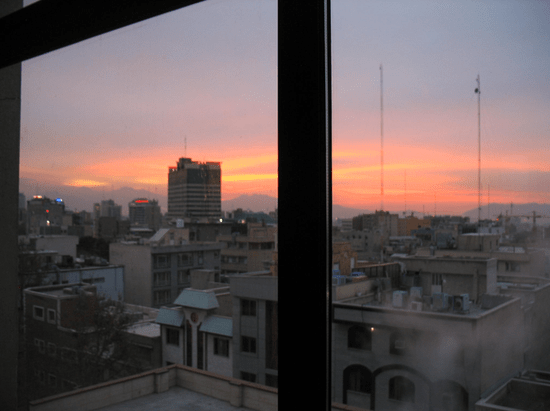
You have until noon on Tuesday to guess it. City and/or state first, then country. Please put the location in the subject heading, along with any description within the email. If no one guesses the exact location, proximity counts.  Be sure to email entries to VFYWcontest@gmail.com. Winner gets a free The View From Your Window book. Have at it.

The Dish’s Core Strength

Readers

Conor Friedersdorf, a Dish alum, understands that strength is you:

I finally saw the reader inbox in all its glory while guest blogging for Sullivan as he vacationed. It's a gig I did several times, all of them while The Dish was hosted here at The Atlantic. I've never received so much delightful correspondence. The Dish readership is massive, highly educated, ideologically diverse, employed in a stunning array of fields, and spread out across the world. Of course, those same attributes characterize the readership here at The Atlantic, and I've gotten tons of wonderful emails in the course of my current job, but something about the blogger's personal, informal tone inspires correspondence of a different character. Compare the comments on the average item here at The Atlantic with the loyal readers Ta-Nehisi Coates has cultivated in the comments section of his blog, where it's more like an intimate community.

Alex Massie, who has also guest-blogged on the Dish, bets that "many bloggers could perhaps raise more money from an annual 'pledge week' than they suspect":

Not enough to compensate them for all their time but enough to make a difference. I think – actually, I just hope – that some goodly proportion of readers (at whatever "level" you’re at) appreciate that, at some point, not everything can be free and that even "amateurs" catering to small or specialist audiences merit some compensation for the enjoyment they provide.

(Photos from Dish readers' Gmail profiles, used with permission. Become a founding member of an independent, ad-free Dish here.)

Face Of The Day

Amsterdam_portrait01

DesignBoom zooms in:

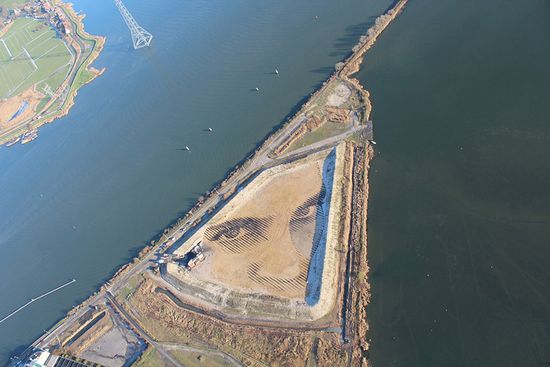
As an artistic impetus for social change, Cuban-American contemporary artist Jorge Rodriguez-Gerada has created an aerial land artwork spanning the length of two football fields in Amsterdam. Commissioned by the feminist organization Mama Cash for their campaign, Vogelvrije Vrouwen - defend women who defend human rights, the work depicts the portrait of an anonymous mesoamerican woman in honor of female activists and as a protest against their persecution in the Mesoamerican region.

Before Opera Was Uptight

Carolyn Abbate, co-author of A History of Opera, explains how the genre has evolved:

I have teenaged sons, and I ask, "What’s the difference between a [popular music] concert and the opera?" They say the difference is at the opera you have to be quiet and you can’t move. But that wasn’t always true. Two hundred years ago no one was required to be attentive and focused. It was routine for people to talk amongst themselves. They could go in and out whenever they wanted. And eating was allowed in boxes, as was gambling and chess playing. It was a social occasion that happened to have something going on at one end of the room that you could pay attention to if you wanted to.

She blames Wagner for the current state of affairs:

He was the first to declare that the auditorium had to be pitch dark. At Bayreuth [which opened in 1876], he imposed all kinds of other religiosity on the experience — like having to be absolutely quiet. He talked about how people had to be utterly attentive to the stage world and not each other. He erased the social function of opera.

More on Abbate's book here.

The Original Nordic Track

6995575112_74844bea48_b

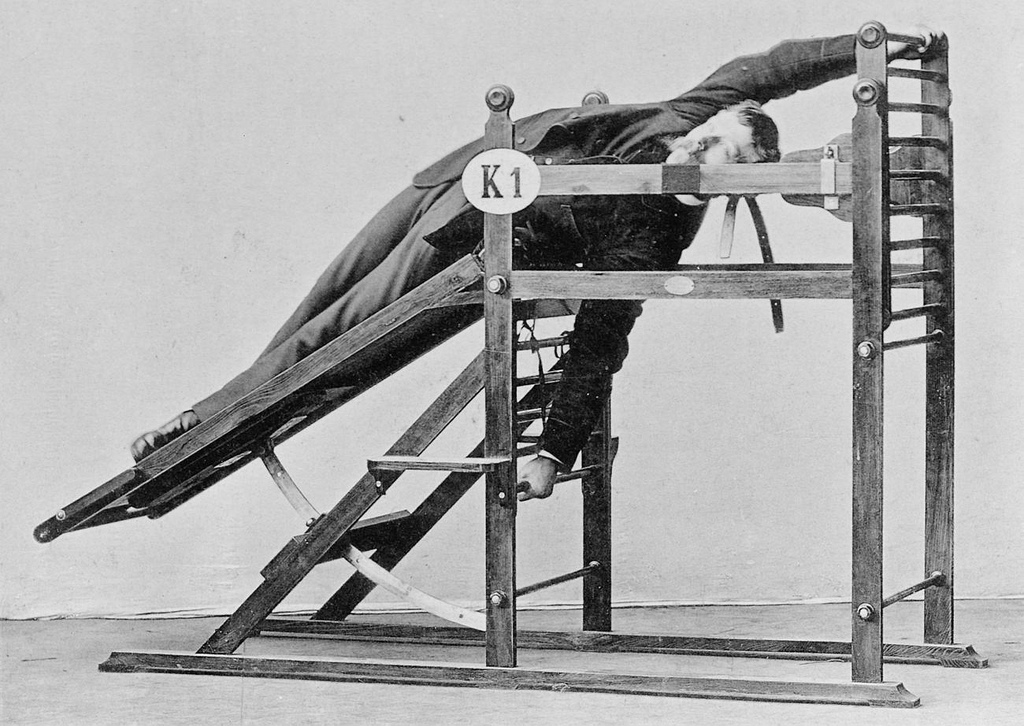
Just in time for the work-out boom in the new year, Megan Garber remembers Dr. Jonas Gustav Wilhelm Zander, "the Swedish physician and orthopedist and all-around genius who invented the exercise machine":

Though Dr. Zander wasn't alone in realizing the market for machines that would aid in exercise — and though exercise equipment as a more general thing has been around since long before the Greeks and their gymnasia — it was Dr. Zander who popularized the connections between physical exertions and overall well-being. He was the one who looked at a horse and realized it could be replicated for purposes of recreation. He was the one who looked at a bicycle and realized it could be used for more than transportation.

And his inventions signaled a change in how we view exercise – as an elite past time: 

Zander pitched his machines, the writer Carolyn de la Pena notes, as "a preventative against the evils engendered by a sedentary life and the seclusion of the office." And he pitched them as well, implicitly and explicitly, as luxury experiences — experiences that were expensive, and rarified, and therefore available only to society's elites. Mechanized workouts enforced, for the first time, a separation between exercise and labor: They posited physical activity as something to be engaged in not by economic necessity, but by personal choice. 

On a related note, Denise Winterman ranks history's weirdest fad diets. First up, Fletcherism – the promotion of extensive chewing by Horace Fletcher at the turn of the 20th century:

He was fairly prescriptive in how many times you had to chew different foods. Just one shallot needed to be chewed 700 times.  It was hugely popular and had some famous followers, including Henry James and Franz Kafka. It got to a point where people were timed at dinner parties to make sure they were chewing enough, says Foxcroft. "The diet also meant only defecating once every two weeks and it was nearly odourless, described by Fletcher as smelling like 'warm biscuits'," she says.

(Photo: Side-bending device designed by Gustav Zander, via the Tekniska Museet/National Museum of Science and Technology, Stockholm)