The Daily Wrap

Dishness-explained

Today on the Dish, Andrew declared our independence, announcing that on February 1 the Dish would leave The Daily Beast to become a fully independent blog which depends on nothing but our readers for support (via a freemium-based meter). Andrew then answered reader questions about the move here and here. Also we rounded up blog reax, as well as checked in on the Twitter response here and here. We watched in amazement as an avalanche of memberships began, published many reader reactions from the inbox, reposted last year's fascinating reader survey, charted the inequality of the web advertising business, got called mavericky in a tweet, and handed John Nolte a Malkin nomination for calling the Dish's independence part of some left-wing media conspiracy.

You can join us as a founding member here.

In political coverage, we rounded up blogosphere response to the now-passed fiscal cliff deal, Michael Hirsh wondered if Joe Biden was the most influential VP in history, Conor Friedersdorf rejected the notion that the 2nd Amendment was some safeguard against tyranny, Paul Ryan earned the year's first Yglesias nomination for supporting the fiscal cliff deal, and Richard Socarides anticipated marriage equality for Illinois.

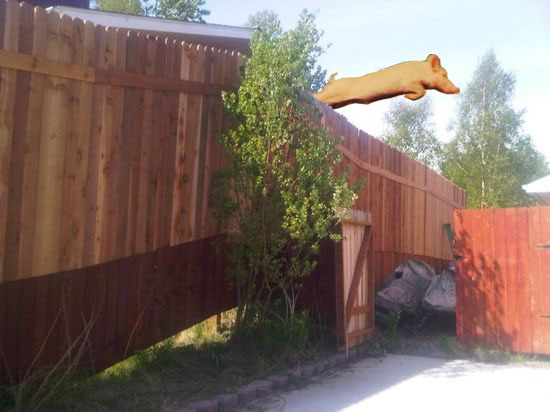
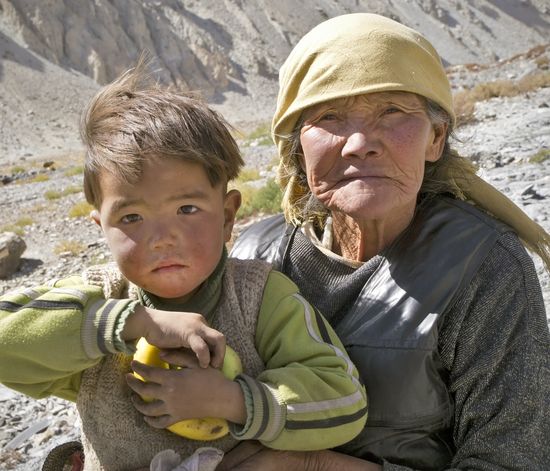
In assorted coverage, Maria Popova explained her donation-over-advertising strategy, Boris Muñoz imagined a Venezuela without Hugo Chavez, Ada Calhoun looked at the increasing practice of at-home abortions, Wayne Curtis surveyed America's walking stats, and Terry Teachout advocated for more accurate depictions of small-town life in the arts. Also, Edward McPherson told us the story behind Dallas' essential airport, Alex Knapp questioned the management skills of robots, Kevin Kelly called in about the developing world's prioritizing of cell phones over toilets, and a reader (who is an actuary) set the record straight about car insurance rates based on how much someone drives. Readers also pushed back on the idea that teenagers shouldn't smoke weed, while other readers weighed in on why women seem to smoke less of it than men. Then we went over the news that Avis was buying Zipcar, examined the possible late-career solipsism of Judd Apatow, discovered a new use for washing machines in our MHB, met a Chinese camel herder in our FOTD, and saw Colorado mountains through the VFYW.

– C.D.
The Next Marriage Equality State

Richard Socarides is hopeful that it will be the Land of Lincoln:

Seemingly out of nowhere, Illinois, the fifth largest state, with a population of almost thirteen million people, is likely about to become the tenth state to allow same-sex marriage. It could happen within the next week, during the lame-duck session of the state legislature, which ends on January 8th. If it does, over twenty per cent of the U.S. population will live in states with marriage equality, even before the U.S. Supreme Court rules on marriage rights in California this June. California alone has approximately twelve per cent of the U.S population, and its addition to the group would then bring the total to about a third of the population.

Abby Rapoport is also watching Rhode Island and New Jersey. Chris Geidner adds California, Delaware, Minnesota, and Hawaii to the list.

When Nature Calls

Kevin Kelly contemplates the economic choices of citizens in developing countries:

The farmers in rural China have chosen cell phones and twitter over toilets and running water. To them, this is not a hypothetical choice at all, but a real one. And they have made their decision in massive numbers. Tens of millions, maybe hundreds of millions, if not billions of people in the rest of Asia, Africa and South America have chosen Option B. You can go to almost any African village to see this. And it is not because they are too poor to afford a toilet. As you can see from these farmers’ homes in Yunnan, they definitely could have at least built an outhouse if they found it valuable. (I know they don’t have a toilet because I’ve stayed in many of their homes.) But instead they found the intangible benefits of connection to be greater than the physical comforts of running water.

Millman adds:

If you don’t have plumbing, and have never had plumbing, and nobody around you has ever had plumbing, then you’ve presumably long since worked out an efficient way to relieve yourself. 

That’s what you do, and what your people have always done. Maybe it’s less private than an outhouse – but in that case you’re used to not having privacy. Maybe it involves walking further than you would to a bathroom – but maybe it seems normal not to defecate in your home. So somebody comes along and offers to build you an outhouse – would you pay good money for a luxury that solves a problem you don’t have? Or would you prefer to pay the money for something that opens up a huge range of new social and economic possibilities – like a cell phone?

Chart Of The Day

Ad_Revenues

The above chart is from the Interactive Advertising Bureau's October 2012 report (pdf) on internet advertising revenue. What it shows:

Online advertising continues to remain concentrated with the 10 leading ad-selling companies, which accounted for 73% of total revenues in Q2 2012, up slightly from the 72% reported in Q2 2011. Companies ranked 11th to 25th accounted for 9% of revenues in Q2 2012, consistent with the 9% reported in Q2 2011. Companies ranked 26th to 50th accounted for 8% in Q2 2012, also consistent with the 8% in Q2 2011.

The Car-Sharing Economy

Felix Salmon sees the logic of Avis buying Zipcar:

[F]rom Avis’s point of view, it’s buying the clear leader in what is probably the future of car renting. We’re only at the beginning of a long secular decline in the number of cars owned per household: as America becomes increasingly urban, there’s much less need for households to own a car, or a second car — and it becomes much cheaper to just rent cars by the hour or the day when you need them than it is to own a car outright and just leave it parked and useless for 99% of its life.

Yglesias goes into more detail:

Zipcar's big outstanding problem is that demand for Zipcars is highly spiky. People who want to use a car to commute to work are going to want to own their own vehicle. And people generally need to work during weekdays. Which means that demand for spot rentals is very highly concentrated on the weekends, which makes it hard for Zipcar to manage inventory efficiently. Avis says that combining its fleet with Zipcar's will make it much easier to meet those demand peaks, as individual vehicles can switch from hourly rental to traditional rental on a day-by-day basis.

Steven Pearlstein, on the other hand, fears that Zipcar's brand will be tarnished:

Oh, sure, Avis executives will say how they respect Zipcar — its culture and its way of doing business — and promise to preserve it. But a year down the road when it comes to some decision in which they will have to forgo some cost savings or some revenue increase in order to maintain those differences, the decision will be to do it the “Avis” way. And that will be it: Zipcar as we know it will be history.

Hugo’s End?

Chavez_GT

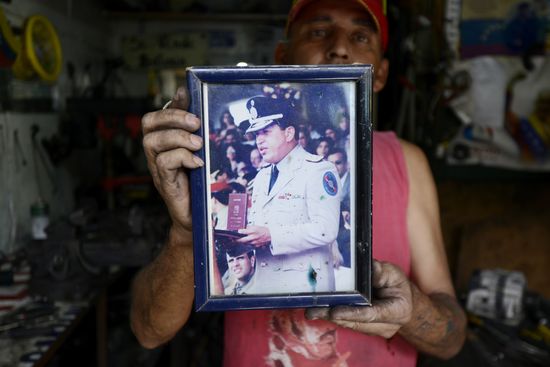
Rumors are swirling about Hugo Chavez's health. Should he die, Boris Muñoz wonders about Venezuela's future:

The struggle for a successor is in full swing. Maduro and Cabello, Chávez’s two potential heirs, represent two opposing strands of chavismo, his brand of left-wing nationalism. For fourteen years, since he came to power in 1998, Chávez has been the alpha and omega of his “Bolivarian revolution.” He has dealt with Venezuela as if it were a corporation and he himself its absolutist C.E.O., obsessed with micromanagement, relying on a few advisors to hold the country under tight control. That time is nearing an end. Deep fissures are already present. Chavismo is a political movement with marked divisions between its military and civilian wings. Chávez, a former Army paratrooper, has been a leader on both fronts, playing either military or civilian leader when convenient. But the civilian-military division reflects an even deeper one based on two differing conceptualizations of the Bolivarian revolution: a nationalist revolution or a socialist one based on the Cuban model.

(Photo: A mechanic shows a picture of Venezuelan President Hugo Chavez at his workshop in Caracas, on January 2, 2013. Chavez is conscious and fully aware of how 'complex' his condition remains three weeks after difficult cancer surgery in Havana, the Venezuelan president's handpicked successor, Vice President Nicolas Maduro, said Tuesday. Chavez underwent his fourth cancer-related surgery three weeks ago in Havana and has been bed-ridden ever since. By Leo Ramirez/AFP/Getty Images)

Dish Independence: Tweet Reax II

Heh. But it’s not a paywall. To reiterate: No one coming to the Dish home-page will ever be stopped. All links to individual posts will be outside the meter and as free after we launch as they are now. The only meter arrives at the “Read On” posts, whose full text you have to be a member to read. Even non-members will be able to read a certain number of “Read On” posts a month, free and in full. Dish alum Zack reiterates something else for us:


Subscribe to TPM Prime here. My full pitch for Josh’s new venture here.

Why Not Chase Ad Dollars?

Maria Popova explains why she asks for donations instead of running ads on her site, Brain Pickings

There's a really beautiful letter that a newspaper journalist named Bruce Bliven wrote in 1923 to his editor. It was about how the circulation manager had taken over the newspaper, deciding what went on the front page. Today, search engine optimisation is the "circulation management" of the internet. It doesn't put the reader's best interests first – it turns them into a sellable eyeball, and sells that to advertisers. As soon as you begin to treat your stakeholder as a bargaining chip, you're not interested in broadening their intellectual horizons or bettering their life. I don't believe in this model of making people into currency. You become accountable to advertisers, rather than your reader.

Dish Readers: Who Are You? Ctd

Dish Readers: Who Are You?

Back in December 2011, we posted the Urtak survey seen above as a quick and easy way to get a better sense of you, the typical Dish reader. We first brainstormed questions we’d like most to know about you, and then we allowed you to brainstorm and add your own questions – and answer them. The reaction to the reader-driven survey was overwhelming – responses nearly eclipsed the 1.5 million mark. If you didn’t respond to the questions at the time, or think you may have missed some added by readers, go ahead and click through the quick and easy Yes/No questions above. Analyze the results of the survey here. Some cross-tabs from the Urtak blog:

[Andrew Sullivan’s] readers under the age of 35 are less likely to have cried in response to a Dish post. Cold-hearted youth! His married readers would be less interested in attending an annual conference of Dish readers. His Jewish readers are almost three times more likely than their gentile counterparts to have attended Ivy League colleges. His Republican-voting readers are more likely to have emailed him. And his gun-owning readers are more likely to make more than $100,000/year.

Readers also sifted through the data:

I was shocked to find out that FIFTY percent of your readers who took your poll were atheists like me. I’ve always respected your Catholicism and read every word of your debate with Sam Harris years ago, but I think that this is living proof that there are a lot of nameless, faceless, intelligent skeptics out there – many of whom are aligned with you on most other important issues. I think it just goes to show how independent and anomalous you are.

Well, that’s a nice way to put it. Another writes:

I suspect you already knew the rough answer to this question, but it still must be jarring to see that 78% of Dish readers answered yes when asked “do you consider yourself a liberal?” while only 9% answered yes when asked “do you consider yourself a political conservative?” As you know, I’m one of those liberals, tried and true. I think people like me read The Dish because we’re craving an actual intelligent, well-reasoned political opponent. A point of view based in reality but skeptical of liberal political thought. We want to have real political arguments, but they’re impossible to have with know-nothing movement conservatives.  The Dish is where we come to grapple with the patriotic, intelligent, small-c conservative, loyal opposition we wish we could get from the GOP.

Another:

Holy cats, Andrew. The survey of your readership is an eye-opener in many ways, but my greatest take-away from the results so far is: I am one of only 22% of your readers who is female, and the rest of your readership appears to be largely comprised of straight men around my age, a good percentage of whom are unmarried, non-religious, liberal, and voted for Obama. And many of them have dogs!

You’re damn straight I’d come to that annual gathering …

Explore the data for yourself here. Thanks again to all our readers who took a few minutes to answer and submit questions. The most original submission among them:

Would you pay to see Andrew shave his beard live on The Dish with proceeds going to “cure” Marcus Bachmann?