Secret Agent Ma’am

5416825098_9b6a279270_b

Tasneem Raja revisits the early days of women in the CIA:

A few years ago, four veteran CIA officers, with more than a 100 years of collective experience over four decades, were asked to speak frankly about serving in the agency as women. The taped conversations, used for internal review by the CIA, reveal encounters with male attitudes from the officers’ early years that aren’t surprising—it was indeed a Mad Men world, albeit with security clearances. The transcripts, part of a trove of recently declassified CIA documents, also contain wry, Peggy Olson-esque recollections in which being a woman proved an asset—and hardly in the “femme fatale” vein of intelligence gathering.

Carla, who joined the agency in 1965 and was Deputy Chief of the Africa Division by the time she retired in 2004, recalled a time when male higher-ups in the agency warned that women would be ineffective for recruiting agents and gathering intel abroad. She recounted a successful assignment debunking that notion:

I never actually had to pitch the guy. I [played] sort of the “Dumb Dora” personality, and “Golly” “Gee!” and “Wow!” He would tell me, “I just love talking to you because you’re not very bright.” And I would just sit like this [makes an innocent expression]. The recruitment ended because he told me about a plot to go bomb the embassy in [redacted] and we arrested him and his gang of merry men as they crossed the border. He just told me everything and I got tons of intel out of him because I was just a woman who wasn’t very bright.

An internal survey from 1953 dubbed “The Petticoat Panel” shows that while women accounted for 40 percent of the agency’s employees at the time—better than the overall US workforce then, which was 30 percent female—only one-fifth of those women were above the midlevel GS-7 on the government’s salary grade, which went to GS-18. Meanwhile, 70 percent of men in the CIA were higher than G-7, and 10 percent topped GS-14, a grade no women had reached at the time. …

Yet, while men made up the lion’s share of highly paid roles in the agency, women accounted for 60 percent of the agency’s jobs in statistical analysis. Linda McCarthy, a CIA historian and former agency analyst, says that’s unsurprising: “During World War II, when it came to numbers, the war department went after women,” she told Mother Jones. “Same with maps and codework: They specifically wanted to find women for that kind of work. They were simply better at it.” McCarthy said the prevailing notion in the agency at the time ascribed women’s aptitude for stats, geography, and code breaking to maternal instinct. “They figured, you have to be patient to raise children, and you have to be patient to make maps by hand, so it must all be connected.”

For more on this subject, a reader recommends Sisterhood of Spies: The Women of the OSS, a book about a World War II intelligence agency called the Office of Strategic Services.

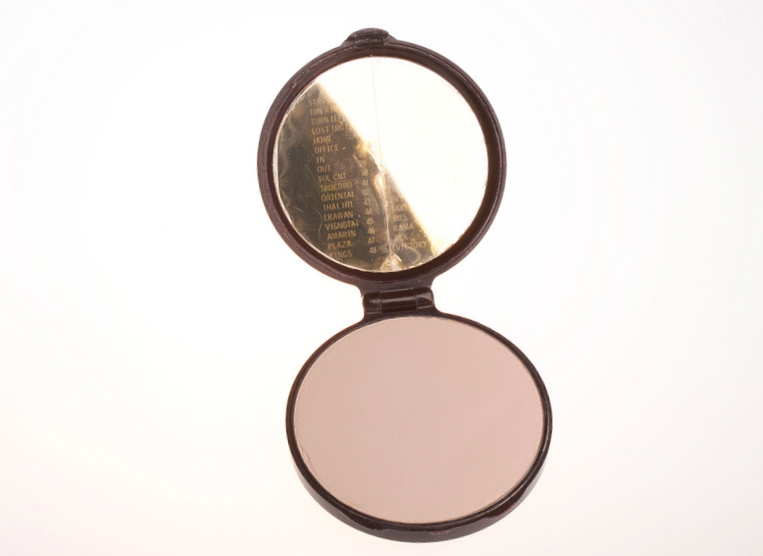
(This CIA device, designed to look like a makeup contact, features a code that’s revealed by tilting the mirror at the correct angle. Photo: The Central Intelligence Agency)

When Luxury Goods Are Necessities, Ctd

A reader provides some key conservative pushback:

The article you highlighted on luxury items being necessities may have been the most preposterous thing I have ever read on your blog. First off, the author appears to take aim at what is mostly a strawman: I don’t think anyone really begrudges poor people for buying a nice set of clothes and accessories for wearing to job interviews and other special occasions. That’s good sense and isn’t really the issue. The real problem is expenditures on items such as expensive rims or speaker systems for one’s car, buying designer parkas and jackets for casual wear (HellyHansen seems to be popular around the public housing near my house) or ridiculous tattoos that, rather than projecting an image of class and sophistication, actually do the opposite.

Also consider that, if buying luxury items is such a great strategy for getting ahead, shouldn’t groups who embrace such strategies be doing best while other poor people who engage in less conspicuous consumption and carefully save their money be performing worse? Does this comport with anyone’s actual experience?

The much more likely truth is that many poor people spend money on luxury goods not as part of a strategy to escape their plight, but as part of a misguided competition with their friends, neighbors and others in their social circle to project a false sense of prosperity. In short, it’s about status. The first step to correcting this behavior is to stop making excuses for it.

The Separation Of Haves And Have Nots

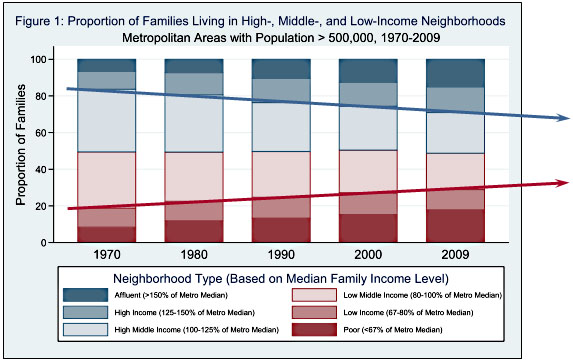
A recent study (pdf) finds that segregation by income is growing:

Neighborhood Types

Drum comments:

This is yet another sign of the collapse of the American middle class, and it’s a bad omen for the American political system. We increasingly lack a shared culture or shared experiences, and that makes democracy a tough act to pull off. The well-off have less and less interaction with the poor outside of the market economy, and less and less empathy for how they live their lives. For too many of us, the “general welfare” these days is just an academic abstraction, not a lived experience.

Mark R. Rank’s findings complicate Drum’s argument:

Put simply, poverty is a mainstream event experienced by a majority of Americans. For most of us, the question is not whether we will experience poverty, but when.

But while poverty strikes a majority of the population, the average time most people spend in poverty is relatively short. The standard image of the poor has been that of an entrenched underclass, impoverished for years at a time. While this captures a small and important slice of poverty, it is also a highly misleading picture of its more widespread and dynamic nature. The typical pattern is for an individual to experience poverty for a year or two, get above the poverty line for an extended period of time, and then perhaps encounter another spell at some later point. …

Just as poverty is widely dispersed with respect to time, it is also widely dispersed with respect to place. Only approximately 10 percent of those in poverty live in extremely poor urban neighborhoods. Households in poverty can be found throughout a variety of urban and suburban landscapes, as well as in small towns and communities across rural America. This dispersion of poverty has been increasing over the past 20 years, particularly within suburban areas.

Is Amazon Good For Books?

Felix Salmon suspects so:

[T]here’s an argument that Amazon has saved the publishing industry from going the way of the record labels — that it’s made buying e-books so easy that the number of free pirated versions out there is still tiny.

He thinks we confuse the decline of books with the decline of bookstores:

[A] world where you’d see a Barnes & Noble in every shopping mall, where you’d see these monster bookstores by the side of every urban highway, was a world which was constantly reminding you of how many books there are, and of how popular those books are. After all, those bookstores were kept in business by a steady stream of book lovers coming in to buy books. In their own way, B&N stores were just as good an advertisement for books in general as were the small booksellers they replaced.

So while there are just as many media-based book discussions as there always were — book reviews, book excerpts, talk shows, radio interviews, that kind of thing — the real-world reminders of the book industry as a whole have definitely shrunk.

The Best Of The Dish Today

Chicago's Gay Community Celebrates Passing Of Same-Sex Marriage Law In Illinois

It was an epic night for Chris Christie and his acceptance speech was quite obviously an announcement speech for the presidency. I think he’s a very potent candidate in large part because of his pugnacity, anti-Washington cred, and GOP establishment money. But man was that speech big on self-regard. Almost every sentence was a me, I, me, I, my, I, I. Obama has similar levels of self-esteem but he hides it better in public. I’m not sure Christie will wear well. But he’s easily the most impressive potential candidate they’ve got.

As for Virginia, Cuccinelli’s relatively strong showing suggests to me that the Tea Party is far from dead, and that the prospect of the poor getting health insurance still energizes them enormously. And tonight, I have to say, the respect I had for Ron Paul was obliterated by the following inflammatory rhetoric:

Jefferson obviously was a clear leader on the principle of nullification. I’ve been working on the assumption that nullification is going to come. It’s going to be a de facto nullification. It’s ugly, but pretty soon things are going to get so bad that we’re just going to ignore the feds and live our own lives in our own states.

That’s loaded Confederate rhetoric, and when combined with this statement – “The Second Amendment was not there so you could shoot rabbits. Right now today, we have a great threat to our liberties internally” – it crosses the line to promoting sedition. I’m done with him.

Today, we explored the Christie model, his national appeal, and why the press loves him.

My personal faves: this Tuesday cry (and you will); this tortured signature; the extreme fundamentalism of Ted Cruz’s dad and surrogate; and the actual reality of the poor getting health insurance they can afford for the first time.

The most popular post? Blumenthal vs Alterman. Today’s update on that brouhaha is here. Next up? The Reality of the Affordable Care Act.

Sorry for the late post – got caught in a high school reunion and then on AC360 Later. See you in the morning. And congrats to everyone in Illinois – have a Jäger shot or two for me at Side Track, will you? I know you’re still drinking …

(Photo: Fernando Mojica and Drew Freeman raise a toast with other patrons at the Side Track bar in celebration of the Illinois General Assembly’s approval of a gay marriage bill in Chicago, Illinois on November 5, 2013. The governor has said he will sign the bill, which will make Illinois the 15th state to legalize same-sex unions. By Scott Olson/Getty Images.)

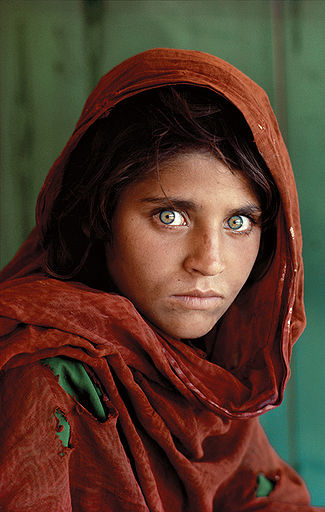
Those Eyes

Steve McCurry’s portrait of Sharbat Gula, the “Afghan Girl”, electrified the cover of National Geographic in June 1985. He recently spoke to The Economist about the indelible image:

Why did you think Sharbat Gula, the “Afghan Girl”, was so special? Did you have any dish_sharbatgula idea that the photograph would become so iconic?

I knew it was a powerful image. I knew that she had a powerful presence. She was very striking. I knew all that, but I never dreamed it would be on the cover of the magazine, much less become an icon of the [Soviet] war in Afghanistan or Afghan refugees. The power of the picture has to do with her eyes and the ambiguity of her expression. There are a lot of emotions in that picture; on the one hand she seems a bit traumatised, but there’s a real sense of dignity and fortitude and perseverance. She’s a beautiful little girl, but there is also dirt on her face and her clothes are torn, yet she holds a direct gaze at the camera.

How was your reunion 17 years later?

It was extraordinary. It was astonishing that she and her husband agreed to meet with us, which was really unusual in that culture. We were thrilled that she was still alive, that she had a good life, that we were able to finally give back to her and help her. I think she was a bit bewildered by the whole thing initially. She didn’t understand that her picture has been published all over the world. But in time she learned—we provided her with a television so she could see the documentary [“Search For the Afghan Girl” (2003)].

We keep in touch with her every month—myself, National Geographic, my sister plays a very important role in maintaining this relationship and assisting her with all sorts, whether it’s medical assistance, education, housing or anything we can do. We’ve helped to buy her a home that she’s able to have ownership of. It’s been great to help her. I believe that this has made her life better.

McCurry has a new book out, Untold – The Stories Behind the Photographs, and you can follow his latest work here. Below is the documentary of McCurry and Gula’s reunion, “Search For the Afghan Girl”:

The documentary continues here. Photo used with permission.

Custom-Made Kids, Ctd

A reader writes:

Thanks for posting on preimplantation genetic diagnosis (PGD). I’d like to offer my perspective as both someone who enjoys thinking about the social implications of technology (graduate degree in Technology & Policy, big Kurt Vonnegut fan), and as a parent who has used this technology. I have actually pondered for many years about the morality of choosing the sex of a child, or screening for diseases, or tailoring a child’s appearance and traits. The problem of course is that there is a slippery slope at work (which the Gattaca clip you posted makes very clear), and it seemed to me that it was not our place to play god. Not being a religious man, I tended to think of this more in terms of the risks to humanity from deliberately reducing the biodiversity of the gene pool, and what that might mean for the ability of the human race to evolve in response to changes in their environment.

Enter reality.

My wife is a carrier for X-linked retinitis pigmentosa, a more or less untreatable degenerative eye disease caused by a mutation on the X chromosome. Her father and her uncle both began to lose their eyesight at age three, and were legally blind by early adulthood. When we had our son three years, ago, we knew that my wife was an obligate carrier of the mutation and that our son had a 50% chance of inheriting the disease from her.

We began taking him to an ophthalmologist to monitor his eyesight. I can hardly express how painful it was to watch our little boy discovering the world and know that there was an even chance that he would soon be losing his sight. We soon learned that there are genetic tests for the two most common mutations that cause X-linked RP, and we proceeded to have my wife, her uncle, and our son tested. I recall getting the phone call from the geneticist with the good news and how I cried with relief when we learned that our son had tested negative for the mutation. Not only had we dispatched with the sword of Damocles, we could now forego many costly visits to the ophthalmologist for ongoing monitoring.

At the same time, we were having trouble conceiving our second child. We visited a fertility clinic, and in the process heard about PGD. At that point, all of the old hypotheticals, thought experiments, and moralistic navel-gazing went out the window. For us, it was a no-brainer. Since we were undergoing IVF anyway, we were more than happy to pay the extra few thousand dollars to ensure that our child would not suffer from this disease. We did not want him to deal with what his grandfather and great-uncle had dealt with, and we did not want to go through the stressful ophthalmologist visits again.

At the same time, we knew that by default we would also have the opportunity to choose the sex of our child. This gave us more pause, especially when considering that we might have to choose between an unaffected male and a carrier female. We wanted a girl, and while a carrier female would never be affected by the disease herself, like her mother she would have a 50% chance of passing the mutation on to her children. (In the end, we were spared this choice: all of the embryos for which they could get a clear PGD result were female.)

None of this obviates the moral questions in play here. I just mean to point out that as with so many contentious issues, where you stand depends on where you sit, and what seems mildly unsettling for society in the abstract can be a godsend for an individual family.

The Aftershocks Of Gezi Park

Steven A. Cook reports on a recent surge of xenophobia and media crackdowns within Turkey, as the government continues to lash out against coverage of the summer protests:

[I]n the last six months, something has changed. Turkish political discourse is darker and the attacks on foreign observers of Turkish politics have become relentless. During the Gezi Park protests, the thuggish mayor of Ankara, Melih Gokcek, accused a BBC reporter of Turkish origin of being a traitor because she was reporting on the brutal crackdown on demonstrators in his city. Recently, a Dutch journalist named Bram Vermeulen, was informed that his press card was not renewed and that he would not be permitted back into Turkey after his current visa expires, apparently in revenge for his reporting on Turkey’s recent tumult. The Gezi Park protests represent an important point of departure for the AKP [ruling Justice and Development Party] establishments and its supporters.

Rather than a cause for introspection about why so many Turks—though not a majority by any means—are angry at their government, the ruling party and Prime Minister Recep Tayyip Erdogan cynically framed the narrative in a way that places blame for Turkey’s political turbulence on outsiders seeking to bring the country to its knees. The fact that they have been successful speaks to the continuing trauma of the post-WWI period when foreigners—the British, Greeks, French, and Italians—did actually seek to carve up Anatolia. As a result, a depressingly large number of Turks blamed CNN, the BBC, the “interest rate lobby,” “Zionists,” the American Enterprise Institute, and Michael Rubin for the events surrounding Gezi.

Previous Dish on the Turkish upheaval here.