An Architect Of A.I.

James Somers profiles Douglas Hofstadter, cognitive scientist and author of the Pulitzer Prize-winning Gödel, Escher, Bach: An Eternal Golden Braid, “the bible of artificial intelligence.” Though Hofstadter seemed poised to become a leading figure in AI research after the publication of GEB in 1979, Somers observes that “then AI changed, and Hofstadter didn’t change with it, and for that he all but disappeared”:

He would increasingly find himself out of a mainstream that had embraced a new imperative: to make machines perform in any way possible, with little regard for psychological plausibility. “Very few people are interested in how human intelligence works,” Hofstadter says. “That’s what we’re interested in—what is thinking?” Take Deep Blue, the IBM supercomputer that bested the chess grandmaster Garry Kasparov. Deep Blue won by brute force. For each legal move it could make at a given point in the game, it would consider its opponent’s responses, its own responses to those responses, and so on for six or more steps down the line. With a fast evaluation function, it would calculate a score for each possible position, and then make the move that led to the best score. What allowed Deep Blue to beat the world’s best humans was raw computational power. It could evaluate up to 330 million positions a second, while Kasparov could evaluate only a few dozen before having to make a decision.

Hofstadter wanted to ask: Why conquer a task if there’s no insight to be had from the victory?

“Okay,” he says, “Deep Blue plays very good chess—so what? Does that tell you something about how we play chess? No. Does it tell you about how Kasparov envisions, understands a chessboard?” A brand of AI that didn’t try to answer such questions—however impressive it might have been—was, in Hofstadter’s mind, a diversion. He distanced himself from the field almost as soon as he became a part of it. “To me, as a fledgling AI person,” he says, “it was self-evident that I did not want to get involved in that trickery. It was obvious: I don’t want to be involved in passing off some fancy program’s behavior for intelligence when I know that it has nothing to do with intelligence. And I don’t know why more people aren’t that way.”

Previous Dish on artificial intelligence here, here, and here.
A Poem For Saturday

shower

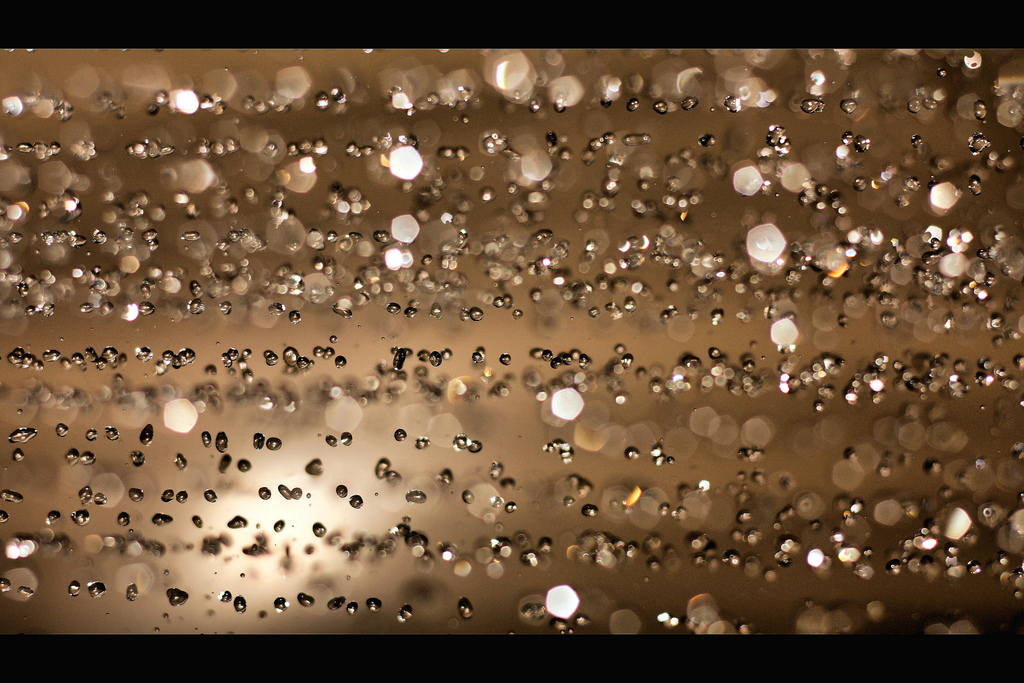
Recently we’ve posted poems by Frank Bidart and Lucie Brock-Broido, two of the nominees for this year’s National Book Award in Poetry. This weekend, we’ll sample poems by the other three nominees, Matt Rasmussen, Mary Szybist, and Adrian Matejka, so that those who have been reading along might be a bit invested in the outcome when the award is announced on November 20th. Our first selection is “X,” from “Elegy in X Parts” by Matt Rasmussen:

I found a small ring
of your black hair

in the shower.
It could have been

worn like a laurel
by a mole

or hung like a wreath
on death’s tiny door

(From Black Aperture by Matt Rasmussen © 2013 by Matt Rasmussen. Reprinted by permission of Louisiana State University Press. Photo by Phil Roeder)

The View From Your Window Contest

vfyw_11-2

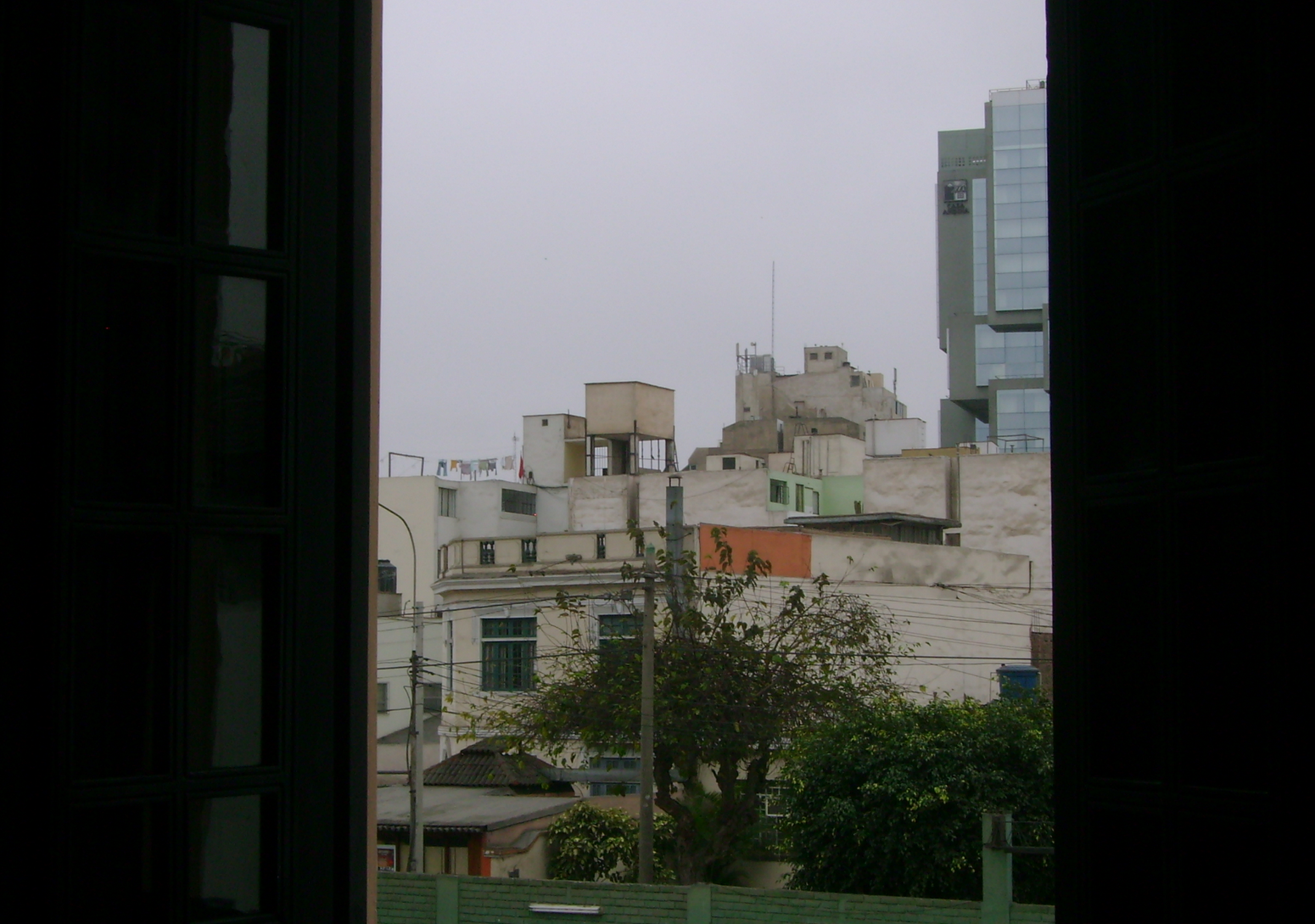
You have until noon on Tuesday to guess it. City and/or state first, then country. Please put the location in the subject heading, along with any description within the email. If no one guesses the exact location, proximity counts.  Be sure to email entries to contest@andrewsullivan.com. Winner gets a free The View From Your Window book or two free gift subscriptions to the Dish. Have at it.

Making Memoir Work

Jen Doll interviews Beth Kephart, author of Handling the Truth: On the Writing of Memoir, about the genre’s weaknesses and strengths:

Why do you think memoir gets a bad rap? 

The popularity of the genre came out of the great success of Mary Karr and others who radicalized the form, and it quickly became the genre, until it was hurt, battered, banged up by so many untrue memoirs that were problematic to the reputation of the form. And also, the categorization of memoir: That’s an illness memoir, that’s a divorce memoir, it felt to readers like if they’d read one they’d read them all. The great success of a genre is always followed by many who want to reap the benefits of the success who don’t break the boundaries of the form.

Where do you feel we are with the genre now?

Memoir will not go away because there are so many beautiful stories and great memoirists continue to break form—like Terry Tempest Williams in her new book, When Women Were Birds, or another I just read, Stephanie LaCava’s An Extraordinary Theory of Objects, in which she examines the objects in her life; it’s wrapped around the odyssey of collections with these interesting footnotes about the origins of things. Terry Tempest Williams, before her mother passed away, she told her to look for her journals, and when Terry did that, she discovered that all of the journals were blank. In her book, Terry works to understand her life against the profusion of possible conclusions one can draw from so many blank journals. Each interpretation is a lens through which she views her life. Artistry and thoughtfulness are very much there. Joan Wickersham’s The Suicide Index is another of these books. It’s organized as an index, and through that she’s organizing her contemplation—not just as my father killed himself on this day, but the almost jarring collision of how to look at this, which is the honest approach to life, there is no true continuity.

Faces Of The Day

The coach shouts at a boy during the break of the fight.Muay Tha

For her series “Die Kampfkinder,” or “Fighting Kids,” Sandra Hoyn photographed the young Muay Thai competitors of Thailand. David Rosenberg details:

Although Hoyn said many people were shocked by her images of children fighting, she said in Thailand it isn’t really unusual, and it is common to see young children training, often as a way to escape poverty. Although her photographs make it seem like a very rough sport for the children, Hoyn wrote that she didn’t see many of them seriously hurt since they aren’t as powerful as adults. “Few of these children boxers will be rewarded with fame, glory, or money,” Hoyn wrote, noting that although money bets are illegal in Thailand, they don’t seem to be enforced.

“The most shocking thing for me was to see the pressure on these children. They are the instrument for the parents to earn money, and they have to win the fight because the parents bet a lot of money on them. A lot of people lose all their money in one night,” she said.

(Photo by Sandra Hoyn)

The Genesis Of Genius

While reading Darrin M. McMahon’s Divine Fury: A History of Genius, Popova tracks the evolution of the notion of uncommon brilliance:

This construction of genius as “a figure of extraordinary privilege and power,” McMahon argues, began in ancient Greece, where the era’s luminaries — poets, philosophers, politicians — first pondered the question of what makes a great man. (For, as McMahon explores in a later chapter, the original concept of genius was an exercise in cultural hegemony excluding women and various “others.”) The Romans picked up the inquiry where the Greeks had left off, seeking to understand what lent Julius Caesar his military might and why Homer could enchant as he did. This quest continued through Christianity, which attempted to answer it with the image of the God-man Christ, the ultimate genius. During the Renaissance, da Vinci and Michelangelo bent this fascination with Godlike genius through the lens of art, attempting both to capture it and to further illuminate its elusive nature.

And so we get to the modern genius. McMahon writes:

The modern genius was born in the eighteenth century—conceived, in keeping with long-standing prejudices, almost exclusively as a man. There were precedents for this birth, stretching all the way back to antiquity. But that the birth itself occurred in the bright place of deliverance we call “the Enlightenment” is clear. Scholars have long recognized the genius’s emergence in this period as the highest human type, a new paragon of human excellence who was the focus of extensive contemporary comment and observation.

What remains a mystery, however, is why the genius emerged in the first place, and why it did under those specific circumstances of time and place. Tracing scholars’ attempts to answer these questions, McMahon points to several factors, ranging from the rise of capitalism to the evolution of aesthetics to new models of authorship and selfhood. But his own explanation has to do with something else entirely: The religious change described as the “withdrawal from God” — a collective pulling back from spiritual companions, which opened up a space for humans to embrace self-reliance as we came to entrust ourselves with the fate of our civilization and our individual lives. That, in turn, catalyzed the birth of the modern genius — at once a stand-in for God and a testament to the human spirit at its highest potential.

Previous Dish on genius here.

Know Thy Selfie

tumblr_mvewnrD6Zz1smbgw2o2_r1_500

John Ganiard defends the the much-maligned teenagers of Selfies At Funerals:

Inevitably, a funeral does make you think about yourself, about being alive and about being dead. … [I]sn’t vanity a defense against death? And isn’t dismissing a selfie as purely “vain” also dismissing this form of nascent inquiry and self-preservation? In the New York Times, Jenna Wortham wrote, “Rather than dismissing the trend as a side effect of digital culture or a sad form of exhibitionism, maybe we’re better off seeing selfies for what they are at their best – a kind of visual diary, a way to mark our short existence and hold it up to others as proof that we were here. The rest, of course, is open to interpretation.”

The face you send out from a funeral is just your face again, and still, a reminder to others of our self’s current aliveness is – somehow, no matter the circumstances, and perhaps at a funeral, uniquely so – a denial of the inescapable, a refraction of the dark light of death. At the least it’s a way of saying, “If I have to see this, then everybody else has to see it too.”

PJ Vogt scolds the blogosphere for jumping on the story:

It’s obvious how you’re supposed to feel about this. You’re supposed to laugh at the kids. The joke is that they’re so relentlessly narcissistic that even the death of a loved one is just another chance to post their pictures online. Gawker published a clickbait piece grabbing the photos and appending commentary:

Selfies at Funerals is the last tumblr you see before you die because your body will simply shut down once it realizes it’s being forced to share the same plane of existence with the kind of people who think it’s completely normal to snap selfies at funerals and upload them to social media sites with the caption ‘love my hair today, hate why I’m dressed up’ and the hashtag “#funeral.”

I’m exhausted by the practice of mining social networks for supposedly ignorant or narcissistic utterances by children and then publishing them online for adults to judge. Yes, the kids are speaking publicly, and in doing so they’ve somewhat disavowed their right to privacy. But is this the kind of adult you wanted to be? A person who is completely astounded that the younger generation doesn’t share their values. A person who has no curiosity about why young people might do things in a new or different way from you.

A Roller Coaster On Your Tongue

Lauren Collins ventures into the world of “superhots” and the surrounding community of committed “chiliheads.” So what’s the appeal of feeling the burn?

Chilis are believed to have health benefits. Four show jumpers were disqualified from the 2008 Olympics for having treated their horses with creams containing capsaicin dish_chili2 [the main active ingredient in most chilis that produces a burning sensation on the tongue], which can act as a stimulant. Traffic cops in China hand out chilis to keep drivers alert. In 2008, when Katie Couric asked Hillary Clinton how she kept her stamina up on the campaign trail, she replied, “I eat a lot of hot peppers.”

But, according to Paul Rozin, of the University of Pennsylvania, who studies the psychology of taste, the salutary effects of chilis aren’t substantial enough to account for their appeal to humans, the only mammals that eat them. With his theory of “benign masochism,” Rozin frames the allure of chilis as an emotional phenomenon. He writes, “We may come to enjoy our body’s negative responses to situations when we realize that there is no, or minimal, actual danger. In the case of the roller coaster, our body is scared, and sympathetically activated, but we know we are safe.

Previous Dish on a chili-eating competition here.

(Photo by Flickr user koadmunkee)

Mastering The Morning After

It’s one thing to write under the influence, but Nick Richardson admires a writer who can labor while hungover:

Joyce would rise late, after an inebriated evening spent belting out songs at the local boozer, and get his writing done in the early afternoon ‘when the mind is at its best’. Cheever did much the same, but got out of bed earlier. Hemingway would stay up boozing but be at his typewriter by six the following morning. He famously wrote standing up: because his leg had been injured in the war, he said, but also to stop himself drifting off. Francis Bacon used to paint hungover, though not because his mind was sufficiently numb to be able to concentrate, but because it was revved up: ‘I often like working with a hangover,’ he said, ‘because my mind is crackling with energy and I can think very clearly.’ …

At the tamest end of the revver spectrum are the dozens of maestri who couldn’t get going without a cup of coffee. There are so many variations of ‘x got up, had a cup of coffee and sat down at his desk to work’ in Daily Rituals that it can feel, at times, a bit like Queneau’s Exercices de style as reimagined by a breakfast fetishist. At the more extreme end are people like Stravinsky, who used to pull handstands to get the blood to his head; Benjamin Franklin, who used to sit naked in his room for half an hour or so each morning, taking his bracing ‘air bath’; and Sartre, who would, every day, consume twenty Corydane, a mix of amphetamine and aspirin fashionable in 1950s Paris, now banned.

Previous Dish on drinking and writing here, here and here.

New Dish, New Media Update: 10 Months In

[Re-posted from earlier today]

It’s been a while since we last shared our traffic and revenue data, so here’s the latest. October was a terrible month for the country but a great month for the Dish. Subscription revenue had its biggest surge since March:

Screen Shot 2013-10-31 at 1.10.07 PM

But when you look at that week by week, you see the twin peaks of the big news story (the shutdown and threat of default) and then back to our regular levels of income:

Screen Shot 2013-11-01 at 11.14.11 AM

Traffic was strong:

Screen Shot 2013-10-31 at 1.12.25 PM

October’s final numbers were 1.2 million unique visitors and 7.7 million page-views. That’s the highest number of unique visitors we’ve had since we went independent. More importantly, we now have 30,880 subscribers.

How are we doing in getting toward our announced goal of a gross $900K in revenues for the year – which would keep us at the budget we had in the last year at the Beast? We’re at $791K at ten months. So we have two months to raise $110,000. It’s a tall order, because the average monthly revenue since March has been $18,000. If we keep going at the current pace, we’ll be lucky to make it to $830K by year’s end. Not bad and not fatal, since I’m not taking any salary or profits from the Dish this year. But we’re not quitters – and still want to reach our target. So if you’ve held out for the last ten months, and read us every day, please [tinypass_offer text=”help us”] keep the show on the road. Right now, you’re the only source of income we have.

Over the weekend, we’re also going to add house ads for the first time, aimed solely at getting new subscribers in the next two months. Every other website has them as a constant – and we’d need to do much less begging in posts like this one in future.  For some of you, that will mean a slightly more cluttered Dish, with less white space and more distraction, and a lower signal-to-noise ratio than you’ve been used to.

But only for some of you. The technology exists to ensure that only non-subscribers will see the ads. So subscribers will see no change at all. Membership, I’m happy to report, has its privileges. (If you have subscribed and still see the ads, make sure you’re logged in.) And if you’re still a non-subscriber and dislike the clutter or distraction of the ads, you can easily get rid of them. Just [tinypass_offer text=”subscribe”] and they will all magically disappear! If you like the clean, simple look of the current Dish, keep it. Just [tinypass_offer text=”subscribe”]. It’s that simple.

For us, this “ads-for-non-subscribers, no-ads-for-subscribers” model seems the best of both worlds. It’s an opportunity to both generate new subscriptions through house ads and keep our promise to subscribers to do all we can to provide an ad-free Dish. We’ve updated our Privacy Policy to reflect these changes. And, of course, we’ll keep you appraised of the results. Transparency is a promise we’ll continue to keep.

It’s [tinypass_offer text=”$1.99 a month”], or just [tinypass_offer text=”$19.99 a year”]. Do it today and you won’t see any house ads at all. Do it after the ads have appeared – and you can make them go away at any time. Just subscribe [tinypass_offer text=”here”]!