Brad Leithauser ponders how “words become unusable for all sorts of reasons”:
Though “niggard” and “niggardly” have a rich pedigree running through Chaucer and Shakespeare and Browning, they’ve recently fallen out of currency as the result of being near-homonyms to a hateful epithet. On the other hand, a cluster of earthy terms that used to be unusable, at least in civil discourse, has gained acceptability, especially among the young. Not long ago, teaching a course in the novella to undergrads, I was apparently the only one in the classroom who felt there was anything odd or untoward when a shy, soft-spoken sophomore raised her hand to offer this assessment of Edith Wharton’s put-upon and pitiable hero Ethan Frome: “I think Ethan’s a total asshole.” Though the seventies, when I was in college, are recalled as a freewheeling and iconoclastic era, back then “asshole” wouldn’t have been deemed an acceptable lit-crit characterization. …
Words also can become unusable, paradoxically, through excessive usefulness—overuse. “Awesome” strikes me as an all but unusable word, except in irony, now that we live in a world in which you might plausibly hear an oatmeal cookie or a shoelace described as awesome. (“Awful,” né awe-full, went in an analogous direction but died in a different way.) Likewise, “amazing” and “totally.”
The bestselling children’s book and the overall top seller on Amazon right now is The House of Hades by Rick Riordan. There is a male character in the story who is forced to admit he has … a same-sex crush. When someone else finds out the secret, he is completely sympathetic and understanding. He even says, “I’ve seen a lot of brave things. But what you just did? That was maybe the bravest.”
That’s nice to see in a kids’ book series that has sold over 20 million copies.
That is why we need LGBTQ+ representation in books – not just YA, but middle-grade and children’s books as well. We need these books earlier rather than later because there’s no set age one has to be before one realizes that one is different.
Annie Murphy reports from Lima on a literary alternative to Mexico’s lucha libre wrestling – “Lucha Libro”:
In the Peruvian version, instead of headlocks and body slams, aspiring writers compete against each other by writing short stories in front of a live audience, all for a shot at the grand prize of a publishing contract. … Each writer gets three words they have to incorporate into their story, a laptop connected to a large screen, and five minutes. Their writing – including errors, deletions, and dead ends – is projected in real time before a packed room.
Murphy says the writing ring is more forgiving than Lima’s literary establishment:
Peru is the birthplace of writers like Mario Vargas Llosa, and poet Cesar Vallejo. Yet today books are prohibitively expensive, often costing twenty or thirty dollars for a paperback. As a result, readership is low, and publishing contracts are even harder to come by than in the US. Nonetheless, the Andean country has plenty of aspiring writers, eager for a big break. “Lima is still dominated by last names, and social circles,” says Christopher Vásquez, the writer who runs Lucha Libro along with his wife, event producer Angie Silva. “This [event] is democratic, because here you come together in front of a public made up of readers, and no one knows who’s behind the mask.”
Ptown features prominently in this 1966 documentary on Norman Mailer:
Abby Margulies suggests that two new books on the legendary writer, the biography Norman Mailer: A Double Life and the essay collection Mind of an Outlaw, “offer insight into why Mailer, more than any other literary figure of his era, has been so mythologized, reviled, and revered”:
Mailer had a temper and was fast to throw a punch or quip a snide remark, often at the expense of his reputation. He is famous for stabbing his second wife, Adele Morales; addressing the feminists in his audience at the University of California, Berkeley, as “obedient little bitches” before going on to suggest that “a little bit of rape is good for a man’s soul”; and assaulting Gore Vidal at a party. As Mailer once wrote about himself: “To be the center of any situation was, he sometimes thought, the real marrow of his bone—better to expire as a devil in the fire than an angel in the wings.”
Norman Kingsley Mailer, the author of more than 40 books, encompassing fiction, journalism, poetry, essays, and interview collections, was a prolific and brilliant writer, but he is nearly as well known for his charisma and instigative prodding, his mayoral candidacy and threatened presidential run, his love of boxing, his insatiable promiscuity, and his penchant for settling scores with a firm head-butt. These competing facets of his personality—at once his greatest asset and his hopeless Achilles heel—created fantastic and inspired friction in all aspects of his life.
Biographer J. Michael Lennon, Mailer’s close friend and “extended family member”, explains why he frames his aforementioned book in terms of a “double life”:
Mailer believed that we all have two complete personalities in our psyche, and this was manifested in his own oppositions: family man-philanderer, activist-observer, leftist-conservative, rationalist-transcendentalist – the list goes on. But I wouldn’t describe Mailer as a private man. He was always mining his experience for his books, and always seeking more. His curiosity was huge. He did keep certain early experiences secret, but not many. He said he used them as “crystals,” and shined a light through them to illumine later experiences. Most of these were from his childhood and adolescence. He called experience “the church of one’s acquired knowledge.” For him, the best experiences were unforeseen, experiences that hit you like a brick tossed over a fence.
Richard Brody is fascinated by Mailer’s early life and wonders why the writer never channeled it into his work:
The grandson of a rabbi who struggled in business, the son of a picaresque bookkeeper and an adoring mother, he was a brilliant student and precocious writer. He was also something of a spoiled and fearful child—by his own account, a “physical coward.” Why did Mailer not want to write about the Brooklyn of his youth? Did he hesitate to reveal stories about his parents? (His father, a compulsive gambler, was often in debt, on the edge of legal trouble, and frequently unemployed.) Did he not want to write about his days of sheltered timidity? Was there some other aspect of his early years that he found unspeakable? Was he sparing his family—or himself? Or did he simply look at his background and find it wanting?
Paul J. Gallagher’s take on the above documentary:
It contains what was good and bad about Mailer—an overweening need to push his ordinary ideas (today’s word Norman is “totalitarianism”), with those occasional sparks of brilliance. It can be summed up by the know-it-all-booze-in-one-hand-Mailer versus Norman-being-a-father-and-husband, who is willing to admit he sometimes doesn’t know the answer. … There’s a truth in John Updike’s observation that Mailer had once the potential to be the greatest American writer of the twentieth century—if only he hadn’t squandered his talent on a desire to being a respected public figure. Writers write, they don’t run for office, or make unwatchable movies, or compensate for their own insecurity by turning everything into a fistfight.
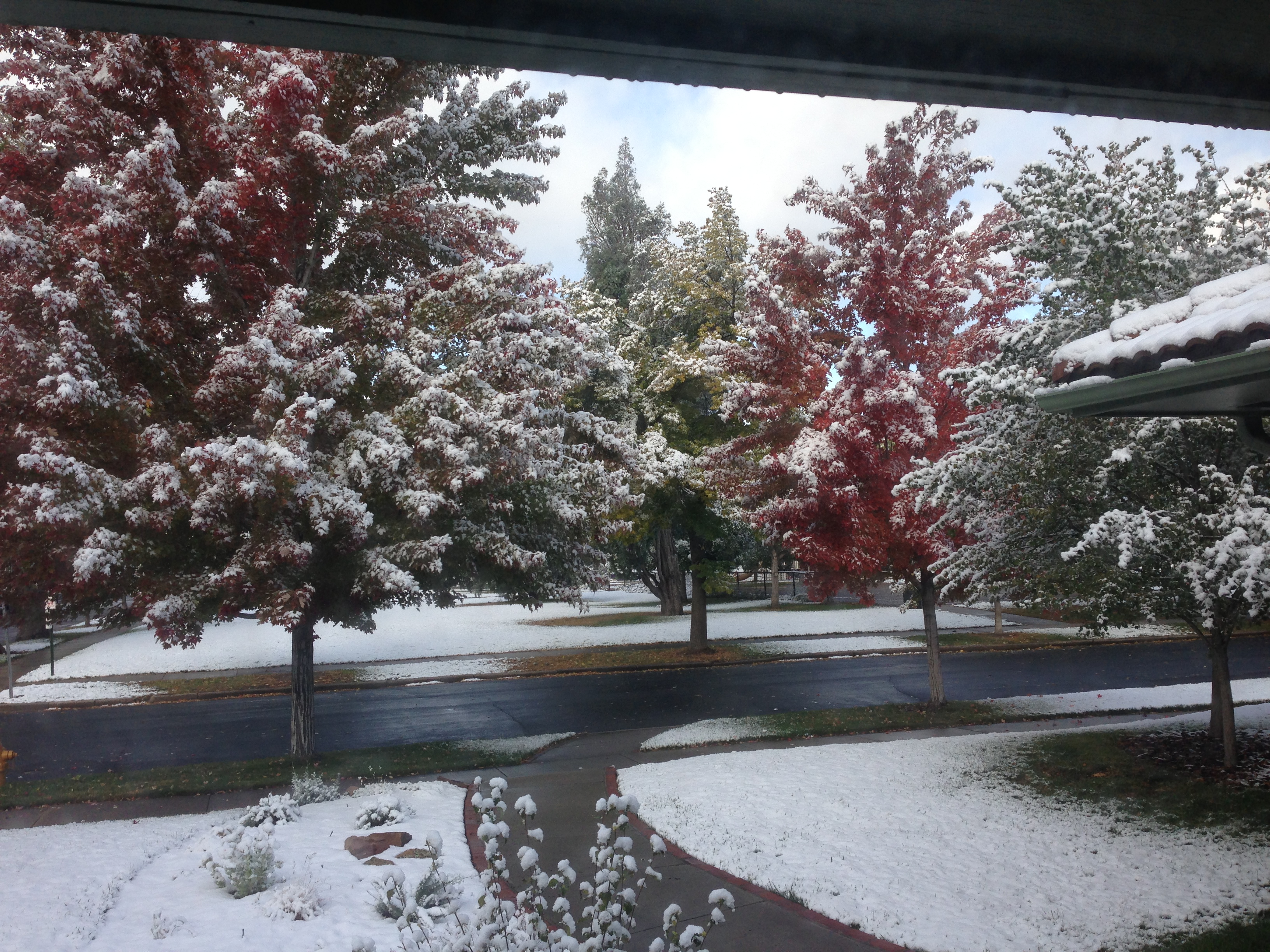
You have until noon on Tuesday to guess it. City and/or state first, then country. Please put the location in the subject heading, along with any description within the email. If no one guesses the exact location, proximity counts. Be sure to email entries to contest@andrewsullivan.com. Winner gets a free The View From Your Window book or two free gift subscriptions to the Dish. Have at it.
In the growing field of “digital humanities,” researchers apply the datamining capabilities of computers to the history of literature. Dana Mackenzie addresses “perhaps the most frequently heard refrain in the criticisms of digital humanities: Where’s the beef? Where are the great insights?”:
Supporters argue that the digital humanities have produced new insights, but that the constellations of meaning it generates are not the kinds of insights humanists are used to. For example, when Ted Underwood, an English professor at the University of Illinois, topic-modeled 4,275 books written between 1700 and 1900, he noticed that changes in literature happen more gradually than we give them credit for.
For the first hundred years of that period, for example, the proportion of “old” Anglo-Saxon words in use declined. But over the century that followed, literature trifurcated. In poetry, the use of “old” words increased markedly. In fiction, “old” words also became more popular, but less dramatically. In nonfiction, however, the frequency of “old” words remained unchanged from the previous century. The data reflected a complex set of historical processes—the emergence of fiction and poetry that self-consciously broke from classical themes and instead treated the experiences of common people.
Such a change had often been attributed to the romantic school, but the data showed it playing out over a much longer period of time and continuing long after the romantics were supposedly passé. “Our vocabulary is all schools, movements, periods, cultural turns,” Underwood says. “If you have a trend that lasts a century or more, it’s really hard to grapple with.”
Digital humanities technologies can help us see gradual changes, whether in literature or elsewhere. Humans have difficulty comprehending change that happens on the time scale of a human life, or longer. If Underwood’s hypothesis is correct, we need computers to help fill in our blind spot. Topic modeling does not overturn or replace our previous ways of seeing; it enhances them. “It is not a substitute for human reading, but a prosthetic extension of our capacity,” says Johanna Drucker, a professor of information studies at UCLA.
Previous Dish on the digital humanities here and here.
Dish poetry editor Alice Quinn writes in about this weekend’s poems:
Frank Bidart, the author of seven previous and highly regarded collections of poems and the co-editor of the monumental edition of The Collected Poems of Robert Lowell, has just published a new book of poems, Metaphysical Dog, nominated this week for the National Book Award. His work has a visceral power and gravitas that summons up George Herbert’s poems addressed to God (“Now I am here, what thou wilt do with me/ None of my books will show.”)
In an interview from 1999, he addressed the nature of his artistic values, saying “There has come to be astonishing sophistication in producing an armored self on paper—in a way that makes the poems that were ‘armored’ twenty years ago look positively candid and naïve. And I think it’s a trap…Frost says, quoting Horace, ‘No tears in the writer, no tears in the reader.’…The fact is, you cannot get through life without putting your life on the line! There’s no other, no ‘safe’ way to live.”
Today and over the weekend, we’ll feature poems from his arresting and very moving new book, beginning with “Against Rage”:
He had not been denied the world. Terrible
scenes that he clung to because they taught him
the world will at last be buried with him.
As well as the exhilarations. Now,
he thinks each new one will be the last one.
The last new page. The last sex. Each human
being’s story, he tells nobody, is a boat
cutting through the night. As starless blackness
approaches, the soul reverses itself, in
the eerie acceptance of finitude.
Dish alum Gwynn Guilford contends that Europe’s current immigration policy “will almost certainly result in more dead bodies in the Mediterranean”:
Frontex, the border patrol agency the EU created in 2005, budgeted a combined €20.9 million patrolling land borders in 2011 and 2012—more than it did from 2006 to 2010 combined. Those moves have pushed migrants to travel more and more by sea instead. Traveling by sea is more dangerous, which is why tighter land borders have “increased the vulnerability of migrants, their reliance on smuggling and caused the deaths of an estimated number of at least 17,000 people over the past two decades,” as Oxford professor Hein de Hass argues.
Recent Dish on the Lampedusa tragedy here and here.
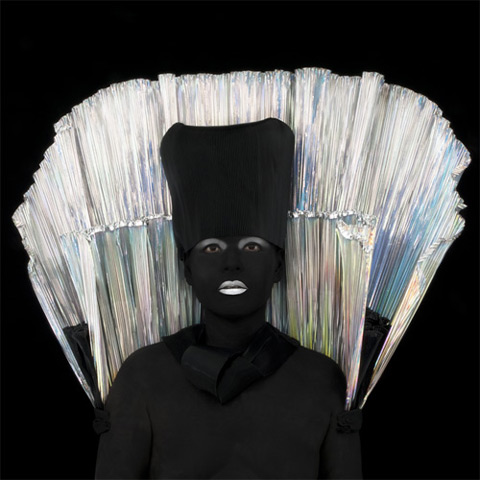
Photographer Kimiko Yoshida sheds her skin and trappings of identity through her bizarre, disarming body of work. PAINTING. SELF-PORTRAIT, 2007-2010 directs our gaze in one thousand places, finally rendering the viewer unable to distinguish the artist from the whole. PAINTING. SELF-PORTRAIT is the anti-portrait, a refusal be known and a declaration that it is impossible to be understood.
In speaking of her “monochrome” images, the artist herself is the one who dissolves into the background, the bright colors and bizarre clothing purposely taking center stage in ways both familiar and uneasy. Repurposing a number of materials, Yoshida often improperly wears European couture and appropriates titles of Western fine art. From Warhol to Picasso, the artist has reference without recreation.
(Photo: 67 Painting (Elizabeth I by Nicholas Hilliard). Self-Portrait, 2010, by Kimiko Yoshida)



 The Dish