The View From Your Shutdown

A reader writes:

I thought I’d share my small frustration with the shutdown, though it absolutely pales in comparison to the full-time workers who are now going without a paycheck. I’m a full-time student and a drilling National Guard officer. What I don’t think is being widely photo-28reported yet is that in a bunch of states, Guard monthly drills and training assemblies are being cancelled, despite the stopgap bill that was pushed through funding the military through the shutdown.

My state has tentatively cancelled all regular training and drill until the shutdown is over, save for the folks already activated for named operations (Enduring Freedom, etc). All of the state’s National Guard technicians, full-time Guard soldiers who maintain our equipment and weapons, have been furloughed. That really messes with our readiness; we have vehicles in need of repair from training last month that won’t get fixed. Imagine if there was a real emergency like Sandy and a critical unit’s vehicles were inoperable.

It also screws with any full-time Guard technician airmen or soldiers out of a paycheck they may be depending on. So when it’s being reported that soldiers and airmen aren’t being affected by this shutdown, that’s just not true.
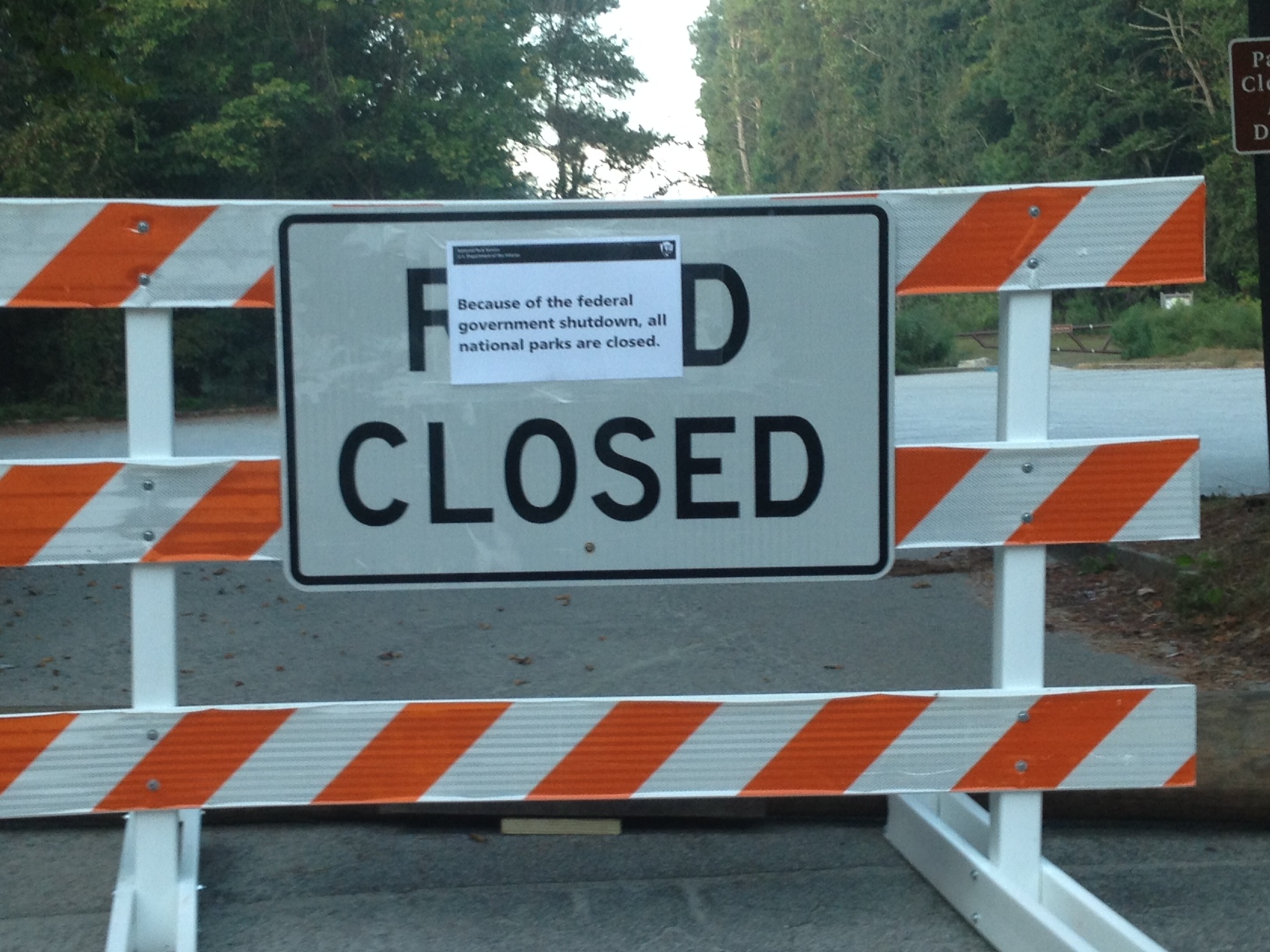
On a personal level too, I rely on the GI Bill and my monthly drill pay to pay my rent. The VA has said they have enough appropriations to pay out the check I’m due for September, but if the shutdown continues through October, I won’t get paid next time. Couple that with me missing out on that critical training we’re supposed to have been doing, and I may be in a little trouble come November 2nd. Luckily I have family to turn to.

I want to echo what your writer in Afghanistan said. And I would serve for free. But this isn’t fair to younger Guard/Reserve soldiers and airmen who don’t have the same amount of support that I do. A lot of my soldiers are young college kids who fully depend on drill pay and the GI Bill for 100% of their income while they’re in school. If this thing lasts long enough to get past one paycheck, it’s time for concern for those soldiers, because if they’re like me, they live paycheck-to-paycheck.

(My views and opinions are personal ones that should in no way be read as reflecting the views, official or otherwise, of the Army, the National Guard, or my unnamed state.)

Update from a reader:

From a current National Guardsman who is also trying to complete law school, missing drills for one month or two could make it difficult to get a “good year”. You need a certain number of drill points per year to make a year count toward retirement. As someone who only started a year ago, I struggled to make the minimum number while maintaining my schooling. Now, going into the next FY, if I am starting out four drills behind, I may miss out on a good year. Two months of shut-down could lead toward a full year later retirement for me should I choose to stay in.

Another:

I’m a DoD civilian working for a Major Command of the Air Force. I’ve just filed for unemployment. On Oct. 21, I’ll be undergoing a major operation which my federally subsidized health insurance will cover. The confluence of events and the timing for me are pretty bad. But I’ve had this job since 2009, when I graduated college. I’ve been furloughed eight days total this year, and been threatened with no less than three shutdowns since starting in 2009.

I believed then and believe now that I’m lucky to be working for the fed. I can’t name many people I went to high school or university with who have been putting away for retirement for four years. I can’t name many people who got jobs out of college who have kept them, and had the opportunity for advancement, pay raises and travel like I have.

When we were asked to sign our furlough notifications on Tuesday, my organization gathered all civilians together to answer questions and field concerns. The loudest people in the room were federal civilians with prior military service who will be receiving retirement checks during furlough from their previous careers as servicemembers. I don’t know how to feel about that, because they should be paid, in full, on time, for the time they served and protected us.

I’ve always been the type of citizen and voter happy to pay my taxes and enjoy the fruits of those taxes in the form of public transportation, safe streets and stop signs. I take medications which were almost all the result of NIH research or federal grants. I love the Smithsonians. If taking this one on the chin ensures that more people get more affordable healthcare through ACA, then I’ll live with it.

My overall conclusion is that this shutdown does, indeed, blow. I need it to end, because I want to keep believing that the downsides of federal employment are vastly outweighed by the upsides. If they keep this up, the federal workforce will lose its most experienced employees, and its youngest and most creative, who came into the job looking for a stability that no longer exists.

A final note: I’m glad I subscribed to The Dish for a full year back when I was getting full paychecks. Sound investment.

Read all of the testimonials in our “View From Your Shutdown” series here. And send us your own.
The Innocent Faces Of Organized Crime

More Beg Children Were Rescued In China

Jillian Keenan describes organized begging as “one of the most visible forms of human trafficking – and [one] largely financed and enabled by good-hearted people who just want to help”:

In India, roughly 60,000 children disappear each year, according to official statistics. (Some human rights groups estimate that the actual number is much higher than that.) Many of these children are kidnapped and forced to work as beggars for organized, mafia-like criminal groups. According to UNICEF, Human Rights Watch, and the U.S. State Department, these children aren’t allowed to keep their earnings or go to school, and are often starved so that they will look gaunt and cry, thereby eliciting more sympathy – and donations – from tourists.

It’s not just India:

According to one U.S. State Department report, a man in Shenzhen, China, can earn as much as $40,000 per year by forcing enslaved children to beg. Horrific examples of trafficking in children (and the elderly) for the purposes of organized begging have been found in countries all over the world: Bolivia, the Philippines, Bangladesh, Senegal, Pakistan – even Austria, other European countries, and the United States. No country is immune to human trafficking. … So when we, well-intentioned tourists, give money directly to child beggars, there’s a decent chance we’re actually lining the pockets of criminals who will turn around and use that money to abduct, enslave, rape, torture, and maim even more kids.

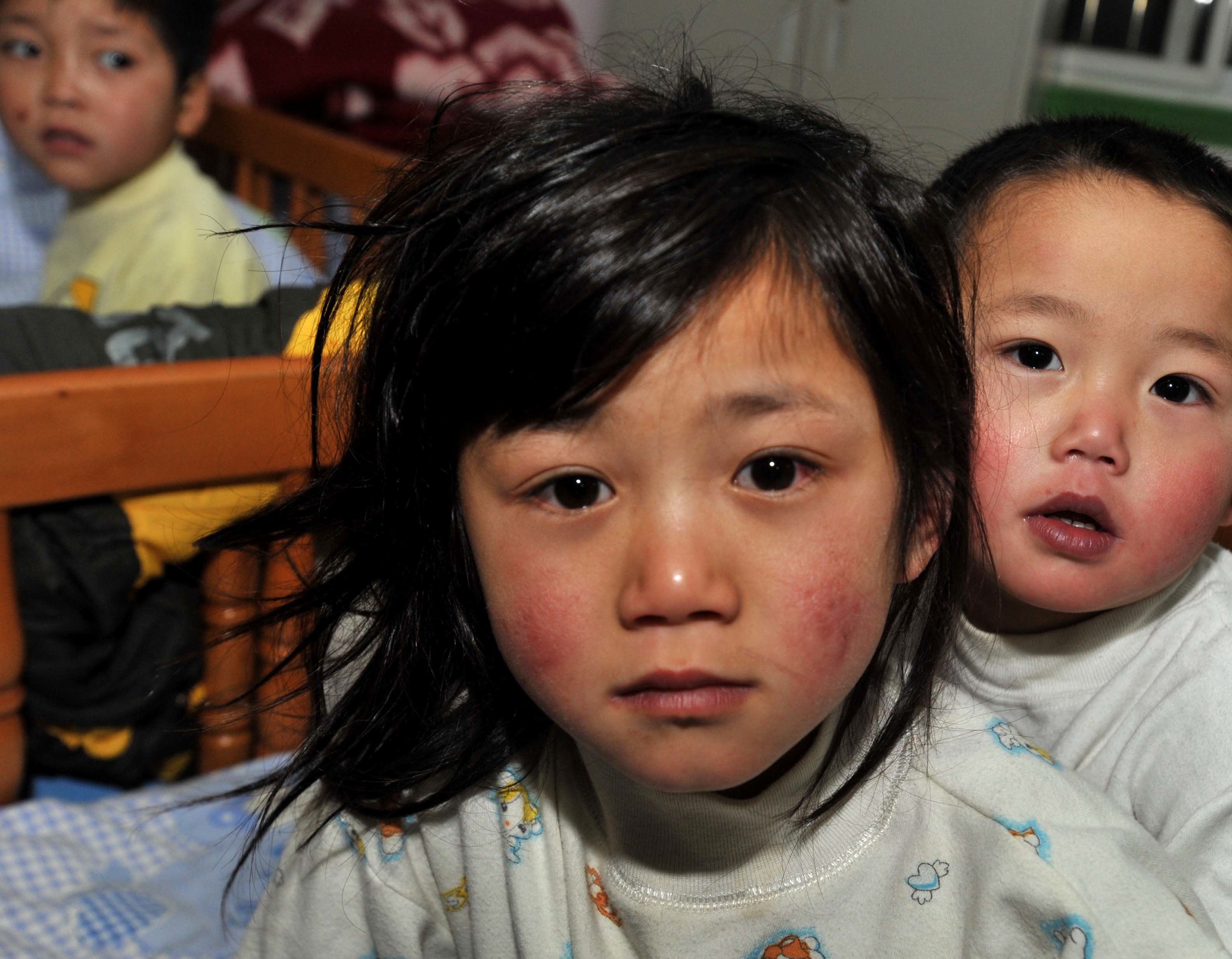
(Photo: Three beg children are seen at a rescue station after they were rescued by police on February 13, 2011 in Guiyang, Guizhou province of China. More than 9,300 kidnapped children in China have been rescued since April 2009, when a nationwide campaign was launched to crack down on human trafficking. In less than three weeks, a Chinese microblog called ‘Street Photos to Rescue Child Beggars’ attracted 175,000 followers and posted more than 2,500 images of begging children online for parents to identify. By ChinaFotoPress/Getty Images)

Why’d We Shut Down The Government, Again?

The Republicans have already forgotten:

Sometimes fights become so intense and so tangled that the original cause becomes obscured. In the government funding battle, the issue that sparked it all, Obamacare, was no longer center stage less than 24 hours after the shutdown began. The fight is now about the shutdown itself, and Obamacare has been pushed to the side.

This incredible quote says it all:

“We’re not going to be disrespected,” conservative Rep. Marlin Stutzman, R-Ind., added. “We have to get something out of this. And I don’t know what that even is.”

A Pussy Riot Of The High Seas?

Russia has filed criminal piracy charges against Greenpeace activists who tried to board an Arctic oil platform, in a move Eugene Kontorovic calls “unprecedented in modern history”:

The charges are significant for international law because historically nations have been extremely wary of pre-textual or politicized piracy charges. To be sure, nations often publicly accused their enemies of piracy – the U.S. in the Quasi-War constantly denounced aggressive French privateering as “piracy.” In the Civil War, President Lincoln also called the obviously-unrecognized Confederate privateers as pirates. But in these cases the matter would almost never proceed from propaganda to prosecution.

One of the more recent politicized invocations of piracy was the Santa Maria incident of 1961, when anti-Salazar forces hijacked a Portuguese cruise ship. Lisbon denounced the attackers as pirates and demanded their arrest. But because the attackers had come on board as passengers, it did not satisfy the “two ship” requirement, just like in the present case, and the international community did not support the piracy characterization. (The terrorists ultimately got asylum in Brazil.) The point is that looks a lot more like piracy than this, and even still did not meet the requirements.

The View From Your Shutdown

A reader quotes another:

“I’m on furlough, and …. I’m worrying about how this is going to impact the household budget, wondering if I might need to apply for unemployment benefits if this lingers on (and just how I go about doing that).” I’m employed by a state university but my office is located at a federal research lab. I’m not allowed in my office during the shutdown and I can’t access the federal computers and datasets, but I’m expected to work as best as I can and I will continue to be paid. I know I am fortunate compared to my federal colleagues!

At the final, pre-shutdown “Town Hall Meeting” in the federal lab on Monday, one of the federal scientists asked about unemployment. Someone in the audience had researched that: regulations vary by state, and in our state a furloughed federal employee cannot apply for unemployment benefits because they are considered still employed (even though they are not allowed to go to work and are not being paid)!  I don’t even know what part of that last sentence to emphasize. The human toll is potentially huge.

Another reader:

I’m a federal employee, and so is my wife (we have two kids in college).  I can’t complain too much (at least in the short run); we’re prudent and we have some savings.  But between the two of us, the shutdown is costing us about $500/day.  If we end up getting it back, that’ll make a rather big difference.

But in the interim, we’re slowing the economy. How? Just today, our contractor came by; he was going to start to do $3000 of repairs of a basement struck with mold (to which I am severely allergic).  We told him: sorry, we can’t afford it now, go home.  So even though we are weathering the shutdown (in the short term), those who rely upon our spending are getting hurt.

Another:

I run a small, rural domestic violence and rape crisis center in Northern California. We are the only provider of this kind for the entire county and we are supported through funds from the Violence Against Women Act. We just received this email from our grant monitor in Sacramento regarding our federal funds:

Office of Justice Programs (OJP) have sufficient resources to remain operational through Friday, October 4, 2013.  This means that OJP staff will be available to assist grantees and OJP payment systems and services will be available through October 4, 2013. Should funding not be restored by October 4, 2013, OJP will cease all operations and California will not be able to draw down funds and reimburse your invoices.

This means the State of California cannot draw down the VAWA funds to pay us for our services – which by the way, are mandated by law. We are not quality-of-life providers, like social services, but we’re not quite emergency services providers either, like law enforcement. We are somewhere in between and apparently not considered essential.

I can tell you with some certainty that many of the rural domestic violence shelters (who don’t have wealthy communities to draw from) will not be operational should the VAWA funding not be rolling down as scheduled. I can also tell you with certainty, that right now almost every shelter in the State is housing not only adult victims of abuse, but many, many children, all of whom may be forced to hit the rickety road soon, compliments of the mostly males members of the “shutdown coalition”.

Another

Yes I’m on furlough, but who cares. What is that compared to a small group of thugs hijacking my country in hopes that the uninsured will remain so. Crush them. As long as it takes.

Strange Scribes

Popova explores the peculiarities of famous writers’ work routines. James Joyce was particularly quirky:

James Joyce wrote lying on his stomach in bed, with a large blue pencil, clad in a white dish_joyce coat, and composed most of Finnegans Wake with crayon pieces on cardboard. But this was a matter more of pragmatism than of superstition or vain idiosyncrasy: Of the many outrageously misguided myths the celebrated author of Ulysses and wordsmith of little-known children’s books, one was actually right: he was nearly blind. His childhood myopia developed into severe eye problems by his twenties. To make matters worse, he developed rheumatic fever when he was twenty-five, which resulted in a painful eye condition called iritis. By 1930, he had undergone twenty-five eye surgeries, none of which improved his sight. The large crayons thus helped him see what he was writing, and the white coat helped reflect more light onto the page at night.

(Image via Wikimedia Commons)

Let There Be Textbook

Paul Waldman wants textbook publishers to take more responsibility over the teaching of evolution in Texas:

When this issue is discussed, the publishers are talked about as if they have no agency, no ability to affect the outcome of these events. But they’re morally culpable for participating in these farces. If they wanted, they could stand up to the state of Texas. So how can the people who work at a publisher in good conscience agree to write a biology textbook that treats evolution as a wild, unsupported idea? What if the Texas Board of Education demanded that their books discuss the “controversy” about whether the Earth travels around the sun or vice-versa, or the “controversy” about whether earthquakes happen because the turtle on whose back the world sits is scratching an itch, or the “controversy” about whether stars are actually faeries winking at us from up in the sky? Would the publishers say, “OK, if that’s what you want, we’ll write it and print it”? Someone should ask them where they draw the line on their integrity.

Marriage Equality Update

John Culhane emphasizes the importance of a Pennsylvania lawsuit:

Palladino v. Corbett is the first case to attack a state law that declares a same-sex marriage from another state “void.” That challenge is quite likely to succeed. If it does, it will effectively tear down the whole edifice of refusing to recognize same-sex marriage, and serve as a model for attacks across the country. …

If Palladino and Barker win, and Pennsylvania has to recognize their marriage, the state still won’t have to authorize its own same-sex weddings. But that will soon become a distinction without a difference. Pennsylvania couples can plan their destination weddings in all of New England, New York, Delaware, Maryland, and D.C.—and head home knowing that their marriages are also legal and binding in the state of Pennsylvania. And once this strategy catches on around the country, we’ll have gay couples living with the same rights and protections as straight couples everywhere—even if some states continue to pretend otherwise.

The Best Of The Dish Today

An Alternative View Of The Conservative Party Annual Conference

Yesterday and today, we saw a big bump in subscriptions after a late-summer lull. Today was our biggest new subscription day since March! A new member of the Dish writes:

I have been enjoying your blog since 2004 (which is almost 10 years ago yikes!) and I don’t have a good excuse as to why I freeloaded. But I do feel much better now I have paid.

You can too! [tinypass_offer text=”Subscribe!”] Another:

OK Mr. Smarty-pants, so I finally paid out for a subscription after nearly a year of putting up with truncated articles. You win. The decider for me was that I’ve been reading your stuff now since 2003, love you/your team’s writing, and the price is actually a fraction of what I used to pay for hard-copy newspapers over a year (I stopped getting them years ago, except for the occasional copy of The Economist). Why did I hold out for so long? Well, I wasn’t sure your model was going to work, I don’t like paying for things I used to get for “free” (sidebar/inter-paragraph adverts don’t bother me), and because I’m a penny-pinching cheap-skate. Now don’t let me down.

We’ll do our very best.

Today: the racial and cultural context for Tea Party insurrection; why the far right cannot back down; why they believe enforcing the laws is tantamount to a felony; the shutdown office fuzzball star; and a torture apologist defends wrecking the global and American economy for partisan kicks.

Bros n bikinis! Strange encounters of the pro-choice kind!

The most popular post of the day was “The Nullification Party“, now the second most popular post since we went independent. The fourth remains Tina Fey’s “Girls” parody. Still laughing my hernia wound off.

See you in the morning.

(Photo: A woman with a vintage handbag gives out leaflets to delegates leaving Manchester Central where the Conservative Party are holding their annual conference on October 1, 2013 in Manchester, England. By Christopher Furlong/Getty Images)