The View From Your Airplane Window

golden-gate-park

Golden Gate Park, San Francisco

Many more views after the jump:

Near Atlanta

Near Atlanta, 10.45 am

image (7)

Mt. Hood, departing Portland, Oregon

marthas-vineyard

Martha’s Vineyard, Massachusetts

Siberia_3143

Siberia, on the Bering Sea, 2 pm

boulder-floods

Boulder, Colorado, during September’s massive floods

sierra-de-gredos

Sierra De Gredos Mountains outside Madrid, Spain

IMG_8601

“Somewhere over Nebraska”. Update from another reader:

Grrrr, please, that VFYAW is not “somewhere over Nebraska.” The picture shows the western end of Lake McConaughy, the largest reservoir in Nebraska. The reservoir is fed by the North Platte River, and is an important irrigation reservoir for thousands of acres of farmland in the Platte River valley, as well as a recreational area for fishermen, boaters, and campers. Fly-over country may look all the same to people at 35,000′, but it has distinct features known and loved by those of us who live here.

lower-manhattan

Lower Manhattan and Brooklyn, 3.45 pm

dc-washington-monument

Washington, DC

Sunset @ SLC

Salt Lake City, 7.30 pm

Browse all the previous VFYAWs here.

The World’s Quietest Place

It’s an anechoic chamber at Orfield Laboratories in Minneapolis:

Inside the room it’s silent. So silent that the background noise measured is actually negative decibels, -9.4 dBA. Steven Orfield, the lab’s founder, told Hearing Aid Know: “We challenge people to sit in the chamber in the dark – one person stayed in there for 45 minutes. When it’s quiet, ears will adapt. The quieter the room, the more things you hear. You’ll hear your heart beating, sometimes you can hear your lungs, hear your stomach gurgling loudly. In the anechoic chamber, you become the sound.”

But the room isn’t just for torturing people. Companies test their products in it to find out just how loud they are. And NASA has sent astronauts to help them adapt to the silence of space. For you and me, however, the room is a deeply disorienting place.

Turbulence Over The East China Sea, Ctd

Kishore Mahbubani urges China and Japan to each take a deep breath with their standoff over the Diaoyu/Senkaku islands:

Of course, if it’s hard to imagine [Japanese prime minister Shinzo Abe] reaching out to Beijing now, it’s equally hard to see Chinese leaders responding constructively. Yet on a simple cost-benefit analysis, [Chinese president Xi Jinping] has incentive enough to scale back aggressive naval and air patrols of the waters surrounding the islands. He has just embarked on a set of difficult, potentially far-reaching economic reforms. Although he can’t afford to look weak domestically, he also can’t afford a geopolitical crisis that would disrupt China’s economy and possibly global trade.

A major rebalancing is gradually taking place in Asia as China’s economy becomes larger than Japan’s. But it isn’t in China’s interest to push for this rebalancing too aggressively. When I was in Tokyo in early December, I was struck by the intensity of concern over China’s aggressive posturing. The harder the Beijing government pushes now, the more rapidly Japan will move to upgrade its military capabilities and strengthen its alliances with the U.S. and countries ringing China. Both sides need to find a way to ratchet down their words and deeds.

Meanwhile, Jin Kai thinks the United States gives China some leeway:

[I]f the US truly believes that China will maintain its rise in the foreseeable future, building mutual trust between Washington and Beijing should be at least as important and significant as maintaining a strong US-Japan alliance, if not more important in the long term. Excessively limiting or compressing China’s strategic space will probably be counterproductive; it may cause or at least speed up China’s active counter-measures.

Previous Dish on the dispute here.

Does Coffee Really Stunt Kids’ Growth?

Nope:

Modern concerns about coffee’[s] health effects in the U.S. can be traced to C.W. Post, an 1800s-era food manufacturer most well known for pioneering the field of breakfast cereal. He also invented a grain-based breakfast beverage called Postum, advertised as a caffeine-free coffee alternative, that was popular through the 1960s (and is still in production). … Even after Post died in 1914, his company’s ads continued their attack on coffee, highlighting its effects on youth in particular and marketing Postum as a kid-friendly hot beverage. Postum’s ads claimed that that coffee should never, under any circumstances, be served to children, for a number of reasons—it made them sluggish, irritable and sleepless, it robbed them of “rosy cheeks and sparkling eyes,” it led to failing grades and … “it hampers proper development and growth.” Over time, it seems, the belief that coffee is unfit for children—and, specifically, that it stops them from growing—slipped into the country’s cultural consciousness and took root, despite a total lack of scientific evidence.

Yet the appeal of Postum has persisted for some:

Postum remained America’s favorite coffee substitute late into the century, making [up] 87 percent of the market as of 1995. The problem was that, by then, the market was “moribund,” as The New York Times put it, totaling just $7.5 million a year. It was, after all, the dawn of the Starbucks era. … Kraft Foods pulled Postum from shelves entirely in 2007, but reintroduced it last year. According to Utah’s Deseret News, the drink is still a breakfast staple in Mormon households, which are forbidden, of course, from drinking coffee.

2013: An Alternative History

Chicago's Gay Community Celebrates Passing Of Same-Sex Marriage Law In Illinois

[Re-posted from last night]

Like many a columnist, I was tasked with an end-of-the-year column, and couldn’t really decide what to say. Here’s what I felt: 2013 was one of the most dreary and depressing I can remember. Politically, it seemed scarred by the Republicans’ ever greater extremism and by the Obama administration’s surprising incompetence. Brutal, dispiriting gridlock and the lame embers of an exhausted culture war set the tone for the rest. It was a year in which most of the forces propelling our culture and politics seemed played out: Obama reached his delivery moment, and he was horribly exposed. The GOP had already seen their electoral crisis the year before, and yet they failed to grasp the nettle of immigration reform and, if anything, took pure nullification to newly manic levels in the states and the Congress. No deal on long-term debt; no immigration reform; no serious infrastructure investment; and a horrible roll-out of healthcare reform.

Still, I had no sooner spelled out these core, depressing facts than I kept thinking of the other, less noticed ones. There were, after all, plenty of reasons for be cheerful in 2013. The number of US troops killed in Afghanistan reached a new low of 161, down from 711 three years’ ago. The war in Iraq remained over. Growth accelerated to 4.1 percent in the third quarter and looks set to continue next year. The Dow is now comfortably over 16,00o – more than double where it was five years ago, at the trough of the recession. The budget deficit shrank 37 percent in 2013, and was falling faster than at any time since the end of the Second World War. Yes, perhaps the austerity was premature and the big fiscal crisis has yet to hit. But an economy that’s growing and a deficit that’s fast shrinking is a pretty good combo for the time being. For good measure, the US is now in the full throes of a domestic energy revolution and is scheduled to be energy independent by 2020, a goal sought for decades. In part because of this, the US position in the Middle East is far less constrained, enabling a potentially world-changing detente with Tehran. Terror attacks – widely aca-sign-upsthought after 9/11 as a new norm – have dwindled to negligible levels in the West. Crime perked up a little, but was still way, way down from its past heights, despite the recession.

And in the US, one huge social shift cemented itself. The last few years have seen a revolution in the way in which gay people are integrated into society. 2013 saw not only the Supreme Court place the federal government firmly behind state-sanctioned gay civil marriages, but democratic legislatures also accelerated the trend across the country. There were many ways in which this titanic year for civil rights could have ended, but civil marriage for gay couples in Utah was pretty damn good. Nine more states now issue marriage licenses for gays than did this time last year – doubling the entire roster in just twelve months. Another, Illinois, will see its first weddings next June. In 2013, England, Wales, Scotland, Brazil, Uruguay, New Zealand, Mexico and France introduced marriage equality. The new Pope, for his part, defused the extremely tense religious and cultural debate by refusing to “judge” a gay person genuinely seeking to follow Christ. By any standards, this was a watershed year for an issue that has vexed humanity for centuries.

And, of course, I mention the Pope. In a few months, he has almost miraculously reasserted Christianity against all the modern “isms” of our time, utterly eviscerated the supreme papacy as envisaged by his two predecessors, and reminded billions of the core and simple message of Jesus. If he has initiated a rebirth of Christianity – as is my devout hope and wish – then this year was a turning point for the world, a moment when hope showed its endurance. And although the Affordable Care Act has gotten off to the rockiest start it could have, it remains a fact that more than nine million Americans have reliable health insurance for the first time in their lives because of it. The graph above was compiled by Amy Fried Charles Gaba on Christmas Eve. Many more applied for insurance in the following week. But the point is: these policies will be very hard to take away. I may be wrong, but I’d say the odds are solid that 2013 will eventually be seen not as a triumph for any system of medical care, but as the moment when everyone got into the same, insured boat, and we began to figure out how seriously to control costs.

usgs_line.phpIt was also the year in which the post-9/11 security state was put back on its heels. I have deeply mixed feelings about what Edward Snowden did, and deep misgivings about the utopian idea that governments should exist with no secrecy. But it is hard not to observe that, as the president’s own commission has found, the US government was doing far, far more snooping than any of us realized, that much of it is of extremely dubious value in foiling terror plots and can be highly counter-productive in the conduct of foreign policy. It felt to me as if a tide had turned. Without Snowden? Not so much.

I’d also argue that October’s simultaneous humbling of the president and exposure of the GOP leadership was a deeply salutary thing. The president needs to understand that he has to get one domestic policy right in the next three years and that’s the implementation of the ACA. Nothing else compares in importance. If the debacle of October means a leaner, more focused domestic agenda from the White House in 2014, focused on executive branch delivery and not partisan politics, then it will have been worth it. (The speed with which the website was fixed certainly gives some confidence.) As for the GOP, the Ryan deal and Boehner’s new disdain for the Tea Party suggest some mild movement back to sanity. It’s too soon to celebrate. But it is no longer crazy to hope.

So count me a revisionist. Everything on the surface this past year was horrible; but the tectonic shifts from below were anything but. We’ll see what lasts. But it helps not to forget what recedes ever so slightly from our news-cycle horizon.

Know hope. Or perhaps that requires reformulation.

Know pope.

(Hat tip for the ACA graph: Amy Fried)

(Top Photo: gay men in a bar in Chicago celebrate the dawn of marriage equality in Illinois. By Getty Images.)


Medicating The Human Condition

Scott Stossel recounts his efforts to cure his crippling anxiety:

Some drugs have helped a little, for finite periods of time. Thorazine (an antipsychotic that used to be referred to as a “major tranquilizer”) and imipramine (a tricyclic antidepressant) combined to help keep me out of the psychiatric hospital in the early 1980s, when I was in middle school and ravaged by anxiety. Desipramine, another tricyclic, got me through my early 20s. Paxil (a selective serotonin reuptake inhibitor, or SSRI) gave me about six months of significantly reduced anxiety in my late 20s before the fear broke through again. A double scotch plus a Xanax and a Dramamine can sometimes, when administered before takeoff, make flying tolerable. And two double scotches, when administered in quick enough succession, can obscure existential dread, making it seem fuzzier and further away. But none of these treatments has fundamentally reduced the underlying anxiety that seems hardwired into my body and woven into my soul and that at times makes my life a misery.

My assortment of neuroses may be idiosyncratic, but my general condition is hardly unique.

Anxiety and its associated disorders represent the most common form of officially classified mental illness in the United States today, more common even than depression and other mood disorders. According to the National Institute of Mental Health, some 40 million American adults, about one in six, are suffering from some kind of anxiety disorder at any given time; based on the most recent data from the Department of Health and Human Services, their treatment accounts for more than a quarter of all spending on mental-health care. Recent epidemiological data suggest that one in four of us can expect to be stricken by debilitating anxiety at some point in our lifetime. And it is debilitating: studies have compared the psychic and physical impairment tied to living with an anxiety disorder with the impairment tied to living with diabetes—both conditions are usually manageable, sometimes fatal, and always a pain to deal with. In 2012, Americans filled nearly 50 million prescriptions for just one antianxiety drug: alprazolam, the generic name for Xanax.

A Poem From The Year

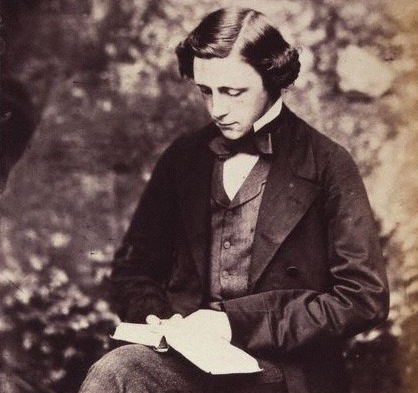
NPG P7(26),Lewis Carroll (Charles Lutwidge Dodgson),by Lewis Carroll (Charles Lutwidge Dodgson)

“The Lobster Quadrille” by Lewis Carroll (1865):

“Will you walk a little faster?” said a whiting to a snail,
“There’s a porpoise close behind us, and he’s treading on my tail.
See how eagerly the lobsters and the turtles all advance!
They are waiting on the shingle—will you come and join the dance?
Will you, wo’n’t you, will you, wo’n’t you, will you join the dance?
Will you, wo’n’t you, will you, wo’n’t you, wo’n’t you join the dance?

“You can really have no notion how delightful it will be
When they take us up and throw us, with the lobsters, out to sea!”
But the snail replied, “Too far, too far!”, and gave a look askance—
Said he thanked the whiting kindly, but he would not join the dance.
Would not, could not, would not, could not, could not join the dance.

“What matters it how far we go?” his scaly friend replied.
“There is another shore, you know, upon the other side.
The further off from England the nearer is to France.
Then turn not pale, beloved snail, but come and join the dance.
Will you, wo’n’t you, will you, wo’n’t you, will you join the dance?
Will you, wo’n’t you, will you, wo’n’t you, wo’n’t you join the dance?”

Please consider supporting the work of The Poetry Society of America here.

(Photo: A self-portrait of Carroll in 1856, via Wikimedia Commons)

Belated Justice For Turing

Alan Turing, the great British mathematician who cracked Nazi codes and later killed himself after the government chemically castrated him for being gay, received a posthumous royal pardon last week, 61 years after his conviction (NYT). Peter Tatchell wants the pardon extended to everyone convicted under the “gross indecency” law, which remained on the books until 2003:

Why him alone? Singling out Turing for a royal pardon just because he was a great scientist and very famous is wrong in principle. The law should be applied equally, without fear or favour, regardless of whether a person is a well-known high achiever – or not. Selective redress is a bad way to remedy a historic injustice. At least 50,000 other men were convicted under the same ‘gross indecency’ law from the time it was first legislated in 1885 until its repeal in 2003. They have never been offered a pardon but deserve one, equally as much as Turing. An estimated 15,000 men of these men are still alive. It is not too late for them to receive a measure of justice in the form of a royal pardon.

Ally Fogg is on the same page:

Turing should be forgiven not because he was a modern legend, but because he did absolutely nothing wrong.

The only wrong was the venality of the law. It was wrong when it was used against Oscar Wilde, it was wrong when it was used against Turing and it was wrong when it was used against an estimated 75,000 other men, whether they were famous playwrights and scientists or squaddies, plumbers or office clerks. Each of those men was just as unfairly persecuted, and many suffered similarly awful fates. To single out Turing is to say these men are less deserving of justice because they were somehow less exceptional. That cannot be right.

Back in July, David Allen Green suggested an alternative to pardoning Turing:

A recent statute – the Protection of Freedoms Act 2012 – provides a scheme where those who had been convicted of the section 11 offence (and similar offences) can apply for their entire criminal records to be removed if the facts of the case would no longer count as a crime.  It would be as if the offence had not been committed at all.  These are not pardons – they go much further: the 2012 scheme removes the taint of criminality altogether, and with no fussing about not affecting the conviction or the sentence.

But the 2012 scheme is only for those still alive.  However, there is no good reason why it cannot be applied retrospectively.  It would have the merit of consistency.

Cass Sunstein warns us against congratulating ourselves on our current enlightenment:

In much of the world, same-sex relations remain a criminal offense. Just last week, the Ugandan legislature passed a law that would impose life imprisonment for homosexual activities. It wasn’t until 2003 that the U.S. Supreme Court ruled that same-sex acts couldn’t be criminalized. Most states continue to forbid same-sex marriages. In other domains, even democratic nations authorize practices that will be seen a few decades from now as cruel and unjust, prompting future generations to ask: How could they have done that? This week’s long-overdue pardon was a good way to pay tribute to Alan Turing. An even better way would be to scrutinize our own practices with that question in mind.

Face Of The Day

CHINA-CUISINE-OFFBEAT

Pan Yizhong reacts as he eats worms during an eating race in Liuyang in China’s central province of Hunan. Pan Yizhong has eaten 147 dumplings in one sitting and polished off 40 bowls of noodles in 15 minutes – and now China’s most renowned competitive eater is now searching for his most ambitious challenge yet, even though he says his hobby has cost him his marriage. By Wang Zhao/AFP/Getty Images.