Can Obama Hatred Be Harnessed?

Rubio warned yesterday that, if Congress doesn’t pass immigration reform, Obama may legalize millions of undocumented immigrants by executive order. Catherine Thompson explains:

”I have been saying for more than a year that I believe that this president will be tempted,” Rubio said. ”If nothing happens in Congress, he will be tempted to issue an executive order, like he did for the DREAM Act kids a year ago, where he basically legalizes 11 million people by the sign of a pen.”

“We won’t get any E-Verify, we won’t get any border security, but he’ll legalize them,” he continued.

Drum thinks Rubio’s comment is “interesting for what it says about how Rubio views his tea party base”:

Basically, he’s given up on reasoning with them. Instead, he figures the only way to win them over is to appeal to their paranoid belief in Obama the tyrant, the man who’s unilaterally ruining America by running roughshod over Congress with his dictatorial executive order powers. Reason might not work, but perhaps they hate and fear Obama even more than 11 million undocumented immigrants.

Benjy Sarlin believes that Rubio’s gambit could backfire:

Many Republicans say they’re concerned about the security components of a bill because they fear Obama or a future Democratic president will find some legal rationale to delay or derail their implementation. Democratic and Republican supporters of the bill insist that they can find ways to prevent that from happening, either by specifying a clear set of security measures or by tying legalization to ironclad border metrics. But Rubio’s claim could feed perceptions on the right that Obama can’t be trusted to enforce the law and thus will ignore even the toughest border deal.

Bring The Noizu

In a review of Japanoise: Music at the Edge of Circulation, Scott McLemee defines the genre of Noizu:

The term is a neologism in Japanglish (cf. Franglais) referring to the underground movement or milieu devoted to producing — and enduring – squalls of atonal electronic sound blasted at incredibly high volume. Noizu stands in relation to hardcore punk or extreme heavy metal band something like the roar of a jet engine does to chamber music. Connoisseurs call the sound “harsh,” at least when they are praising a performance or recording.

The “noisician” works with a set of electronic boxes that distort, echo, or clip the frequencies of a sound; they are sometimes connected to one another according to a plan, and sometimes by chance. “Outputs go back into inputs,” [author David] Novak writes, “effects are looped together, and circuits are turned in on themselves. Sounds are transformed, saturated with distortion, and overloaded to the point that any original source becomes unrecognizable.” By the end of the performance, “the circuit is overturned, the gear is wrecked, and the network is destroyed.”

The point is to create, in Novak’s words, “the biggest, loudest, and most intense invocation of sonic immediacy imaginable” — sometimes blasting the audience into “a state of hypnosis, dreaming sleep, or trance.” …[T]he question of whether Noizu is a category of music is a question of taste and, even more, of definition – including self-definition, since there are people in the Noizu scene who insist that it is an experience utterly distinct from music.

(Video: Noizu artist Merzbow)

Email Of The Day

Says a lot:

From: OSD Pentagon PA Mailbox Duty Officer Press Operations
Sent: Wednesday, August 14, 2013 11:03 AM
To: Breasseale, J Todd LTC USARMY OSD OSD (US)
Subject: FW: Email to Media Distros at 1130

Todd,
Before I send this to the world as Duty Officer… I thought you should be the first to get the official note.
Congrats and Cheers.
Jack

(Jack) Wesley P. Miller IV, Lt Col, USAF
Defense Press Officer for Middle East Policy
Office of the Assistant Secretary of Defense for Public Affairs

Todd is Todd Breasseale, the Pentagon’s spokesman, who is also gay (and a friend). The email was about the implementation of full spousal benefits for US servicemembers who are gay (including ten days of marriage leave). Todd wrote me this morning:

My husband and partner of 13 years – who has selflessly, quietly served our nation in silence, without so much as a thank-you from the military – is finally receiving both the recognition and the respect he earned so long ago.
I’m overwhelmed and am utterly proud. Of him. Of our nation’s military. Of America.

Me too.

Time To Cut Off Cairo’s Aid

After today’s grotesque violence, I think the balance of the argument has decisively shifted. There is no way the US can aid a government that guns down its citizens in the streets. Those who argued for it long ago have been vindicated by events. Lynch, in a powerful post, agrees:

With blood in Egypt’s streets and a return to a state of emergency, it’s time for Washington to stop pretending. Its efforts to maintain its lines of communication with the Egyptian military, quietly mediate the crisis, and help lay the groundwork for some new, democratic political process have utterly failed. Egypt’s new military regime, and a sizable and vocal portion of the Egyptian population, have made it very clear that they just want the United States to leave it alone. For once, Washington should give them their wish. As long as Egypt remains on its current path, the Obama administration should suspend all aid, keep the embassy in Cairo closed, and refrain from treating the military regime as a legitimate government. …

The hard truth is that the United States has no real influence to lose right now anyway, and immediate impact isn’t the point. Taking a (much belated) stand is the only way for the United States to regain any credibility — with Cairo, with the region, and with its own tattered democratic rhetoric.

Meanwhile, Mike Giglio reports on being arrested and beaten by Egyptian police. He wasn’t alone:

I was arrested along with an Egyptian freelance photographer, Mahmoud Abou Zeid, and a French freelance photographer, Louis Jammes. They were in the same area during the clashes and also rounded up. Both were beaten after identifying themselves as journalists. Also, in detention, I ran into the award-winning French photo and video journalist Mani. (He doesn’t use his real name.) Mani had been on the Rabaa side of the demonstration, trying to film. For what it’s worth, he says he saw no weapons on the pro-Morsi side, just rocks and sticks. This was my impression, too. I was on the Rabaa front line just before the fighting started and saw no arms; only sticks, and then fireworks that were launched at the police from the side streets.

Other journalists were killed. Gideon Rachman doubts that, at this point, elections can heal the country:

Egypt may hold elections, at some point. But it is inconceivable that the army – having effectively declared war on the Muslim Brotherhood – will risk allowing them to win elections, again. Many Egyptian commentators argue that the Brotherhood are, anyway, much less popular than when President Morsi won election. But it seems highly improbable that the army will risk testing that proposition at the ballot box. If Egypt has any elections in the near future, they will be a sham.

End the aid.

Peas In An Ever-Faster Pod? Ctd

Alon Levy, who blogs frequently about mass transit, hates on the Hyperloop:

My specific problems are that Hyperloop a) made up the cost projections, b) has awful passenger comfort, c) has very little capacity, and d) lies about energy consumption of conventional [high speed rail]. All of these come from Musk’s complex in which he must reinvent everything and ignore prior work done in the field; these also raise doubts about the systems safety that he claims is impeccable.

Tyler Cowen notes that you “can already fly LA to San Francisco in about an hour”:

Flying is carbon-negative, but of course building and running a hyperloop would be too.  In any case, it is hard to believe that a hyperloop is the marginally cost effective way to reduce carbon emissions, compared to say shutting down some more dirty coal or pricing traffic congestion.

Previous Dish on the Hyperloop here and here.

Clinton Courts Obama’s Coalition

The speech Hillary Clinton gave on Monday focused on voting rights:

Nate Cohn sees the political logic of the speech:

Clinton only lost in 2008 because her weakness among progressive activists was paired with Obama’s showing among black and young voters, who combined to assemble a non-traditional Democratic primary coalition.

If she wants to wrap up the nomination quickly, she need to win over these Obama ’08 constituencies. To do that, Clinton doesn’t want to just seem like she’s checking the boxes of the Democratic platform. She wants to be seen as a champion of the causes that animate the different corners of the Democratic primary electorate. If she’s not, someone else could be. At the very least, Clinton doesn’t want to be on the wrong side of a big faction of the party, like she was on Iraq.

Last night’s speech sounded like a first step toward being a champion of a relatively new liberal cause: voting rights. The Clinton folks have to be happy that an issue like this is enflaming the base. It allows Clinton to hit her two relative vulnerabilities among non-white voters and on the left, and there aren’t too many general election downside risks to siding with voting rights. Perhaps as a result, Clinton was pretty unequivocal about her position. If the Clinton folks are smart, they’ll return to this issue with some regularity.

For what it’s worth, I tend to think this is the right call for Clinton – but as Cohn notes, one with limited potential.

After Obama, I suspect the Democrats will likely pick someone less prudent, cautious and leading-from-behind. They’ll want a clearer liberal who leads from out-front, as the broader culture shifts left. Hillary is not a natural pick for that role – so she’s shrewd to start nailing down those constituencies early. But it’s on national security that she’ll really have to prove she’s not a McCainiac. Alex MacGillis predicts the battles over voter suppression and voter fraud will stretch long into the future:

[T]he voting wars didn’t start with Obama and they won’t end with him. Leave aside the obvious big-picture history going back to Jim Crow and the Voting Rights Act; the modern era of the voting battles started back when Obama was but a humble state senator having trouble getting a rental car at the 2000 Democratic convention. They were an outgrowth of that year’s election, which laid bare just how much voting rules could matter at the margin. Democrats took the election as a lesson to be more vigilant against things like the voting rolls purge that eliminated countless eligible Floridians from the rolls; many Republicans drew the opposite lesson, to do everything possible to crimp turnout among likely Democratic voters, to keep states like Florida from ever being so close again.

Thinking Through Stop-And-Frisk

Stop Frisk Outcomes

Heather Mac Donald defends stop-and-frisk’s racial disparities:

[T]hough whites and Asians commit less than 1 percent of violent crime in the 88th Precinct and less than 6 percent of all crime, according to [Judge] Scheindlin 40 percent of all stops should be of whites and Asians, to match their representation in the local population.

Never mind that the suspect descriptions that [Officer Edgar Gonzalez of Brooklyn’s 88th Precinct] was working off of gave blacks and Hispanics as robbery, burglary and shooting suspects. To avoid an accusation of racial profiling, he should have stopped whites and Asians for crimes committed — according to their victims — exclusively by blacks and Hispanics.

That helps us focus on the real issue here: to what extent is the disproportionate racial imbalance in “stop-and-frisk” a legitimate by-product of fighting crime? What metric do you judge it by? The proportion of criminals who are black and Hispanic? The proportion of innocent people who are black and Hispanic? Or some more complex metric? Dylan Matthews complicates Mac Donald’s argument:

The Bloomberg administration says that it’s focusing stops on areas with lots of crime. But [Jeffrey Fagan, a criminologist at Columbia Law School] found that even if you control for the crime rate, the racial makeup of a precinct is a good predictor of the number of stops.

“The percent Black population and the percent Hispanic population predict higher numbers of stops, controlling for the local crime rate and the social and economic characteristics of the precinct,” Fagan’s report explains. “The crime rate is significant as well, so the identification of the race effects suggests that racial composition has a marginal influence on stops, over and above the unique contributions of crime.”

Cassidy adds:

Fagan’s analysis also showed that blacks and Hispanics, once they had been stopped, were more likely to be subjected to the use of force, even though the probability of the stop resulting in further action—like an arrest, or a summons—was actually lower in cases involving minorities than in those involving whites.

That, to me, gets at another core question: how on earth do the human beings tasked with this job not fall into racial profiling and not get hardened in ways that mean more cop violence in minority neighborhoods? You don’t have to believe cops are racist to see that stop-and-frisk by its very nature will often lead to abuse, unless countered by almost super-human virtue. The test for me is whether black and Hispanic citizens who live in high crime neighborhoods believe the trade-off is worth it. And the answer to that is mixed:

Black voters disapprove of stop and frisk 69 – 25 percent while approval is 57 – 37 percent among white voters and 53 – 45 percent among Hispanic voters, the independent Quinnipiac University poll finds …  A decrease in police use of stop and frisk would not lead to an increase in gun violence, voters say 50 – 41 percent, again with significant racial division. Black voters say 63 – 28 percent the reductions would not lead to more crime. White voters believe it would 49 – 39 percent and Hispanic voters agree 52 – 46 percent.

Robert VerBruggen offers another point:

[I]f police are targeting minorities for stop-and-frisk above and beyond their likelihood of being involved in a crime, we might expect searches of minorities to be less likely to uncover concrete evidence of criminal activity. We do see this to some extent: Whites were carrying weapons 1.9 percent of the time; the number for blacks was 1.1, Hispanics, 1.3. For “contraband other than weapons,” the numbers are 2.3 percent for whites, 1.8 percent for blacks, and 1.7 percent for Hispanics.

However, Mayor Bloomberg has said he’s specifically targeting guns, and on that front the trend runs in the opposite direction: 0.16 percent of stopped blacks were carrying guns, as compared with 0.07 percent of whites and 0.09 percent of Hispanics.

Weak. If whites are more likely to be carrying contraband and weapons, the disparity in gun-carrying does not seem to me to be enough to justify the huge racial imbalance in overall stop-and-frisk. And the experience of feeling racially profiled routinely by cops – whatever the actual motivation – is a huge social and constitutional issue. No minority group should feel as if the law is designed to target them because of their race. That cost is real – in political, social and human terms. And the huge escalation of stop-and-frisk in the last decade – long after the biggest drops in crime – suggests we are veering toward something close to a police state in some areas.

Time to recalibrate – as the polling for race for mayor seems to indicate.

(Chart from Mother Jones)

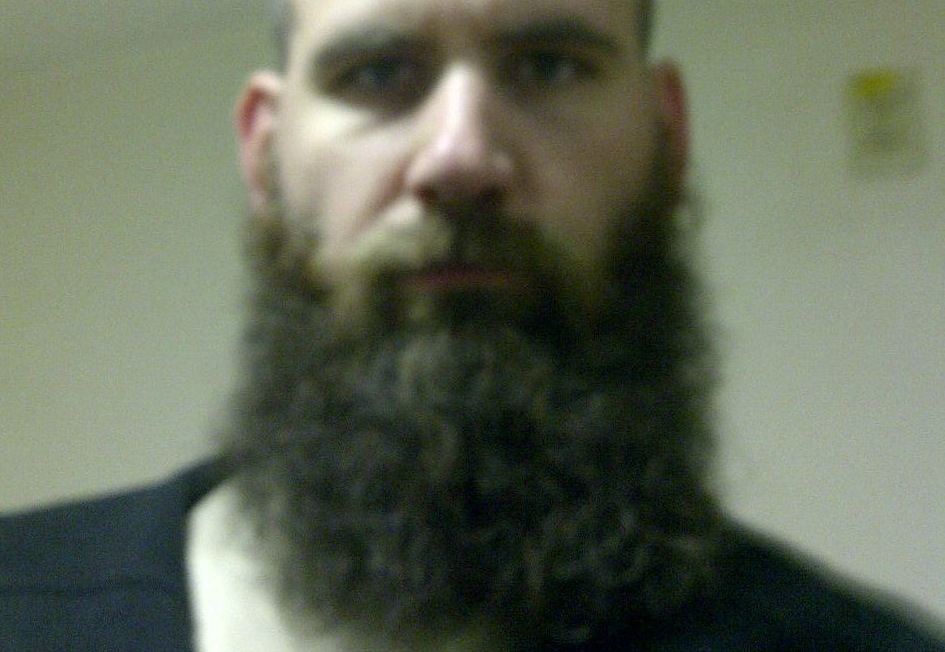
Beard Of The Week

weeklybeard

A reader writes of a recent post:

“Don’t worry, it isn’t going to be a daily feature.” Please change your mind, Andrew. I’m a beard-wearing subscriber, and while I don’t need extra motivation to scour the Dish three or four times a day, seeing a “beard of the day” on the site would be fucking awesome.  And if getting enough submissions for a daily pic is an issue, make it your “beard of the week” instead.  What do you say?

Attached is a picture taken just before I left Afghanistan in 2012.

I. Am. Not. Worthy.

Why Haven’t More Muslims Won The Nobel Prize? Ctd

Millman joins the debate:

Here’s a handy-dandy little fact to throw out there: 20% of Nobel Prizes have been awarded to Jews. This despite the fact that Jews are only 0.2% of the world’s population. In other words Jews are represented at a rate 100 times higher than strict proportion to population would suggest. Contra Nesrine Malik, the Jews are one “arbitrary” group of people to have won far more Nobel Prizes (in every category, by the way) than Trinity College, Cambridge graduates have.

Now, what are we to make of that fact?

At first glance, it would seem that if the “it’s all culture” folks mean what they say, the implication would be that we should all become Jews. After all, if the Islamic world’s poor showing proves that Islam “holds back intellectual development,” then presumably this extraordinary Jewish performance proves that Judaism massively promotes intellectual development. Does Isaac Chotiner agree? Can I expect Andrew Sullivan and Richard Dawkins to sign up for conversion classes?

No, because my conscience calls me to Jesus and Dawkins’ to giant future hamsters. But to remove the context and history of Jewish intellectual culture, one of the great shining monuments of Western civilization, would be equally bizarre. Ditto the extremely high IQs of Ashkenazi Jews, compared with almost any other sub-group population. And how can anyone not be struck by the wildly divergent achievements of the resource-poor Israelis and the oil-rich Arab states of the Middle East without resorting to some kind of cultural analysis?

There may be other factors involved – a response to centuries of repression and ghettoization, or the Jewish cultural focus on education, or the Talmudic tradition which provides for some space between divine truth and scholarly interpretation. And the reasons for Islam’s long slide into backwardness may also be complex. But it demands an explanation more satisfying than mere randomness. Noah goes on:

From a political perspective, the right response, it seems to me, to the extraordinary disproportion of Jewish Nobel prizes is neither “wow, Jews are totally awesome; we should all be like them – and if we can’t, it must be our fault” nor “wow, this game must totally be rigged by the Jews [um, Swedish Jews?]” but “wow, levels of achievement at the very top can be really wildly disproportionate to population. And the modern economy seems to be more winner-take-all than it used to be. Maybe the selection process for Nobel Prizes isn’t a good template for how all of society should work? Maybe there’s a moral case for countervailing social and economic forces?”

Sure. But when intellectual and technological advantage confers enormous socio-economic benefits, and when that advantage is far greater in the West and Asian cultures than almost anywhere in the Muslim world, you can argue for a different metric, if you like. But in practice, it means marginalization and relative poverty. Which is what the Muslim world is now trapped in. I don’t think you can fully escape that trap without also escaping a fundamentalist culture and polity.

Update from a reader:

Andrew, please issue an immediate correction and apology to Professor Dawkins; his conscience calls him to giant future sea otters.

Egypt Is Erupting Again, Ctd