Why We Enlist

Rosa Brooks surveys the reasons that Americans join the military:

Some people sign up because — reared on old World War II movies, or maybe just on first-person shooter video games — they want to “go to war.” (It’s an unrealistic aspiration for many military personnel: Even in the post-9/11 era, many military personnel never deploy, and even fewer see combat.) Others dislike the idea of going to war, but believe that a strong military will prevent war by deterring potential adversaries and want to be part of such a deterrent force. Others still join up for reasons that don’t really have much to do with the nature of the military: They’re attracted by the military’s educational benefits and free heath care, they’re looking for opportunities to travel and learn, or they simply view the military as a stable job with benefits during economic hard times.

A 2011 Pew survey asked post-9/11 military veterans to list the most important factors that had motivated them to join the military.

Nearly 90 percent listed serving the country as an important reason for joining, and 77 percent listed educational benefits as important. Upwards of 60 percent said they wanted to “see more of the world,” and 57 percent said that learning skills for civilian jobs was an important factor. In contrast, only 27 percent said that difficulty finding a civilian job had been an important factor in the decision to join the military.

She also notes a common misconception:

The perception that “the military is right wing” probably stems from studies that focus on senior officers. Although senior officers make up only about 6 percent of the Army, they are substantially more conservative (and more Republican) than junior officers, and dramatically more conservative than enlisted personnel, whose views tend to more closely track those of the general population.

Update from a reader:

I joined the United States Air Force, serving from 1984-1992 as a Security Policeman working in Law Enforcement.  My family had a rich history of serving this country, from my great-great-grandpa, who at 10 years old ran away from home to serve as a drummer boy in the US Army during the Civil War; three uncles who served in both fronts during WWII, and one who was onboard a cruiser during the Cuban Missile Crisis; and my father who served during the Korean War.  So for me, it was a family tradition.

In fact, all through high school I wanted to join.  But it wasn’t just a patriotic calling; I also wanted to see the world.  I grew up in a small town in central Illinois and I shuddered at thought of attending college locally.  I just wanted to get out.  My folks didn’t have the money to send me to school, so being able to get funds via the GI bill was another reason I served.

So off I went, and after completing Basic Training and Law Enforcement school, I was stationed at Clark AB, Philippines.  That was in 1985, just one year shy of the People’s Revolution in the Philippines.  Here I was just a 19 year old, witnessing the overthrow of President Marcos while most of my friends back home were partying in college.

I worked Town Patrol later on and saw a lot for a young man (we had something like 100 bars packed into a two-mile radius with US Airmen, Navy, Marines, Army, as well as several other allied countries enjoying the Angeles City night life).  It was wild and I saw a lot of tragedies: murders, decapitated heads, stabbings, prostitution, shootings, corruption, robberies – you name it.  Then in 1987, a good friend and K9 handler was brutally shot to death, along with several other Airmen and Naval personnel.  That had to be the worst thing I ever experienced.  I rushed to the hospital and was allowed to see his body.  I had seen people shot before, but this was so different.  It’s hard to imagine a friend (he was only 21) and fellow Airmen lying there dead with his wife next to him.  Hell, we had only been out partying a couple nights before and now he was gone.  To this day I can still see his body lying there in the hospital emergency room.  Nothing prepared me for that.

Then in 1991, Mt. Pinatubo erupted and all hell broke loose!  I have never seen such a powerful natural destruction and was never scared more in my life.  I lost everything in that disaster and was reassigned back to the US.  I got out in 1992 and attended college locally with the GI bill money I received.

I will never forget the experiences I encountered during my service.  I guess I was able to see a lot more since I was working Law Enforcement.  Some great memories abound, but there are other horrible ones I just can’t forget.
Are We Failing At Grading Schools? Ctd

An expert on the subject writes in:

I hate that I have to partly defend Tony Bennett, but here goes. The education reform movement has sold politicians and the public what is, at best, the polite fiction of objectivity in school accountability. There’s some truth to Michael Petrilli’s flippant remark you quoted, describing these systems are “more akin to baking cookies than designing a computer,” and Bennett’s involvement is more the rule than the exception. I should know, I’ve worked in the kitchen.

The basic architectures of these systems are sketched out by elected officials, high-level education bureaucrats, and stakeholders (such as teachers’ unions or reform lobbyists). Discussions tend to focus on the traditional elementary-middle-high school model, and final designs are a compromise between what they’d like to measure and what’s actually available in the data.

Most of these systems are based on some combination of pass/fail percentage, graduation rate, attendance rate, and test score improvement or growth (Jeb Bush’s group has been particularly instrumental in pushing the latter as the solution to the snapshot-in-time “failure” of NCLB). The basic idea is that each measure has a value that’s converted to a score, and then all the scores are combined into a composite from which accountability identifications are made.

In practice, it’s not that simple.

There are well-known statistical problems with aggregated test scores from small populations, and every state sets minimum sizes for inclusion of a group. Different measures have different distributions: pass/fail rates almost always follow the classic bell curve, while attendance rates bunch at the high end with a long tail of “problem” schools. Combining measures requires making value judgments on balancing relative priorities.

Then states find schools that don’t have all the data to fit their designs, or don’t match the stereotypical model. What do they do with a K-12 school? How about a school with too few kids? Stretching the design to encompass more schools adds yet another layer of complexity and subjectivity. (This is where Indiana ran into trouble: they hadn’t accounted for charter high schools too new to have graduated any kids yet, so averaging what measures they had made this school’s score inherently worse than high schools with graduation rates, which often cluster toward the high end.)

Once states develop scores, they have to assign meaning to them. Specifying which scores fit what labels – either by defining ranges or translating scores to fit a particular rubric (like Indiana’s GPA) – is the most subjective and political part of the process. Decision-makers inevitably test designs against what they believe about particular schools. I guarantee that every state with this sort of school accountability system has an email chain like Bennett’s, with a top official questioning a favorite school’s score as too low.

Did Bennett cross an ethical line? He certainly sidled up to it, but whether or how far he actually stepped over depends on two things: First, how much Indiana’s system was modified to fit one school, as opposed to all schools with the same quirks. Second, whether there was a quid pro quo between the grade modification and campaign contributions Bennett received from the school’s founder (knowing how the reform movement operates, I suspect there was but doubt there’s any way to prove it).

So what does this mean? Major factions within both parties have bought into these accountability systems, even though most who champion them – including and especially Arne Duncan and his staff – don’t understand their complexity. Politicians and special interests misuse information that ought to identify trends and target improvements as ideological weapons. The media’s default position of blind credulity occasionally gives way to scandal-mongering, without any real attempt to understand the issue.

How’s that for a cheerful perspective on the future of American education?

Updates from readers originally posted in this post, in addition to an email from an Indiana school official, can be found here.

The Proustian Diet

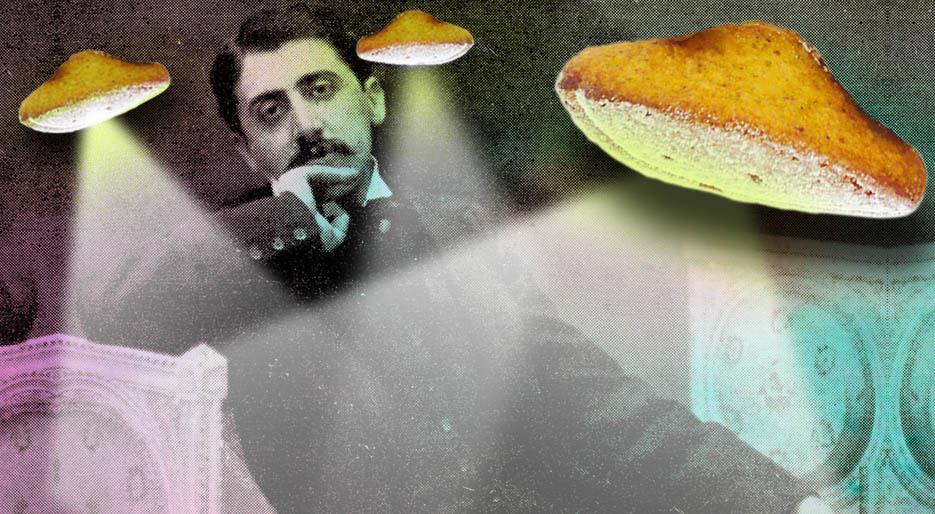
xl_5186_TP-madeleine-ufo

A shocking revelation:

The thing is: There’s not a lot of evidence to suggest that Proust really ate madeleines. Although his vivid memories of the delicate cookies from In Search of Lost Time have become iconic, early versions of the novel actually don’t include madeleines at all. Instead, we see Marcel biting into humble biscotte – a piece of dry toast.

What Proust really ate:

[A]s his illness worsened, his need to write began to subsume his desire to eat, and breakfast became Proust’s meal of choice. Instead of the madeleines and tea we known from his fiction, the real Marcel demanded croissants and cafe au lait, brought to him in bed while he read the paper and began his work. He would dunk his croissant in the coffee (just as his fictional self would mimic with a cup of tea) and ate little else for the rest of the day.

Cécile Albaret, Proust’s trusted servant, would later marvel at the writer’s ability to live on so little, after years of hedonistic eating. “The most extraordinary thing was how he could survive and work, ill as he was, … by living on the shadows of foods he’d known and loved in the past.” In the absence of beef and beer, Proust’s writing (and those morning croissants) was all that remained, evoking those tantalizing sense memories of meals gone by—his own personal madeleine moments.

(Image via James Brennan’s piece on Proust and madeleines)

Peak Beard? Ctd

Not so much:

This morning Procter & Gamble (PG), which rules the category with Mach-3-maker Gillette, said its razor sales are falling in developed markets. This followed yesterday’s announcement by Energizer (ENR) that unit sales of its Schick men’s razors have dropped 10 percent in the past year—a literal decimation.

Energizer blames the sales slide on aggressive promotions, specifically P&G’s. Meanwhile, P&G focused on its gains abroad and glossed over its losses in major markets. Euromonitor points to another culprit: “the vogue for stubble” and a “growing acceptance of the unshaven look in the workplace.” In other words: hairy dudes. And this is one market where China may not save the day; Euromonitor claims Chinese men are relatively “nonhairy.”

Tempers Are Hot

New research finds that upticks in the temperature encourages conflict, ” from interpersonal spats — such as aggressive horn-honking by automobile drivers — to full-blown civil war and societal collapse”:

The researchers found that a temperature rise of one standard deviation — which, in the United States today, occurs when the average temperature for a given month is about 3° Celsius higher than usual — increases the frequency of interpersonal violence by 4%, and the risk of intergroup conflict, such as civil war or rioting, by 14%. “The level of consistency in how people are responding was surprising to us,” says Solomon Hsiang, an econometrician at the University of California Berkeley, who led the study. He and his team warn that climate’s influence on behavior is likely to become more apparent as the planet warms and precipitation patterns change.

Tim McDonnell provides examples:

The Syrian conflict is just one recent example of the connection between climate and conflict, a field that is increasingly piquing the interest of criminologists, economists, historians, and political scientists. Studies have begun to crop up in leading journals examining this connection in everything from the collapse of the Mayan civilization to modern police training in the Netherlands. A survey published today in Science takes a first-ever 30,000-foot view of this research, looking for trends that tie these examples together through fresh analysis of raw data from 60 quantitative studies. It offers evidence that unusually high temperatures could lead to tens of thousands more cases of “interpersonal” violence—murder, rape, assault, etc.—and more than a 50 percent increase in “intergroup” violence, i.e. war, in some places.

Face Of The Day

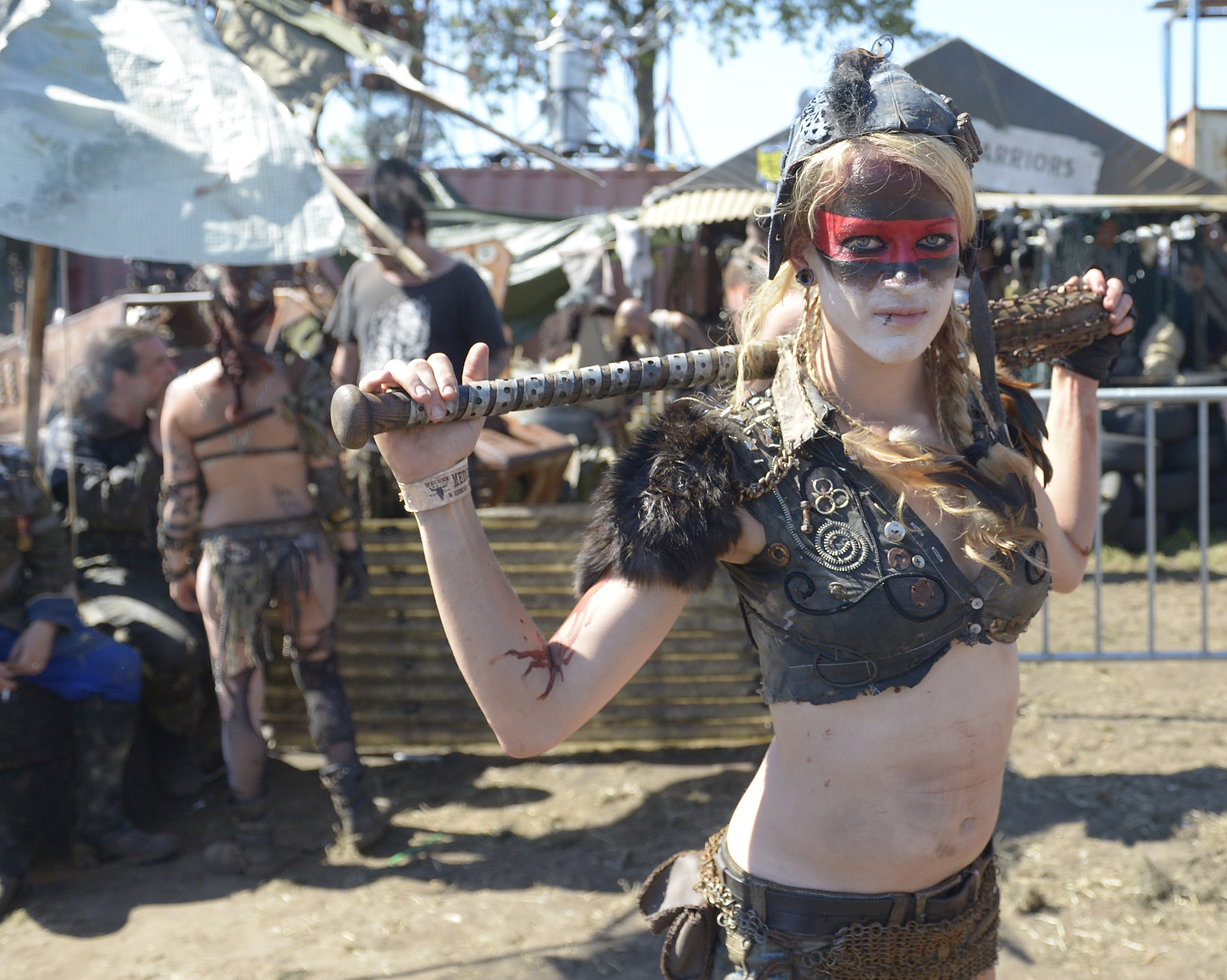
Wacken Heavy Metal Festival 2013

Visitors from a group of end time role gamers enjoy the Wacken Open Air heavy metal music fest on August 2, 2013 in Wacken, Germany. Approximately 75,000 heavy metal fans from all over the world descend every year on the north German village of 1,800 residents for the annual three-day fest. By Patrick Lux/Getty Images.

A Pit Stop On The Road To Democracy? Ctd

The Economist is pleasantly surprised about Mali’s election to restore democratic government in the wake of its civil war:

The election [on Sunday] was praised by observers for its high turnout and overall transparency. But coming just six months after a French-led force chased away Islamist militants who had seized control of the country’s vast north, and hastily arranged under intense international pressure, it was nonetheless riddled with flaws. Hundreds of thousands of voters were disenfranchised for lack of new biometric identification cards. Even some who made it to the polls, cards in hand, could not find their names on voter lists.

Still, it was not the debacle many outsiders had forecast. On an otherwise quiet day, voters crowded the streets leading to polling stations. Many marvelled that they had never seen such numbers at the ballot box. The 53.5% turnout shattered the previous record by 15 percentage points. Perhaps most important in a country still jittery after the jihadist occupation of the north, the day passed without violence.

Meanwhile, Michael Totten praises Morocco as a model of moderation in the Arab World:

Morocco has free and fair elections, but not for its head of state. That has to change sooner or later. The Moroccan monarchy will eventually have to sideline itself or face being sidelined by others. Smart Arab kings know this is true of the institution in general. As Jordan’s King Abdullah said to Jeffrey Goldberg of The Atlantic, “where are monarchies in 50 years?” In the meantime, Morocco provides a safe space for peaceable coexistence between liberals and Islamists, Muslims and Jews (including Israelis on holiday), Arabs and Berbers, modernists and traditionalists.

The Western press has wasted a lot of words lately describing the Muslim Brotherhood as moderate. But Muhammad VI is a real moderate. He’s a conservative in the sense that he belongs to a very old tradition and order, and he’s a liberal insofar as he advances women’s rights and has willingly abdicated some of his power. He’s a Muslim ruler who not only protects Jews, but declares Jewishness a part of Moroccan identity. He pushes for careful and deliberate change without overwhelming the country with too much at once, thus avoiding a hostile and potentially violent reaction from traditionalists.

Morocco is a little like Costa Rica during the Cold War—a calm, friendly, stable, sane, peaceable, and essentially civilized oasis in a region that has known precious little of those things.

Previous Dish on the recent upheavals in the Arab world here, here, and here.

Adorably Divisive

4164596380_888979b8f9_b

Jon Mooallem says the polar bear is losing its potency as an environmental symbol:

I don’t know whether you saw the YouTube video that Obama put out to accompany his big climate speech in June, but I was surprised: There wasn’t a single polar bear image in it. It was all floods and storms and dried-up corn. Four years ago, there would have definitely been polar bears in that video. Today, though, the polar bear is just not as potent a symbol. It’s become too political. It doesn’t really resonate with environmentalists anymore and it ticks off everyone else. What’s amazing is that it’s just a freaking bear, yet it’s become as divisive a figure as Rush Limbaugh.

Previous Dish on polar bears here, here, and here.

(Photo by Susan Poupard)

A Green Cremation

Josh Clark and Chuck Bryant outline various ways to process human corpses. One option on the horizon:

Alkaline hydrolysis is an established technology that is already in use—albeit for the disposal of cattle infected with spongiform disease and cadavers that have outlived their usefulness at teaching and research institutions. Because of the utter lack of sentimentality attached to the process and the resulting goo it produces, alkaline hydrolysis has been largely left untouched for regular old funerals, even in places where it’s a legal means of disposing of corpses.

If the green lobby ever gets true power and starts wielding it against end-of-life norms, you will soon likely have no choice, however, so getting on board with the idea of having your body reduced to an oily, neutral substance sooner rather than later can help you to be a true early adopter in this area. Even more appealing, it uses about five to ten percent of the energy cremation does.

How it works:

In the process of alkaline hydrolysis, your corpse will be slid into a large stainless steel contraption that looks a bit like a freestanding pressure cooker, mainly because that’s what it is. An alkaline solution is introduced into the sealed chamber and heated to between 170 and 350 degrees Fahrenheit (depending on which method is used) and allowed to stew until your skin, organs, tissue and viscera have completely dissolved into the solution. A similar process also introduces pressure to the mix to speed up the process.

All that’s left over is a squishy version of your bones, which are then crushed and presented to your family. The rest of you is gone in virtually every sense of the word: The alkaline solution and heat completely destroy DNA; even a transhumanist would have a hard time conceiving of you being present in the solution at the end of the four hours.

Update from a reader:

As others will certainly point out, the technique described in your post was documented in the Mary Roach book, Stiff: The Curious Lives of Human Cadavers. Highly recommended.