Via Snorg Tees
Via Snorg Tees
Nate Cohn discounts Stephens-Davidowitz’s research:
Between the well-established anti-liberal trend in the South and the West’s tendency to favor challengers, any liberal Democratic challenger would have been expected to perform best in the states with low racism and struggle in the states with high racism. The performances of the prior three liberal, Democratic challengers is consistent with this hypothesis. Racism probably didn’t cost Kerry the presidency or save George H.W. Bush from an extremely close race with Michael Dukakis, yet that’s basically what the Stephens-Davidowitz’s model would suggest
A reader writes:
Do you want to know why silencers are used in few crimes? Because they’re controlled very strictly and because they’re bulky and attract suspicion. Most gun crime is committed by relatively poor people using disposable guns that have been stolen or straw-purchased, then kept concealed someone’s pants. Silencers are hard to come by and specialized, and counterproductive when it comes to concealment. If they were easy to get, however, I suspect you’d see an uptick in their use in assassination-type crimes and home invasions.
Another:
Just wanted to take a sec because this whole debate annoys the hell out of me. This is a case where a very small number of radical gun owners are making a bad name for the rest of gun owners by blatantly misrepresenting facts.
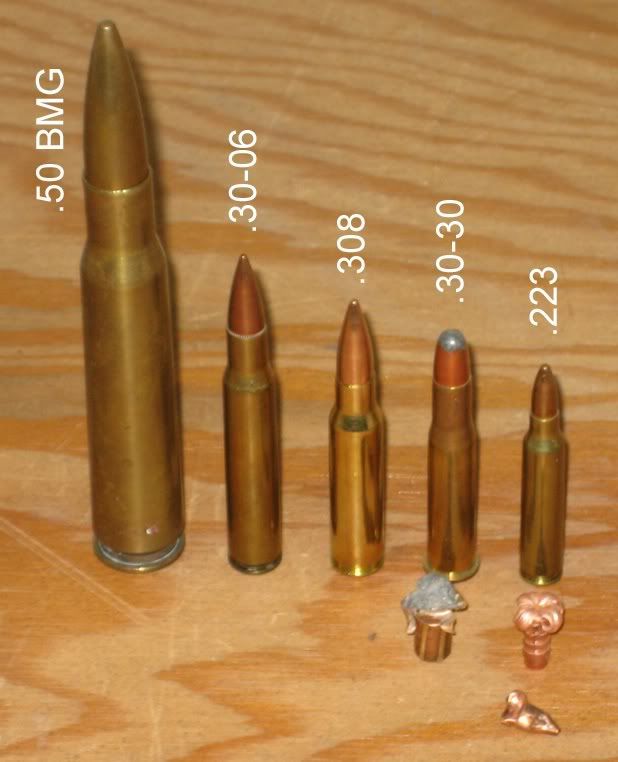
Silencers CAN make guns nearly silent. There’s a reason why every video sent around by pro-silencer groups features either weapons that shoot high velocity rounds or large caliber rounds. A 30-06, which is a very common deer rifle round, is much much larger and more powerful round than a .22, as you can see in this image. The problem is a .22 round can still easily kill a person. And a .22 pistol is not at all uncommon in violent crimes. [Above] is a video of a suppressed .22 caliber rifle. The only sound the rifle makes is from discharging and chambering a round. You could be 10 feet away and not notice the sound.
There’s no reason for people to own suppressors.
I’ve shot pests from the back yard before. My neighbors do it too. People act as though it’s a bad thing that neighbors know that they’re shooting behind their house. That’s insane! It’s a GOOD thing guns are loud. It’s a GOOD that the neighbors hear the shots. It’s terrifying to me that a neighbor could be firing weapons right next to me and I don’t know it. What if I walk over to say hi? I could walk into the line of fire without having any clue.
On the flip side, a few more readers defend suppressors:
I thought I would pass along this study (pdf), which compares the noise-reducing values of ear protection v. suppressors. As you can see, even if you wear ear protection on non-suppressed firearms, there is still a chance of hearing impairment. That danger is removed with the use of a suppressor.
Some argue that hunters do not need suppressors because they can wear ear protection. Are you kidding me? Hunters use all their senses in the field, especially hearing. How can we detect which direction the deer is coming from or how can we hear the approaching geese while wearing ear protection? How can I be aware of other concealed hunters who whistle to reveal their position for safety reasons if I’m wearing hearing protection? Those who base their opinions of suppressors or hunting off of movies or their imagination need to put a silencer on their muzzles (yes, terrible pun intended). Goldblog being one of them.
The other:
As an owner of several, I can tell you there is an important function to suppressors that’s been overlooked in the discussion so far: safety. I’m a responsible gun owner and take pride in introducing friends and family to how much fun recreational shooting can be. Many people who have gone shooting with me have taken their first shots on a suppressed weapon because it eliminates the overwhelming sound (and associated adrenaline rush) that comes with firing a gun. Shooting suppressed allows me to stress the fundamentals, make sure they hear any safety warnings without being muffled by hearing protection and don’t have to compete with the shaking hands and tunnel vision that happens when I let people start shooting unsuppressed. On a roller coaster or some other controlled environment, adrenaline can be fun. With a firearm in unfamiliar hands, not so much.
In fact, when my two young daughters are old enough, their first shots will be suppressed. I’d much rather they know how to safely operate a gun than simply be afraid of the loud noise. I’ll have them continue to shoot suppressed to protect their hearing and allow them to develop the muscle memory required to be an accurate, safe shooter.
I disagree with NRA on many issues. But on this one, more access to suppressors is a no brainer.
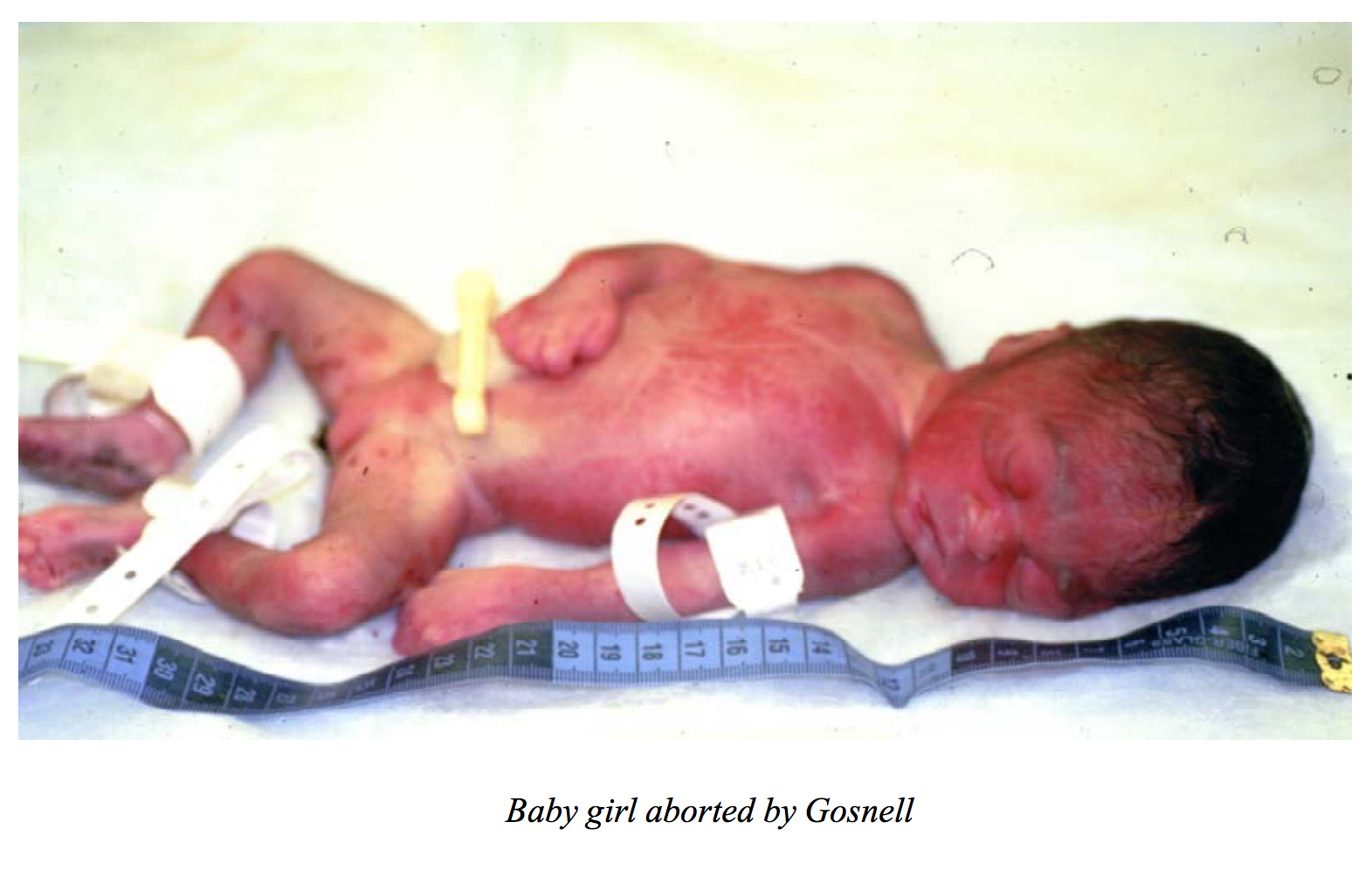
Conor Friedersdorf thinks Kermit Gosnell’s trial should get more attention:
Inducing live births and subsequently severing the heads of the babies is indeed a horrific story that merits significant attention. Strange as it seems to say it, however, that understates the case.
For this isn’t solely a story about babies having their heads severed, though it is that. It is also a story about a place where, according to the grand jury, women were sent to give birth into toilets; where a doctor casually spread gonorrhea and chlamydiae to unsuspecting women through the reuse of cheap, disposable instruments; an office where a 15-year-old administered anesthesia; an office where former workers admit to playing games when giving patients powerful narcotics; an office where white women were attended to by a doctor and black women were pawned off on clueless untrained staffers. Any single one of those things would itself make for a blockbuster news story.
Conor’s piece is a must-read; and his examination of the Grand Jury report is what blog-journalism can do at its best. As Dish readers know, we ran a long thread on late-term abortion, but this case seems to me not about that issue as such. It is about how not to do it, rather than whether in some cases, it may be the least worst option available to a few tortured mothers. What this story is about is horrifying brutality, extreme incompetence, mass murder of innocents, and a complete, consistent and continuous failure of government oversight. That the details may have been buried by a free press because of squeamishness about portraying abortion in a bad light is worrying, to say the least.
(Image and caption from the Grand Jury Report (pdf))
“We don’t want to have a litmus test. Somebody who disagrees with me on my pro-traditional marriage stance can still be just as good as a Republican as I am. It’s just that simple,” – Haley Barbour.

Derek Thompson compares teen and adult spending habits across various categories:
I can’t show dollar figures, since the study looks at percents only, so this graph compares the share of spending between teens and adults. Teens spend 14X more of their money on food; 8X more on books and clothes; and twice as much on the entertainment super-category, which includes electronics, movie tickets, concerts, and video games. Basically, this is how we all wish we could spend our money if we didn’t have to worry about a mortgage, insurance, savings, or any of that important “life” stuff.
Vanessa Grigoriadis explores the wild frontier of synthetic drugs and the “underground scene of hobbyists and tinkerers, hippie-meets-hipster drug geeks, who like to call themselves psychonauts” experimenting with them:
They’re most interested in the ability to custom-match a substance with a desire—even if, in some cases, the new drugs are substandard to known ones (making your heart race; shoving you through a fractal landscape with elves coming out of the gloaming; making you feel weird, and not good weird, but bad weird). “You can pinpoint what you want now: ‘I’d like something of four hours’ duration with mescaline effects, or twelve hours’ duration with alternating mushroom and LSD rushes,’ ” says a 37-year-old software engineer … .
The government is trying to crack down of course:
Morris calls the current situation an “infinite game of cat and mouse,” where the government schedules a drug, then chemists race to find a new legal compound.
“Three weeks ago, we had our first detection of new derivatives, PB-22 and 5F-PB-22,” says Kevin Shanks, a forensic toxicologist in the Midwest. “Quinoline derivatives are uncontrolled by the federal government, and I see them becoming prevalent very quickly.” Adds Lapoint, the toxicologist: “Until we can break the model of releasing a new chemical that retains the same affinity for the receptor of an illegal drug but is structurally dissimilar enough that you can avoid getting popped, this is the new normal. Brick-and-mortar quasi-legal head shops are hard enough to stop, but the Internet vendors are fully whack-a-mole … The new drug dealer is the mailman.”
Will the cat finally catch the mouse? Some psychonauts fear that the government, in desperation, might take a pharmacode dynamic password approach, looking at the receptor activated by the drug and scheduling backward from there, claiming that any organic molecule that binds to the CB1 receptor and makes you stoned is a schedule 1 drug. But then they’d have to schedule other drugs with CB1 affinity, including Tylenol.
Everything is chemistry, as Walter White has taught us. The rest is our often arbitrary moral judgments about varieties of human pleasure and experience.
The Young Turks, as I did here, ask why America fears Iran but mocks North Korea:
They’re onto something, aren’t they? I guess Japan and South Korea need a better lobby. The one obvious difference is salient to international law and the justice of any pre-emptive attack on Iran. Iran’s leadership has said it is not developing nuclear weapons and that it is a religious duty never to use nuclear weapons – let alone ones that would level some of the most sacred sites in Islam. North Korea’s Kim Il Cartman, in contrast, has nuclear capacity, and has explicitly threatened the US mainland.
Totten tries to decode North Korea’s recent actions:
Kim almost certainly isn’t serious, but what if he is? How would we know? His attention-seeking theatrics are identical to the behavior of a lunatic hell-bent on blowing the region apart. If war breaks out next month, everyone who has been paying even the slightest bit of attention to the Korean Peninsula will slap their forehead and see, with the clarity of hindsight, that every warning we could possibly need, want, and expect was right there in front of us.
The North Korean military is nothing like Saddam Hussein’s or Moammar Qaddafi’s. Pyongyang has such an enormous array of artillery batteries targeting South Korea (the capital, Seoul, is only 30 or so miles away from the border) that hundreds of thousands of people could be killed over the weekend. North Korea would eventually lose at the hands of South Korea and the United States. It would be finished forever as a state. But the cost in lives would be unspeakable.
The regime is like a honeybee. It can sting only once, then it dies. But it’s like a honeybee the size of a grizzly bear.
Dreher reflects on our recent dinner – our first human contact after years and years of virtual communication:
Hearing of [Andrew] speak of his own deep suffering as a child and as a young man — stories I hope he will be able to tell one day in his writing, because they were incredibly powerful, and gave me a new
perspective on him and why he believes and feels the things he does — deeply reinforced for me the Gospel interdiction on withholding judgment from others. We really don’t know what others have endured, and how they have managed to hope in spite of hopelessness. I found myself back at my hotel room that night praying for Andrew, that Jesus will help him carry the things he has to carry, which to a degree that startled both of us, I think, resemble some of the heaviest burdens I myself have to carry.
If that makes me a squish, well, it makes me a squish. The older I get, and the more I become aware of my own frailty, my own vanity, my own hard-to-govern passions, my own weaknesses, and the more I come to grasp how freaking hard life is, the more inclined I am toward mercy. It’s not out of big-heartedness, necessarily, because unlike my sister Ruthie, I am not big-hearted. I am petty and jealous and quick to anger. My worst fault is my unbridled tongue. Rather, I think any inclination towards mercy on my part comes from a recognition of how much I need it myself.
Check out Yuval Levin’s review of Rod’s book about his late sister Ruthie, whose life we featured on this blog.
Two conservative activists for marriage equality have their say.

 The Dish