Establishing Rand’s Bona Fides

Douthat thinks that “the legitimization of Rand Paul as a right-wing folk hero has implications that extend beyond the narrow hypothetical where he chose to plant his filibuster flag”:

[L]egitimizing, as Real Conservatives (TM), politicians who advocate restraint is a necessary precondition to broader policy change. Opportunism follows influence, and creates it — and right now Paul has more influence within his party than every other realist, paleoconservative and libertarian Republican of the last decade put together.

Harry J Enten points out that, were Paul to run for president and get the GOP nod, “Paul would be the most conservative Republican to win the nomination ever.” That may make it harder for his opponents to brand him as a RINO:

Rand Paul is really, really conservative. He’s the second most conservative senator, next to Mike Lee of Utah based on roll call votes. This is matched by the by the ideological ranking system based on campaign donors.

Trading Healthcare For Cash

Retirement Wealth

Using the chart above, Josh Barro points outs that social security is “the most important retirement-saving vehicle” and argues that its benefits should be increased. He would be willing to cut Medicare to do so:

We are talking about the need to cut cash payments to seniors in order to finance ever more expensive health benefits for them, despite those health benefits’ dubious value. Why not give seniors less health care and more cash? With the U.S. devoting an extra six points of gross domestic product to health spending compared with our peer countries, there should be room for much deeper cuts in Medicare than what President Barack Obama has proposed. If a key purpose of those cuts was to expand Social Security, political opposition from seniors might not be as fierce.

McArdle sees a problem with this idea:

[W]hy not give people cash instead of an in-kind benefit? Well, there is a reason, with health care; in fact, there are a few of them, all of come back to the observation that health care is simply fundamentally unlike other in-kind goods that the government provides. Unlike the cost of food, or housing, or other in-kind benefits that we give to people, the value of health care varies wildly between individuals. Some people, even the majority, might be better off with cash. But the people who would be worse off would be really worse off.

Seeding Innovation

Last month SCOTUS heard oral arguments for Bowman v. Monsanto:

The question before the Court is surprisingly simple: when a farmer buys a Roundup Ready soybean seed, is it free to do what it wishes with the seeds harvested from the Roundup Ready plantings?  The farmer (Bowman) says yes – arguing that Monsanto’s rights in the seed and its progeny are “exhausted” by its sale of the first seed.  Monsanto, by contrast, argues that because it never made or sold the harvested seeds, those seeds cannot be replanted without violating the patent.

Ronald Bailey worries about the consequences were SCOTUS to rule against Monsanto:

If the Supreme Court does “eviscerate” seed patent protections, agricultural biotech companies could turn to genetic engineering solutions similar to the Technology Protection System (TPS), an approach developed in 1999 by the U.S. Department of Agriculture and the seed company Delta & Pine Land Company (now owned by Monsanto). TPS consists of an array of three genes that causes a second generation of seeds to be sterile so that farmers would gain nothing by saving them. Bowman himself suggested in 2009 to the Federal District Court that Monsanto could protect itself against people like him by deploying TPS.

Uncle Sam’s Sister

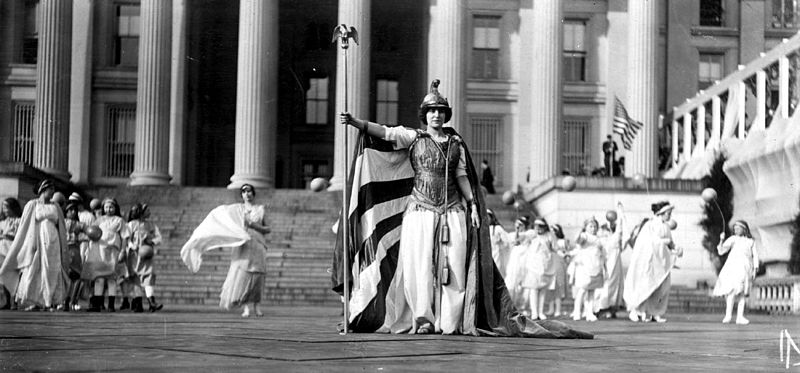
Garance Franke-Ruta hails Columbia, “the feminine historic personification of the United States of America, who has since the 1920s largely fallen out of view”:

[S]he was as recognizable to Americans of yesteryear as the man in the top-hat and tails remains today, and when the suffragettes donned robes and armor, they garbed themselves in her rebel warrior’s spirit. From the 18th century until the early decades of the 20th, Columbia was the gem of the ocean, a mythical and majestic personage whose corsets or breast-plates curved out of her striped or starred or swirling skirts with all the majesty of a shield. She was honored from the birth of the nation — “Hail, Columbia!”, whose score was first composed for the inauguration of President Washington, was an unofficial anthem until the “Star-Spangled Banner” displaced it as the official national one in 1931 — to the birth of the recording and film industries, which is why we have had Columbia Records and Columbia Pictures. Yes, that lady with the torch at the start of the movies isn’t just some period-costume-wearing chick — she is a relic of this earlier personification of America, immortalized forever by the most American of industries.

America was Columbia in the same way that England was Britannia and France was Marianne. America’s capital is the District of Columbia; New York City’s great early private university was Columbia College (now University).

Why did her star fade? Garance’s view: “Female national personifications in general fell out of vogue as women took on a growing role as emancipated citizens.”

(Photo: A suffrage pageant in 1913 via Wikimedia Commons)

The French Suck At English

David Sessions investigates why. Among other reasons:

[A]lmost all foreign-language television and many Hollywood films are dubbed, rather than subtitled, in France. The practice is driven both by popular demand and by the French state’s attempts to block invasion by foreign languages, especially English. While what the government calls the “cultural exception” —that French culture won’t be left to the ravages of the market—is certainly understandable, it can have unintended side effects, like insulating the French population from linguistic awareness they need in a world increasingly dominated by English.

Ronald Reagan, RINO

As the usual suspects flay Jeb Bush alive for daring to argue that a Grand Bargain would include both entitlement cuts and perhaps some tax reform that would add to revenue, Pete Wehner sighs. For one thing, Ronald Reagan would not be invited to CPAC in 2013:

Let’s consider Bush’s record as governor. While Bush never signed an anti-tax pledge, he never raised taxes. In fact, he cut taxes every year he was governor (covering eight years and totaling $20 billion).

Ronald Reagan, by contrast, signed into law what his biographer Lou Cannon called “the largest tax hike ever proposed by any governor in the history of the United States”–one four times as large as the previous record set by Governor Pat Brown–as well as the nation’s first no-fault divorce law and legislation liberalizing California’s abortion laws, which even people sympathetic to Reagan concede “led to an explosion of abortions in the nation’s largest state.” (Reagan didn’t anticipate the consequences of the law and deeply regretted his action.)

Now imagine the Norquist and Shirley standard being applied to Reagan in the 1970s.

The Prison As Opera House

DL_Haarlem

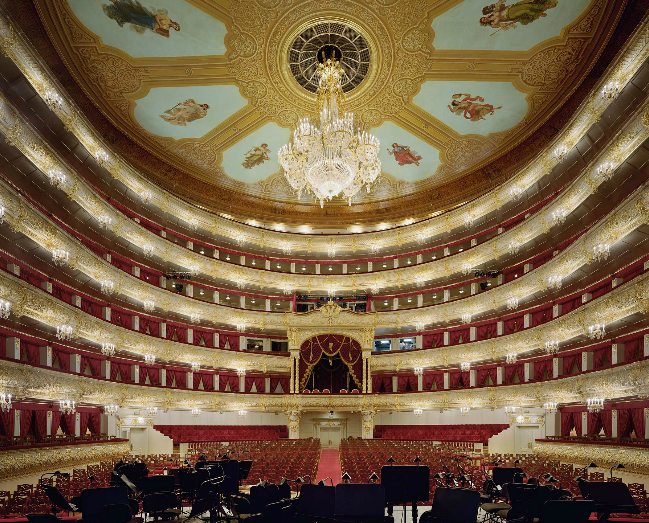
David Leventi photographed world famous opera houses and Dutch roundhouse prisons, “a study in contrasts between beauty and squalor, opulence and poverty, serenity and cacophony”. And yet the domed structures have some eerie similarities as well:

Screen shot 2013-03-11 at 2.27.29 PM

From an interview with the photographer:

Domed prisons are the closest examples of Jeremy Bentham’s Panopticon model of mass surveillance prison design – a central guard tower with a complete view of surrounding prison cells. This concept was designed so a central observer could monitor all of the prisoners at once, without any particular prisoner being able to feel under inspection. The domed prisons have the same architectural structure as an opera house (without the opulence), but the difference is in who is observing whom. In an opera house, the audience of many is observing a few. In these domed prisons, it’s the reverse.

He was struck by the relative barbarism of US prisons compared with those in Holland:

Prisoners in Stateville prison [in Illinois] are treated like animals… It is loud. The warden at Stateville gave me assurances. But he also told me not to show any fear. One prisoners was running against the bars the entire time I was there. Bang. Bang. Bang. Endlessly. It was shocking. Everything at Stateville was the complete opposite to what I experienced in the Netherlands…  I have always had stage fright. Photographing from the center of a round prison causes anxiety. The inmates are all yelling, jeering, talking, in cacophony. You become the center of attention, and taking the photograph becomes a performance in itself. At first I was intimidated, but then I blanked everything out and focused on photographing. It must be the same for the performer.

(Photo: Haarlem Prison, Netherlands, and the Bolshoi Opera House, Moscow, by David Leventi)

Obama’s Betrayal On Transparency

On national security, it gets worse and worse:

In a year of intense public interest over deadly U.S. drones, the raid that killed Osama bin Laden, terror threats and more, the government cited national security to withhold information at least 5,223 times – a jump over 4,243 such cases in 2011 and 3,805 cases in Obama’s first year in office. The secretive CIA last year became even more secretive: Nearly 60 percent of 3,586 requests for files were withheld or censored for that reason last year, compared with 49 percent a year earlier.