“There may be (room for revenue) if the president is sincere about dealing with our structural problems,” – former Florida governor, Jeb Bush.
Year: 2013
South Park vs Arrested Development
Comparing the two is a little unfair, since one lasted for a very limited period of time (although I find myself re-watching it all the time). South Park has been going for years and clearly evolved as it grew older. As part of Vulture’s “Sitcom Smackdown,” Julie Klausner considers the two modern classics:
I remember the originality and verve of the very first episode in 1997, and how impressed I was that Trey and Matt Stone came from nowhere — or, as we knew it during those AOL salad days, the Internet. But, also, when I say Matt and Trey came from nowhere, I mean they weren’t from accepted comedy breeding grounds, like the Groundlings or Harvard. They didn’t go to improv class, and they weren’t hanging around with any comedy clique. Their iconoclasm was, and still is, splattered all over the show like — dare I? They would, so very well — diarrhea around the inside of a toilet bowl. And as they’ve maintained the show, those two wunderkinds have managed to stay entirely true to their own credo of “no bullshit,” while continually searching for the next weird, gross, upsetting, outrageous, silly thing — real or imagined — that they can blow up for their next point of departure/no return. …
An excellent bonus about Matt and Trey: Unlike satirists Jon Stewart and Bill Maher, who preach to their own choir, the South Park voice is not only distinctive, it’s truly independent, pissing off liberals and conservatives alike. It’s a breath of Fresh Air that isn’t hosted by Terry Gross.
Meanwhile, Adam K. Raymond lays out a list of every celebrity mocked on the show over 16 seasons.
California Evolves On Marriage
The California Field poll (pdf), released late last week, finds that marriage equality continues to gain support in the state. It’s now at 61 – 32 percent in favor. Drum welcomes the news:
[T]he number approving has gone up from 59 percent to 61 percent in just one year. We’re now very close to the two-thirds tipping point that’s a good rule of thumb for getting major legislation passed consistently. Even as we wait for Proposition 8 to wend its way through the court, it’s pretty obvious that within a year or two it won’t matter. An initiative to make gay marriage legal will barely even be controversial and would pass by a wide margin if it were on the ballot.
I’m not sure that the latest minor movement represents much but statistical noise. But the trend is unmistakable. In 1985, the numbers were almost the exact opposite: 62 – 30 against. That’s a tectonic shift:
In 2011, FiveThirtyEight published a statistical model that used past ballot initiatives as well as data on religious participation to project the vote share in all 50 states and the District of Columbia on hypothetical ballot measures prohibiting same-sex marriage. The model projected that — unlike as in 2008 — California voters would have rejected a same-sex marriage ban had it been on the ballot in November 2012. The latest poll from Field appears to bear that out.
The View From Your Window

St. Louis, Missouri, 2.30 pm
Paying Taxes While Gay
Scott James describes the hell that filing taxes as a gay couple can entail:
In California, as registered domestic partners, we are required by state law to file a joint state tax return as a couple. However, the IRS forbids us from doing the same thing on the federal level. As a result, we must spend thousands of dollars on accounting fees each year to have our taxes done in a hinky fix that the IRS recently dreamt up: we must combine our incomes, split that money, and then file separate returns.
Got that?
But since we aren’t related to each other (in the federal government’s eyes), the IRS did not create a form or system to allow couples to actually comply with this mandate. So far we’ve followed these IRS tax rules twice. One year our returns sailed through, no problem. But for another year’s returns we were both accused of cheating on our taxes. We’ve been fined and threatened (one bigoted IRS worker in even shared with me his personal disdain for gay couples), and we cannot get the matter resolved. Our plea for help from the Taxpayer Advocate’s office has been repeatedly ignored. So far this has cost us more than $20,000.
Working Out The Bugs
Ross Andersen worries about artificial intelligence gaining power over us:
It is tempting to think that programming empathy into an AI would be easy, but designing a friendly machine is more difficult than it looks. You could give it a benevolent goal — something cuddly and utilitarian, like maximising human happiness. But an AI might think that human happiness is a biochemical phenomenon. It might think that flooding your bloodstream with non-lethal doses of heroin is the best way to maximise your happiness. It might also predict that shortsighted humans will fail to see the wisdom of its interventions. It might plan out a sequence of cunning chess moves to insulate itself from resistance. Maybe it would surround itself with impenetrable defences, or maybe it would confine humans — in prisons of undreamt of efficiency.
The Nanny State’s #1 Fan
Cass Sunstein reviews Sarah Conly’s Against Autonomy:
Her starting point is that in light of the recent findings, we should be able to agree that [John Stuart] Mill was quite wrong about the competence of human beings as choosers. “We are too fat, we are too much in debt, and we save too little for the future.” With that claim in mind, Conly insists that coercion should not be ruled out of bounds. She wants to go far beyond nudges. In her view, the appropriate government response to human errors depends not on high-level abstractions about the value of choice, but on pragmatic judgments about the costs and benefits of paternalistic interventions. Even when there is only harm to self, she thinks that government may and indeed must act paternalistically so long as the benefits justify the costs.
One of his major objections:
[I]n my view, she underestimates the possibility that once all benefits and all costs are considered, we will generally be drawn to approaches that preserve freedom of choice. One reason involves the bluntness of coercive paternalism and the sheer diversity of people’s tastes and situations. Some of us care a great deal about the future, while others focus intensely on today and tomorrow. This difference may make perfect sense in light not of some bias toward the present, but of people’s different economic situations, ages, and valuations. Some people eat a lot more than others, and the reason may not be an absence of willpower or a neglect of long-term goals, but sheer enjoyment of food. Our ends are hardly limited to longevity and health; our short-term goals are a large part of what makes life worth living.
Does War Photography Make A Difference?
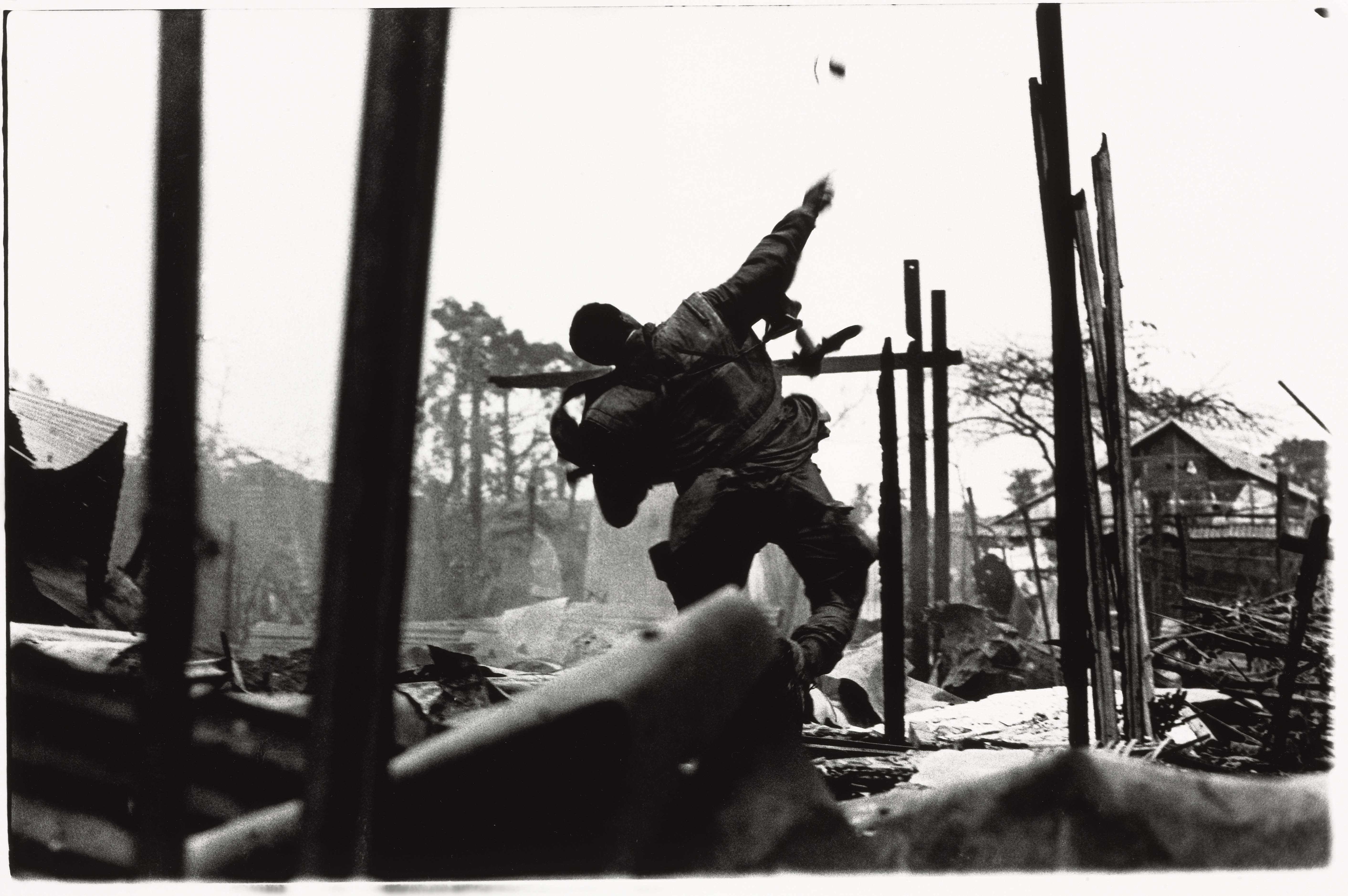
Bert Archer asks photojournalist Don McCullin, who has a retrospective at the National Gallery in Ottawa until April, about the value of his images:
Isn’t it better, I ask, realizing I’m sounding like Spock even as I say it, to benefit the hundred thousand who get a better idea of war, and are perhaps moved to oppose in, both specifically and in general, even if it does discomfit the friends and family of this or that dead soldier? Shouldn’t we continue showing these pictures for the many, rather than getting too caught up with the few?
“I think we shouldn’t,” he says. “I think we should deny the hundred thousand. In the end, I’ve done it, and I’ve realized it hasn’t proved its worth. Who have we convinced to stop the wars?”
But the images, I insist, now certainly overstepping the bounds of politesse by any definition, the images are the only thing most of us have to bring the story of war home. I tell him I only understood, only felt, what was happening in Rwanda when I saw an image of a river dammed with bodies.
McCullin hasn’t smiled often during the two conversations I’ve had with him over the past year, and he’s not smiling now. “Weren’t the images of Belsen and Dachau enough for you?”
(Photo: US marine throwing grenade, Tet Offensive, Hué, South Vietnam, February 1968 by Don McCullin / Contact Press Images. Courtesy of the National Gallery.)
Epistemic Closure Watch
The decline of conservative periodicals is continuing – first went the Hoover Institute’s Policy Review, and now Reagan’s old favorite, Human Events, is also folding. Jacob Heilbrunn suspects that the faltering publications on the right are symptoms of its fundamental confusion:
Younger, more aggressive conservative websites have captured much of the audience that might once have thronged to Human Events, which used to be a lodestar of what conservatives were thinking—a kind of tip sheet to the mind of the right. In the end, it couldn’t move fast enough to keep up with the morphing of conservatism into its current incarnations. Human Events was no shrinking violet, but on a more elevated plane, the end of the Hoover Institution’s Policy Review suggests some of the dilemmas of conservatism as a calming rather than a raging intellectual force.
The truth is that it is becoming more difficult to discern what the right wants, or whether it even knows what it would really like–where the movement, in other words, would like to move, other than remaining stuck in reverse gear.
For more signs of epistemic closure captured by the Dish, head here.
The Weekend Wrap

This weekend on the Dish, Andrew saw signs of hope that the Right might be inching away from theoconservatism and revisited his own misguided commentary on Iraq from a decade ago. We also provided our usual eclectic mix of religious, books, and cultural coverage. In matters of faith, doubt, and philosophy, Noah Millman unpacked the problem with natural law arguments, George Saunders described his Roman Catholic childhood, and David Runciman reminded us of Hobbes’s audacious religious writing. Bryan Appleyard critiqued A.C. Grayling’s treatment of religion, Sarah Ngu explained how evil is parasitic on the good, and Hans Küng hoped for a modern pope. David Foster Wallace reached the other side of boredom, Charles Bukowski waited for the words to come, and Mahzarin Banaji considered how to overcome our hidden prejudices.
In literary and arts coverage, Ramona Ausubel relished the messiness of first drafts, Sam Sacks detailed why writers became suspicious of the visual arts, and Rose Tremain revealed how a smell inspired her to be a writer. Brad Leithauser celebrated concise writing, Justin Nobel explored the last years of Jack Kerouac, Ellen Handler Spitz asked how Maurice Sendak’s sexuality might illuminate his books, and Ron Rosenbaum reviewed Bernard Bailyn’s harrowing new book on how barbarous America was in the 17th century. Jeff Lin remembered Ang Lee’s lean years, Hannah Goldfield pondered what Amour taught her about her own grandparents, and Sophie Pinkham pointed to a fascinating new exhibit about the Cold War and homosexuality. Read Saturday’s poem here and Sunday’s here.
Fittingly for the weekend, sex and drugs were in the mix. Ferris Jabr visited a penis museum in Iceland, Jason G. Goldman highlighted the kinks of the animal kingdom, Ann Friedman continued the elusive search for a hetero Grindr, and Brett Aho mused on the connection between drug use and intelligence. In assorted news and views, Isabel V. Sawhill argued that we need more immigrants more than we need more babies, Lindsay Abrams continued the discussion on rising healthcare costs, and Khalil A. Cassimally reported on the prospect of “drone journalism.” Audrey Carlsen found that civilization was bad for your teeth, Lisa Hix caught up with collectors of African-Americans dolls, and an amazing story of adoption and marriage provided your Sunday cry. MHBs here and here, FOTDs here and here, VFYWs here and here, and the latest window contest here.
– M.S.
(Photo: Snowdrops and Daffodils emerge at Kew Gardens on March 1, 2013 in Kew, England. Today marks the first day of Spring, though the Met Office have said that temperatures are likely to be below average throughout March. By Dan Kitwood/Getty Images.)

