As regular readers know, I have always been a federalist when it comes to marriage equality, and have long preferred legislative decision-making to judicial intervention on the matter. That was one of the core disagreements between me and Evan Wolfson many many years ago when we were both devoting much of our lives to the project. I did not want one state’s decision – back then it was Hawaii’s court – to apply to every other one. And indeed, as we have seen, that hasn’t happened, and wouldn’t have happened even if DOMA had remained just a gleam in the GOP’s id. It never happened for over a century of different marriage laws in America with respect to race, age and consanguinity.
And I confessed recently that if we got a gay Loving vs Virginia this June, I would certainly weep for joy. But in a country still divided 50 – 50 on the issue, I think my tears can wait. And that’s why I think the Obama DOJ has taken exactly the right approach in both joining the Supreme Court suits over Prop 8 [PDF] and DOMA [PDF] and in making the simple and modest arguments they have. They both understand and express for the first time the systemic discrimination gay Americans have lived under for centuries, and they are small-c conservative, in that they stop short of a full-scale federal equal protection argument that would mandate marriage equality across the entire country at once.
Lyle Denniston, as usual, has a superb analysis. On Prop 8, Obama has not changed his moderate ways (and we’re told he was engaged in this brief). Money quote:
The Court can resolve this case by focusing on the particular circumstances presented by California law and the recognition it gives to committed same-sex relationships, rather than addressing the equal protection issue under circumstances not present here.
I agree. Basically, the administration is arguing that if you give gay couples all the rights and responsibilities of marriage, but withhold the name, you are discriminating less rationally than those who refuse to give gay couples any rights at all. You are legislating only stigma. And on the DOMA question, the brief argues that if a state recognizes a marriage, the federal government should defer to the state, as was the case throughout American history until 1996.
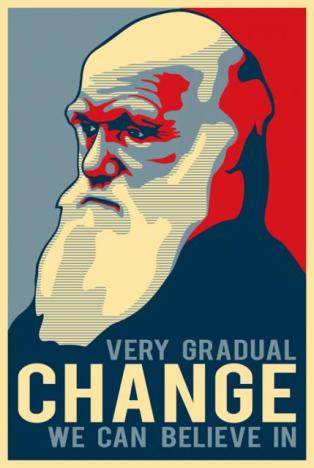
I just came from Idaho, debating a fundamentalist Christian writer and pastor, Douglas Wilson. The crowd of over 800 at the University of Idaho was full of members of his congregation, as well as students, and we debated civilly if passionately, and at the end of the debate a huge majority sided with him over me. Maybe over time, some of the points I made will resonate. Maybe they won’t. But what I do know, from my own experience, is that people can change their minds in a short period of time.
Only a short drive away from where I was speaking is Washington State, where marriage equality is legal. You can see this border – where I was instantly re-married as we drove in a pick-up truck across the border – as bizarre and incoherent (which, of course, it is), but you can also see this as something worth celebrating about such a vast and diverse country as this one. Opinion in those states differ widely – and in a democracy public opinion must count. Before Idaho, I was in Oregon, speaking on the same issue. Next year, that state looks likely to be the first one to overturn a constitutional ban on marriage equality at the ballot box. You want proof that argument and reason and time can work in a democracy? The marriage equality movement is Exhibit A: person by person, generation by generation, state by state.
Not only has federalism allowed those of us in favor of marriage equality to demonstrate that no bad consequences will come by giving gays the right to marry (Washington State’s divorce rate is lower than Idaho’s; divorce rates across the country have fallen in the decade when marriage equality became a burning issue; the first gay marriage state, Massachusetts, has the lowest divorce rate in the country); it prevents the imposition of an institution on people who do not want it or believe in it. This is what makes me a conservative, I suppose. Toleration is a two-way street. I loathe the idea of coercing anyone’s conscience, or allowing any one, central institution to enforce a one-size-fits-all solution on a diverse country, where conscience is at stake, where religious freedom matters, and where public opinion remains deeply divided.
I can see and appreciate the full liberal argument that Obama has not fully embraced. Couldn’t my gradualist, federalist, democratic argument, after all, have been made of the anti-miscegenation laws that once desecrated this country?
And the answer is yes. But mores evolve in a society; change occurs in the conscience and consciousness over time. The job of a conservative is to argue the case, when she sees fit, for change – but only when change is designed to retain the coherence of a society, not to do damage to its sense and understanding of itself. The Christian witness of Martin Luther King Jr and the simple dignity of Rosa Parks and the organizational genius of Bayard Rustin and the moral witness of so many, black and white, is what made the Voting Rights Act possible. Was America before that an unjust society? Yes. But by embracing that change, America became, in my view, more true to its founding documents, to its essential nature, than it was before. A conservative seeks to balance justice with the dispersal of power, the coherence of a culture, and the common, contingent meaning of a polity, its traditions and customs.
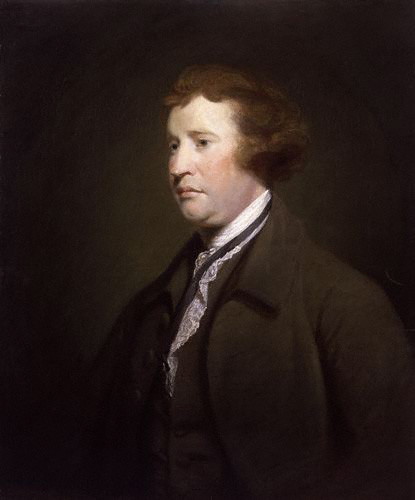 But sometimes – in fact, often – you have to change an institution in order for it to stay the same. That was Burke’s insight, not Mill’s. And that’s why I have always held that marriage equality is as conservative a cause as it is a liberal one. Once gay people fully and finally owned their own equality in their own families, and their own families responded, once centuries of internalized self-hatred and oppression and criminalization gave way to self-worth and pride and freedom, keeping gay people out of their own families became, in fact, an attack on the family as it had actually evolved in this country. The humanity of gay people – intensely proven in the crucible of the plague – won out both within our own souls and the souls of others. And it was that shift in consciousness and culture that prompted legal reform. I think in a democracy, you change hearts and minds first if possible; then you change the law. And when you change it, you do so with caution, especially with a vital social institution like civil marriage.
That’s why DOMA was so pernicious. It made the federal government the sole arbiter of civil marriage when that judgment had always been left to the states. DOMA pre-empted the national debate and tried to shut it down. Mercifully, it did not prevent any states from embracing marriage equality if they wanted to; but for the first time in history, it said the federal government would not simply recognize the states’ decisions. That was wrong on conservative and federalist grounds. It was a key moment in the take-over of conservatism by religious fundamentalism. It was a declaration of war by a government on its own citizens. It was a mile-stone in the degeneracy of American conservatism.
The second argument the Obama brief makes in the Prop 8 case is neither conservative nor liberal. It assumes that if you oppose marriage equality in a democracy, you have to do so for a substantive reason, because the minority involved has been the object of such discrimination in the past. For the first time, the American government acknowledged that centuries of criminalization, stigma, cruelty and forced invisibility, and declared that “the undisputed twentieth-century discrimination has lasted long enough.”Hence the embrace of the judicial notion of “heightened scrutiny” when assessing laws that single out this minority for further discrimination by their own government.
If the reason is that the rights and responsibilities of marriage are inherently heterosexual, because of procreation, you have a very weak case, given what civil marriage now is for straights, and after the ubiquity of contraception,  but you have a case. But if you have conceded the substance of the argument and granted gay couples all the rights and responsibilities of civil marriage – but denied them the symbolism of the the name – you are creating a separate but equal form of legal segregation that does nothing and can do nothing but express animus toward a minority or the need to segregate them from a common, binding institution. That simple segregation – without an argument – violates core civil equality. And there are eight states – California, Delaware, Hawaii, Illinois, Nevada, New Jersey, Oregon, and Rhode Island – that have laws that can only be understood as expressing the civil inferiority of gay couples. That must, in my view, end. And it can end without a resort to a sweeping federal decision across all 50 states.
What must also end is the federal government’s unconstitutional decision to distinguish between the marriage licenses in any given state where it is the law on the basis of gender. My marriage license in Massachusetts, New York and DC is indistinguishable in every respect from my heterosexual peers. The federal government has no business getting involved and creating a distinction. In fact, it has no way of actually telling from the licenses themselves which are gay and which are straight. It must infer that merely from our first names. When the feds are poring over a state’s marriage license to analyze the first names of the couple, it is way over the line. On almost any other issue, federalist conservatives would agree with that.
Which is why Obama is both advancing a liberal goal of equality with a small-c conservative concern for gradual change based on moral, empirical and spiritual evolution. He leads, like every Tory should, from behind the people he represents.


 When people think about talking, their throat muscles move even if they do not speak, a phenomenon known as
  The Dish