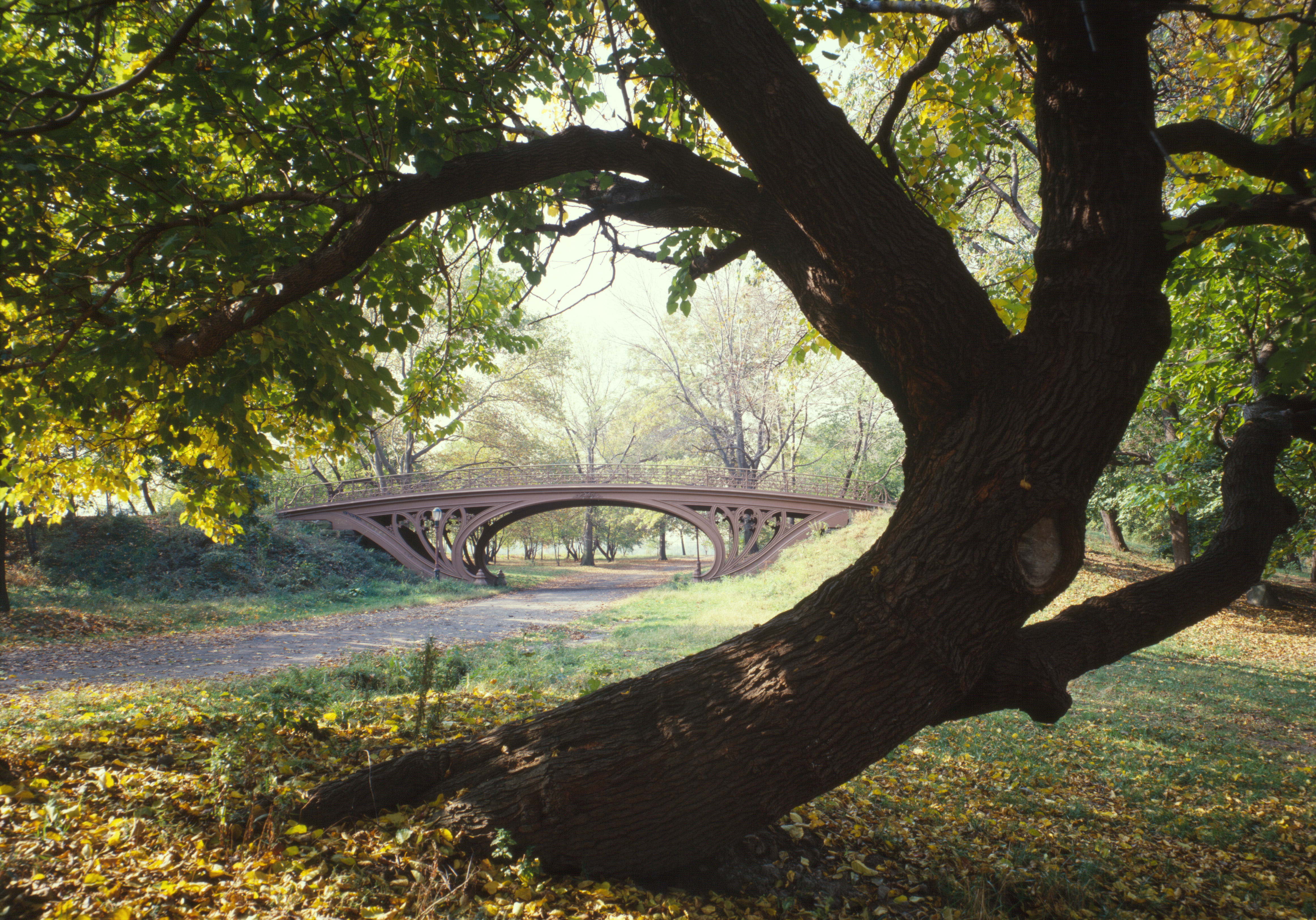
The site Gilded Birds asks an array of thinkers to discuss a seminal object of beauty. In a recent installment, the philosopher Joshua Cohen chose New York City's Central Park, claiming that its "hard to think of other places that so fully combine beauty with being public":
The ambition of the designers, Frederick Law Olmsted and Calvert Vaux, was to give people the experience of being in the Adirondacks. Wealthier New Yorkers in the middle of the nineteenth century could afford to go the Adirondacks. The Park was designed to give people who couldn’t get there that same experience of being in nature. So the park provides an experience of beauty and is also, as you say, driven by a remarkable intellectual idea: the democratic idea of an experience of beauty for the people. Moreover, you have the extraordinarily obsessive and creative execution, down to the finest detail, of that intellectual idea.
It's also a feat of engineering:
First, because the park is two and a half miles long, the Central Park Commission said that there had to be four cross-streets that connected the east and west sides of Manhattan. … It was done in 1858, ten years before dynamite was invented. Central Park is filled with very old, hard rock, so they had to use gunpowder to create the transverses. In fact it took more gunpowder to build Central Park than was used by both sides in the battle of Gettysburg.
(Photo of one of Central Parks bridges, no two of which are identical, via Wikimedia Commons)
 The Dish