When I first stumbled into blogging over 12 years ago, it was for two reasons: curiosity and freedom. I was curious about the potential for writing in this new medium; and for the first time, I felt total freedom as a writer. On my little blog, I was beholden to no one but my readers. I had no editor to please, no advertiser to woo, no publisher to work for, no colleagues to manage. Perhaps it was working for so long in old media that made me appreciate this breakthrough so much. But it still exhilarates every day.
For the first time in human history, a writer – or group of writers and editors – can instantly reach readers – even hundreds of thousands of readers across the planet – with no intermediary at all.
 And they can reach back. Few discovered this as quickly as I did – and as the Dish evolved over the first six years, I was forced to admit when I was wrong (see: George W. Bush, 9/11, the Iraq War, etc), and it was not pretty at times. Looking back, I realize that in many ways, you, the readers, made that unavoidable. I had to face you every day. And you were merciless.
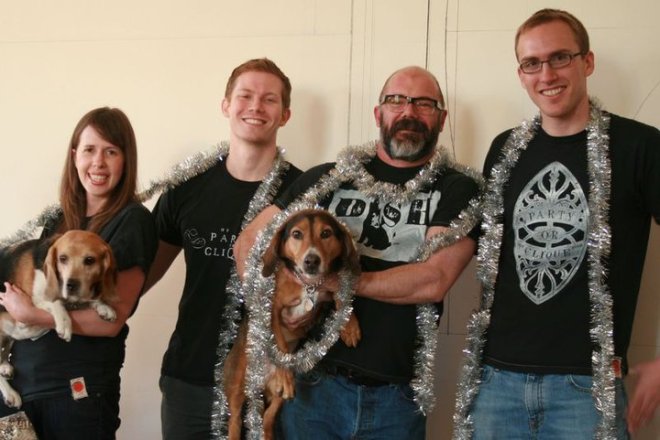
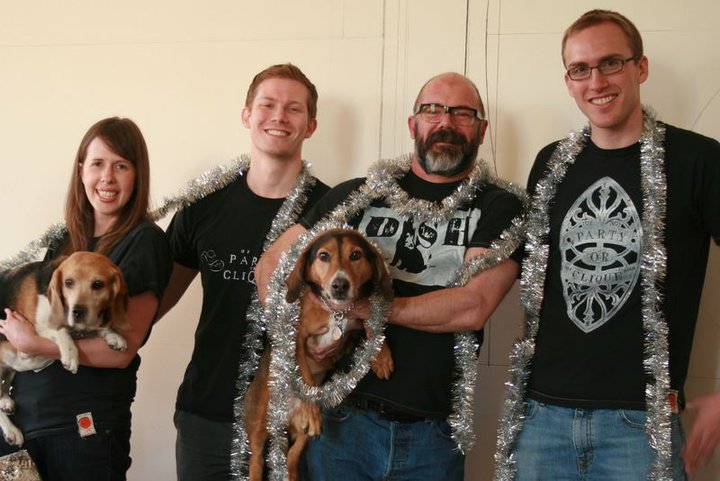
And that, I realized, was a good thing. The more this sank in, the more what started as a monologue became a dialogue. The dialogue eventually ceded to a sprawling conversation in which I now play the role of host/provocateur, while my Dish colleagues (and readers) scour every nook of the web to add insight, news or amusement to the whole mix. We have an official staff of 7, and an unofficial one of around a million unpaid obsessives.
But as the pretense of old media authority ceded to the crowd-sourcing of argument, fact and thought, one thing remained elusive: how to make this work financially.
 I did it on my own for nothing but two pledge drives for six years. Then I tried partnering with bigger media institutions for the following six – Time, the Atlantic, and the Daily Beast. The Beast in particular gave us the resources and support to take the Dish to a new level of richness, breadth and depth: adding one more staffer and two paid interns, helping us with video, giving us a supportive space to breathe and grow, as we have. We are intensely grateful to them, especially Tina Brown and Barry Diller, who became great partners in this evolving enterprise. The Dish now is beyond what I allowed myself to imagine twelve years ago.
And so, as we contemplated the end of our contract with the Beast at the end of 2012, we faced a decision. As usual, we sought your input and the blogosphere’s – hence the not-terribly subtle thread that explored whether online readers will ever pay for content, and how. The answer is: no one really knows. But as we debated and discussed that unknowable future, we felt more and more that getting readers to pay a small amount for content was the only truly solid future for online journalism. And since the Dish has, from its beginnings, attempted to pioneer exactly such a solid future for web journalism, we also felt we almost had a duty to try and see if we could help break some new ground.
The only completely clear and transparent way to do this, we concluded, was to become totally independent of other media entities and rely entirely on you for our salaries, health insurance, and legal, technological and accounting expenses.
 The “we” in particular was executive editors Patrick Appel, Chris Bodenner and me. Every member of the Dish team contributed to the debate (Zoe and Matt very much so), but Patrick, Chris and I were the core. We’d bonded most powerfully during our coverage of the Iranian Green Revolution, but over the years before and since, we’d evolved into something like a triad brain, blogging alone (apart from weekly lunches and South Park nights) but somehow intuiting each other’s rhythms and interests, passions and conflicts – while constantly feeding off yours in the in-tray and beyond. We grew to trust the model that emerged from the intimations of the daily blogging, and treasure the formula you slowly helped concoct and we collectively call the Dish.
And so last week, the three of us signed an agreement setting up an independent company called Dish Publishing LLC, and agreed to strike out on our own with no safety net below us but you.
And that’s the primary reason we’re hopeful this can work. Because the Dish readership is the core strength of this site anyway, and you have shown us over the years how deeply you care about an open, honest, provocative debate on all kinds of subjects. The computers say the average Dish reader spends up to 17 minutes a day on the site – a massive investment of time and energy. All your extraordinary emails are anonymous – a sign of a community eager to debate the real issues rather than take credit for their own insights. And this relationship between all of us now goes back a long way – to a time when everyone I met kept asking me what a blog was, through the horrors of 9/11 and the Iraq War, past the Obama miracle and the odd lies of a former half-term governor whose name now escapes me.
 If you’ve stuck with the Dish through all this, if you’ve tolerated my idiosyncrasies and occasional meltdowns, and if, in fact, you’ve helped create our content with the best reader threads anywhere online, we just hope you’ll help keep this show on the road in a more sustainable, permanent way.
So, as of February 1, we will revert to our old URL – http://www.andrewsullivan.com. All previous URLs will automatically redirect, so don’t worry about losing us. Until then, the Beast has generously agreed to keep us on so we can organize ourselves in time for the launch. In fact, Tina and Barry have been fully supportive of this decision once we made it, although we’re all sad to part ways.
Here’s the core principle: we want to create a place where readers – and readers alone – sustain the site. No bigger media companies will be subsidizing us; no venture capital will be sought to cushion our transition (unless my savings count as venture capital); and, most critically, no advertising will be getting in the way.
 The decision on advertising was the hardest, because obviously it provides a vital revenue stream for almost all media products. But we know from your emails how distracting and intrusive it can be; and how it often slows down the page painfully. And we’re increasingly struck how advertising is dominated online by huge entities, and how compromising and time-consuming it could be for so few of us to try and lure big corporations to support us. We’re also mindful how online ads have created incentives for pageviews over quality content.
We’re only human and so we want to set up the incentives so we are geared entirely to improving the total reader experience, not to ratchet up hits, or to please corporate advertisers. We may be fooling ourselves, and it would be imprudent for us to rule out all advertising right now for ever. So we won’t. But it would be a great missed opportunity, in my view, not to try. Remember the classic saying:
If you’re not paying for the product, you are the product being sold.
We want to treat our readers better than that, because you deserve better than that.
Hence the purest, simplest model for online journalism: you, us, and a meter. Period. No corporate ownership, no advertising demands, no pressure for pageviews … just a concept designed to make your reading experience as good as possible, and to lead us not into temptation.
 So for the next month, we’re going to offer you advance membership of the Dish for $19.99 a year, which translates to $1.67 a month, which is around a nickel a day. The meter won’t start until February, and the price won’t change then, but by pre-subscribing, you give us a crucial financial bridge to get to independence – and you’ll never notice a thing when the transition happens.
To be honest, we didn’t know where to set the price – we have almost no precedents for where we want to go – but $19.99 seemed the lowest compatible with a serious venture. We wanted to make this as affordable as possible, while maximizing revenues.
Which led us to a second thought: who better knows the value of a site than its readers? More to the point, we know the Dish is worth much more to some of you than others; that twice-daily readers plumb more of it than daily ones; and that multiple-click readers and regular emailers are the source of so much of our content, and might see the Dish as more valuable. So for those of you who would like to support the Dish over and above $19.99, we’ve left the price box empty. Pay $19.99 or what you think a year of reading the Dish is worth to you. No member will have any more access or benefits than any other member, but if hardcore Dishheads want to give us some love for the years of free blogging and for the adventure ahead, we’d be crazy not to take it.
And we do need it, if we are to continue and grow. We need, in particular, to get paid decently for what is extremely intense work 365 days a year. Some people I bump into ask me how we produce 240 posts a week (13,000 separate posts last year alone) or how we read the 90,000 emails we get a year. I have a simple answer: we work our asses off. And my colleagues and I deserve to be paid for it. (For the best defense of this basic principle, see Louis CK’s explanation here.) If the money doesn’t come in, we’ll have to find another way to make a living.
 Equally, the more you give us, the more we will be able to do. It’s really as simple as that. The more of you who pre-subscribe the easier our transition will be; the more of you who give more than $19.99 the more ambitious we can get. We have many future projects in our head – commissioning and editing original long-form journalism is a core ambition of ours, along with a possible monthly tablet magazine called “Deep Dish” (which would both require hiring old-school editors) – and the more you give us, the faster we can evolve, mature and develop further. Throughout, we’ll be asking you what you want, and as always, airing dissent and opinion as freely as possible.
And that’s where the real pay-off begins. If this model works, we’ll have proof of principle that a small group of writers and editors can be paid directly by readers, and that an independent site, if tended to diligently, can grow an audience large enough to sustain it indefinitely.
The point of doing this as simply and as purely as possible is precisely to forge a path other smaller blogs and sites can follow. We believe in a bottom-up Internet, which allows a thousand flowers to bloom, rather than a corporate-dominated web where the promise of a free space becomes co-opted by large and powerful institutions and intrusive advertising algorithms. We want to help build a new media environment that is not solely about advertising or profit above everything, but that is dedicated first to content and quality. (And notice I’ve even finally managed to spell “advertising” right in this post.)
That’s why we have partnered with a new company, TinyPass, which shares our vision. You can read their mission statement on their website. Here it is:
Tinypass is a team of refugees from advertising, design, and banking. We came together because we believe that in this new digital world there should be more than one bookstore, more than one music store, and more than one video store.
 They are providing a way for any website – from a mom and pop store to a fledgling newspaper – to get revenue from readers in the easiest and simplest way. No massive cut for Amazon when selling your book, no 30 percent to Apple for getting your music or podcast out there – just a simple meter and payment system that can be scaled at any level.
Our particular version will be a meter that will be counted every time you hit a “Read on” button to expand or contract a lengthy post. You’ll have a limited number of free read-ons a month, before we hit you up for $19.99. Everything else on the Dish will remain free. No link from another blog to us will ever be counted for the meter – so no blogger or writer need ever worry that a link to us will push their readers into a paywall. It won’t. Ever. There is no paywall. Just a freemium-based meter. We’ve tried to maximize what’s freely available, while monetizing those parts of the Dish where true Dishheads reside. The only tough love we’re offering is the answer to the View From Your Window Contest. You’ll have to become a member to find where the place is. Ha!
So it’s over to you. We’re in your hands. The meter won’t start until February 1, but you can become a member now. It takes two minutes tops. All you need is a credit card and a zip code – and you’re done. The more of you who decide to contribute more than $19.99 the deeper and richer and more ambitious a Dish we will be able to provide. We have no marketing, no ads, no corporation behind us now. We only have you.
The link is here. Join us and keep the Dish alive and ad-free here.
And change the media world just a little – for the better.










 The Dish
