Citizenship For Sale

Charles Kenny entertains the idea:

So, how much could—or should—we charge for the right to live and work in the U.S.? [Gary] Becker suggested the U.S. should let in anyone who can pay $50,000 to Uncle Sam and pass a criminal background check. That may seem like a lot of money, but Miao Chi and Scott Drewianka of the University of Wisconsin estimate (PDF) that, allowing for factors including age and education, the average recent Mexican immigrant with a green card (permanent resident status) earns roughly $20,000 a year more than the average Mexican immigrant without one (on a more limited visa or undocumented). So, allowing for education, the average immigrant from south of the border would recoup that $50,000 in less than three years.

Reihan prefers a competitive bidding system.

“An Unpalatable Truth”

quinoa

Joanna Blythman warns of the effects of quinoa’s increasing popularity:

The appetite of countries such as ours for this grain has pushed up prices to such an extent that poorer people in Peru and Bolivia, for whom it was once a nourishing staple food, can no longer afford to eat it. Imported junk food is cheaper. In Lima, quinoa now costs more than chicken. Outside the cities, and fuelled by overseas demand, the pressure is on to turn land that once produced a portfolio of diverse crops into quinoa monoculture. … [T]here’s a ghastly irony when the Andean peasant’s staple grain becomes too expensive at home because it has acquired hero product status among affluent foreigners preoccupied with personal health, animal welfare and reducing their carbon “foodprint”. Viewed through a lens of food security, our current enthusiasm for quinoa looks increasingly misplaced.

(Photo: Employees are seen working at a quinoa processing plant in Challapata, 117 km from Oruro, Bolivia on February 15, 2011. According to Epifanio Murana, director of the Quinoa Producers Association (ANAPQUI), the crop will become – due to its high nutritious value – an important food source in the future and NASA researchers consider it to be an exceptionally complete and balanced food, adequate for astronauts. By Aizar Raldes/AFP/Getty Images)

The Scourge Of Paperwork

No one is immune:

Consider the following memo, captured in 2008 but dating back to the 1990s, from Egyptian Al Qaeda leader Mohammed Atef to a subordinate. Atef, a former agricultural engineer, wrote: “I was very upset by what you did. I obtained 75,000 rupees for you and your family’s trip to Egypt. I learned that you did not submit the voucher to the accountant, and that you made reservations for 40,000 rupees and kept the remainder claiming you have a right to do so. … Also with respect to the air-conditioning unit…furniture used by brothers in Al Qaeda is not considered private property…I would like to remind you and myself of the punishment for any violation.” That’s right: Al Qaeda required a T&E report.

The Daily Wrap

Inaugural Parade Held After Swearing In Ceremony

Today on the Dish, Andrew live-blogged the inauguration ceremony and reflected on the strengths and weaknesses of the president’s address. He placed Richard Blanco’s inaugural poem in the tradition of American letters, collected some instant literary analysis, and posted the piece in its entirety. Finally, after Douthat and Continetti admitted Obama is the liberal Reagan, Andrew flashed back to the first time the phrase crossed his mind.

We rounded up reax to the speech, gathered the expectations beforehand, and noticed that Fox News seemed rather glum about the whole thing. Nate Silvercompared Obama’s second-term respite with those of past presidents, Mark Blumenthal and Emily Swanson measured Americans’ outlook on the president’s place in history, and Chait warned not to think of the chief executive as all-powerful in his second term. Relatedly, we asked whether America should brag about its record of handing off power so peacefully and surveyed the lexicon of words coined by heads of state throughout our history.

In assorted coverage, we gauged the varying ways news outlets are covering Mali, Katy Waldman identified the most vivid reels of our memory, and Derek Thompson graphed Americans pushing away Big Gulps for cappuccino. David Drake articulated how more a liberal immigration policy makes America more competitive, readers shared their thoughts on American workers’ time off, as wesaid good riddance to invasive body scanners at the airport. Drew Olanoffapplauded Google’s efforts to scan your chicken scratch, while Nicholas Carrcriticized the search engine’s myopic turn.

In an unusually sporty vein, we cataloged the gruesome toll professional football extracts from players, a reader piped up for Manti Te’o, and contra Lance Armstrong, we brought a truly honorable athlete into the spotlight. Later we peeredout of Ebenezer Baptist Church in Atlanta during today’s VFYW and then racedthrough each season of the year on the Nordland Railroad for a MHB.

– B.J.

(Photo: U.S. President Barack Obama waves as the presidential inaugural parade winds through the nation’s capital January 21, 2013 in Washington, DC. Barack Obama was re-elected for a second term as President of the United States. By Chip Somodevilla/Getty Images)

Blanco, Whitman And Orwell, Ctd

Ken Tucker calls Richard Blanco’s effort “a humble, modest poem, one presented to a national audience as a gift of comradeship” and “a quiet assertion that poetry deserves its place in our thoughts on this one day, and every day.” His further analysis:

“One Today” is a fine example of public poetry, in keeping with Blanco’s other work: Loose, open lines of mostly conversational verse, a flexible iambic pentameter stanza form…The poem takes its structure from its title: It follows America over the course of one day, from sunrise to sunset. It dips into autobiography, mentioning Blanco’s working-class origins in his father “cutting sugarcane” and his mother toiling in a grocery store “for twenty years, so I could write this poem” — the sort of anecdotal locution that President Obama himself likes to employ in speeches.

Jahan Ramazani, an editor of The Norton Anthology of Modern and Contemporary Poetry, also gives the poem high marks:

“[It] was especially well suited to the occasion … A more knotty or abstruse poem—even if it had a better chance of lasting or was more formally innovative, less conventional in its imagery or diction—would have missed the mark as an act of public address as well as poetry.”

And, like me, Greg Kandra caught echoes of Whitman in the poem:

It’s full of rich images and sensations—a whiff of Whitman with a dollop of Woody Guthrie and a brush stroke or two of Thomas Hart Benton for good measure.  It’s a big-hearted paean to a big country.

Lastly, Annie Colbert rounds up “10 people annoyed that [the] inauguration poem didn’t rhyme.”

The NFL: NASCAR With Human Beings

no-pain-no-game

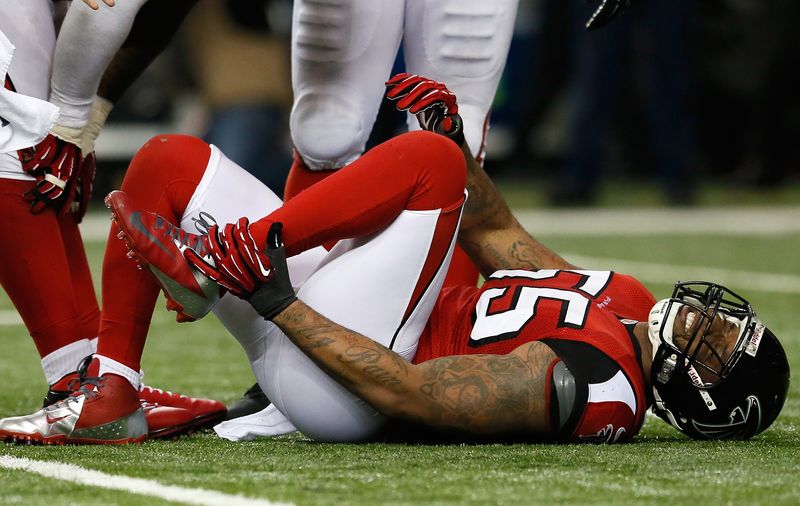
Tom Junod takes a searing look into the price football players pay for their injuries:

[I]njuries are a day-to-day reality, indeed both the central reality of their lives and an alternate reality that turns life into a theater of pain. Experienced in public and endured almost entirely in private, injuries are what players think about and try to put out of their minds; what they talk about to one another and what they make a point to suffer without complaint; what they’re proud of and what they’re ashamed by; what they are never able to count and always able to remember.

According to a study conducted by the National Football League, the approximately two thousand players active on the thirty-two NFL teams suffered about forty-five hundred injuries in 2011, for an injury rate of 225 percent. These were injuries that caused not simply pain and discomfort but also cost players at least two weeks of playing time; these were not simply bruises and scratches and abrasions but also concussions, torn ACLs, ruptured Achilles tendons, high ankle sprains, hyperextended elbows, broken metatarsals, turf toes, stretched or compressed spines, pulled hamstrings, and torn muscles, along with assorted strains, contusions, and herniations.

(Photo: John Abraham #55 of the Atlanta Falcons reacts after injuring his leg against the Tampa Bay Buccaneers at Georgia Dome on December 30, 2012 in Atlanta, Georgia. By Kevin C. Cox/Getty Images)

America Isn’t Big On Vacation, Ctd

Readers sound off on a recent thread:

One of your readers argues that adopting the “center-left fantasy” of a 35 hour work week would be beneficial for the economy, stating that it would “have the additional salutary effect of boosting the economy via increased consumption in off hours and of boosting employment (marginally?) as companies hire more workers to make up for lost time.” Your reader would be well advised to read up on the lump of labor fallacy, which illustrates why such a fantasy is just that.

Another:

I am a state employee in the Commonwealth of Virginia and I so often hear from friends and family their astonishment at the amount of paid time off I get.  Well, some perspective: when my wife and I had our first child I had one week off.  One week to spend with my new son who, due to several things happening together, had some severe weight gain issues.  So here I am, a newborn struggling to nurse, a wife at the end of her rope and I’m lucky to get 32 hours paid time off?!  It blows my mind when I hear about how other developed nations legally mandate (evil word!) six weeks or more of paternal leave and yet we have no, I repeat NO provision for fathers to have paid time off to help their partners in those first weeks after childbirth.

By the way, those 32 hours were not specifically designated for paternal leave.  I had to use what is called “Family Personal” time, which I could have used to take more time around the holidays, as most state employees do.  I am lucky enough to be a salaried employee; if I were wage, I would get nothing.  Never mind the fact that I make less than $30,000/year.

Another:

There are a lot of lesser known benefits to being in the military. One of my favorite is 30 days leave a year. It accumulates at 2.5 days a month. But here’s the thing: no one takes advantage of it.

Naval regulations say that you cannot have more than 75 days of leave on the books (more if you deployed). I’m currently at 0 days leave, the result of having a wedding and honeymoon, but many of my coworkers constantly complain that that are at risk of losing leave.

Even when given the opportunity to take leave, many of my shipmates refuse. And they continue to refuse until they can’t not take vacation. The people who make a career of the Navy genuinely love it, love to work and it rubs off (less so on me). The culture in the commands I’ve worked at has been one of working long and hard. Many of the people I know in the civilian world are the same. I know many people would welcome more paid leave. But I’m curious how many people would take advantage of it?

Can Google Read Your Doctor’s Handwriting?

Google Handwrite is new mobile tool that allows you to “write your search”:

Drew Olanoff is excited about the tool’s long-term possibilities for learning:

If Google wants to try and learn how to read your handwriting when nobody else in the world, including you, can, then more power to them. By learning how to read a multitude of handwriting samples, the company can then release functionality to scan documents of any type in, making it easier to convert them into digital format. This type of approach is how Google has tuned its Voice product, by allowing you to call GOOG411 to get restaurant information and phone numbers. You talk, Google learns. Now when you write, Google learns that, too.

The Peaceful Transition Of Power

Dylan Matthews is unimpressed by it:

It’s probably fair to say that the U.S. has had an unusually long run, in both number of transitions and length of time those transitions have spanned. But between Robert Walpole and David Cameron, the United Kingdom has gone through 74 changes of prime minister, all without bloodshed. How democratic UK elections were in the early 18th century is a matter of legitimate debate, but they weren’t that much less democratic than early American elections, restricted as they were to white, property-owning free men.

Jonathan Bernstein counters:

It is a big deal — a very big deal. And while other nations have gotten the hang of it, the US was very much a pioneer. Yes, we could argue about the Brits vs. the US, but either way when Jefferson replaced Adams it really was something amazing and rare in world history.

Backing Away From Backscatter

atrimage

David Kravets calls the TSA’s decision to pull the Rapiscan body scanners from airports “a rare victory” for the public:

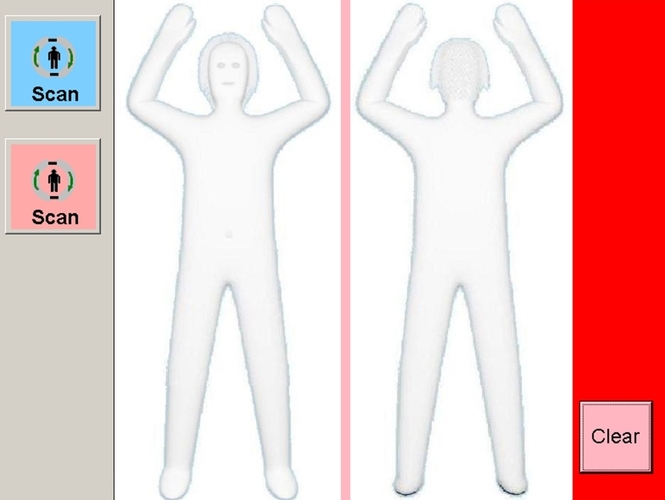
The Transportation Security Administration is pulling the plug on its nude body scanner program, a decision announced Friday that closes the door to a tumultuous privacy battle with the public scoring a rare victory. Travelers will continue to go through one of two types of scanners already deployed, but images of naked bodies will no longer be produced. Instead, software will instead show a generic outline of a person.

Bruce Schneier applauds:

This is a big win for privacy. But, more importantly, it’s a big win because the TSA is actually taking privacy seriously. Yes, Congress ordered them to do so. But they didn’t defy Congress; they did it. The machines will be gone by June.

(Photo: The new machines will use generic outlines like the one shown here rather than passenger-specific images. Via NPR, from the TSA.)