In Praise Of Squirrel Piss

In Praise Of Squirrel Piss

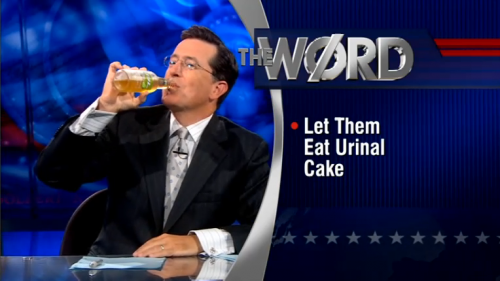
Tom Dibblee defends Bud Light Lime, the butt of all beer jokes:

Bud Light Lime does two things: it allows me to shed the burden of sophistication, and it restores beer to what it once was, when I was young — a tart nectar that makes me happy. To speak to the second point (I’ll get to the first later): With Bud Light Lime, I never find myself slumping over the bar, turning every 30 seconds to watch the door in the hope that some imagined friend will walk inside and pick me up and fix all my problems. With Bud Light Lime, that kind of attitude isn’t even possible. Because it’s hard to be morose while drinking a sweetened, lime-flavored beer, yes, but also because being morose requires a self-seriousness that Bud Light Lime completely forbids.

The beer is a fitting legacy for the Anheuser-Busch heir who came up with it – August Busch IV, a “drug-addled playboy” known as “the Fourth”:

Once in charge, the Fourth, billed as a leader in touch with the new era of adult contemporary beverage consumption, set out to modernize the company, and launched such products as Jekyll & Hyde (a type of double shot that came in two bottles that you were supposed to mix together on your own), Spykes (a mildly-alcohol flavored shot that came in a tube that looked like a lipstick container that you were supposed to “spyke” your beer with — flavors included melon and hot chocolate) and Bacardi Silver (which may very well have been good, but came too late into the flavored malt beverage market, and just plain missed the boat).

But the Fourth did not stop there. Next came Chelada Bud, Michelob Ultra Lime Cactus, and Michelob Ultra Tuscan Orange Grapefruit, and — yes — Bud Light Lime.

On a related note, Martyn Cornell assesses the 20 most influential beers of all time. (Spoiler alert: Bud Light Lime isn’t on it.)

Getting In Cars With Strangers

Robert Moor recounts his harrowing and life-affirming experiences while hitchhiking:

My first ride was with a stoned Maori who drove me a hundred miles in the wrong direction and dropped me off in a valley full of gray mist, where ice crystals collected on my eyelashes as I shook and regretted everything. My next ride was with a trio of jolly, heavyset women who warmed me with hot chocolate and drove me directly to my door, with plenty of time to spare.

People always surprise me with the strangeness of their interior lives and the depth of their generosity. They are forever handing me things: food, cans of beer, cigarettes, joints. One guy in a Cadillac even pressed twenty dollars into my palm, saying I needed it more than he did—perfectly inverting the presumed ass-grass-or-cash economics of hitching. Economics which, by the way, I have found wholly false. Every single time I have offered to pay for a driver’s gas, I have been refused. Perhaps it would have cheapened the driver’s charity, sullied our real (if ephemeral) moment of humanity.

The End Of The Dive Bar?

OLYMPUS DIGITAL CAMERA

Aaron Gilbreath shines a light on the King Eddy Saloon in downtown LA:

Located on the ground floor of the historic King Edward Hotel, The King Eddy is the last original Skid Row bar still in operation, or what some call an authentic dive. LA’s Skid Row contains one of the largest permament populations of homeless people in the US, with estimates reaching as high as 5,000 residents. During the Prohibition, the saloon was a hub of alcohol bootlegging, and part of an enormous network of underground tunnels in downtown Los Angeles. After alcohol sales became legal again, novelist John Fante drank there, and poet Charles Bukowski drank and wrote there, too.

The new owners closed the bar last month for renovations that will “preserve the bar’s ‘mythical status'” – which raises questions:

As a dive—before it closed for renovations—the King Eddy served some of the cheapest booze downtown. It was the last place you could order a whole pitcher of beer for $12, a shot for $3.50 and a bottle of Bud for $4. They also sold $4 microwaved cheeseburgers. (Prices had been lower, but rent went up.) A banner above the entrance advertised “The Best Dive Bar In Los Angeles.” The website listed their motto: “Where nobody gives a shit about your name.”

To adapt, the King Eddy was starting to market its authenticity, a process which inevitably diminishes authenticity. In this age of heavy-duty lifestyle marketing and urban renewal, when does a dive cease to be a dive?

John Fleury and Benjamin R. Freed argue that dive bars in DC died long ago:

We’re not looking for a true dive. We’re looking for the invented nostalgia of the idea a dive conveys but watered down for the masses. You don’t want your beer to taste like the Toxic Avenger washed his feet in it (even if it costs $2), but you want a place that looks like that is the case while drinking your Dogfish Head IPA or Ketel One and in-house tonic. The idea of a disgusting bathroom that looks and smells more like a slaughterhouse is incredibly amusing and useful when writing on your OKCupid profile that you “love dive bars,” but it is a very different story when you have to use it multiple times after that “seal has broken.”

We are not a city that loves grime. We are a city that wants to give off the impression that we want grime, when in fact we crave sushi and cupcakes. We even go so far as to drink in places that go to a lot of effort to have dive aesthetics but price points and atmospheres that would keep any true dive regular out of the establishment. This may be the way the city is moving to as a whole: give the appearance of an all-American city while fewer and fewer can actually afford to pay their tabs.

(Photo by Marc Hughes)

Does Scrabble Need A Revision?

In 1938, Alfred Butts assigned numerical values to Scrabble tiles based on how often each letter appeared on the front page of the New York Times. Joshua Lewis believes it’s an inaccurate system:

“The dictionary of legal words in Scrabble has changed,” says Joshua Lewis, researcher and creator of a software program which allocates new, up-to-date values to Scrabble tiles. “Among the notable additions are all of these short words which make it easier to play Z, Q and X, so even though Q and Z are the highest value letters in Scrabble, they are now much easier to play.” … According to Lewis’s system, X (worth eight points in the current game) is worth only five points and Z (worth 10 points now) is worth six points.

Nick Carr warns that changing the game “would make it more difficult for novices to occasionally beat veteran players”:

The scoring system’s lack of statistical rigor, it turns out, has the unintended but entirely welcome effect of adding a little extra dash of luck to the game. The apparent weakness is a hidden strength. Let the statistically impure thoughts of Alfred Butts serve as a lesson to us all about the dangers of our current fixation on the analysis of large data sets. Armed with a fast computer, a wonky algorithm, and whole lot of Big Data, a geek will begin to see problems everywhere in our messy human world. And by correcting every statistical anomaly or inefficiency, he’ll not only clean up the messiness, he’ll remove the fun. To a statistician, a blank tile has no value. The rest of us know better.

Faces Of The Day

Ignant explains:

In 1528 German writer Albrecht Dürer wrote ‘Four Books on Human Proportion’ as a study of male profiles. In 2008 artist Pablo Garcia picked the study up, transforming the illustrations into a bizarre device. With his so called ‘Philograph’ he found a method of tracing and extrusion through sequential profiles. The device transforms Dürer’s drawings into a contiguous 3D extrusion that rotates on a circular spindle causing a shadow that morphs between each profile.

T.S. Eliot Kept His Day Job, Ctd

The Dish previously noted Eliot’s work as a banker. Robert Fay reminds us “what is less appreciated is that he was really good at his day job”:

Huxley observed that Eliot was indeed “the most bank-clerky of all bank clerks.” And an officer of Lloyd’s, upon hearing of Eliot’s success with his “hobby,” remarked that Eliot had a bright future at Lloyd’s if he wanted it. “If he goes on as he has been doing, I don’t see why — in time, of course, in time — he mightn’t even become Branch Manager.”

Fay is disillusioned over writers’ day jobs:

When I learned that critic and famed literary blogger Maud Newton worked full-time as a legal writer, I was devastated. Maud Newton? The woman with 156,000 followers on Twitter, who knows every book person worth knowing, and has been on C-Span Book TV, she needs a day job? … It’s far more romantic to think of Jack Kerouac working as a railroad brakeman, zipping through the American landscape on the California Zephyr, than it is to ponder Eliot in the basement, Dr. William Carlos Williams treating a dying woman or the former U.S. Poet Laureate Ted Kooser (2004-2006) working as an executive at Lincoln Benefit Life Insurance Company in Nebraska. That’s why I’ll stick with denial, thank you very much.

Update from a reader:

Well, Eliot may have kept it, but I’m not so sure he liked it.

According to Virginia Woolf’s diary, there were various plots among his friends to obtain an annuity for Eliot or set him up as publisher of a small literary press similar to Hogarth, the Woolfs’ publishing entity, and she implies this was because he was unhappy at the bank. I suspect the reason Eliot turned down various offers of help was not so much because he liked being a banker or didn’t wish to support himself with a “literary” job, but because his wife was emotionally disturbed and he needed considerable financial security in case he was forced to place her in a sanitarium, which, eventually, he was.

Smelling Your Way Through A Museum

Smelly_Museums

Jimmy Stamp visits the first “major museum exhibition to recognize and celebrate scent as a true artistic medium rather than just a consumer product”:

While walking through the Museum of Art and Design’s exhibition “The Art of the Scent (1889-2012)” my mind was flooded with memories of a nearly forgotten childhood friend, an ex-girlfriend and my deceased grandmother. It was a surprisingly powerful and complex experience, particularly because it was evoked in a nearly empty gallery by an invisible art form—scent.

He marvels at the exhibit’s design:

The architects lined three walls of the nearly empty gallery space with a row of gently sloping, almost organic “dimples.” Each identical dimple is just large enough to accommodate a single visitor, who upon leaning his or her head into the recessed space is met with an automatic burst of fragrance released by a hidden diffusion machine. I was told the burst doesn’t represent the scents’ “top notes” as one might expect, but more closely resembles the lingering trail of each commercial fragrance—as if a woman had recently walked through the room wearing the perfume. The scent hovers in the air for a few seconds then disappears completely.

(Image from The Art of the Scent exhibition at the Museum of Art and Design in New York, by Brad Farwell, courtesy of the Museum.)

Classifying Kafka

Joe Hanson dug up a lecture from Vladimir Nabokov, author and entomologist, on the insect The Metamorphosis‘ Gregor Samsa awakes to find himself:

Commentators say cockroach, which of course does not make sense. A cockroach is an insect that is flat in shape with large legs, and Gregor is anything but flat: he is convex on both sides, belly and back, and his legs are small. He approaches a cockroach in only one respect: his coloration is brown. That is all. Apart from this he has a tremendous convex belly divided into segments and a hard rounded back suggestive of wing cases. In beetles these cases conceal flimsy little wings that can be expanded and then may carry the beetle for miles and miles in a blundering flight … He is merely a big beetle.