The Trouble With Comments, Ctd

Chris Mooney delivers the results of a new study (paywalled) that reinforces the Dish’s stance against the comments section:

Participants were asked to read a blog post containing a balanced discussion of the risks and benefits of nanotechnology … The text of the post was the same for all participants, but the tone of the comments varied. Sometimes, they were “civil”—e.g., no name calling or flaming. But sometimes they were more like this: “If you don’t see the benefits of using nanotechnology in these products, you’re an idiot.” The researchers were trying to find out what effect exposure to such rudeness had on public perceptions of nanotech risks. They found that it wasn’t a good one. Rather, it polarized the audience . . . Pushing people’s emotional buttons, through derogatory comments, made them double down on their pre-existing beliefs.

Kilograms Aren’t What They Used To Be

The original kilogram—a slab of platinum-iridium in Sevres, Paris—now registers a different mass, throwing the benchmark off. The Economist explains why this matters:

Science would thus love to be free of this awkward lump of metal, but attempts to define mass objectively—with reference to, say, the mass of a proton—have always foundered on the question: “So how do you measure that?” For all the fancy equipment that scientists now have for monitoring the behaviour of caesium atoms and the value of the speed of light, no one has come up with a more accurate way of measuring mass than taking the Parisian ingot out of its sarcophagus from time to time, and putting it on a set of scales.

Earlier Dish on the original kilogram here.

A Civil Debate On Gun Control

Mark Hoofnagle and Matt Springer (both bloggers at ScienceBlogs) attempt a reasoned, fact-based discussion of gun control in America. Hoofnagle argues for stricter regulation:

Making access [to firearms] more challenging, and giving those who seek access more scrutiny, will dissuade those who seek to do harm from even trying to obtain these weapons. It will not stop the most motivated of individuals, it will not stop all crime, but it will reduce the frequency and severity of the problem, as well as inject some much-needed responsibility into the existing gun markets. No other product that has potential for so much harm is sold with so little oversight, or even liability for misuse, theft or loss.

Springer marshals evidence that gun control laws have little causal effect on gun violence:

Here’s a cautionary tale – one very similar nation has a homicide rate of 9.8, more than twice that of the US. That nation was the US, in 1991. What changed? Sociologists differ, but it was certainly not due to stricter gun laws. (One frequently-mentioned and surprisingly robust possibility is reduced childhood lead exposure after lead was phased out of gasoline.) Simultaneous declines took place in many other developed nations to various extents. If non-gun factors can change the murder rate within the same country by more than a factor of two, it is extremely challenging to say anything about the effects of gun laws in nations with very different cultures, histories, economies, and demographics.

Predicting a Supreme Court Shakeup

Slate has rolled out a rather morbid tool for calculating the odds of freshly vacant seats on the bench:

Using publicly available data from the Centers for Disease Control, we can get rough odds for many different scenarios. It's rough because it assumes, to put it briefly, that Clarence Thomas has the life expectancy of the average 62-year-old black man. Which is likely not true. But it is true that with four justices in their 70s—and Ginsburg turning 80 this year—this Supreme Court is one of the oldest in a long time.

Covering Up Climate Change, Ctd

Bora Zivkovic argues that the NYTimes' reassignment of their environmental writers could help climate change coverage rather than hurting it:

[C]oncern is certainly warranted. But there is potential for this to be a good thing. It all depends on the implementation. My first reaction, quoted here, was that this may be a way to modernize environmental reporting at the Times. After all, reporters were not fired, the senior editors may be. All the environmental expertise is still at the Times, but now outside of its own ghetto, able to cross-fertilize with other beats, and to collaborate with reporters with other domains of expertise.

NYTimes Public Editor Margaret Sullivan has a similar, if slightly more pessimistic, take:

Symbolically, this is bad news. And symbolism matters – it shows a commitment and an intensity of interest in a crucially important topic… If coverage of the environment is not to suffer, a lot of people – including The Times’s highest ranking editors — are going to have to make sure that it doesn’t. They say they will. But maintaining that focus will be a particular challenge in a newsroom that’s undergoing intensive change as it becomes ever more digital while simultaneously cutting costs.

The Atlantic‘s Resort To Advertorials, Ctd

A reader writes:

The worst part of this? They were moderating the comments. You can make a comment on any post from Jeffrey Goldberg or Ta Nehisi Coates and it would go through. If you put something vile in there, it would go through until moderated after the fact. The Scientology advertorial, however, blocked all posts until they were approved. This means that they gave Scientology veto power over how people respond to them, which they do not give to anyone else. As a result, the comments were almost entirely glowing about Scientology.

“Enhanced Advertorial Techniques”

I have to confess that the term “native ads” was new to me as I read the Atlantic’s spokesperson, Natalie Raab, explain the magazine’s propaganda page for Scientology – right next to journalists of the highest integrity, from TNC to Fallows. You might be too. Here’s what I found out about them from one man who played a part in coining the term last year:

“a form of media that’s built into the actual visual design and where the ads are part of the content.”

A little more Googling and I found this:

Launched three years ago, Native Solutions creates ad programs that have the look and feel of The Atlantic’s content. The goal: help brands create and distribute engaging content by making the ads linkable, sharable and discoverable. For example, take a look at the work it did with Porsche on the image-heavy sponsored post, “Where Design Meets Technology,” which was shared 139 times on Facebook and 80 times on Twitter. The Native Solutions programs has been so successful that it now accounts for half of digital ad revenue, which is up over 50 percent so far this year.

So you can see how letting advertizers drive content is lucrative and expanding. The Atlantic isn’t alone. Buzzfeed, Gawker, Forbes and HuffPo are all in the game – because online banner ads really are dead. But I can’t help but feel troubled by this development:

Like BuzzFeed, [Jay] Lauf has a 15-person creative team that helps brands create content and develop distribution strategies… Fidelity Investments is working with The Atlantic to find what Fidelity’s best assets are to tell its story. Fidelity, which uses its own in-house creative services team to create content, has a couple of campaigns on The Atlantic — one’s a video and accompanying infographic, the other is a series of pictures. Each is a branding mechanism, tying back to the financial company’s “Thinking Big” campaign.

Jay Lauf, again, is a great guy and a business genius. But when a magazine is actively working with an advertizer to “create content” that has “the look and feel of The Atlantic’s content” … well, all I can say is that if that is the future of online journalism, we should all be alarmed.

The View From Your Window Contest: Winner #136

vfyw

A reader writes:

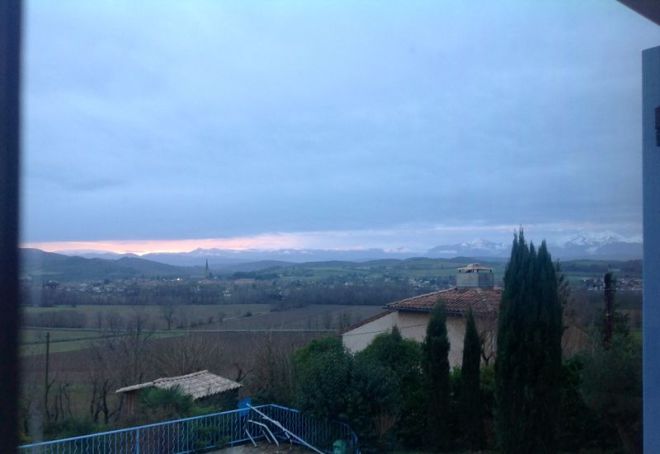
The wrought iron railing, the cypress trees, the terra cotta tile roof, the church spire in the valley, the nicely and boringly groomed farmland, the swimming pool crap haphazardly left lying around on the deck – all scream “Italy.” The mountains in the background look like they could be the Alps. I have no more specific guess than this because, well, I have a life. It’s Saturday, I’m buzzed on red wine, trying to get my younger son to finish eating his horse steak (yes, I live in Sardinia!) and I can’t wait to go to bed, so no Google searches for me! LOVE your blog! Will subscribe soon!

Another:

I don’t have the computer savvy like your other readers to pinpoint the location, but nothing screams California to me like this photo: standard swimming pool fencing, tall junipers, Spanish-tiled beige stucco house, with a flat valley surrounded by snow-capped mountains in the distance.  Forget all those typical beach scenes. This is California!

Another:

Shifang, China? Really just winging it based on a quick google-earthing of the area. The closest actual landmark I’d guess is the Shifang Huilan No.1 Middle School. After lurking around for a while, I finally decided to enter.

Another:

Although I’ve had several of my window photos appear on your site, I’ve never tried to guess one before, but this looks so familiar. I lived in and around Barcelona for over twenty years and this looks like home (or at least, the country homes of friends). Those could be the Pyrenees in the background, or more likely the Montseny. The pool suggests it’s a summer place for some wealthy Catalan family – probably the house where the parents and grandparents grew up. The larger building is the typical Catalan masia, the large, dark, thick walled, small windowed farm house typical of that region. There are no doubt butifarras cooking over the fire…

Another:

I never bother to try with these contests because I have neither the skills nor patience of your regulars. But I lived in Bern, Switzerland for four years, and this just looks familiar. When you first started posting VFYW (before the contest existed), the view from my then-window in Bern was the fourth (I believe) that you posted. Anyway, happy to be a founding member of your new venture. Bonne chance et bisous de Paris.

Another:

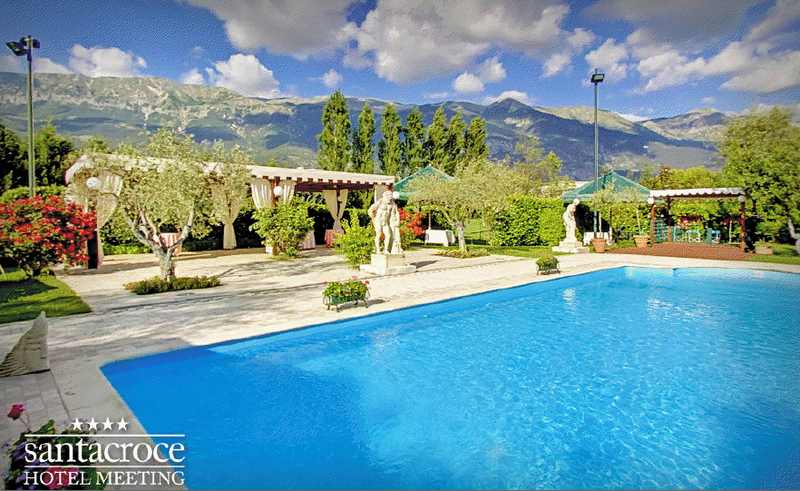
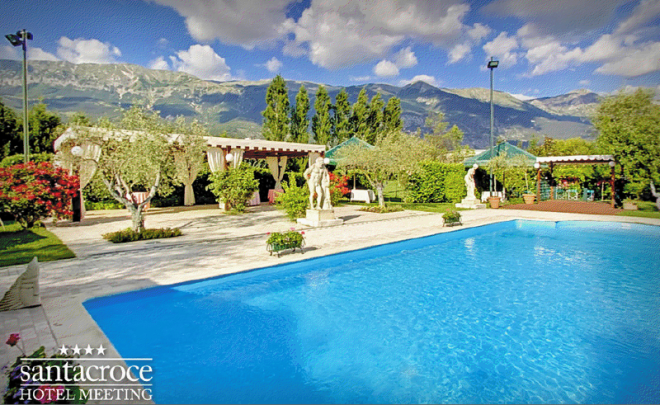
Hotel Santa Croce, Sulmona, Abruzzo, Italy? I think it’s this hotel with a pool and if it isn’t, I’d like to stay there anyway:
vfyw-2

Another:

Happy New Year!


Well, this is the last attempt by this particular geography class as the semester ends this week, so we’d like to at least be close. Though other possibilities came to mind, my class quickly settled on northern Italy because of the architecture, cypress trees, church steeple in the town, and (hopefully) the Alps in the distance. Further research turned up images of the Piedmont region in northwestern Italy that looked a lot like this, with the rolling hills and perhaps vineyards. But it looks like the local town is too small to be Turin, so we’re thinking on the eastern outskirts of Ivrea, Italy. Here’s hoping.

Another:

This was one of those pictures which almost suckered me into losing a night’s sleep comparing silhouettes of distant church steeples, but I successfully resisted – this time. My (thankfully) brief thought process: Europe, but not the Alps (mountains not steep and dramatic enough). Pyrenees. The relatively lush green, rolling hills and angle of sun say more France than Spain. Maybe the large mountain on the right is Aneto (highest in the Pyrenees)? A rough approximation of the view’s potential source puts me somewhere around the town of Saint-Girons in Ariège.

Very close. Another:

vfyw-3

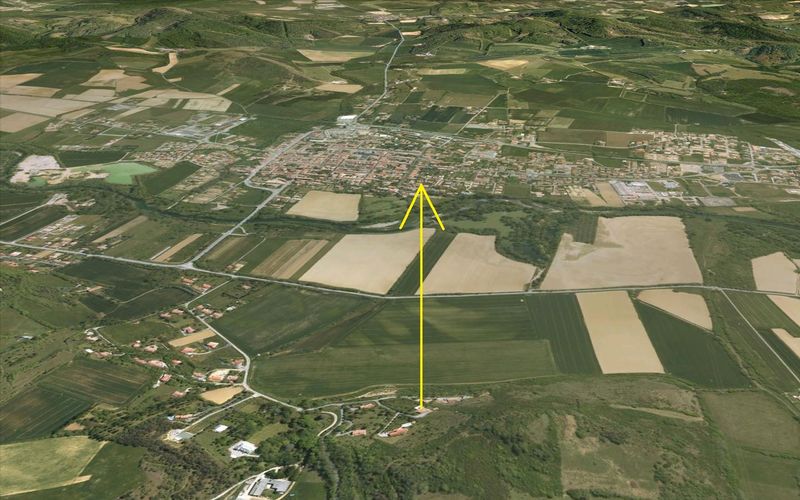
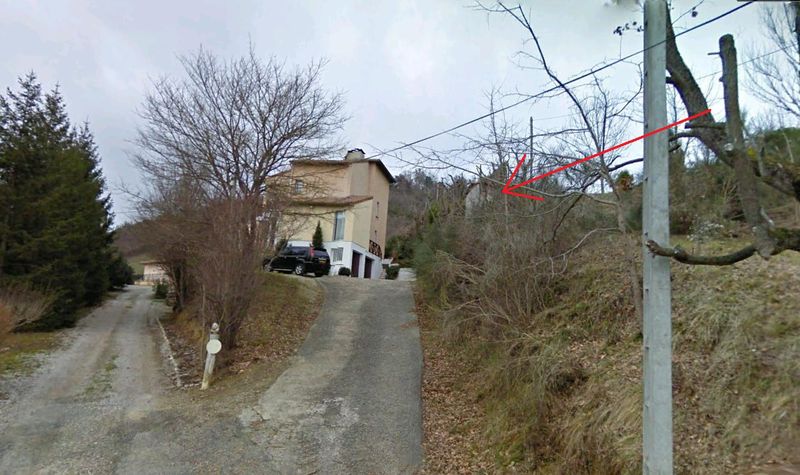
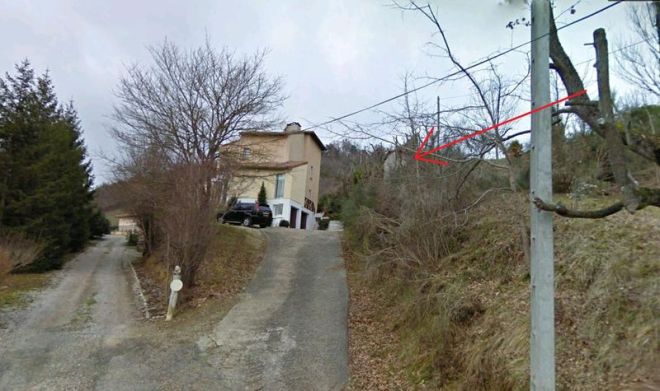
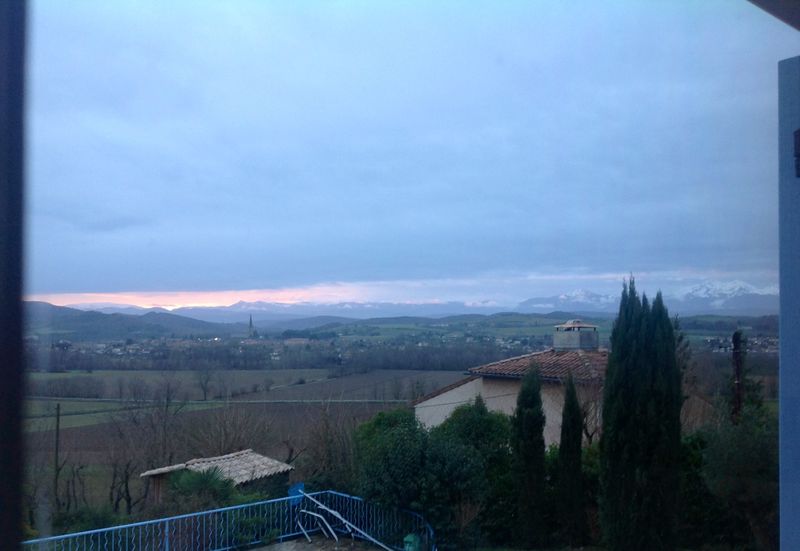
Looking at the cypress trees and the building in the foreground one might guess that this is Italy, but the church steeple and the mountains in the rear point squarely to the Pyrenees. This week’s view shows the medieval town of Mirepoix, France. The view looks south, south east from a building about half a mile outside of town, just off of the D106 road. Oh, and that pole with the blue net leaning against the railing? It’s a pool skimmer, with the pool deck lying just out of sight below your viewer’s window. Images of overhead and bird’s eye views are attached, as well as a partial shot of the viewer’s building marked with a red arrow:
vfyw-4

Mirepoix it is. But that reader has previously won a contest and is the only one this week to get the exact town, so now we have to go to proximity for a tie-breaker. Of the half-dozen readers who guessed France, the following entry was the closest in kilometers to Mirepoix (other than the Saint-Girons reader, who has also won a book already):

Too run-down for California, plus the old-style church, too flat for Italian alps, too fertile for Spain, so that puts me in France. Valleys near Pyrenees seemed broader than Alpine valleys, that brought me to Lourdes.

Congrats, we’ll get a VFYW book to you shortly. The photo’s owner writes:

It’s from my parents’ new house in Mirepoix, France, looking towards a view of the Pyrenées. I took it yesterday morning at 8:23 am (sunrise comes late here!). Thanks for giving me a reason to get out of bed for the sunrise, even while jet lagged!

One more reader:

You used a photo I submitted for the View From Your Window contest on June 7, 2011, from Portugal. I was very new to the Dish at that point and didn’t really know the rules of the contest regarding how specific I should be, so I gave you the town where the photo was taken.

What I should have done was mention that the photo was taken from the Colina Flora B&B, in Pa de Serra, near Sintra. The B&B belongs to my aunt and uncle, and it’s been eating me up to think of the missed opportunity to give a boost to their business. It would probably be odd to publish a correction for a VFYW a year and a half old, so my request is simply that if you happen to make another VFYW book and use that photo, that you include the name of the B&B. I would be extremely grateful.

Of course, if you ever are visiting Portugal, I highly recommend it as a place to stay. It is hands-down one of the most beautiful locations I have ever been to, the B&B is an extremely peaceful place to stay, eco-friendly and dog-friendly.

Our reader follows up:

Thanks for publishing the correction to my VFYW submission from a year and a half ago! Having read this blog for a couple years now, I shouldn’t have been surprised, but given the vast amount of emails you must receive on a daily basis I did not expect such a silly request to be honored. I don’t know of any other blog that can give such personal attention to such a large audience. Thank you.

P.S. That was the sound of me subscribing.

(Archive)
The Atlantic‘s Resort To Advertorials

Well, it seems pretty clear where the editorial staff stands. Goldblog touts Lawrence Wright’s new book on the subject (which, if it is anything like as good as his past work, will indeed be a must-read); Fallows tweets diplomatically but obviously with some concern. To its credit, the magazine pulled the pro-scientology propaganda advertorial pronto (if you call 11 hours pronto). Eric Wemple has a good summary here. My immediate thought was that this was overblown, and then I saw the sheer extent of the piece:

Atlantic-Sponsor

Look, these are extremely tough days for magazines and what David Bradley and Justin Smith have done to resurrect this pillar of American letters is quite something: a tour de force financially. James Bennet’s editorship has been a model for others. But advertorials in the Atlantic? For cults? What I’d like to know is how extensive the use of advertorials now is at my former beloved home. Maybe this was a one-off, quickly ended. Or maybe it wasn’t. But the integrity of a great magazine needs defending. Wemple ominously notes from his reporting:

Natalie Raabe, a spokeswoman for the Atlantic, says that such “native ads” are making their way onto TheAtlantic.com on a “regular basis,” though figures weren’t immediately available. Native ads are critical to The Atlantic’s livelihood. They are one element of digital advertising revenue, which in 2012 accounted for a striking 59 percent of the brand’s overall advertising revenue haul. Unclear just how much of the digital advertising revenue stems from sponsor content. We’re working on that.

The heart sinks.