Both Obscuring And Revealing The Truth About Slavery

TNC won't be seeing Tarantino's latest:

I'm not very interested in watching some black dude slaughter a bunch of white people, so much as I am interested in why that never actually happened, and what that says. I like art that begins in the disturbing truth of things and then proceeds to ask the questions which history can't. Among those truths, for me, is the relative lack of appetite for revenge among slaves and freedmen. The great slaughter which white supremacists were always claiming to be around the corner, was never actually in the minds of slaves and freedman. What they wanted most was peace. It's true they had to kill for it. But their general perspective was "Leave me the fuck alone."

Ambers, on the other hand, feels that "Django Unchained is probably the best movie about slavery, ever":

Django's plot is totally implausible, unlike Lincoln, which pretty much happened the way Kushner described. But I think Django conveys a better gut sense of what slavery, and by proxy, the Civil War, was all about. Both movies are great. One makes you cry; the white men did something right; the country realized its mistake and began atone for it with Constitutional amendments. The other makes your innards turn: you'll know how utterly evil, insane and unique the practice of American slavery was and why political and legal transformations are still, today, not enough to expiate our shame.

Copyediting Our DNA

Anne Trafton reports on new research that allows researchers to "[edit] the genome with high precision":

To create their new genome-editing technique, the researchers modified a set of bacterial proteins that normally defend against viral invaders. Using this system, scientists can alter several genome sites simultaneously and can achieve much greater control over where new genes are inserted, says Feng Zhang, an assistant professor of brain and cognitive sciences at MIT and leader of the research team.

In other genetics news, Mark Lynas, a long-time opponent of genetically modified (GM) crops, recently reversed his stance. He recounts how a little research revealed some of his "cherished beliefs" to be "little more than green urban myths":

I’d assumed that [GM] would increase the use of chemicals. It turned out that pest-resistant cotton and maize needed less insecticide. I’d assumed that GM benefited only the big companies. It turned out that billions of dollars of benefits were accruing to farmers needing fewer inputs…

I’d assumed that no-one wanted GM. Actually what happened was that Bt cotton was pirated into India and roundup ready soya into Brazil because farmers were so eager to use them. I’d assumed that GM was dangerous. It turned out that it was safer and more precise than conventional breeding using mutagenesis for example; GM just moves a couple of genes, whereas conventional breeding mucks about with the entire genome in a trial and error way.

The Drive To Be Head Of The Class

3501284494_efb768a62a_b

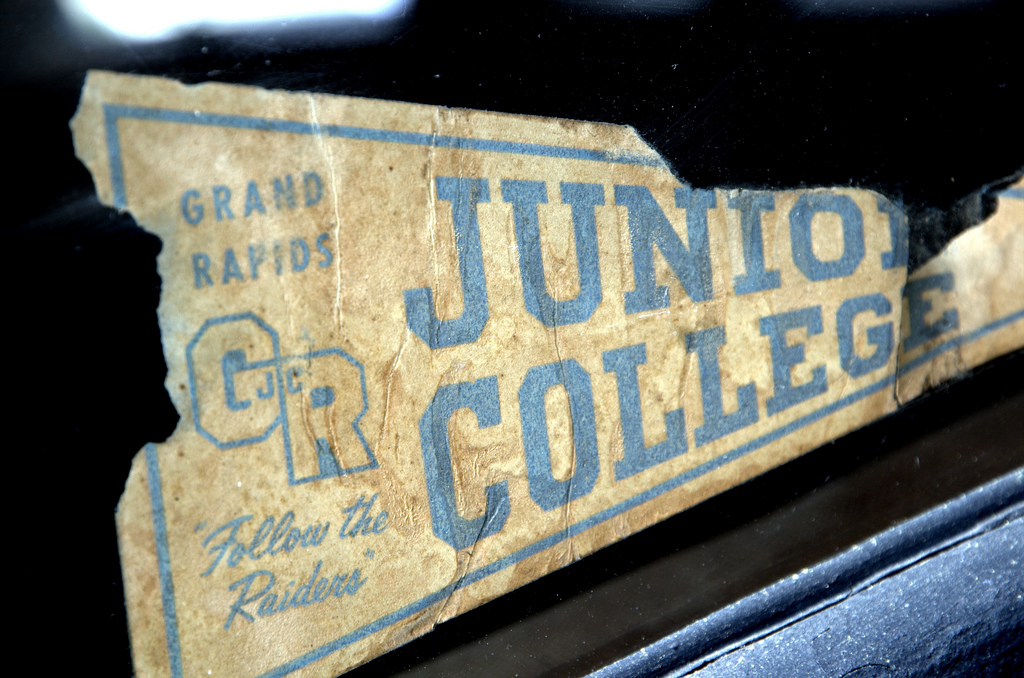
In honor of historian Paul Fussell, who passed away [NYT] last year, Dean Robinson digs up a great quote from Fussell's "Class: A Guide Through the American Status System":

Americans are the only people in the world known to me whose status anxiety prompts them to advertise their college and university affiliations in the rear windows of their automobiles. You can drive all over Europe without once seeing a rear-window sticker reading CHRIST CHURCH or UNIVERSITÉ DE PARIS. … These stickers pose an ethical problem uniquely American: How long after a family member has ceased to attend a classy college may one display the sticker? One year? Ten years? Forever? The American family would appreciate some authoritative guidance here, perhaps from the colleges themselves.

(Photo by Steve Snodgrass)

The Platinum Coin Option, Ctd

How Felix Salmon understands it:

The #mintthecoin meme has successfully migrated from the outer reaches of the econoblogosphere into a fair amount of mainstream media coverage, and as a result it has actually started to be taken seriously outside the Beltway. And even, in a few cases, inside the Beltway too. But be clear, this is absolutely a media-driven meme: people talking about it are not talking about an actual political proposal which an important number of serious DC politicians genuinely want to implement. As I say, it’s a Flying Spaghetti Monster thing — it’s a ticklish thought experiment, nothing more. Many media organizations are having a lot of fun with it, and that’s their right. But, especially in this case, it’s important not to mistake media coverage for reality.

Douthat imagines "what would actually happen if the president was understood to be taking the 'mint the coin' option seriously":

Those Republicans in Congress who believe that they’re justified in risking chaos in order to combat the White House’s fiscal irresponsibility would have their hand immeasurably strengthened. The internal pressure on the Republican leadership not to cut a deal with the coin-minting tyrant Obama would be be ratcheted significantly higher. And public opinion, which currently favors Obama and the Democrats and regards Congressional Republicans as the more irresponsible party in these negotiations, would probably tilt sharply the other way, essentially validating Republican intransigence.

In other words, a White House that played the coin card in negotiations would be answering threats to sabotage the nation’s credit with a threat to … massively sabotage its own political position.

I'm with Ross on this. Earlier discussion here and here.

Will The Scouts Lose The Millennials?

Katie McDonough points to a growing grassroots shift in the Boy Scouts:

Ryan Andresen is an honor student who has been in the Boy Scouts since he was six years old. He also happens to be an openly gay teen, which is why the Eagle Board of Review refused to approve his Scouts’ Eagle application. Until [Tuesday], that is. After appearances on Ellen DeGeneres and Anderson Cooper and 460,000 signatures on a Change.org petition, a California-based Mount Diablo-Silverado Council approved Ryan’s status — in direct defiance of the national organization’s policy against gay scouts. "It’s the first in-your-face (challenge)," Boy Scout district review board chair Bonnie Hazarabedian told Reuters.

But the national organization overruled the locals:

"The Eagle application was forwarded, by a volunteer, to the local council but it was not approved because this young man proactively stated that he does not agree to Scouting’s principle of ‘duty of God’ and does not meet Scouting’s membership requirements," said a prepared statement from [BSA spokesperson Deron] Smith. "Therefore, he is not eligible to receive the rank of Eagle."

When the controversy first arose last fall, Greg Laden downplayed the role of sexual orientation in the story:

Here we have the claim that the Boy Scouts were repressing this young man because he’s gay, and we have a petition that is adding dozens of names a minute, passing the quarter million mark as I write this, but in reality, a key reason, maybe THE key reason, that Ryan is not able to go Eagle is because he is some sort of Atheist or Agnostic or other form of non-believer.

The Friendly Atheist added:

The BSA is a private organization. If they want to be homophobic and God-centric, they have every right to do that. But public schools shouldn’t give them space to recruit members, the government shouldn’t give them taxpayer money, and the rest of us shouldn’t give them any respect.

What’s The Big Fracking Deal?

Ronald Bailey argues that the "environmental and economic benefits of fracking greatly outweigh the costs":

Natural gas is outcompeting coal as a cheap fuel for producing electricity and the result is that U.S. carbon dioxide emissions are down sharply to a level last seen around 1992. In addition, a study comparing the costs and benefits of coal with those of conventional and shale gas in the February 2013 issue of Energy Policy finds that burning natural gas produces far less in the way of air pollutants like sulfur dioxide, nitrogen oxides, soot, and mercury. The authors conclude that a shift from coal to gas would "reduce the overall likelihood of health problems affecting the nervous system, inner organs, and the brain"…

He goes on to address concerns related to methane leakage, local water pollution, and land disturbance. Meanwhile, Andrew Revkin relays two approaches that could "potentially [end] fights over the source of any subsequent contamination of water supplies in a drilling area":

[The first] technology, [developed by Southwestern Energy and Rice University] uses specially designed nanoparticles that exhibit a unique profile, or "signature," that can be detected at low concentrations. This new tracer technology is a stable, non-invasive, non-toxic tracer that can be used for long term fluid identification. The current schedule is to complete the laboratory testing by the end of the year and, if successful, start field testing in the first quarter of 2013…

[The second approach, from startup BaseTrace,] uses a unique, proprietary structure to make it withstand extreme temperatures/pressures and stop codons to make it completely inert. Because DNA has the advantage of providing a near-infinite number of sequence variations, the tracer is well-specific and easily testable.

Previous Dish on fracking here, here, here, herehere and here.

The Freedom To Smoke Pot

Dreher agrees with Frum about marijuana:

We Americans love to think idealistically about the virtues of expanding freedom, but we are poor at thinking about what happens to people who can’t handle freedom. Every parent understands that older kids can be afforded a degree of freedom that younger kids cannot, and that younger kids need a firm, "No, you can’t do that, because I said so." Frum’s point is that while we ought to reduce the criminal penalties for marijuana possession and use, decriminalization goes too far because of the added burden it would place people who are most vulnerable to the deleterious aspects of the drug. He has a good point, and not just about drug laws.

So all American adults are basically children that we have to protect from their own choices? You can't get a clearer voice of condescending paternalism than that. Conor is as aghast at it – and its completely counter-productive effects – as I am:

One final point about the "unsophisticated" people the paternalists are out to protect. 116486193So long as prohibition persists, a subset of them will be risking their futures and perhaps their lives by deciding to sell drugs on the black market. And another subset of the "unsophisticated" will trust the wrong people to supply their drugs and wind up with a product more dangerous than it would otherwise be. I wish David Frum's family all the best, but catering drug policy to the needs of upper middle class kids in homes with parents who actively talk to them about drug abuse doesn't make much sense, even from a paternalist perspective – especially given the awful track record of "it's illegal" in preventing American youth from experimenting with marijuana.

I have to say that David's arguments on this remind me of the early arguments I had about marriage equality.

David hasn't thought much about this question and his arguments simply miss the core case of the other side: that Prohibition is making pot more available to kids, not less; that countless people not in the upper middle class are swept up into a criminal records simply because they want to enjoy a pleasure less dangerous than alcohol; that the racial disparities are simply unconscionable. The thing is, as with marriage equality, the opponents of Prohibition have thought a great deal about this, while the supporters truly haven't. They need to up their game – or they will lose this argument as soundly as they lost the marriage one. (Recall that not so long ago, David urged re-enforcement of sodomy laws as revenge against the push for marriage equality. You can look it up now in the e-Book version of my anthology, "Same-Sex Marriage: Pro and Con".)

The Dish Meter’s Mechanics

Jonathan Glick wonders about them:

I suspect the longer pieces that trigger the pay-us reminder will need to be original just because writers being aggregated will get pissed if they use long quotes from their stuff to drive subscription sales.

We've been contemplating the best way to use "read-ons" going forward, since the read-on clicks are what will trigger the meter and the please-pay message. We could set the meter lower and only have read-ons on longer original commentary and on reader threads. Or we could set the meter higher and use read-ons essentially as we do now. Or we could just play it by ear, experiment a bit and see what works best. What do you think?