Twice Looks Like Carelessness

So the second Inaugural benediction for Obama turns out to be another clusterfuck. First, they had the fatuous Rick Warren, whose campaign against marriage equality was deemed irrelevant to the cause of uniting the country. Now we have Louie Giglio, a preacher who has done sterling work in preventing human trafficking – an extraordinarily important and admirable thing – but who, like most evangelicals, still believes that gay relationships, let alone marriages, are anathema.

The sermon in question, which I listened to, is not full of hatred. It has all the caveats about not hating gay people, not promoting intolerance. But it is quite clear that Giglio has never Tumblr_loa0r1qwjF1qisa2ko1_500stopped believing that what he calls “the gay lifestyle” is a terrible crime against God. He also calls it one of the most important issues of the time. He proposes the horrifying abuse of “ex-gay therapy.” He cites Leviticus, which mandates the death penalty for gays, and says it is the lynchpin of the teaching against homosexuality. In fact, he doesn’t just cite Leviticus; he goes on for ever about it. He describes gay people as living a “lie,” a term my born-again uncle accused me of doing when he found out I was gay. He calls us engaged in “depraved, lustful behavior” and being haters of God. He calls for his congregation to “firmly respond to the aggressive agenda” of gay equality.

Now, people evolve. And we should be happy to welcome those who have evolved and no longer find homosexual relationships sinful or poisonous. But Giglio shows no sign of having changed. His defense is that “clearly, speaking on this issue has not been in the range of my priorities in the past fifteen years.” But in that sermon, he described it as possibly the most important moral battle of the time. And get a load of this: “Those who practice such things are worthy of death.” And this:

Homosexuality is not an alternate lifestyle. Homosexuality is not just a sexual preference. Homosexuality is not gay. But homosexuality is sin.

He does not seem to me to be a hateful person. He makes a distinction between homosexual behavior and homosexuals. Read his statement if you doubt me. Or listen to his full sermon here. He takes pains not to demonize gay individuals in fire and brimstone terms. But he is adamant that gay relationships are an attack on God. That’s his religious prerogative. But what clueless administration official did not do due diligence on this figure? After the Rick Warren mess, could no one in the White House do the same research as Think Progress? The sermon is sitting online, for Pete’s sake. I’m tempted to paraphrase Lady Bracknell’s line in Oscar Wilde’s “The Importance of Being Earnest”:

To bollix up one Inaugural Benediction, President Obama, may be regarded as a misfortune. To bollix up both looks like carelessness.

There’s only way forward on this and that is to choose as his replacement a minister who endorses gay unions and full gay inclusion in the Christian community. Why would Obama object to that? He has “evolved” now, hasn’t he?

Is Hagel “Out Of The Mainstream”?

It's a bizarre formulation in the first place. Who would want to be in the mainstream in Washington in the first decade of the 21st century? Shouldn't all of them be running away from their previous disastrous judgments – I mean McCain and Butters and Lieberman and Cornyn et al. I was for a bit and then realized the true scale of my misjudgment. How could you not as tens of thousands of Iraqis died under US control? As the US squandered a core element of its soft power by copying the torture techniques of totalitarian regimes? As the end-result was an Iraq on the edge of sectarian collapse and a strengthened Iran? As we now realize that the longest war in American history in Afghanistan will have, at best, a compromised conclusion. So it seems to me a plus if Hagel is out of that particular mainstream. It's a feature, not a bug.

Greg Djerejian goes further, in a splendid bloggy rant. Money quote:

I believe skepticism about a military adventure in Iran is eminently “mainstream”. Indeed, I would go further, and would think that fuller consideration of a “containment” doctrine vis-à-vis Iran should be “mainstream” too—if ultimately diplomacy and sanctions were to run aground, only leaving potentially less desirable military options, and as done with arch-foes in the past of far greater geopolitical strength than Iran (even if the President has ostensibly removed this policy option from the table). I believe skepticism about unilateral Iran sanctions—as compared to the multilateral variety that Hagel more typically has supported—is “mainstream” and indeed, far more intelligent, as unilateral sanctions can be avoided with ease and so have materially less bite. I believe looking to aggressively haircut the, yes, “bloated” Pentagon budget is “mainstream”, especially in this era of mammoth deficits and looming austerity.

Drum, Lead And Crime

Jim Manzi offers the most thorough critique yet. It gets nerdy at times, but no nerdier than necessary. Money quote:

Reyes seems like a diligent and thorough analyst, and she has an admirably clear prose style. But this regression model is reading tea leaves. The problem is not with her, but with the econometric method she is using to try to tease out causality. It is like using a child’s magnifying glass to try to investigate the structure of a skin cell.

Richard Nixon: It’s Complicated

This week marked what would have been the 100th birthday of America’s 37th President, Richard Milhous Nixon. In an essay summarizing the breadth of Nixon’s remarkable life and career, John Aloysius Farrell points to the man’s frequently neglected virtues:

Americans, at their best, are romantics. As was Nixon. He dreamed of noble triumphs in international affairs; asked to use Woodrow Wilson’s desk in the Oval Office. He was sworn in as vice president on a Quaker Bible opened to the beatitude: Blessed are the Peacemakers. “We are asking you to join us in a great venture,” he told congressional leaders in 1972, after his second historic trip that year, to sign a nuclear arms treaty with the leaders of the Soviet Union. “We may change the world for a while.”

He embodied, too, another great American virtue: pragmatism. His was the last progressive Republican presidency, his White House manned by bright young men (and women) who devised forward-thinking reforms for health care, poverty, civil rights and affirmative action, the treatment of American Indians, the advancement of women and protection of the environment.

He could be achingly, clumsily kind. In 2012, his alma mater, Whittier College, settled a decades-long dispute with the National Archives and opened more than 300 oral histories it had conducted among Nixon’s friends and family to historians. In one of them, a classmate at Duke Law School recalls how a fellow student, a victim of polio, needed to be carried up the stone steps of a building to class, and how it was Dick Nixon who assigned himself the task.

Which simply shows how we are all complicated. I remember when he died being in a hotel room in New York City, about to go out on the town (those were the days). I switched on the television and they were broadcasting the Frost-Nixon tapes. You would think that hour after hour of interviewing a highly unattractive, defensive politician would be mind-numbing. Instead, I couldn’t pull my eyes off him. I was still sitting there in the early hours, riveted by this simmering human volcano of rage, hate, self-hate, resentment, some remnants of conscience, and kindness.

This was a criminal who betrayed the core of American democracy, lied to the people, persecuted those dedicated to free speech, ordered robberies and cover-ups, and laid the ground work for some of the best innovations of the time – like the EPA – and the worst – price controls. For one generation he will always be evil. For the next he may be more complicated. Still a crook and an enemy of the Constitution. But complicated.

The Platinum Coin Option, Ctd

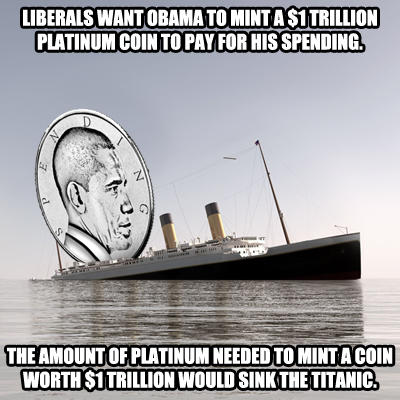
NRCC_Coin

Steve Benen objects to the NRCC tweeting the above image:

[T]he problem with the image and initial argument is that the NRCC appears to have forgotten how money works. A $20 bill does not have $20 worth of paper. Indeed, the paper and fibers that go into a $50 bill do not have five times the value of a $10 bill. And as such, a $1 trillion coin would not need $1 trillion worth of platinum.

Kevin Drum isn't so sure:

[A]s a lawyer friend emailed to me this morning, "bullion coins are generally understood by other statutes within the US Code to be coins with a value effectively equal to the market value of the precious metal bullion in them. The trillion dollar coin is not that."

Former US Mint director Philip Diehl argues otherwise. Meanwhile, David Silbey fact-checks whether a trillion dollars of platinum could sink the Titanic and concludes that the NRSCC "did manage to come up with a historically-plausible way to snark about the platinum coin":

[T]he Titanic could carry about 14,300 tons. The weight of the platinum for the coin is substantially larger than that, but would it sink theTitanic? Well, it would certainly drive it beyond its regular displacement, but it might not cause it to go under. Ships can carry a lot of weight beyond their design capacities. Still, it’s not the kind of thing that I’d be really eager to try.

Can There Be “Nixon In Pyongyang”?

As former UN ambassador and New Mexico governor Bill Richardson visits North Korea in an attempt to free an American hostage, Armin Rosen explores the perils of any engagement with the prison state:

[The] trip calls to mind William J. Dobson's concept of "the dictator's learning curve" — the idea that successful autocracies (and North Korea certainly qualifies) can adapt to prevailing realities and challenges in order to further entrench the existing system.

He cites humanitarian aid like the UN's World Food Program as an example:

WFP aid can even be thought of as a kind of unearned subsidy — or as a subsidy that the North Korean government was able to extract through its continued bad behavior. After all, the estimated $3 billion to $4 billion North Korea has spent on its missile program over the past two years could easily have resolved the country's food security problems. Pyongyang's arrangement with the WFP gives the North Korean government leverage over an international community eager to alleviate large-scale human suffering, while freeing its resources for projects that arguably prop up the regime and destabilize the southeast Asian security environment. The less North Korea cares about solving a chronic and man-made food security crisis, the more the international community feels compelled to disconnect political and humanitarian concerns in dealing with the Hermit Kingdom.

Brennan: Second Time Around, Ctd

A reader writes:

You are right that the issues surrounding the Brennan nomination in 2013 are different from those of 2009. Then the question was extraordinary renditions and torture. Brennan can by no stretch of the imagination be considered an architect of those programs. On the other hand, he was a qualified defender of both, and he was 159072920likely to work hard to obstruct exposing what happened as well as demands for accountability. This he did in the White House even more effectively than he could have done at Langley.
Now the major question is the reorientation of the CIA into an organization that is essentially paramilitary, with the drone program being the "tip of the spear." Brennan more than any single figure has pushed along this metamorphosis of the agency and his role. His appointment provides the best opportunity so far to challenge and discuss the unchallenged and undiscussed assumptions behind the stealth make-over of the CIA.

There is entirely too much of a hurry to get into the weeds of hot-botton issues like Al-Awlaki and the civil rights dimension, which is emotional to civil libertarians, but also rather a rare matter. There is not enough willingness to look at the big picture of a militarized CIA that lacked the discipline of military doctrine and rules.

Basically, I think that the planners got the picture right in the National Security Act of 1947–they said the CIA should be an intelligence gathering organization with only very limited paramilitary functions in the areas of self-protection and training. Their guidelines were rigorously maintained until 2002, and then the picture went off the tracks. John Brennan is a major reason why. Confirming him means acknowledging a militarized CIA.

This is not, in my mind, an impossible outcome, but it is also not a decision to be taken without a compelling public presentation of the need for changing the nature of the agency. Aside from this we have Brennan's gabbiness with reporters–his embarrassing interview with the Washington Times that touched off the Al-Awlaki controversy–completely unnecessarily, in my view. His ridiculous mangling of the account of UBL's death. His penchant for chatting with his friends in the press corps to talk up the pro-active nature of Obama in the area of drone warfare, etc.

A smart DCI is far tighter in dealing with the press, and not so clumsy. The GOP will have at him over all of this, and I think they have plenty of legitimate points to score–though not likely anything that will take down his nomination. As for Klaidman, I agree his reporting on this subject is extremely important. On the other hand, he misunderstands much of the criticism (or rather, he understands the ACLU's critiques to be the total of the criticism, he misses the critical perspective of military leaders schooled in the traditional NSA analysis). He also makes no bones about the fact that he is writing as an advocate for Brennan, just as previously he wrote as an advocate for Holder.

That's fine, but you have to recognize it in weighing what he has written. Just consider this factor: if the drone war that Brennan oversaw in Pakistan results in this new nuclear power, a former leading non-NATO ally of the United States, becoming an enemy of the United States–then who can possibly say it was a success? It would then have to be reckoned one of the major tactical errors of the war on terror. But Brennan systematically fails to factor in this broader picture.

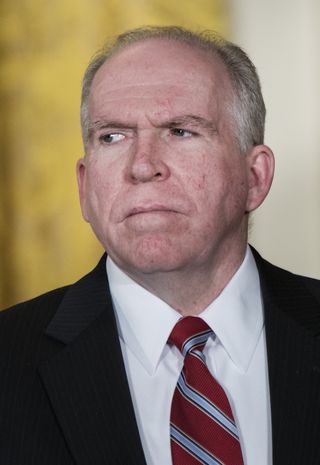
(Photo: John Brennan listens during an event in the East Room of the White House on January 7, 2013 in Washington. By Brendan Smialowski/Getty.)

Worse Than Nickelback, Better Than Gonorrhea

21944209

As you know by now, Public Policy Polling's had some fun with the latest numbers (pdf) on Congress' popularity. Respondents were asked whether they had a higher opinion of Congress or 26 various items. The news wasn't all bad though:

By relatively close margins [Congress] beats out Lindsey Lohan (45/41), playground bullies (43/38), and telemarketers (45/35). And it posts wider margins over the Kardashians (49/36), John Edwards (45/29), lobbyists (48/30), Fidel Castro (54/32), Gonorrhea (53/28), Ebola (53/25), Communism (57/23), North Korea (61/26), and meth labs (60/21)

At least you can cure gonorrhea. Congress seems unfixable. Andrew Gelman wonders if it's a spoof: "But all those crosstabs . . . they look real. So I don’t know what to think." Pareene points to the latest reason to lampoon Congress:

The HuffPo’s Ryan Grim and Sabrina Siddiqui obtained a PowerPoint presentation given to incoming Democratic freshmen legislators by the Democratic Congressional Campaign Committee, and the DCCC’s recommended schedule for House members includes four hours spent on the phone begging rich people for money and one hour spent begging rich person for money in person. This is the daily schedule. As Kevin Drum notes, this leaves no time for studying or homework. …

This, as much as anything else, is why our Congress is both dysfunctional — legislators have no clue what they’re voting for or against most of the time — and so attentive to the priorities of the very wealthy.

Update from a reader:

I was surprised to see you state in your post that "At least you can cure gonorrhea." That statement seems like poor timing given the news of antibiotic-resistant gonorrhea that's been circulating over the past two days.

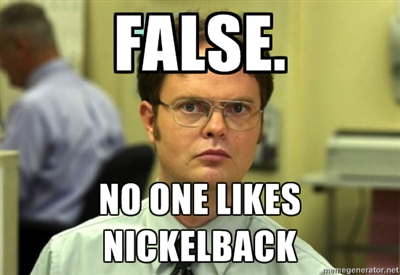
(Image from memegenerator)

Could America Leave Afghanistan Completely?

Mark Thompson wonders how many troops we will remain:

Early suggestions that the 2015 U.S. troop presence in Afghanistan could be as high as 20,000 to 30,000 have shrunken to smaller options in the 2,500-to-10,000-troop range. Plainly, the White House is fed up with the corrupt Afghan government. It also views a large troop presence as a drain on its budget, as former Army officer and ex-NSCer Doug Ollivant pointed out Monday on Battleland.

David Barno believes that pulling all troops out is a possibility:

Even though the Zero Option is not the best choice to protect American long-term regional interests, it certainly remains on the table. Overreach on Karzai's part could easily sour prospects for any sort of enduring U.S. military presence.