The Lester Bangs Of Art Criticism

Laurie Fendrich searches for the reason the "wider intellectual world" of scholars and intellectuals has given short shrift to the rogue art criticism of Dave Hickey. She finds that it comes down to biography:

Scholars find it difficult to accept that he chose to make Las Vegas his home for most of his adult life. They are put off by the fact that he calms himself by gambling and chain-smoking. They are contemptuous of his spending a lot of his early years consumed by rock 'n' roll, hanging out with the likes of Hunter S. Thompson, Nick Tosches, and Lester Bangs, and writing articles about (to use Hickey's words) "subjects with the shelf life of milk." Academics don't understand how a serious intellectual could have spent so many years not doing academic work, instead snorting cocaine and jamming with the Nashville-based singer-songwriter Marshall Chapman.

Late last year, Hickey announced his semi-retirement from art criticism, lamenting how the art world has changed:

I have to emphasize that I think the art is great. There’s as much good art out there now as there was in—maybe not in 1968—but certainly there’s as much good art as there was in 1978 or 1988. The difference? The art world used to let in gangs—the Pop gang, the Minimalist gang—and now they let artists in one at a time and isolate them from their peers. This is bad medicine. So, if you’re an artist, join a gang. Make up signs. Demand respect, but don’t drive-by critics. It’s our job to hurt you. Sorry about that.
A Poem For Sunday

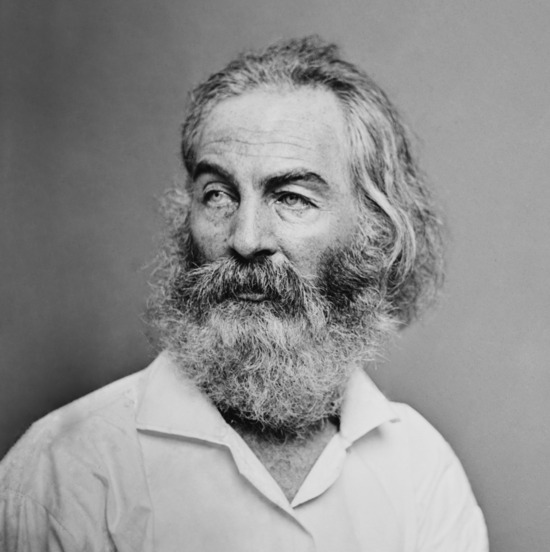
Walt_Whitman_-_Brady-Handy_restored

“Full of Life Now” by Walt Whitman (1819-1892):

Full of life now, compact, visible,
I, forty years old, the eighty-third year of the States,
To one a century hence or any number of centuries hence,
To you yet unborn these, seeking you.

When you read these I that was visible am become in-
    visible,
Now it is you, compact, visible, realizing my poems seek-
    ing me,
Fancying how happy you were if I could be with you and  
    become your comrade;
Be it as if I were with you. (Be not too certain but I am
    now with you.)

(Photo of Whitman by Matthew Brady via Wikimedia Commons)

The Best Advice Ever

There’s no such thing, according to Edith Zimmerman:

After editing an advice column for two years, I’ve decided that there is no such thing as advice. There are only problems and the ways people handle them. Advice, on the other hand, is when you hear a description of someone else’s problem and then tell the person something about yourself. Hopefully whatever you say is funny or interesting, but it has little to do with actually helping anyone. It may seem or feel like it does, but there are always more variables than we’ll ever be able to see or understand, and best case scenario you’re pressing on the problem a little bit in a way that engages the problem-haver.

Maria Bustillos approaches the quandary from a different angle:

Anybody who supposes himself wise is already demonstrating the reverse. Therefore the cleverest, most beneficial advice must always come disguised as something else. Because who can ever really believe that he knows better?

On The Road To Transcendence


Jay Michaelson critiques the new film adaptation of Jack Kerouac's On the Road, hesitating at its "tendency to secularize sensuality—precisely to reduce it to hedonism," and thus missing the deeply spiritual impulse behind many of the Beats:

With the sensual spirituality (or spiritual paganism, if you like) secularized into mere “kicks,” the moral balance of On the Road lurches to one side. In the book, there’s a productive tension between the evanescent, yet incandescent, mysticism of pure human experience on the one hand, and the deep ethical consequences of human relationship on the other. This is a crucial and recurring religious polarity, between the immediacy of spirit and the temporality of ethics, between the circle and the line, the Now and what’s next. But take out the spirituality of one side, and what’s left is an almost puritanical judgment on the other.

Your Neighborhood Cathedral

A recent NYT article covers trends in American Christianity, such as meeting in movie theaters and coffee houses. Pivoting off the article, Walter Russell Mead declares that "[e]ntrepreneurialism and adaptation is in the DNA of American religion," and sounds a hopeful note about the religious life of millennials:

In America today, Catholic, liberal Protestant, evangelical and African American churches all in their different ways face the challenge of a generation that isn’t necessarily happy with the forms of faith they’ve been offered. As millennials mature in their personal faith and their theological and cultural reflections, we should expect this generation to come forward with new ways of stating and living the Christian message. There will be conflict and wrangling; “New Lights” and “Old Lights” will struggle over doctrine and practice as they have done since Jonathan Edwards’ critics attacked the Great Awakening. But if history is any guide, the new generation will find and express an authentic and compelling interpretation of the ancient faith, and American politics and culture will be shaped in large measure by the answers the millennials find.

Rod Dreher, while skeptical of such trends, finds a potential upside to these churches:

I think these nouveau Protestant guys are onto something with their ideas of church coffee shops and other community-center activities. In medieval times, the church was not only the place for liturgy, but was also a community center of sorts. In Chartres, for example, the great cathedral was in those days a community gathering place; merchants even sold goods inside the church when liturgies weren’t going on. That may have been pushing it too far, but as a general matter, I think it’s not a bad thing at all when a community makes the church a center of its common life, and not just during worship.

The Personal Touch

Hamilton Nolan rips into the tendency of young writers “to exploit every last tawdry twist and turn of their own lives for profit.” On the journalistic culture of innumerable memoirs and confessional essays:

The demoralizing truth is that there is a huge appetite for first-person essays of this sort. The pages of Salon, and Slate, and Thought Catalog, and XO Jane, and women’s magazines, and lowbrow-masquerading-as-highbrow publications like parts of the New York Times, and Gawker Media are absolutely overflowing with them. At their very best, they offer some amount of insight learned through experience. Mostly, they offer run of the mill voyeurism tinged with the desperation of attention addiction. For those who own the publications, they’re great—they bring in the clickety-clicks. But for the writers themselves, they are a short-lived and ultimately demeaning game. They are a path that ends in hackdom. And young writers who’ve paid good money to attend journalism classes should not be set on that path.

In an article we linked to earlier, Ann Friedman pushes back and uses the Dish, among others, as an example:

Two of my very favorite long-form feature writers, John Jeremiah Sullivan and Mac McClelland, are adept at weaving personal stories with their reporting. (Read this and this and this—and, just to bring it full circle, this from Andrew Sullivan—then try and tell me you still think good reporters don’t get personal.) There is an art to getting personal without obscuring the real story. Just as there’s an art to infusing your tweets and your commentary with a tinge of your nonprofessional life without going the full confessional.

An Ephemeral Poet

Rilke_Drawing

John Banville ruminates on Rainer Maria Rilke's Letters to a Young Poet, claiming that "one cannot but be impressed by the passionate dedication with which Rilke addressed the task of living—living as a poet, that is":

Above all, these letters give the lie to the idea of Rilke as hopelessly self-regarding and cut off from authentic, “ordinary” life. His tone may be elevated and his manner at times that of a dandy—he was elevated, he was a dandy—but the advice purveyed in these letters, and the observations and aperçus that they throw off, contain true wisdom, and are anything but platitudinous. Franz Kappus was a fortunate young man to have found such a correspondent, and we are fortunate in his good fortune. Despite all the moaning and complaining; despite the lists of illnesses, mental and physical; despite his constant urge toward transcendence, Rilke was thoroughly of our world. In the ninth and perhaps greatest of the Duino Elegies he asks why we should persist in our humanness, and offers this beautiful answer:

…because truly being here is so much; because everything here
apparently needs us, this fleeting world, which in some strange way
keeps calling to us. Us, the most fleeting of all.

(Image: Sketch of Rilke by Leonid Pasternak via Wikimedia Commons)

The Appearance Of Profundity

Victoria Beale lambasts recent books from Alain de Botton's  "School of Life" imprint, which, in Beale's phrase, bring "literature together with peppy self-actualization":

There have been six books published in the series so far, one written by de Botton, the rest adopting his authorial technique. How to Stay Sane by Philippa Perry, epitomizes the worst tendencies of this formula: it amounts to little more than philosopher name-dropping with poorly written exegesis. “Socrates stated that ‘The unexamined life is not worth living,’” she writes. “This is an extreme stance, but I do believe that the continuing development of a non-judgemental, self-observing part of ourselves is crucial for our wisdom and sanity.” The whole book is composed of this kind of grinding obviousness, bizarrely sprinkled with a King Lear line, a Martin Buber quote, or a Wagner reference.

Hallucinating God

Paille1-600x480

In a review of Oliver Sacks' recent book, Hallucinations, T. M. Luhrmann emphasizes the spiritual dimension of altered states:

Hallucinations teach us that these odd moments of sensation are an extreme point of a continuum along which what we imagine becomes more real, more possible than the mundane, and that the continuum has power. The terror of horrible imaginings can nearly destroy us, but good moments can change us for the better.

At the end of his book, Sacks turns to the sense of presence. This is a specific phenomenological experience detectable in a brain scanner: a clear awareness that someone is sitting there, right there, even though you cannot see him or her. Perhaps this uncanny awareness, Sacks suggests, evolved over time from a constant watchfulness for predators and potential threats. But see what it makes possible, he suggests. For those willing to trust in the benevolence of the unseen, the presence becomes God. It is the point on which he ends his book.

Previous Dish on Sacks' book here.

(Image: From photographer Benoit Paillé’s LSD series, which he shot after he "dropped acid and headed into the woods, where he lit a candle and took these four-minute-exposure photos," via Judy Berman.)