How Central Is Marijuana In The Drug War?

Keith Humphreys claims that pot isn't particularly profitable for drug cartels:

Their big money comes from cocaine. They also make a lot of money from other things. [Legalization in Colorado and Washington] is a pinprick in terms of the Mexican cartels

He later expands on this argument:

Marijuana gets outsized attention in US drug policy debates, yet it matters at most slightly for the security of Mexico (and not at all for Central and South America). Domestically, it does not contribute to overdose deaths nor account for even 1% of imprisonments. But its status as a culture war symbol — particularly for baby boomers — will keep it in the forefront of popular debate even as concern over cocaine, methamphetamine and heroin wanes.

Fact-Checking Tall Tales

Ian Frazier mourns the loss of too-good-to-be-true stories:

Consider the recent case of the giant wild hog Hogzilla. A Georgia man said he had shot it while it was running around someplace in the woods, and he posted pictures of it Hogzilla online. This eight-foot-long, 800-pound animal was as monstrous a creature as the Georgia swamps had ever seen. The man added that he had buried the hog in a grave marked with a cross (though feral, it had been a Christian hog, apparently), and because of the excitement stirred up on the Internet the man eventually had to submit the corpse for examination. Through DNA testing, experts determined that it was a mix of wild hog and domestic pig. Its size suggested it had eaten a lot of hog feed.

Such a disappointment—Hogzilla, a pen-raised fake. How much more stimulating to believe that there are 800-pound wild hogs infesting the swamps of Georgia. One hates to think what a radio collar and a wildlife-management team would have done to William Faulkner’s bear.

Frazier's broader view:

The global landscape used to be a theater of various shadings—sunlit fields and canyons of dark obscurity, trackless jungles, and misty Shangri-las. Now the whole world is like a cineplex when the lights have come on. Almost no place on the surface of the planet is really obscure anymore. Satellites watch it all and can let you know to the millimeter how far continental drift moved your swimming beach last year. What’s up along the banks of the great, gray-green Limpopo? How’s traffic on the road to Mandalay? What’s the snowpack like across the wide Missouri? The Internet or Google Earth will tell you.

How Green Is Telecommuting?

Not very, according to Evgeny Morozov:

It might … be that, contrary to some early expectations, telecommuting is not necessarily good for the environment. A 2011 article in the Annals of Regional Science found that, on average, telecommuters end up putting in more travel—on both nonwork-and work-related trips—than those who don't telecommute. (This article defines telecommuters as those who "work at home instead of going to usual workplace" once a week or more.) In other words, that they don't drive to work doesn't mean that they drive less overall. As Pengyu Zhu, the article's author, put it, "the hopes of planners and policymakers who expected the promotion of telecommuting programs to substitute for face-to-face interactions and thus reduce traditional travels remains largely unmet."

The World’s Best Pickpocket

Adam Green profiles Apollo Robbins, "a theatrical pickpocket," who is "widely considered the best in the world at what he does, which is taking things from people’s jackets, pants, purses, wrists, fingers, and necks, then returning them in amusing and mind-boggling ways":

[P]hysical technique, Robbins pointed out, is merely a tool. "It's all about the choreography of people's attention," he said. "Attention is like water. It flows. It's liquid. You create channels to divert it, and you hope that it flows the right way."

Robbins uses various metaphors to describe how he works with attention, talking about "surfing attention," "carving up the attentional pie," and "framing." "I use framing the way a movie director or a cinematographer would," he said. "If I lean my face close in to someone's, like this" — he demonstrated — "it's like a closeup. All their attention is on my face, and their pockets, especially the ones on their lower body, are out of the frame. Or if I want to move their attention off their jacket pocket, I can say, 'You had a wallet in your back pocket — is it still there?' Now their focus is on their back pocket, or their brain just short-circuits for a second, and I'm free to steal from their jacket."

A Democratic China

It almost came to fruition in the early 20th century:

In the elections of December 1912 to early 1913 more than 10% of the Chinese population would be eligible to cast votes, an elite but still large group of 40m male taxpayers who owned some property and had a primary-school education. (Women had not won the right to vote; one suffragist slapped Song in the face for not taking up their cause.) China’s first real democratic campaign had begun.

What did this first go at democracy look like? Partisans roughed up opposing candidates and activists, carried guns near polling stations to intimidate voters, bought votes with cash, meals and prostitutes (some lamented selling too early, as prices went up closer to election day), and stuffed ballot boxes. At least one victorious candidate was falsely accused of being an opium-taker.

In a word, it looked like democracy.

Hopes were dashed when Song Jiaoren, leader of the Chinese Nationalist Party and a believer in "Jeffersonian ideals and admiration for Britain’s Parliament," was assassinated.

Judging A Stranger By His Cover

Screen shot 2012-12-17 at 10.31.03 PM

Philosophy professors Scott F. Aikin and Robert B. Talisse describe the feedback they have gotten from reading a provocative book in public:

We’ve been asked to review Brian Leiter’s Why Tolerate Religion?  for The Philosopher’s Magazine (the review will be out in the Spring).  Talisse has found that being seen reading the book in public creates unusual interest.  Folks at the Starbucks across from Vanderbilt seemed positively befuddled by the book, as if to ask who would ask such a question?  One person very audibly muttered, "Yeah, and why tolerate books like that?” Aikin accidentally left his copy on an airplane, tucked into the seatback pocket.  When he’d returned for the book, it had been found by a flight attendant.  She (only half-jokingly) reprimanded him for reading the book while flying

(Image via Scott Jordan Harris)

A Crippled Kyoto

Max Paris checks the pulse of the climate change treaty as the first stage of "binding cuts" came to an end on Monday:

The [lapse of the] controversial and ineffective Kyoto Protocol's first stage … leav[es] the world with 58 per cent more greenhouse gases than in 1990, as opposed to the five per cent reduction its signatories sought. From the beginning, the treaty that was adopted in 1997 in Kyoto, Japan, was problematic. Opponents denied the science of climate change and claimed the treaty was a socialist plot. Environmentalists decried the lack of ambition in Kyoto and warned of dire consequences for future generations. … Some countries have signed on to a second round of Kyoto commitments beginning Jan. 1, 2013, and stretching through to 2020, but they only represent 15 per cent of current world emissions.

Canada, Russia and Japan have all dropped out of Kyoto's next round of emissions commitments, while the US never signed the treaty.

The Daily Wrap

Dishness-explained

Today on the Dish, Andrew declared our independence, announcing that on February 1 the Dish would leave The Daily Beast to become a fully independent blog which depends on nothing but our readers for support (via a freemium-based meter). Andrew then answered reader questions about the move here and here. Also we rounded up blog reax, as well as checked in on the Twitter response here and here. We watched in amazement as an avalanche of memberships began, published many reader reactions from the inbox, reposted last year's fascinating reader survey, charted the inequality of the web advertising business, got called mavericky in a tweet, and handed John Nolte a Malkin nomination for calling the Dish's independence part of some left-wing media conspiracy.

You can join us as a founding member here.

In political coverage, we rounded up blogosphere response to the now-passed fiscal cliff deal, Michael Hirsh wondered if Joe Biden was the most influential VP in history, Conor Friedersdorf rejected the notion that the 2nd Amendment was some safeguard against tyranny, Paul Ryan earned the year's first Yglesias nomination for supporting the fiscal cliff deal, and Richard Socarides anticipated marriage equality for Illinois.

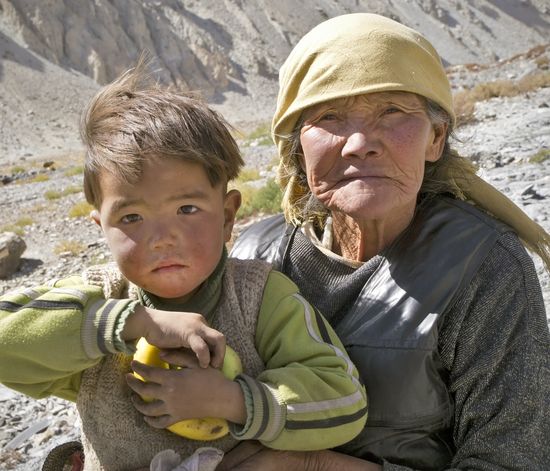
In assorted coverage, Maria Popova explained her donation-over-advertising strategy, Boris Muñoz imagined a Venezuela without Hugo Chavez, Ada Calhoun looked at the increasing practice of at-home abortions, Wayne Curtis surveyed America's walking stats, and Terry Teachout advocated for more accurate depictions of small-town life in the arts. Also, Edward McPherson told us the story behind Dallas' essential airport, Alex Knapp questioned the management skills of robots, Kevin Kelly called in about the developing world's prioritizing of cell phones over toilets, and a reader (who is an actuary) set the record straight about car insurance rates based on how much someone drives. Readers also pushed back on the idea that teenagers shouldn't smoke weed, while other readers weighed in on why women seem to smoke less of it than men. Then we went over the news that Avis was buying Zipcar, examined the possible late-career solipsism of Judd Apatow, discovered a new use for washing machines in our MHB, met a Chinese camel herder in our FOTD, and saw Colorado mountains through the VFYW.

– C.D.

The Next Marriage Equality State

Richard Socarides is hopeful that it will be the Land of Lincoln:

Seemingly out of nowhere, Illinois, the fifth largest state, with a population of almost thirteen million people, is likely about to become the tenth state to allow same-sex marriage. It could happen within the next week, during the lame-duck session of the state legislature, which ends on January 8th. If it does, over twenty per cent of the U.S. population will live in states with marriage equality, even before the U.S. Supreme Court rules on marriage rights in California this June. California alone has approximately twelve per cent of the U.S population, and its addition to the group would then bring the total to about a third of the population.

Abby Rapoport is also watching Rhode Island and New Jersey. Chris Geidner adds California, Delaware, Minnesota, and Hawaii to the list.