An Easter Breather

photo(1)

I’m taking the next week off – my first, I think, since last summer. The Dish team will be subbing as usual – as, of course, they do all the time anyway, with my oversight and authoritah. But next week, they can say anything they like, under their own by-lines, as is tradition, (as the Canadians say). I want to thank them in advance – from Patrick and Chris to Matt, Zoe, Alice, Chas, Doug and Brendan.

partnersIt is simply a fact that without Chris and Patrick (see right) and Chas, the new Dish would never have happened. Period. And it’s another fact that without you, this new experiment in online publishing would have sputtered from the get-go.

So before I sleep for a few days, a message of gratitude for you, dear Dish readers, for your support and faith and persistent engagement. Thanks for subscribing in numbers large enough to make this one of the single most successful pay-meter debuts ever. And to those of you who are still holding out, [tinypass_offer text=”$1.99 a month”] is now an option.

At West Point

IMG_5550

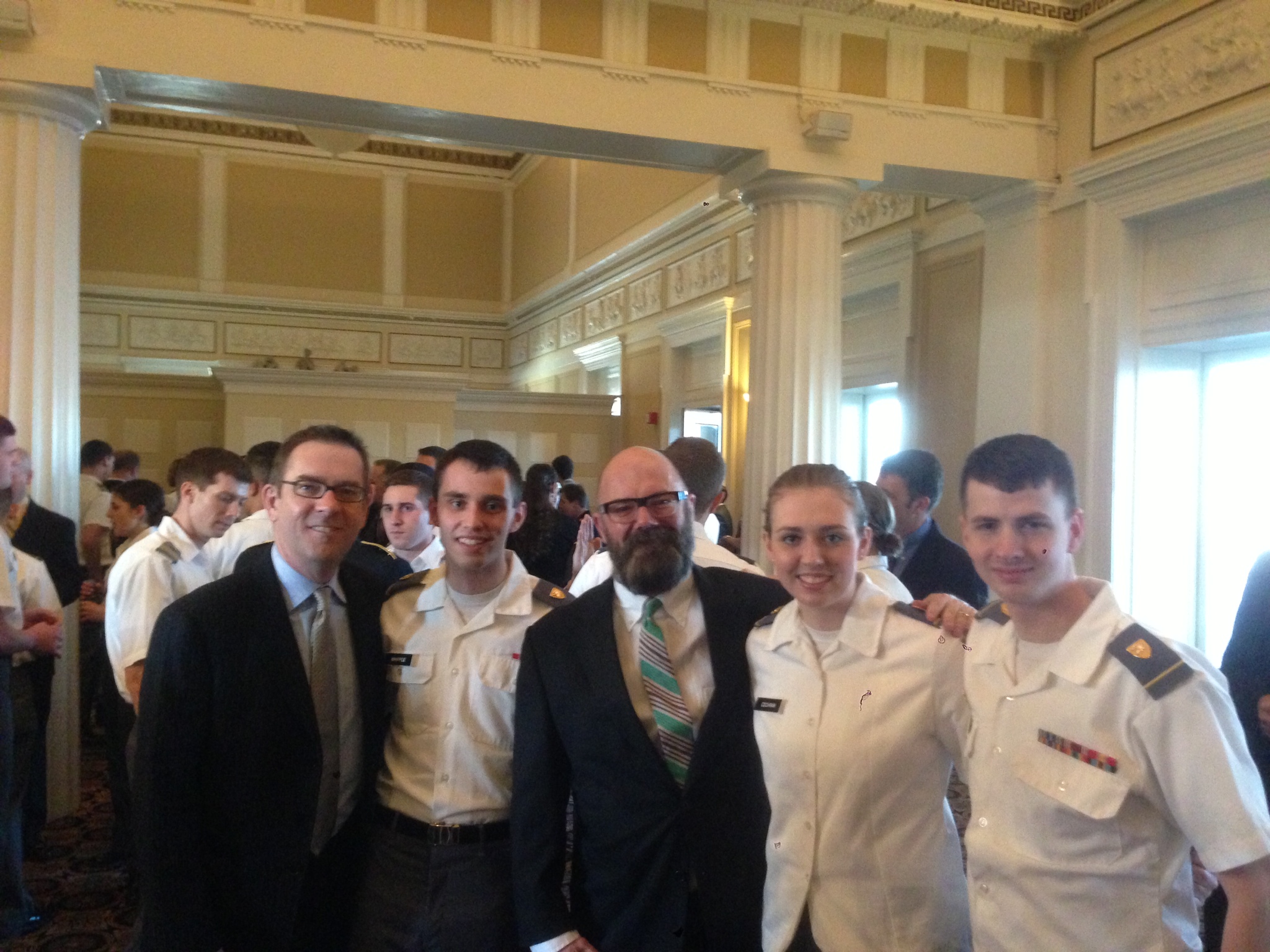
A week ago last Saturday, I was invited to West Point by a group called “Knights Out”. That’s the name for the gay-straight alliance among cadets at the oldest continuous military installation in America. This was their second annual dinner – which, like all things done twice at West Point, is now therefore a tradition. (Yes, that’s TV foodie, Ted Allen, on the far left. He was also a guest.) I thought I was just attending a dinner and making a few remarks, but they insisted on giving me an award for my work on ending the military ban on openly gay service-members. This happened the week before those critical court cases on marriage equality.

It’s taken me this long to write up the event because my bewilderment has been so disorienting – and because it was difficult to absorb the power of this moment while putting on my analyst’s hat for the court cases. But here’s part of what I managed in my paywalled Sunday column in the Times of London:

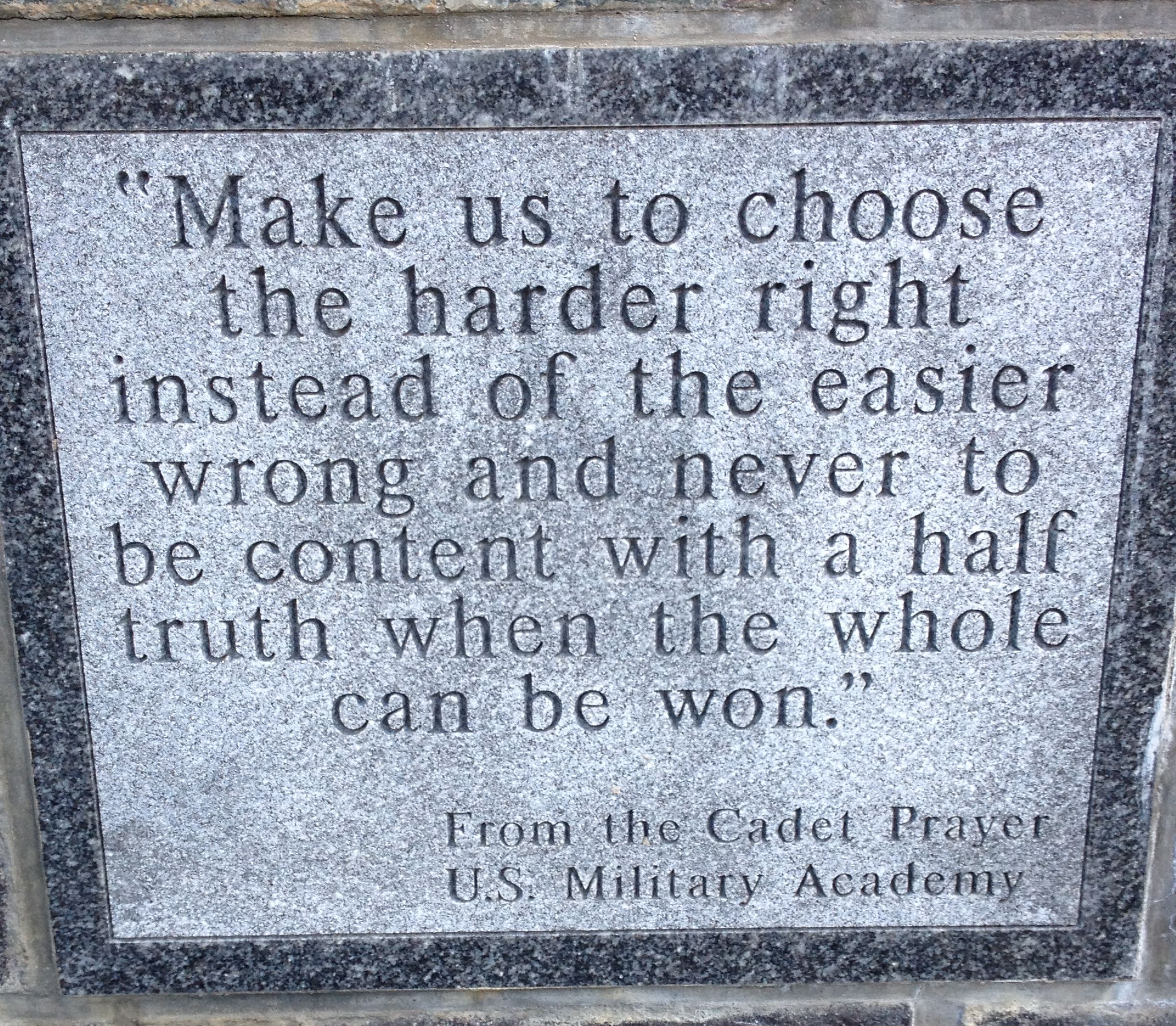
There were around 30 gay cadets present, and then plenty of old boys (and girls), and military faculty. An older general was there – with his husband. It was a formal event held in a central building. And as I tried cadetprayerto absorb the moment, it occurred to me that a little over two years ago, all of those cadets would have been expelled for merely being there. Since the beginning of the institution, gay cadets were either subject to immediate discharge or, after 1993, under the policy of “Don’t Ask, Don’t Tell”, ordered to keep their sexual orientation secret or face dismissal. They were, in other words, forced to break the core ethic of the place – “a cadet will not lie …” – in order to remain in good standing with it. And it was that ancient alleged contradiction – between military honor and homosexuality – that was being dissolved that night.

A tough Brigadier General, Tammy Smith, gave an address: “You’re military first, gay second,” she insisted, her wife sitting nearby. And these young gay men and lesbians gave her a standing ovation. They were in the military not because they were gay, but because they wanted to serve their country. One young cadet I met was following family tradition that had sent the next generation to West Point and the Army for decades. The only difference this time is that she was a woman and a lesbian. Another young cadet from the South argued with me at dinner, protesting Obamacare. He was a Republican and gay and in uniform – and saw nothing contradictory or odd about any of it.

The organization as a whole has taken as its own motto a section of the Academy’s prayer: “Never to be content with the half-truth when the whole can be won.” They did not want to rebel against this institution, or to occupy some special niche. They merely wanted to be wholly, honorably part of it. And finally, they were.

In a column today, Ross Douthat urges those who have championed and almost won the argument for homosexual civil equality to adopt Churchill’s advice: “In Victory: Magnanimity,” while he opts for Churchill’s other dictum, “In Defeat: Defiance.” There was certainly no hubris or triumphalism at West Point. There was merely relief – relief that forcing gay cadets to break West Point’s honor code against lying is now mercifully left in the trashcan of history.

From the next generation, I heard nothing but the desire to serve their country without lying. This was not about the relevance of their sexual orientation but rather its irrelevance compared with this honorable vocation. There was a time when conservatives rejoiced when a balkanized minority wanted to integrate itself into the whole of society by affirming traditional goals, like serving one’s country in uniform or marrying the one you love. There was a time when identity politics was the foe of conservatism. Now, the integrators and opponents of identity politics are suddenly those at fault. And the right has resorted to the identity politics of victimology to describe its current predicament.

And what struck me about these gay soldiers – as with the many gay service-members I have been proud to know and meet in my life – was their commitment to honor. They truly found the lies they were commanded to tell about their lives to be dishonorable. And what struck me about West Point was its constant, persistent American military insistence on choosing the “harder right instead of the easier wrong.” Honor is everything there. It is a standing rebuke to the following sentence:

“You don’t want your honor to be questioned? Why would those things matter when compared to protecting America?”

Yes, the antidote to Cheney is West Point. And the cadets who found the courage to put honor first. And changed the world because of it.

The Radical Christianity Of Francis

Pope Francis Attends Easter Mass and Urbi Et Orbi Blessing in St. Peter's Square

What has struck me the most about the new Pope is his reticence. Benedict XVI was as bewilderingly bejeweled in his prose as he was in his elaborate, fastidious outfits. Francis seems to be following his name-sake, who rarely preached as such, but whose actions spoke far louder than any Latin. “Spread the Gospel everywhere – if necessary with words” was the saint’s alleged remark. It was certainly his way of life, although I doubt Pope Francis will suddenly break out into a spiritual dance or song, as Saint Francis was wont to do.

And so Francis was of few and plain words, as he emerged at first: “Bueno Sera” before urging people to go to bed soon. He has simply let the ornate and elaborate vestments of his predecessor fall from his body, as Saint Francis did in renouncing his worldly inheritance from his father. He has spoken of the need to protect Creation from the forces of pure exploitation and greed; he has reiterated Jesus’ message to visit the sick in hospital and the incarcerated in prison. He has washed the feet of a Muslim female juvie. He has refused the Papal throne and its palatial residence. And he has done all this almost instantly. No words could have said as much.

The reaction from the arch-traditionalists, especially in Liturgical matters, has been just a notch short of outright hysteria. One of the new, young priests, who came of age under the counter-revolution of Wojtila and Ratzinger, registers his bafflement at the washing of women’s feet:

I am a young, recently ordained priest. Tonight, I planned on preaching about the Eucharist and the institution of the priesthood. How can I speak about such things – the self-offering of Christ, the 12 viri selecti – when our Holy Father is witnessing to something different?

I feel like going up to the congregation and saying, “I don’t have any idea what the symbolism of the washing of the feet is. Why don’t we just all do what we want.” How hard this is for young priests.

How hard for a young priest to have to grapple with the idea that in Christ, there is “neither male nor female.” Or that some Pharisaical rules, designed to protect the powerful, are what Jesus came to disarm with the power of love, outreach, and embrace of the other. No: what matters to this priest is that those who are selecti are viri, i.e. men, that the washing of the feet is about the supremacy of the male priesthood, not the humility of a God who places the last first and the first last. There is some awkward resistance from the Ratzinger faction as a whole:

“The pope does not need anybody’s permission to make exceptions to how ecclesiastical law relates to him,” noted conservative columnist Jimmy Akin in the National Catholic Register. But Akin echoed concerns raised by canon lawyer Edward Peters, an adviser to the Vatican’s high court, that Francis was setting a “questionable example” by simply ignoring the church’s own rules.

“People naturally imitate their leader. That’s the whole point behind Jesus washing the disciples’ feet. He was explicitly and intentionally setting an example for them,” he said. “Pope Francis knows that he is setting an example.”

The inclusion of women in the rite is problematic for some because it could be seen as an opening of sorts to women’s ordination.

There is no sign that Francis will move to end that ban – although what a day for the church that would be! There are signs rather that Francis wants to break out of the zero-sum dynamic of those issues for a while and reaffirm the central truths of the faith: that the force behind all of creation is love, that Jesus revealed this in his words and in his actions, that those who believe they have everything have nothing, and that those who are marginalized, poor, alone, afraid and vulnerable are by those very facts more capable of seeing God in the world. We have to become more like them to find Jesus, and less like ourselves.

This is a Pope who follows Jesus’ example by simply showing, not telling. Francis of Assisi is the obvious precedent. But this man is a Jesuit as well, an order founded by Saint Ignatius:

St. Ignatius had been a Basque soldier, as well as something of a ladies’ man, until his conversion while convalescing after a cannonball shattered his leg. In his writings, most notably in his “Spiritual Exercises,” St. Ignatius espoused a theology based on loving deeds rather than loving thoughts or words. St. Ignatius calls us not merely to worship Christ but to imitate him.

My italics. Deeds over words; love over law. In the end, the way a human being acts is what his or her religion is. And a spiritual leader can say so much more without words, because he is describing something beyond human understanding. In the washing of a young woman’s feet – from another universe of doctrine – you are witnessing the surrender of law to love. You are witnessing Jesus’ constant resurrection in our world – every day, somewhere, in someone, opening up to the sun, like flowers in springtime.

(Photo: Daffodils in front of St. Peter’s Basilica as final preparations are made before Pope Francis delivers his first ‘Urbi et Orbi’ blessing from the balcony of the Basilica during Easter Mass on March 31, 2013 in Vatican City, Vatican. By Christopher Furlong/Getty Images)

The Howl That Got Heard

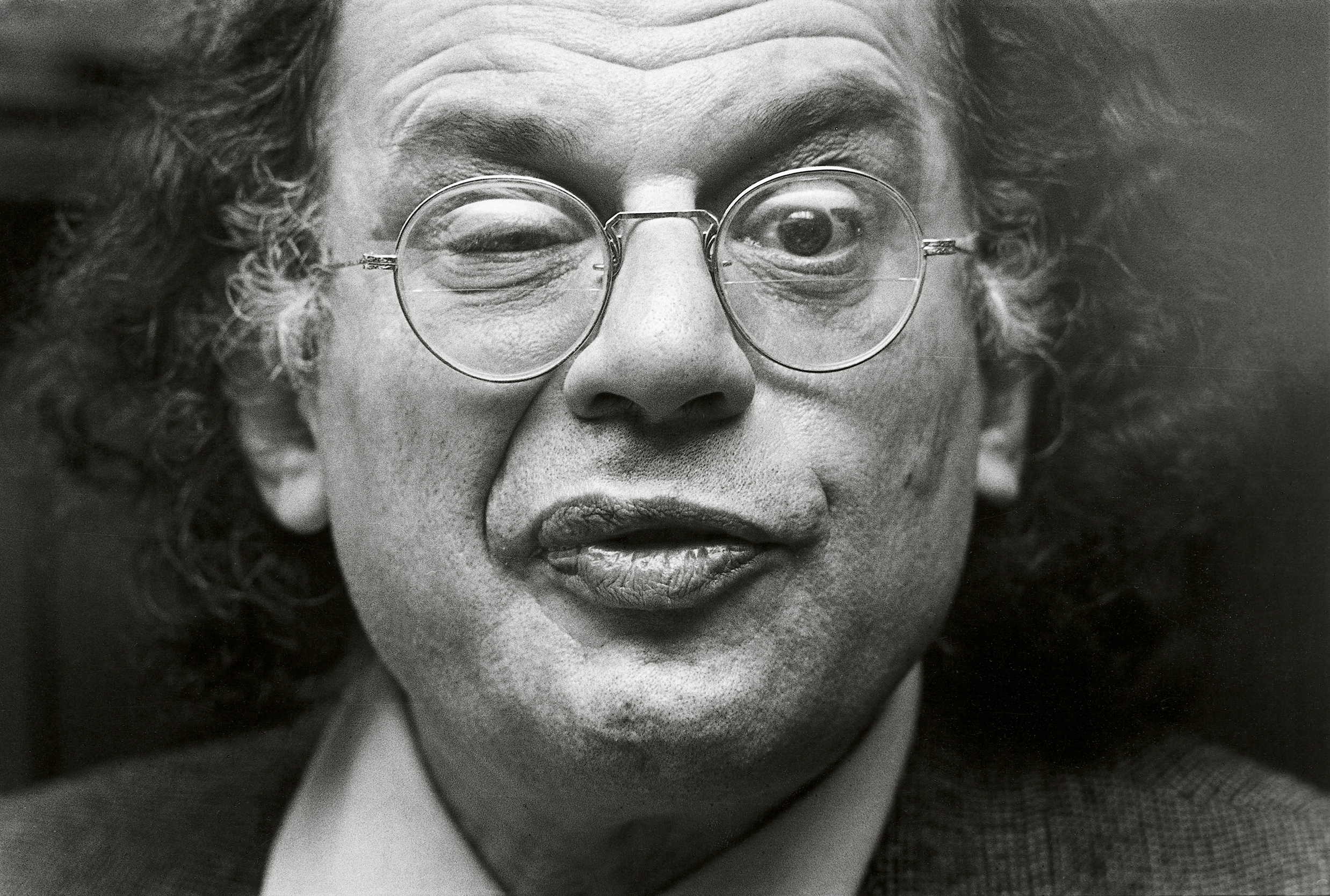
Allen Ginsberg - 1979

After a week in which the Supreme Court heard two cases about same-sex marriage, David Biespiel ponders the ways we still live in the wake of Allen Ginsberg’s poem, Howl:

As a lament, “Howl” dissents against the destruction of youth, refutes the violence of industrialism, and grieves over the compromised life of Carl Solomon, whom Ginsberg met in a psychiatric hospital in the late 1940s. And it is an anthem for for homosexual freedom, rights, and visibility.

Ginsberg’s argument is that American industrial violence and cultural intolerance are a cancer at the root of American life and they cause the corrosion of the beatitude of the imagination. Therefore Howl deplores an American Cold War culture that pushes individuals — pacifists, free spirits, anti-capitalists, women, and yes, gays and lesbians — to its dark fringes. Then that same culture accuses those most vulnerable of being derelicts and outcasts who are undisciplined trash that live beyond the mainstream norms.

But Howl helped to create the world we now live in, a world that is opposed to an intolerant America.

Listen to Ginsberg recite Howl here.

(Allen Ginsberg in 1979, photographed by Michiel Hendryckx, via Wikimedia Commons)

Defying An Author’s Dying Wish

A collection of Willa Cather’s letters are about to be published, despite her expressed instructions to the contrary:

As Jennifer Schuessler explains in the New York Times, “Cather was believed to have destroyed most of her letters and sternly ordered that her surviving correspondence never be published or quoted from, a wish her executors adhered to unbendingly, even as it fueled sometimes rancorous debate about her sexuality.” She goes on to point out that Cather wanted to be known for her work rather than her private life, as evidenced by her refusal to allow excerpts for anthologies or film adaptations, the latter following her disappointment with the 1934 adaptation of A Lost Lady.

The editors of the new collection, Andrew Jewell and Janis Stout, acknowledge in the introduction that this publication flies in the face of Cather’s instructions, as set forth by a will that partially expired in 2011. Still, they believe that publication of her letters will prove invaluable for her legacy, arguing that “these lively, illuminating letters will do nothing to damage her reputation.”

Doug Barry emphasizes that “Cather really wanted her work to be widely perused, and making her letters widely available can only help burnish her reputation” – and that they confirm Cather’s lesbianism:

The letters should be a boon to Cather scholars, who, in the 1980s and ‘90s, were engaged in a fierce debate over Cather’s sexuality, and the role it played in her fiction. Feminist and queer theory scholars began to read a lot of pyschosexual turmoil into Cather’s work, prompting a harsh rebuke from Joan Acocella in a 1995 issue of the New Yorker.

All that controversy can be put to rest now — we’ll all soon get to have a long peek into the personal correspondence that Willa Cather would probably rather us not have read.

Nabokov’s Dirty Lit

Edward Jay Epstein recalls, in the fall of 1954, taking Lit 311: European Literature of the Nineteenth Century – unofficially called “Dirty Lit” for its emphasis on adultery – which was taught by Vladimir Nabokov:

I did not get around to reading any of Anna Karenina before Nabokov sprang a pop quiz. It consisted of an essay question: “Describe the train station in which Anna first met Vronsky.” Initially, I was stymied by this question because, having not yet read the book, I did not know how Tolstoy had portrayed the station. But I did recall the station shown in the 1948 movie starring Vivien Leigh. … Only after the exam did I learn that many of the details I described from the movie were not in the book. Evidently, the director Julien Duvivier had had ideas of his own. Consequently, when Nabokov asked “seat 121” to report to his office after class, I fully expected to be failed, or even thrown out of Dirty Lit.

What I had not taken into account was Nabokov’s theory that great novelists create pictures in the minds of their readers that go far beyond what they describe in the words in their books. In any case, since I was presumably the only one taking the exam to confirm his theory by describing what was not in the book, and since he apparently had no idea of Duvivier’s film, he not only gave me the numerical equivalent of an A, but offered me a one-day-a-week job as an “auxiliary course assistant.”

God From The Machine

Julia Kaganskiy profiles three programmers who are exploring the similarities between scripture and code:

In the gallery, I approached a laptop on a pedestal, flanked by tall white candles and two iPads displaying the project description and samples of the God.js code, both written in Medieval-looking type and flowery language. I was instructed to select my “religion” from a set of three belief systems available in the God.js Chrome plug-in. Each one placed a unique set of constraints on my browsing behavior, doling out punishments for transgressions, such as visiting a page with too many obscenities.

I selected the religion developed by the second developer, Will Brand, and randomly pointed my browser to Gawker. Festering boils filled the page as clipart frogs rained down. Apparently the god behind this religion was not a Nick Denton fan.