Herbalist Olivia Laing, a fan of Shakespeare, recounts her training in phytotherapy:
We used Ophelia’s flowers day in, day out. Rosemary, Rosmarinus officinalis, was deployed as a kind of mild stimulant, to sharpen the mind and improve concentration and circulation. Pansies, Viola tricolor, I mixed most often for childhood eczema. Fennel, Foeniculum vulgare, that marvellous aromatic and carminative (aid to digestion), which was likewise good for promoting milk flow (an action known as a galactagogue), and gentle enough to be taken by a child.
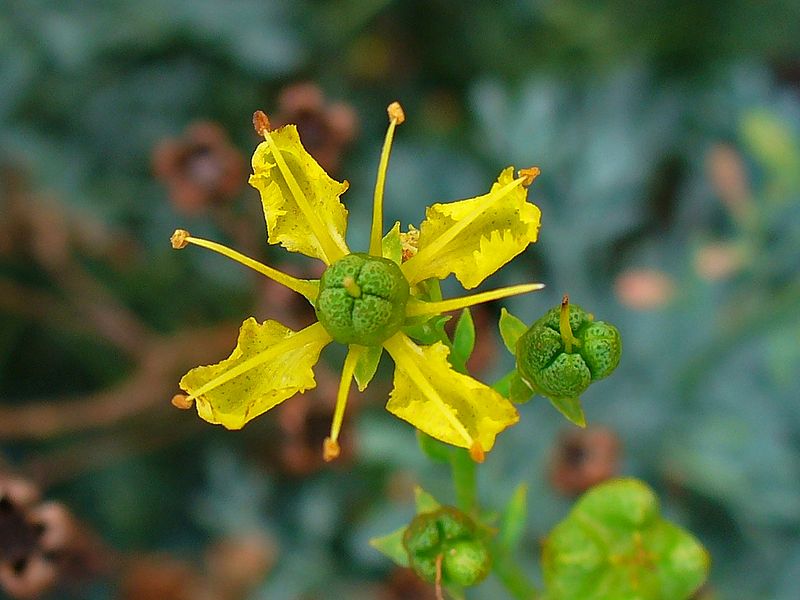
Did we have rue, Ruta graveolens, which flowers a sour yellow and stands in floriography for both regret and the grace of God? I don’t remember. I certainly studied it. It grew in my boyfriend’s garden, and I once idly mashed a leaf back and forth between my fingers. The next day there were red weals and pustules all over my hand, which itched and burned for almost a week. Like many dangerously toxic plants, it had been used traditionally as an abortifacient (‘It expellethe the dead childe,’ wrote Gerard in his Herball of 1633) and so became associated in folk memory with regret, especially in women. This is why Ophelia gives it to Gertrude, Hamlet’s mother: a statement of disgust masquerading as respect.
(Photo: Ruta graveolens by H. Zell via Wikimedia Commons)
 The Dish
