This Particular Now

2-1-4-william-eggleston-600x597

Greg Bottoms pens an open letter to photographer William Eggleston:

I don’t write to dream; I write to stop dreaming, to be more present.  To tell my way toward clarity.  I think I would be a writer even if I didn’t write. I’d have that observational inclination towards the ordinary—that open-mouthed stare at unprocessed existence going by. I write mostly for the process—of looking, thinking, naming, discovering. I think this is why many who might loosely be called documentarians—essayists, memoirists, literary journalists, photographers, nonfiction filmmakers, even biographical or documentary fiction writers—do what we do.  We have an obsessive interest in presenting and pondering ordinary life, the day-to-day flow of things.

I bet you take photographs—of a light bulb in a red ceiling, a dinner table just before people sit down to eat, an old man sitting on a bed and holding a pistol, a rusty tricycle—not to dream but to come out of a dream.  To say This is, this right here is absolutely real in space and time, irreducible and ineluctable, and I witnessed it and I captured it; I lived deeply inside of this particular now.

He thanks Eggleston for a particular photo of a Mustang that triggers a vivid memory of waiting in a Sears parking lot with his father. That photo is used for the cover of the book William Eggleston 2 1/4, seen above.

Opium As Muse

Colin Dickey surveys the literary career of Thomas De Quincey, who built “his reputation as a friend and colleague of Wordsworth and Coleridge with an astute and encyclopedic mind—all the while managing not to produce any actual writing.” That is, until he decided to write about the very thing that had prevented him from doing so – his opium addiction:

Long his artistic nemesis, it had now become his subject. For all its drawbacks, opium had one beneficial effect for De Quincey, that of acting as the ice-axe to free the frozen sea within him. Opium, as it happens, does not enhance one’s dreams, it suppresses them, so that it’s really as one gradually comes off of the drug that those dreams come flooding back with heightened urgency and intensity. It also seems to have freed him from the need to produce a grand, unified and cohesive philosophical treatise; part of what would come to define De Quincey’s style are his fragmentary tangents, his proto-stream of consciousness style that allowed him to move rapidly between dream, memory, and philosophy.

His style was an instant success:

The young De Quincey had wanted to be Wordsworth, but the Confessions is in many ways the complete antithesis of Wordsworth’s writing: prose, not poetry; urban, not rural; eschewing transcendence in favor of the darker side of English society. Most significantly, its approach to time was radically different. For Wordsworth, in poems like “Tintern Abbey” and “I Wandered Lonely as a Cloud,” the moment of epiphany came through recollection, and pleasure came from those moments, “In vacant or in pensive mood,” when memories flashed “upon that inward eye / Which is the bliss of solitude.” There was a magical frisson in a memory recollected at leisure over the space of years, and that gap of time was necessary to an ability to process the beauty of those past moments.

De Quincey found in opium a completely different relationship to the world around him. Speaking of the impact of music while on the drug, he writes: “Now opium, by greatly increasing the activity of the mind generally, increases, of necessity, that particular mode of its activity by which we are able to construct out of the raw material of organic sound an elaborate intellectual pleasure.” Opium, in other words, could render the same kind of epiphany Wordsworth sought in recollection, but could do so in real time. Under opium, according to De Quincey, “Space also it amplifies by degrees that are sometimes terrific. But time it is upon which the exact and multiplying power of opium chiefly spends its operation. Time becomes infinitely elastic, stretching out to such immeasurable and vanishing termini, that it seems ridiculous to compute the sense of it on waking by expressions commensurate to human life.” In these passages, De Quincey is closer to Virginia Woolf than Wordsworth, and particularly that modernist conception of time as bifurcated between, as Virginia Woolf put it in Orlando, the “time of the clock” and the “time of the mind.”

Previous Dish on De Quincey here, here and here.

Marriage Among The Millennials

Lizzie Plaugic unpacks a report (pdf) from UVA’s National Marriage Project that “showed increased rates of binge drinking and depression in non-married twenty-somethings”:

“Thirty-five percent of single men and cohabiting men report they are ‘highly satisfied’ with their life, compared to 52 percent of married men. Likewise, 33 percent of single women and 29 percent of cohabiting women are ‘highly satisfied,’ compared to 47 percent of married women.”

It’s a vague statistic though (“highly satisfied” could mean anything from an endless supply of Cheetos to a house in the Hamptons to daily sex), and it’s potentially misleading. Increased life satisfaction could be the result of marriage being an endorphin-increasing road to happiness, or it could mean that young people are waiting to get married until they have achieved happiness elsewhere, rather than the other way around. Whereas marriage used to mark the beginning of adult life, now it seems to be a thing you do after your adult life is already settled.

Libby Copeland figures that the study explains why many celebrities get married very young:

Once upon a time, men with high school degrees could obtain manufacturing jobs with solid wages and pensions that enabled them to marry and start families in their early 20s. Now, with the chances of nabbing a pension about as good as “winning the World Series,” as the Knot Yet study puts it, young blue-collar Americans can’t pay for a wedding, let alone a house and kids. But pop stars, of course, don’t have that problem.

Nor do they, like middle- and upper-class women, need to worry about finishing college and working for several years before contemplating getting pregnant. They won’t be sacrificing a $10,000 annual bump in salary by marrying too soon; instead, they’re probably making more in their late teens and 20s than they’ll ever make again. And getting married might well help their brand. (Having a baby certainly will.)

In other words, celebrities marry young not because they’re more mature than the rest of us (clearly) but because they have the means so much of America lacks. The move may be driven by youthful impulse, but it is also, in a strange way, logical. They’re just doing what so many of us would have (ill-advisedly) done as teenagers if we’d had loads of cash and legal independence from our parents: married our first loves.

Meanwhile, Megan McArdle considers society’s incentives to get married:

College improves your earning prospects.  So does marriage.  Education makes you more likely to live longer. So does marriage.  Yet while many economist vocally support initiatives to move more people into college, very few of them vocally favor initiatives to get more people married.  Why is that, asks Pascal-Emmanuel Gobry?

Her theory:

[A]ll economists are, definitionally, very good at college.  Not all economists are good at marriage.  Saying that more people should go to college will make 0% of your colleagues feel bad.  Saying that more people should get married and stay married will make a significant fraction of your colleagues feel bad.  And in general, most people have an aversion to topics which are likely to trigger a personal grudge in a coworker.

A Poem For Saturday

daisy

“Shudder of a Daisy” by Gennady Aygi (1934-2006):

little cloud! –

would once the moment
(invisibility-visibility)
of my death thus be shaken –

(what then
shall I choose
more dear):

wind – jewel-like – fleeting! –

as in flight
awakened in me – first of all:

freshness! –

of absence of memory

(Translated, from the Russian, by Peter France. Reprinted from Field-Russia: Poems by Gennady Aygi © 2001 by Gennady Aygi. Translation © 2007 by Peter France. Reprinted with permission of New Directions Publishing Corporation. Photo by Flickr user peter pearson)

Love And Hate In The Age Of Smartphones

Like most millennials who don’t actually use their phone for phone calls, Eric Jett missed the “golden age of the booty call”:

“What are you up to?” read many a late-night text message during my years at Oberlin College. The text was a feeler, a thin, transparent antenna, projecting out into the night. While during the day, such an innocuous message could be followed up by any number of requests or offers, at two o’clock in the morning, it could mean only one thing. But unlike the analogue booty call of yore, which required at least a semblance of tact and care — “How have you been?” — the booty text is a Boolean expression, a true or false question, a gambit to be either declined or accepted. It is the ring — in that awkward moment between the caller ID and SMS — not the call.

Another casualty of smartphones? The ability to slam a receiver:

Hanging up on someone is a physical act, a violent one even, one that produces its own pleasure by discharging acrimony. Like the model 500, the flip-phone supports hang ups because its form is capable of resisting them; because it can survive the force a hangup delivers. Just try to hang up your iPhone or your Samsung Galaxy. I don’t mean just ending a call, but hanging up for real, as if you meant it. For a moment you might consider throwing the handset against a wall before remembering that you shelled out three, four, five hundred dollars or more for the device, a thing you cradle in a cozy as if it were a kitten or a newborn. Everyone is a milquetoast when a smartphone is in their hand.

Hopheads

Exhibit A:

Martha Harbison wonders if some beer drinkers could be addicted to hops:

Modern-day hopheads–the beer drinkers who gleefully, obsessively seek out hoppier and hoppier brews–don’t usually start out that way. Most people have a natural aversion to bitter compounds–useful for avoiding eating lethal doses of poisons in the wild. No, one must work one’s way up to hops: Start off drinking beers with lower IBUs (International Bitterness Units, one measure of how bitter a beer is), be them ambers, lagers, brown ales, or stouts. Next, try a pale ale. Then try many pale ales. Then discover the IPA — and with it, become obsessed with hop varietals such as Simcoe (piney aroma) and Amarillo (fruity aroma). Be happy with that for a while. Maybe try a double IPA (twice the malt, twice the hops as a regular IPA), which may or may not be successful, depending on whose you drink. Begin to love being punched in the face with a fist of hops. Become obsessed with IBU ratings. Buy the hoppiest beers one can find, even if they don’t actually taste all that good. Despair.

But it’s not actually addictive:

You can cut hops out of your diet with no adverse physical reactions just like you can do the same for curry or bacon cheeseburgers or any number of other food items for which one occasionally develops cravings. Gustatory cravings are not the same as caffeine jags, nic fits or heroin jones.

So how does one account for the obsessiveness? Zak Stone theorizes “it’s the association of hoppiness with stronger alcohol content in beers that drives the sense of addiction”:

Beer lovers not only get used to drinking more bitter beers, they often get used to drinking ones with higher alcohol content. The hops are the bell that make Pavlov’s dogs water at the mouth: only this time it’s for booze.

Pink Bubbly

Rose_champagne

Peter Foges tells us all about rose champagne:

One legend has it that this ineffable nectar was first created for a queen to match her bridesmaids’ dresses. But it wasn’t until well into the twentieth century that rose champagne went democratic and entered the public domain. In Depression-era New York it passed in the more upscale speakeasies for cherry soda. But it reached an apogee of applause when it turned up in the movies, most memorably in 1959 in An Affair to Remember, when Cary Grant drinks it with Deborah Kerr as they first meet aboard an ocean liner. They proceed to drink nothing but the stuff as their love affair unfolds. Sales in the U.S. ballooned that year. President Reagan was particularly fond of it—and famously used to pair a bottle or two of Louis Roederer Crystal Brut Rose 1974 with a bowl of jelly beans. …

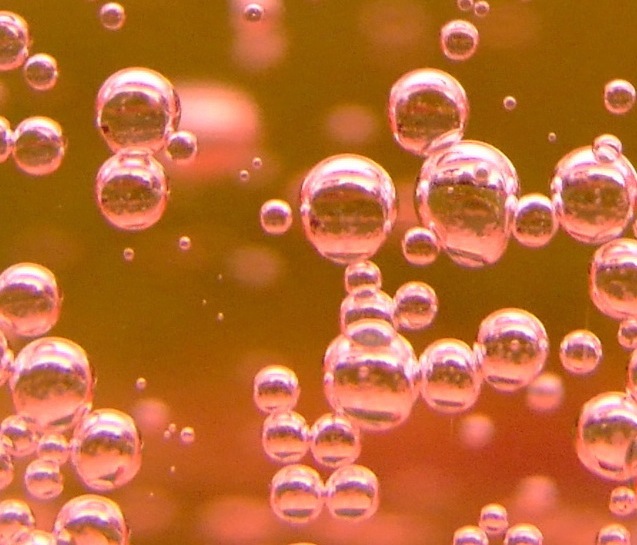
Rose champagne is rare. Only three percent of the 350 million bottles produced annually in the Champagne region of France are pink, perhaps because giving it its tint while maintaining its quality is hard. It’s basically a matter of either adding still red Pinot Noir just before the second fermentation, or leaving the red Pinot grape skins in contact with the wine for a while—both of which are risky and complex. A small mistake can turn the champagne into an unwanted, unsalable red, blue or brown.

(Photo by Gaetan Lee via Wikimedia Commons)

A Contemporary In Cold Blood

In American Honor Killings: Desire and Rage Among Men, David McConnell chronicles six notorious killings committed by straight men against gays. In an interview with Patrick Ryan, McConnell rejects the term “gay panic” as a motive for the murders:

It’s a term that solves the singular mystery of any killing – motive – before you even have a chance to think about it. No wonder defense lawyers love it. But if you’re at all interested in what really goes on in the world, that kind of categorization just isn’t enough. Besides, as I keep insisting, gay panic often isn’t accurate. Of the six cases I write about in detail, several days or more passed between the ‘provocation’ – if there even was a unique precipitating event – and the murder. Can you panic for days or weeks? To me it seems obvious something else is going on. I think the violence exists in the hearts of these men long before the victim comes along.

Ryan tells McConnell, a novelist, that “your recreation of the events in each murder has the same kind of narrative pull as Capote’s book.” McConnell talks about his foray into nonfiction:

In the Oklahoma City case, I was especially fixated on how [Darrell] Madden and his accomplice had hijacked their victim, Steve Domer. A normal newspaper account might have left it at ‘the two lured the older man with the promise of sex for pay.’ But I wanted to know how it happened instant by instant. Because I was having trouble getting clear answers from Madden, I just wrote up the scene as I would in a novel, complete with dialogue. Then I sent him the pages, and he sent them back to me covered with annotations. It was by far the most perverse ‘editorial’ experience I’ve ever had, but it was a great way to get information.

On a related note, Ben Yagoda tracked down the New Yorker‘s fact-checking records for Capote’s In Cold Blood.