Un-Dominion

In a review of two books about our relationship with dogs, What’s a Dog For? and The Puppy DiariesSue Halpern considers the power dynamics at play:

When humans breed dogs, we breed them for us—to suit our fancy, primarily, and sometimes to help us accomplish certain tasks. Snout-compressed dogs like the bulldog have been bred to appeal to a particular human aesthetic, even though this means that they sometimes have trouble breathing. The Cavalier King Charles, which in the twentieth century was rejiggered to resemble dogs in royal portraits, is, as a result, often born with a brain too big for its skull, with excruciating consequences. And bulldogs, as handsome as their oversized heads may be, are typically too large now to descend through their mother’s birth canal and require surgical extraction to be born. The soft mouth of the retriever is a human invention, and so is the tail of a pointer. The labradoodle—a cross between a poodle and a Labrador retriever—was initially made to create non-shedding guide dogs because the standard guide dogs—German shepherds, Labs, and golden retrievers—could not be used by people with allergies. …

The human–canine bond is inherently unequal. Like it or not, it is a power relationship.

And yet, I still feel my own dogs have power over me. I’m sure this is because we haven’t been the sternest disciplinarians; and because one of them is a beagle. They have different strategies for controlling humans. Dusty, the pure beagle, just insists on one simple thing: getting her way. If you’re late for her dinner, she will whine in a way that sears through the brain like the Time Warner Cable announcer. If you crate her, she will howl until the neighbors complain. She’s older than fifteen now and yet can stop a large grown man dead in his tracks if she decides she has found some elemental trace of a former pizza crust in a sidewalk crack. I know I have the power of food and medicine over her; but that’s about it. She seems to me to live in her own world, with us as her personal assistants and chefs. And, yes, of course, we ceremoniously and punctiliously follow after her sphincter and pick up her crap. I’m not sure even Marie Antoinette had such a service at hand.

Our other dog just guilts you into surrender. She’ll gaze at you with such tender love you are rendered completely helpless. She’ll just pee in the apartment if one of us is away too long. She worships Aaron as a sun-god, while I am the moon, something to see by during the nights of his physical absence. Now that I no longer have a boss, she easily has the most power over me of any other living creature, including my husband. I know this is all a terrible paradox and that their obedience should reflect what Cesar calls our “calm dominance.” But I tend to agree with Montaigne:

At home, he extended his perspective-leaping to other species. “When I play with my cat”, he wrote, “who knows if I am not a pastime to her more than she is to me?” He borrowed her point of view in relation to him just as readily as he occupied his own in relation to her. And, as he watched his dog twitching in sleep, he imagined the dog creating a disembodied hare to chase in its dreams – “a hare without fur or bones”, just as real in the dog’s mind as Montaigne’s own images of Paris or Rome were when he dreamed about those cities. The dog had its inner world, as Montaigne did, furnished with things that interested him.

To see the animal world not as something to be exploited, but to be engaged with, even taught by, was, of course, legendarily attributed to Saint Francis who saw animals as his brothers and sisters. Montaigne took it further, although the best historical book I’ve ever read on changing attitudes toward nature is Keith Thomas’s Man and the Natural World. He charts a shift in human consciousness toward animals that led to this disposition:

For 2,500 years it has been known to the students of nature that the more one learns about animals, the more wonderful they become. The observation stands confirmed by the instruments of both science and art, but the animals are most instructively perceived when they are seen, as they were by [American writer Henry Beston] from the beach on Cape Cod, as other nations complete in themselves, “gifted with extensions of the senses we have lost or never attained, living by voices we shall never hear.”

If you have ever gone whale-watching on the Cape you’ll know what I mean. You see not just another creature, but intimations of another world, another way of grasping – or mercifully not grasping – the whole, a model for us primates, as well as a mirror into our own species’ ugly aggression. And a constant element of surprise. Check out Ken Layne’s interview with Derek Lee of the Wild Nature Institute:

I’ve seen so many crazy things in my life: orcas toying with a bird, elephant seal bulls battling to the death, lions killing impala, grey whales exhaling in my face, a million shearwaters feeding over humpbacks, a million wildebeest migrating after the rains, dolphins making phosphorescent trails around our boat during a midnight sail, but I still wake up every day expectant of what new wonder the world is going to surprise me with.

Dissent Of The Day

A reader tires of our comprehensive coverage of “enhanced advertorial techniques”:

I don’t usually write, but your rants on ad-sponsored content are REALLY getting tired (and the latest dig at The Atlantic in an unrelated article dealing with telepresence robots was a little childish). Please stop bashing other companies that aren’t doing as well as you are and that are forced to resort to advertising to make money.  There are great people at The Atlantic and David Bradley and Co. are doing their best to stay in business and generate the same excellent content provided by Fallows, Goldblog, and others.  Traditional ads don’t generate sufficient revenue for those companies.  What’s more, I don’t particularly care if I’m being marketed to and manipulated, because I’m getting their service for FREE.

All else equal, I’d gladly take The Atlantic‘s model, where I have to deal with ads, manipulative or otherwise, than yours, where I have to pay.

Of course, because I enjoy your blog so much, all else isn’t equal here, but the point stands that you’re doing well in your new system (at least from my perspective) because of you and your team and in SPITE of your model, not the other way around.

You’ve done remarkably well for yourself, which is the primary reason your model is working. Good for you, and I of course remain a devoted Dishhead. That said, I have been meaning to pay for your service since your model went pay-for, but this “holier-than-thou” attitude makes me feel like I’ll just be feeding this ego/arrogance and perpetuating this non-stop torrent of bitterness. The whole thing seems a little transparent and self-serving, and I think you’re better than this.

Bitter?

My one and only concern is that in an era when advertisers have publishers by the short and curlies, that we do not give away the village in order to keep it. It’s the crafty fusion of advertising and editorial content that troubles me – and that risks the integrity of the core content. If we really are going to merge advertizing and journalism in the coming years, as seems an increasingly popular idea, I think it’s worth resisting and asking some core questions. Not out of smugness. It’s far too soon to declare our venture as a success. But because there are some principles at stake here, important ethical ones, and they are not being aired in the rest of the media – because no one wants to undermine their future commercial viability.

So I’m doing what only a truly independent blog can: raising an issue the MSM cannot or won’t. And it isn’t childish to note a simple example of how the decline of trust between publisher and reader caused by sponsored content can affect an otherwise good piece. If your magazine is partly under-written by IBM and your cover-story is about IBM’s brilliant new computer, you are doing the writers and editors a disservice by the appearance of a conflict of interest.

The Journey Home

After an airline mix-up, Freddie deBoer was forced to take the bus from Vegas to Indiana. He reflects on the experience:

My seatmate for a long while was a man named Muy. He spoke very little English. He told me he was going to Chicago. It occurred to me, in a vague way, that were he a promising young engineer from China, I might have worked with him in my campus’s oral English program, working on his prosodic quality, his phrasal stress, his morphosyntax. Instead he was from Mexico, trying to get from Las Vegas to Chicago via Greyhound bus.

In Kansas City, they wouldn’t let him get back on the bus.

He had missed a transfer somewhere. It seemed easy enough to do; I worried about it the whole time. I loaded up while he talked to them. It became clear that they wouldn’t let him back on. His leather coat was in the storage space above our seats. I grabbed it and came to get off the bus to give it to him. The Greyhound employees wouldn’t let me off the bus. They said if I got off the bus I wouldn’t be able to get back on, and I’d have to purchase a new ticket for the bus that left the next afternoon. I said to the guy, here, this is that guy’s leather jacket, he’s 25 feet away, can you bring it to him. But they wouldn’t. They just wouldn’t. I wanted nothing more than to just walk out past them and hand it to him. But I didn’t have enough money in my bank account to buy another ticket, and my suitcase was stored in the bus, and I was so tired. So I got back on and put his jacket back up in the storage. Then I had nothing to do but sit and think about it.

My politics exists to understand the difference between him and me, between both of us and the people who will never worry about how to get home. It is political. Perhaps if he were me, if he were white and spoke the English that power speaks like I do, he would have been able to get back on that bus, or to talk them into letting him have his leather jacket. But it’s not just political. It’s the way that human beings can help others, simply, at no costs to themselves, and don’t, every day, every day.

Organization Man

Ursus Wehrli specializes in organizing items, people, even paintings; his new book tackles life’s smaller moments. From an interview with the artist:

I think it speaks to our complicated world because our days are full of decisions and sometimes it is really hard to decide what is right, what’s wrong and we have to fight against the mess and the chaos. I wouldn’t say it is a manifesto for a neat world, but I’m happy if it makes people think about the balance between chaos and order. Of course, we realise we need both poles and it’s the balance that makes life worth living.

More on Wehrli’s process here.

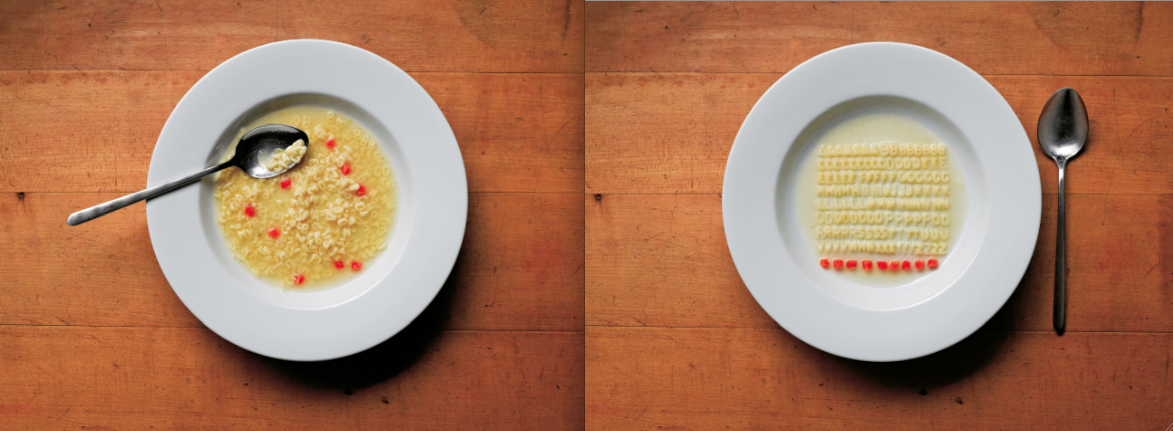
(Image from The Art Of Clean Up, hat tip: Mark Frauenfelder)

From Warzone To Warzone

Elizabeth Ferris checks in on Iraqi refugees:

Today Iraqi refugees throughout the region face dwindling donor support, particularly as the needs of Syrian refugees increase. For the hundreds of thousands of Iraqis who remain in Syria, the situation is particularly dire. Some have been displaced within Syria. Some Iraqis have moved to other countries in the region (though they have faced an uncertain welcome by governments facing new inflows of Syrians.) Many — perhaps 100,000 — Iraqis have chosen to return to Iraq in the past year (though given the violence in Syria, it is hard to see this as a voluntary decision). Those that have returned to Iraq have either congregated in a hastily-constructed camp along the Iraq-Syrian border (which has often been closed) or have simply become [internally displaced persons (IDPs)].

No Ear For Vinyl

Jason Heller has given up collecting LPs:

Like some people who say they have fibromyalgia or gluten intolerance, far more vinyl collectors think they’re audiophiles than actually are. Owning a decent turntable does not turn your ears into trembling flowers, unable to bear the bitmapped harshness of digital. It began to dawn on me—me, someone who had preached the sanctity of vinyl from my record-store pulpit for so long—that I couldn’t really tell the difference between a 7-inch and an MP3. Or rather, I could tell there was a slight difference, but it wasn’t enough to justify the huge portion of my income that I was spending on vinyl.

History As Hagiography

Sarah Marshall revisits an odd relic from America’s past – a series of grim “Bicentennial Minutes” that aired every night for two-and-a-half years during the 1970s. Her takeaway from the one starring Jessica Tandy (seen above):

No ambiguity hangs over the story: the Redcoats cut down the “Liberty Tree” not because they wanted firewood, but because it “bore the name of Liberty.” History has only one version, and it can be parceled into one-minute increments and sponsored by Shell, then slipped in before the evening news as testament to the fact that whatever happened today can’t be as bad as what happened two hundred years ago today.

Her feelings about America’s self-seriousness:

For Americans, our country’s legacy—and in particular the legacy of our founding has calcified into myth, and our Founding Fathers have become inhuman and larger-than-life. To have such an inflated sense of our own importance as a country is both a blessing and a curse; envisioning our forefathers as flawless men who could do no wrong, we are both ill-prepared to acknowledge our mistakes and somewhat overwhelmed at the prospect of living up to their example. If we regard our national history with more humility—and a keener eye for the wonderfully absurd—we may feel far more ready to contribute to it, knowing that, as anxious and overreaching misfits, we would fit in with our Founding Fathers far better than our schoolteachers would have us know.