Are Doctors Overpaid? Ctd

More readers join the conversation:

I suppose I should be moved to pity by the reader whose physician husband works 55 hours a week and “cracks the six-figure mark”, but somehow the tears don’t flow. I’m a US-trained scientist, working at a leading UK university. My training wasn’t as expensive as a medical training, but it lasted longer. I feel privileged to be able to earn a good living doing the work I do, though I earn less than any physician I know. Sure, I could be earning many times my current salary on Wall Street. So what? People may choose their careers at the margins based on earnings, but it’s only one of many factors.

I’m certain that there are some brilliant potential surgeons who would rather work in a bank if we cut surgeons’ salaries, but there are surely plenty of others who now don’t go into medicine because they can’t afford the upfront costs of the education, or they are frightened of the debt burden.

That’s why the proposal to combine a cut in salaries with government subsidy of medical education is so important. (My doctoral studies, and those of a large number of scientists, were paid for by fellowships.) Another reader suggests that only stupid people would practice medicine if their salaries were moved closer to that of an average person. This is where the experience of other countries becomes relevant, though your reader chooses to ignore it, and retreat into American exceptionalism. Does he or she think that there are no jobs in IT or finance in Europe? (I’m a little mystified by this readers claim that the physicians elsewhere are earning $60k, when hardly any number on the chart – which is nearly 10 years old anyway – is that low.) The GPs I have seen in the UK have seemed every bit as intelligent and well trained as those I’ve seen in the US. And it’s much easier to get an appointment.

The real point is, no one gets paid what they “deserve”, but what those who employ them need or want to pay them for their services. So why is it that medical consumers in the US are so much worse than their counterparts in other advanced economies at negotiating a good price for competent medical service?

Another is even less sympathetic:

Your reader wrote:

I was in school (paying tuition) or in training (earning $20-$30K per year) for 12 years after college and collecting more than $150K in debt at a public medical school while others my age and background were moving up in their careers, earning increasingly higher wages (some made millions in the Internet bubble), increasing their retirement nest egg, buying houses, etc. I made my first paycheck from “overpaid” reimbursement at the ripe age of 33.

Cry me a frickin’ river. I’m a teacher. My training period (student teaching) was beyond full time hours and paid $0 a year. In fact, I had to pay tuition for the privilege of working 70 hours a week for no pay.  After completing my student teaching I found I was totally unemployable straight out of college – due to lack of experience – and had to embark on several years of substituting to burnish my resume.  Last year I was lucky to spend most of the year in long-term substituting (jobs lasting more than a month, which pays more than regular substituting).

I made $10,500 last year.  This year I am a first-year teacher with my own classroom, and I will make about $30k. If I max out my educational level, get rave performance reviews, and stay in the same school district for the next 20 years, I’ll max out at about $50k/year.  All the while I’m required to spend more money on education to keep my teaching certificate current.

My path through college was slower because I had to work while going to school. Even still I have about $80k in student loans.  I’m currently 35 and I will NEVER get the “overpaid” reimbursement paycheck this guy talks about.

I don’t particularly mind that my doctor’s overpaid, and I don’t expect sympathy for my low wages (I picked this career knowing what it entailed). But I’d rather my overpaid doctor not whine about the fact that he isn’t overpaid enough.

More perspective on the subject:

I’m a 30-year-old medical student and son of a highly-paid specialized physician. I am well aware of the opportunity costs involved in pursuing a career in medicine that your reader speaks of, and know well the debt burden faced by new physicians ($170,000 is the median indebtedness of medical school graduates). Assuming one has $25,000 in undergraduate debt (about the median), the monthly loan costs are about $2,250, or about $27,000 per year.

The median physician’s salary varies by specialty, but ranges from $350,000 (orthopedic surgery) to $150,000 (pediatrics) per year, after taxes, this is $250,000 to $115,000, respectively.  This leaves you with an after-tax, after-loan income of $223,000 to $88,000 assuming a one-income household.

I didn’t decide to enter this field to make money. It is a privilege to be studying medicine, and a privilege to be present in those intimate moments that are often the most critical moments in a human life. The fact that I can do all of this, and still be in the top 95%-75% of all disposable incomes in this country is nothing short of a blessing. Physician incomes aren’t the sole or primary cause of inflated health spending, but it certainly is part of the picture. I’m quite honestly disgusted at the self righteousness with which this particular reader writes, and hope that I never lose sight of the privilege that I have been granted.

A doctor gets the last word:

Medicine is a very rewarding career.  It pays fairly well.  For most doctors, not enough to make it into the 1%, but pretty close.  More importantly, it provides a lot of flexibility; you can get a job as a doctor nearly anywhere.  A friend of mine from residency went to work in Hawaii; how many auto plant workers can say that?  It has excellent job security.  Though I am sure there must be unemployed doctors, that number is quite small.  And it provides the opportunity to pursue a rewarding career.

On the other hand, it is a lot of work.  It is a lot of work, being paid fairly little, during a long training period.  It is a lot of nights away from family.  It is not a low stress occupation.  And although it pays comfortably, the upside financial reward is limited.  There aren’t multi-million dollar bonuses for doctors.  You aren’t going to take your company public and make a boatload from stock options.

Are doctors overpaid?  I don’t know.  I think we’re paid enough.  I didn’t go into medicine for the money, but it wasn’t a disincentive, either.  I’m happy with my choice, and I think most of your physician readers are too.  Which suggests that we aren’t underpaid.
A High Score In Appendectomies

Gaming is helping train the next generation of doctors:

Take Touch Surgery, an iPhone app. The Guardian described it as a training exercise that could help improve surgeons’ decision making and technical skills. The “mobile surgical simulator” allows users to learn the steps of 12 different operations with intense 3D animation, from cleft palate repair to emergency leg fasciotomies. Touch Surgery’s suite of games–if you’d like to call them that–is designed to compartamentalize each operation into a series of steps and check points, similar to a “level-save” feature in a standard video game, while tracking users’ progress and error-making through each decision point. Perhaps most critically, the simulations help users recognize risks–nerves and arteries to avoid, for example.

Should We Tax Bicycles?

Seattle is considering a $25 sales fee on bicycles that cost more than $500. Eric Jaffe weighs the pros and cons:

There are any number of reasons why a bike tax makes for poor public policy. For starters, the idea that bike riders don’t pay for the road is rather hollow. The vast majority of riders also own cars, after all, and riding creates negligible wear and tear on the road. Bike infrastructure costs public money, especially if it’s done right, but the bike tax wouldn’t even pay for much of it — with the state’s proposal expected to bring in only a reported $1 million over a decade.

But Jaffe notes that the bike community isn’t totally opposed. Rob Sadowsky, who heads the Bicycle Transportation Alliance, sees the fees as a potential political tool with the “chance to begin a dialogue with legislators about the best ways to achieve an equitable system of road funding.” Dominic Holden has been all over the story for The Stranger.

The Daily Wrap

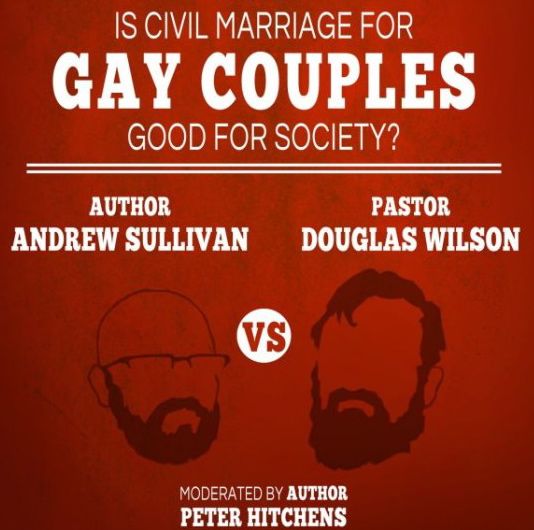
debate-photo-andrew-sullivan-doug-wilson

Today on the Dish, Andrew continued his look back at his arguments for the Iraq War, pitted Cardinal O’Brien against himself and wondered if the Curia would recognize their hypocrisy. He saw apples and oranges in the South Park-Arrested Development debate, provided the latest numbers on the new Dish model, and debated marriage equality in a battle of beards. In the final installment of the “After Dark” series, Sully and Hitch contested the existence of any factual basis for the gospels.

In political news and views, Jacob Heilbrunn sounded an alarm over epistemic closure on the right, legislators’ perceptions of their constituencies skewed conservative, and TNC examined the wave of public opinion that Obama rode to power. We muddled through the data on gun violence in America, Cass Sunstein worried about coercive paternalism, the Golden State flipped on marriage equality in under 30 years, and McKibben called for colleges to green their portfolios. The sequester showed no signs of going anywhere soon, but Israel escaped its effects as Tom Doran sought a way forward in the increasingly segregated West Bank. Readers clarified the charges against Bradley Manning while the government focused on low-level leakers, the military continued to struggle with sexual assaults, and Tony Blair was unrepentant 10 years after the Iraq invasion.

In assorted coverage, Austin Considine broke down the research on BPA, MIT scientists visualized the invisible, Google Glass threatened to take away our last shred of privacy, and Ross Andersen predicted a Skynet devoid of empathy. We tracked drug prices from cultivation to distribution, Scott James waded through a same-sex couple’s tax return, and the working poor sought redemption by collecting recyclables. Don McCullin struggled to find value in his war photography, Marin Cogan’s sources failed to recognize the line between work and play, readers pointed us to other examples of “sponsored content” around the web, and we eulogized Emerson’s Atlantic.

Elsewhere, Jessica Love lamented Gladwell’s effect on social science, and Linda Besner uncovered bullies of all ages. Charles Ornstein faced a real-life situation he’d only written about before, Colm Tóibín perused Proust’s notebooks, and “nuns” shut down an Irish bar. We took a gander at the Gateway to the West in the VFYW, London spring came early in the FOTD, and babies battled it out (break-dance style) in the MHB.

D.A.

When The Abstract Becomes Real

Despite a long career as a healthcare reporter, Charles Ornstein found himself unprepared to make the difficult decisions about his mother’s end-of-life care:

We knew her end-of-life wishes: She had told my dad that she didn’t want to be artificially kept alive if she had no real chance of a meaningful recovery. But what was a real chance? What was a meaningful recovery? How did we know if the doctors and nurses were right? In all my reporting, I’d never realized how little the costs to the broader health-care system matter to the family of a patient. When that patient was my mother, what mattered was that we had to live with whatever decision we made. And we wouldn’t get a chance to make it twice.

Marcel’s Marginalia

proust-exhibit

Colm Tóibín appraises a new exhibit of Proust’s manuscripts, notebooks and letters at the Morgan Library, detecting in one letter the novelist’s readiness “for trouble of the most sweet and tender and pleasurable kind”:

Proust’s handwriting is bad; it is the handwriting of a novelist rather than a dandy, and visitors who can read French will have much fun making out the words and the many untidy emendations on the pages of the manuscript. In a letter to a publisher, as Proust seeks to explain what his novel is about, one word, however, stands alone and is written with a rare exactitude. In a letter to Alfred Vallette, editor of Le Mecure de France, in 1909 Proust described his work-in-progress: it “is a genuine novel and an indecent one in places. One of the principal characters is a homosexual.” The handwriting is that of a man in a hurry. Most of the words can be made out because of the context. But the word “homosexual,” as it is written in his hand here, stands alone; it is very clearly written, each letter perfectly made and totally legible. There is a feeling as you look at it that it was a word Proust did not often write, or that perhaps he enjoyed writing, or that it was a term he now wanted to take his time over, and he needed Vallette to be able to see it clearly.

(Photo of one of Marcel Proust’s notebooks on display. Cahier 12, 1909 NAF 16652. Bibliothèque nationale de France (BnF), Paris, France © BnF, Dist. RMN-Grand Palais)

Educating Colleges On Climate Change

Bill McKibben continues his crusade against fossil fuels, making the case for divestment at college campuses:

In the 1980s, 156 colleges divested from companies that did business in apartheid South Africa, a stand that Nelson Mandela credited with providing a great boost to the liberation struggle. “I remember those days well,” says James Powell, who served as president of Oberlin, Franklin and Marshall, and Reed College. “Trustees at first said our only job was to maximize returns, that we don’t do anything else.  They had to be persuaded there were some practices colleges simply shouldn’t be associated with, things that involved the oppression of people.” Since then, colleges have taken stances with their endowments on issues from Sudan to sweatshops. When Harvard divested from tobacco stocks in 1990, then-president Derek Bok said the university did not want “to be associated with companies whose products create a substantial and unjustifiable risk of harm to other human beings.”

Given that the most recent data indicates fossil fuel pollution could kill 100 million by 2030, the coal, oil and gas industry would seem to pass that test pretty easily; it’s also on the edge of setting off the 6th great extinction crisis, so everyone over in the biology lab studying non-human beings has a stake too.

Christian Parenti believes that divestment is only a first step:

“If you actually look at the details of previous struggles you will see that symbolic power [of divestment] has to eventually crystallize as government action,” Parenti tells In These Times. “Take tobacco. The moral spectacle of dumping tobacco stock was itself not economically painful. But once that moral power was crystallized as legal power in the form of anti-tobacco laws, then consumption of tobacco and tobacco profits began to decline.”

Watch McKibben’s video series on the Dish here.