Does War Photography Make A Difference?

NGC_.MCCULLIN-L1.67

Bert Archer asks photojournalist Don McCullin, who has a retrospective at the National Gallery in Ottawa until April, about the value of his images:

Isn’t it better, I ask, realizing I’m sounding like Spock even as I say it, to benefit the hundred thousand who get a better idea of war, and are perhaps moved to oppose in, both specifically and in general, even if it does discomfit the friends and family of this or that dead soldier? Shouldn’t we continue showing these pictures for the many, rather than getting too caught up with the few?

“I think we shouldn’t,” he says. “I think we should deny the hundred thousand. In the end, I’ve done it, and I’ve realized it hasn’t proved its worth. Who have we convinced to stop the wars?”

But the images, I insist, now certainly overstepping the bounds of politesse by any definition, the images are the only thing most of us have to bring the story of war home. I tell him I only understood, only felt, what was happening in Rwanda when I saw an image of a river dammed with bodies.

McCullin hasn’t smiled often during the two conversations I’ve had with him over the past year, and he’s not smiling now. “Weren’t the images of Belsen and Dachau enough for you?”

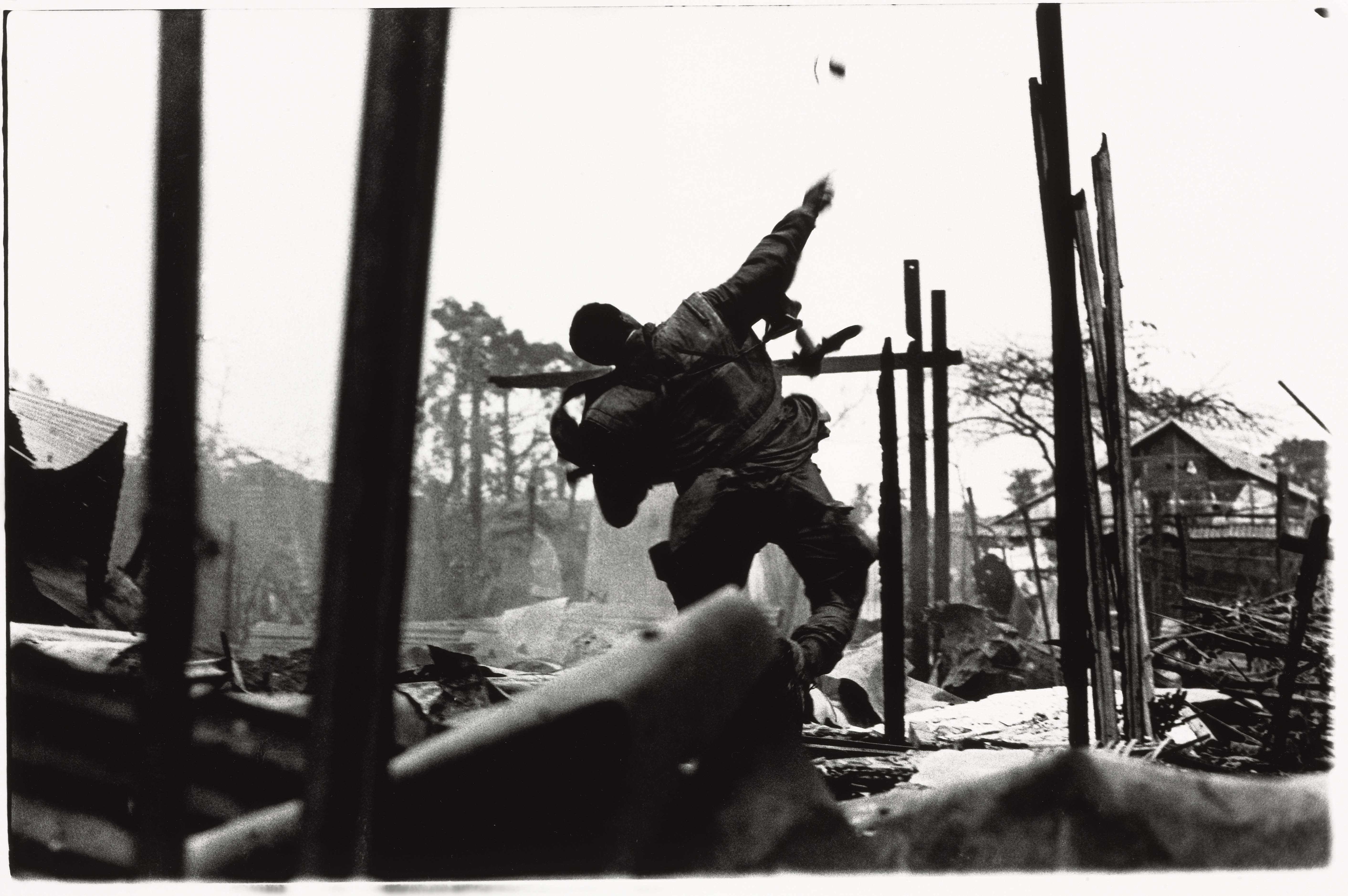
(Photo: US marine throwing grenade, Tet Offensive, Hué, South Vietnam, February 1968 by Don McCullin / Contact Press Images. Courtesy of the National Gallery.)

Epistemic Closure Watch

The decline of conservative periodicals is continuing – first went the Hoover Institute’s Policy Review, and now Reagan’s old favorite, Human Events, is also folding. Jacob Heilbrunn suspects that the faltering publications on the right are symptoms of its fundamental confusion:

Younger, more aggressive conservative websites have captured much of the audience that might once have thronged to Human Events, which used to be a lodestar of what conservatives were thinking—a kind of tip sheet to the mind of the right. In the end, it couldn’t move fast enough to keep up with the morphing of conservatism into its current incarnations. Human Events was no shrinking violet, but on a more elevated plane, the end of the Hoover Institution’s Policy Review suggests some of the dilemmas of conservatism as a calming rather than a raging intellectual force.

The truth is that it is becoming more difficult to discern what the right wants, or whether it even knows what it would really like–where the movement, in other words, would like to move, other than remaining stuck in reverse gear.

For more signs of epistemic closure captured by the Dish, head here.

The Weekend Wrap

The First Day Of Spring At Kew Gardens

This weekend on the Dish, Andrew saw signs of hope that the Right might be inching away from theoconservatism and revisited his own misguided commentary on Iraq from a decade ago. We also provided our usual eclectic mix of religious, books, and cultural coverage. In matters of faith, doubt, and philosophy, Noah Millman unpacked the problem with natural law arguments, George Saunders described his Roman Catholic childhood, and David Runciman reminded us of Hobbes’s audacious religious writing. Bryan Appleyard critiqued A.C. Grayling’s treatment of religion, Sarah Ngu explained how evil is parasitic on the good, and Hans Küng hoped for a modern pope. David Foster Wallace reached the other side of boredom, Charles Bukowski waited for the words to come, and Mahzarin Banaji considered how to overcome our hidden prejudices.

In literary and arts coverage, Ramona Ausubel relished the messiness of first drafts, Sam Sacks detailed why writers became suspicious of the visual arts, and Rose Tremain revealed how a smell inspired her to be a writer. Brad Leithauser celebrated concise writing, Justin Nobel explored the last years of Jack Kerouac, Ellen Handler Spitz asked how Maurice Sendak’s sexuality might illuminate his books, and Ron Rosenbaum reviewed Bernard Bailyn’s harrowing new book on how barbarous America was in the 17th century. Jeff Lin remembered Ang Lee’s lean years, Hannah Goldfield pondered what Amour taught her about her own grandparents, and Sophie Pinkham pointed to a fascinating new exhibit about the Cold War and homosexuality. Read Saturday’s poem here and Sunday’s here.

Fittingly for the weekend, sex and drugs were in the mix. Ferris Jabr visited a penis museum in Iceland, Jason G. Goldman highlighted the kinks of the animal kingdom, Ann Friedman continued the elusive search for a hetero Grindr, and Brett Aho mused on the connection between drug use and intelligence. In assorted news and views, Isabel V. Sawhill argued that we need more immigrants more than we need more babies, Lindsay Abrams continued the discussion on rising healthcare costs, and Khalil A. Cassimally reported on the prospect of “drone journalism.” Audrey Carlsen found that civilization was bad for your teeth, Lisa Hix caught up with collectors of African-Americans dolls, and an amazing story of adoption and marriage provided your Sunday cry. MHBs here and here, FOTDs here and here, VFYWs here and here, and the latest window contest here.

– M.S.

(Photo: Snowdrops and Daffodils emerge at Kew Gardens on March 1, 2013 in Kew, England. Today marks the first day of Spring, though the Met Office have said that temperatures are likely to be below average throughout March. By Dan Kitwood/Getty Images.)

Telltale Heartbeats

MIT scientists have developed an algorithm that amplifies subtle changes in videos, making it easy to spot movement that would be invisible to the naked eye. Rebecca Rosen is impressed by a demonstration:

For many new parents, the urge to check on a sleeping baby can be maddening. Is the baby still breathing? Unless the baby is a noisy sleeper, a traditional baby monitor won’t tell you much, and constantly going into the little one’s room isn’t a great option either. New video software from scientists at MIT may give parents what they want: Images of their sleeping child, with its chest positively oceanic in its heaving, the ebb and flow of oxygen into the human body so dramatic you could spot it at a distance.

But Erik Olsen reveals some less noble intentions for the technology:

Michael Rubinstein, a doctoral student and co-author on the project, said that after the presentation and subsequent media coverage, the team was inundated with e-mails inquiring about the availability of the program for uses ranging from health care to lie detection in law enforcement. Some people, says Mr. Rubinstein, inquired about how the program might be used in conjunction with Google’s glasses to see changes in a person’s face while gambling. “People wanted to be able to analyze their opponent during a poker game or blackjack and be able to know whether they’re cheating or not, just by the variation in their heart rate,” he said.

The Prohibition Markup

To illustrate it, Jochen-Martin Gutsch and Juan Moreno tracked cocaine through the illegal drug market:

Pure cocaine costs €1,300 a kilo in Putumayo [a major cultivation hub in Colombia], more than €4,000 at the Colombian border and, in nearby Jamaica, the price already approaches €6,000. The drug gets really expensive when it reaches Europe or the United States, where dealers make about €30,000 a kilo, depending on market conditions. The European drug user, who only receives cocaine in diluted (“cut”) form, doesn’t pay a fixed price. Coke is cheaper in Spain than in Germany, for example, and it’s cheaper in Berlin than in Munich. The going rate in Germany is about €100 for a gram of impure cocaine, while a kilo of pure cocaine can cost up to €400,000.

Meanwhile, The Economist checks in on waning enforcement efforts in Europe:

Spain’s approach now rivals that of the pioneering liberal Dutch. Though selling is illegal, buying is not. One result is hundreds of cannabis “social clubs”, which allow members to pool their purchases. These range from small co-operatives where new members must wait six months for new cannabis to be grown before joining, to huge semi-commercial organisations, with thousands of “members” buying cannabis. One in Barcelona even made a €1.3m ($1.74m) deal with the country town of Rasquera to grow supplies on local land, better known for its almond trees. Similar experiments are under way in France, Belgium, Italy and Germany, says Tom Blickman of the Transnational Institute, a think-tank based in Amsterdam. In much of Britain, especially its big cities, the risk of prosecution for those using small quantities of soft drugs is vanishingly low.

Rape In The Ranks

A disturbing look at a persistent problem in the military:

Research suggests that one out of every three women in the U.S. military is the victim of sexual assault, making military women twice as likely to be raped as civilians.

(Victims are disproportionately female, given that women make up less than 15 percent of the military, but men are victimized, too: More than 40 percent of vets receiving treatment for Military Sexual Trauma are men.) An anonymous DOD survey found that in 2010, an astonishing 19,000 service members were ­sexually assaulted; a mere 13.5 percent of those attacks were reported to authorities. Victims have little incentive to report, since the military’s insular justice system rarely holds perpetrators accountable. Of the sliver of sexual assaults reported last year, 92 percent never saw the inside of a courtroom but rather were dismissed or administered wrist-slap penalties like fines, reduced PX privileges or counseling – a prosecution record even outgoing Secretary of Defense Leon Panetta has called “an outrage.”

Incredibly, this ugly picture comes after two decades of very public sex scandals – Tailhook in 1991, Aberdeen in 1996, the Air Force Academy in 2003 – after each of which the DOD swore “zero tolerance,” then resisted any meaningful reform. But as survivors have begun to speak up, and legislators resolve to take action, the military finds itself facing a public relations crisis at a time when it’s not only trying to justify its $633 billion budget but also desperate to step up recruitment. Women, widely seen as a way to help stop attrition of troops – and now, for the first time, cleared to serve in combat alongside their male peers – are projected to make up one-quarter of the armed services by 2025.

Previous Dish on the issue herehere and here.

Past And Present: March 3, 2003

U.S. Marines In Kuwait Prepare For Looming Iraq War

This month, the tenth anniversary of the beginning of the Iraq War, I’ve decided to re-publish some of my posts from March 2003. Call it masochism or basic journalistic accountability or the Internet’s revenge. But I was wrong. I was wrong in good faith. But I was wrong. And it’s worth, ten years’ later, to show just how wrong I was in order to understand better my massive error of judgment (let alone of tone). So here we go. From March 3, 2003:

The capture of KSM is big news. In fact, it’s surely the biggest news in the war on terror in months. The nabbing followed previous arrests and interrogations, all of which have clearly helped stymie and disorient al Qaeda. In terms of the broader debate about the war, one conclusion is obvious. It’s time to retire the frayed notion that somehow we cannot go to war against Saddam and al Qaeda at the same time. In fact, it would be hard to think of a more perfect refutation. Could the administration be more preoccupied with Iraq than it is today? It’s a little hopeful to think that this phony argument against waging war on more than one front will now be retired. But it is useful to remember that, as an argument, it was never based on any actual assessment of how the government works. It was an argument entirely designed to make the Democrats look tough on terror while they were counseling appeasement of Saddam. It was a pretty obvious ploy at the time. Now it’s transparent. I’m glad we’ve finally cleared it up.

So let’s re-clear it up. Maybe among some cynics it was a ploy. But from ten years’ later, it seems clear that it wasn’t easy to fight Saddam and al Qaeda at the same time, or at least that the Bush administration was simply far too incompetent to pull off both. I was wrong. I was onto something about KSM – but little did I know or dream that it would be a key milestone in the illegal, secret torture program in earnest.

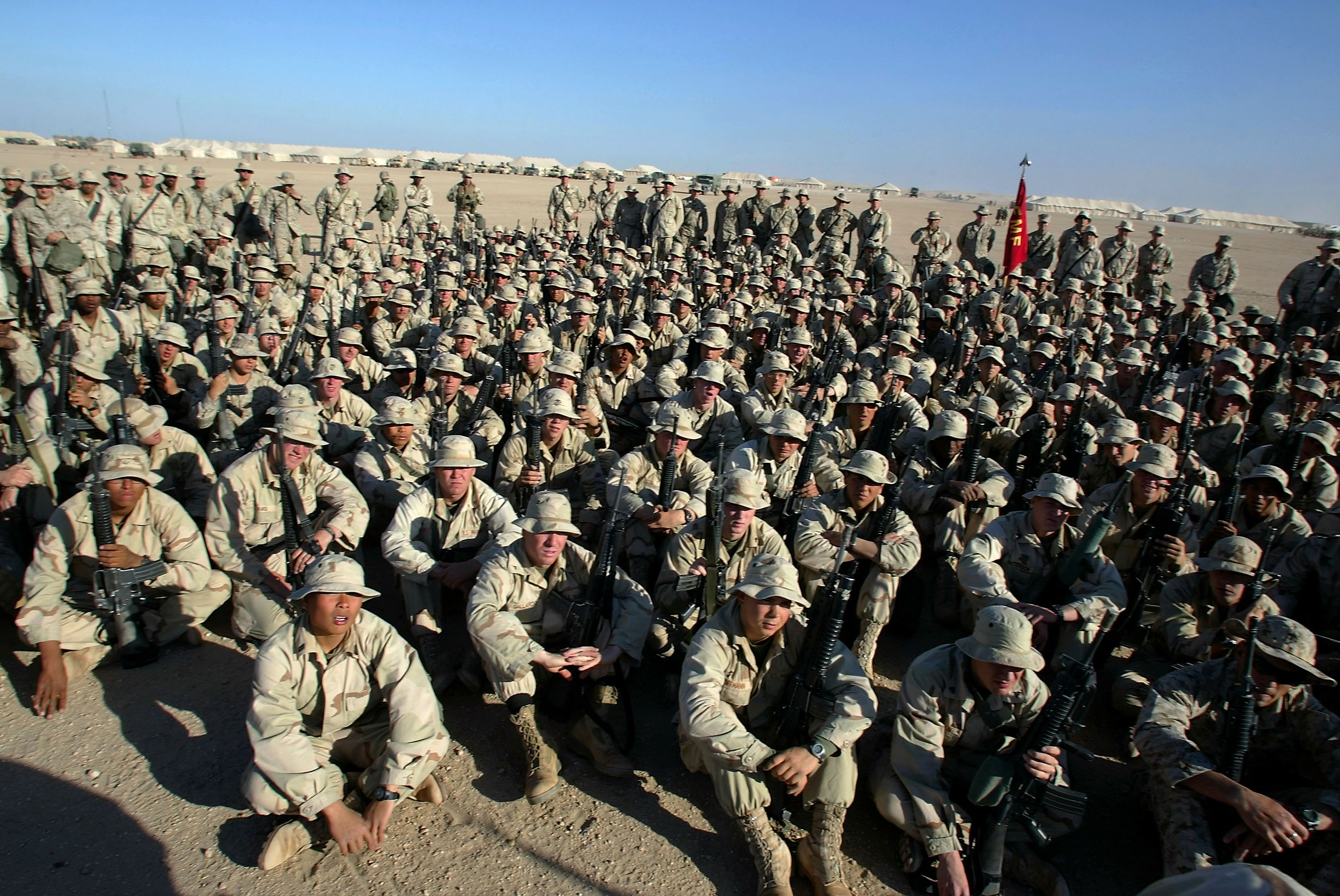
(Photo: U.S. Marines from the 1st Marine Division, 3rd Battlion, 7th Regiment listen at a pep talk at Life Support Area 7 March 8, 2003 in northern Kuwait, 20 miles south of the Iraqi border. By Robert Nickelsberg/Getty Images.)

[Updated – to remove some early, solipsistic blather about Lent.]

Green Shoots On The Right, Ctd

The First Day Of Spring At Kew Gardens

National Review actually comes out in favor of including GOProud and Chris Christie at CPAC this year. Money quote:

GOProud is the most conservative gay group of note (perhaps the only gay group rightly called conservative), and that conservatism extends to its circumspection about many planks of the so-called gay-rights agenda. … Conservative opinion on the intersection of homosexuality and politics is not monolithic, especially among the college-aged set that makes up the better part of CPAC attendees. And a gathering that hopes to speak for the conservative movement will be better equipped to do so if it represents the overlapping gamut of views included in it.

There is, of course, the not-so-small matter of marriage equality. GOProud, despite being a far-right splinter group who’s chummy with Ann Coulter, is still in favor of marriage equality. There are plenty of conservative and Republican gays – but almost none who oppose the conservative cause of full gay inclusion in the family. There are no gay conservatives on marriage like black conservatives on, say, affirmative action. Which is itself telling. Even Roger Ailes couldn’t find any.

Obviously, the editorial is a teensy shift away from theoconservatism. And K-Lo sits up straight and notices:

I tend to agree with Robby George, who last year expressed to me here his concern that conservatives need to keep our priorities straight. Marriage ought to be one, we need to be clear that it is not ours to redefine.

That doesn’t quite capture the tone of the piece, which was by Lopez herself:

“[GOProud] has just written “crazy social issues” out of what it means to be conservative.

That “crazy social issues” phrase comes from a comment made by its chairman, Christopher Barron, during an MSNBC appearance this fall — and it underscores the reasoning behind the boycott. At best, GOProud is indifferent to the issue of defending traditional marriage; it supports letting the states figure it out. But in practice, GOProud has proven itself to be opposed to the defense — and defenders — of marriage.

And now National Review is arguing for inclusion of a pro-marriage equality group in CPAC. One step at a time …

(Photo: Snowdrops and Daffodils emerge at Kew Gardens on March 1, 2013 in Kew, England. Today marks the first day of Spring, though the Met Office have said that temperatures are likely to be below average throughout March. By Dan Kitwood/Getty Images.)

The End Of His Road

Jack Kerouac On The Radio

Justin Nobel travels to France to explore the setting for Jack Kerouac’s second-to-last novel, Satori in Paris (1966), an autobiographical work about the Beat writer’s search for a town in Brittany that bore his family’s name. In one scene, drunkenly arriving at an airport, Kerouac realizes the next available flight is to Florida – a destination Nobel sees as an emblem of the the great writer’s decline:

Florida? That doesn’t sound like a Kerouac sort of place. But at the time he was living in a small house in Orlando with his mother. And so there it is, the mighty Kerouac traveled to France to find his roots, drank himself into a series of stupors and rushed home to read the comics. You begin feeling bad for Kerouac. The boozy womanizing thing can only go so far. Youth lets a writer flick off the world, and sometimes it even makes for exceptional writing, but you get just one On the Road. After that there are two options, stop writing and disappear, a la Rimbaud, letting your work stand as a pure but narrow tongue of fire, or progress along with your ideas. I’m not sure Kerouac ever did.

Nobel’s conclusion:

I still call On the Road the most important book I’ve ever read. It showed me that you don’t have to live the life set out for you, that you can juke and waver, making the rules up as you go along. But looking back now I see how much Kerouac actually missed in life. The spontaneous prose that moved the country may really just have resulted from his inability to think through his own thoughts. Kerouac invented a style that ensured he would never have to face his weaknesses as a writer. And in that we see an odd sort of irony: the man who lived more freely than anyone had barricaded his own mind.

Update from a reader:

I swear, every time I read someone saying that On the Road is Kerouac’s “spontaneous prose” and he never did anything else as good, I just remind myself that this is how the canon works.  People like Justin Nobel read On the Road, and don’t know enough of the details, but figure that going on their own road trip to “find” Kerouac is somehow deep.  But then they write things that show they don’t know their Kerouac from their elbow.

Nobel is surprised to find Kerouac was a raging alcoholic as late as 1966?  He was one in the 1940s.  Surprised that Kerouac seemed like “an over-the-hill frat boy”?  He was a fading frat boy, had been since getting kicked out of Columbia.  Kerouac was a goddamn scholarship football player.  He was always a frat boy, just one tortured by his own sexuality (probably at least bi, maybe very deeply closeted gay, which would explain the many failed heterosexual relationships and perhaps even the alcoholism and mother-fixation (sorry, that’s a 40’s/50’s Freudian read on gayness: but that’s what Kerouac would have been steeped in. . . )) and booze.   Kerouac’s last publication?  An essay in the Chicago Tribune in support of the Vietnam War, decrying hippies.  Yet writer after writer confuses the media image with the man, and, even worse, On the Road with his whole oeuvre.

On the Road is not his finest aesthetic achievement by a longshot.  Either The Subterraneans or Doctor Sax, both novels written after he finished “the road book” and before On the Road was edited half to death and finally released by Viking only AFTER Howl and other events made the Beats potentially marketable, are better examples of what’s truly revolutionary about his prose.

But everyone stops with On the Road, is surprised when Kerouac’s biography doesn’t live up to the myth of the media image of his life.  And laments.  Read The Subterraneans. Read Doctor Sax. Read the poetry.  That’s where Kerouac matters.

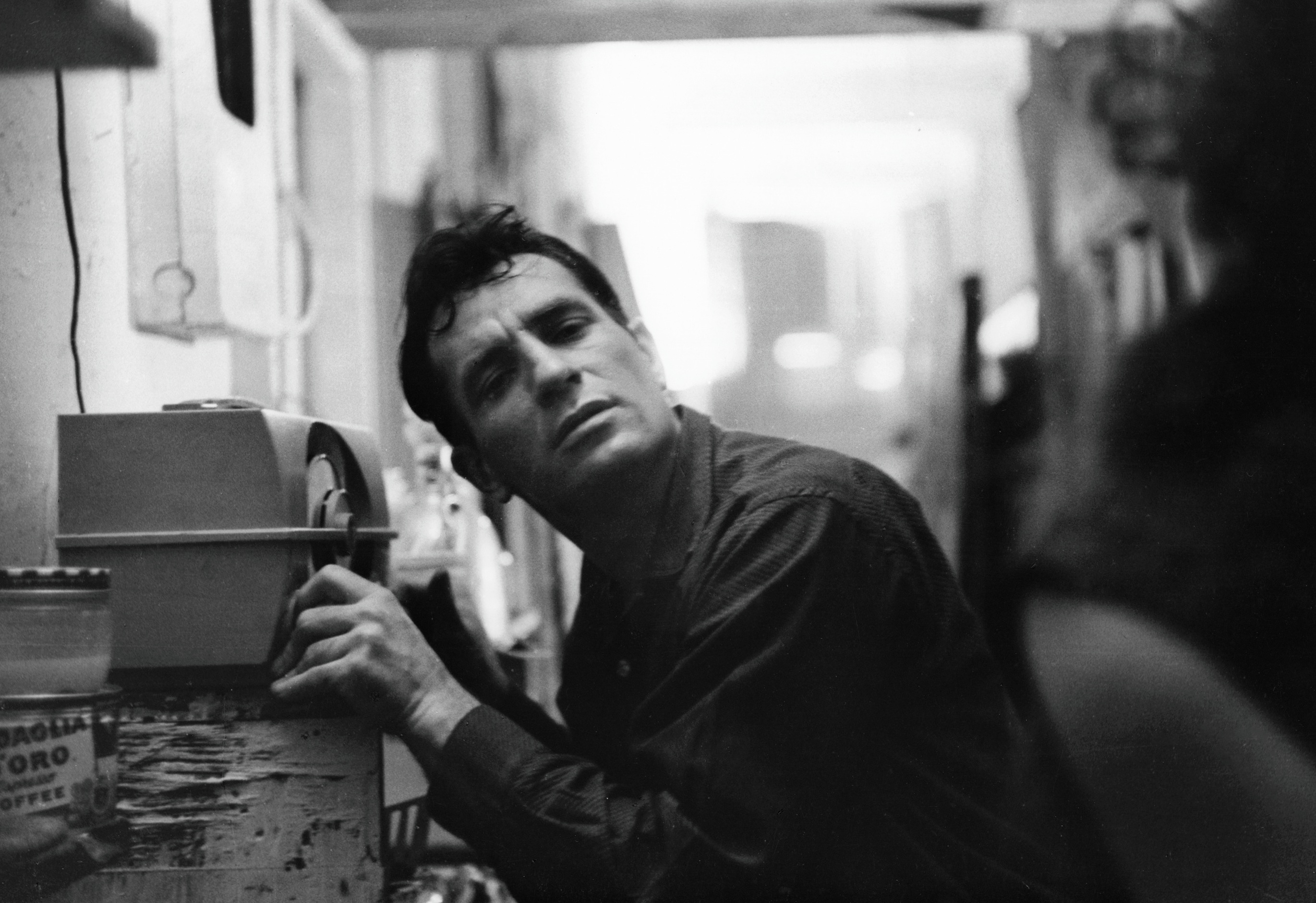
(Photo: American Beat writer Jack Kerouac (1922 – 1969) leans closer to a radio to hear himself on a broadcast, 1959. By John Cohen/Getty Images)

The Great Healthcare Scam, Ctd

ER Visits

A recent study in PLOS ONE supports Steve Brill’s alarming conclusions about healthcare prices. Lindsay Abrams summarizes:

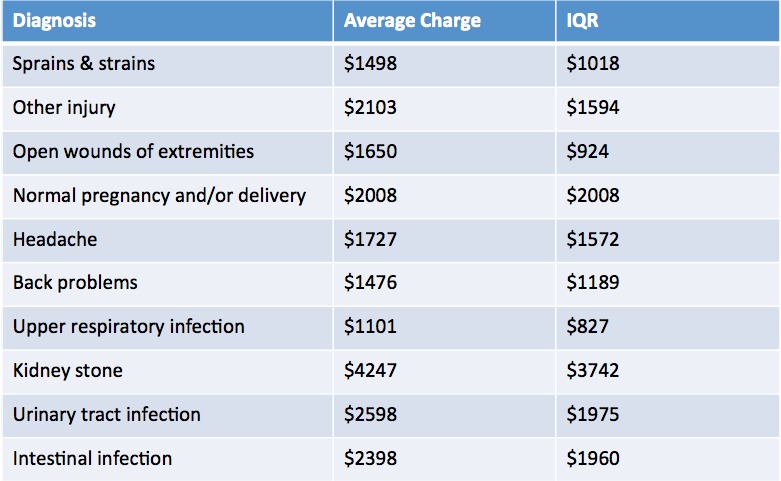
 The median ER visit costs 40 percent more than what the average American pays in monthly rent. But the discrepancy in ER charges is so great, according to the study’s authors, that patients have no way of knowing how much they can expect to be billed. The average cost of a visit to the ER for over 8,000 patients across the U.S. was $2,168. But the interquartile range (IQR), which represents the difference between the 25th and 75th percentile of charges, was $1,957 — meaning many patients were paying a lot more or a lot less than that.

An ER doc in the comments section objects:

These prices sound so arbitrary, like it’s just some crap shoot of what you’ll get depending on what the doc feels like billing that day, but there is a lot more to the system than the article would lead one to believe. Kidney stones are a prefect example. The diagnosis “kidney stone”, covers a wide spectrum of patients. The work up for a 20 year old that has a known history of stones, who comes complaining of his typical pain, and is there simply for pain relief is worlds different than a 60 yr old that has totally new onset of symptoms, yet they’d both be lumped together in this study. The 1st may get out of the ED with nothing more than a simple urine dip for blood and some pain meds, while for the later, anything less than a contrasted CT for a possible leaking abdominal aneurysm would be malpractice.

Meanwhile, Uwe E. Reinhardt proposes one way to limit healthcare pricing unfairness:

Mr. Brill once again illustrates why dubious policies such as he describes can persist. He offers a bewildering potpourri of little tweaks here and there, including huge taxes on the salaries of hospital executives and hospital profits, capping profits on lab services, changes in patent laws and, of course, the eternal stalwart, malpractice reforms. That is a scattershot response to the central problem he lays bare: the pricing of hospital services in general and to uninsured middle-class people in particular.

Here is a simpler approach. Why not make it illegal for hospitals to charge uninsured people more than X percent of what Medicare pays for a procedure? That maximum price would certainly cover the true incremental cost of serving uninsured middle-class people, with handsome contribution margins to overhead and, most probably, to profits as well.