“We are really balanced here on a little precipice, and if this, pardon the pun, goes south, we could be in very serious trouble. If [Immigration Reform] stalls or is killed off by conservatives, we could take the Hispanic community and turn them into the African-American community, where we get 4% on a good day… We could be a lost party for generations,” – Republican media strategist Paul Wilson.
Month: April 2013
Mental Health Break
Brian Abrams captions:
The last time we saw Cookie Monster cover Tom Waits was almost two years ago with his rendition of “God’s Away on Business” from the blues legend’s 2002 LP “Blood Money.” Now, the guttural “Sesame Street” regular returns, courtesy of YouTube’s cookiewaits channel, with a not-so-PBS-friendly take on Waits’ anti-war jam “Hell Broke Luce.” CM nails it.
The Prejudicial Instinct
Tom Stafford revisits the work of psychologist Henri Tajfel, who devised an experiment to see “what it took to turn the average fair-minded human into their prejudiced cousin.” He arbitrarily divided subjects into groups, maybe by “eye-colour, maybe what kind of paintings they like, or even by tossing a coin”:
Every participant knows which group he or she is in, but they also know that they weren’t in this group before they started the experiment, that their assignment was arbitrary or completely random, and that the groups aren’t going to exist in any meaningful way after the experiment. They also know that their choices won’t directly affect them (they are explicitly told that they won’t be given any choices to make about themselves). Even so, this situation is enough to evoke favouritism.
So, it seems we’ll take the most minimal of signs as a cue to treat people differently according to which group they are in. Tajfel’s work suggests that in-group bias is as fundamental to thinking as the act of categorisations itself. If we want to contribute to a fairer world we need to be perpetually on guard to avoid letting this instinct run away with itself.
And not engage in quixotic, legal attempts to coerce it away.
The Temporary Megacity

No, not Burning Man. Kevin Hartnett investigates the holy celebration of Kumbh Mela, “considered the largest migration of humanity on earth”:
It takes place every twelve years at the confluence of the Ganges and Yamuna Rivers, where pilgrims come from all over India to participate in ritual bathing (there are also smaller melas, which take place annually in other parts of India). The scale of the event is staggering. The mela has a steady population of a few million people spread over seven-and-a-half square miles of precisely organized encampment, but on a handful of main bathing days officials estimate the population surges towards 30 million—with as many as 80 million people attending over the 53 days of the festival.
One of the most important qualities of the mela, for researchers, is the speed at which it comes together. The festival site is covered for most of the summer with water from the Ganges, which is swollen by the monsoon rains. The water begins to recede in October, leaving government officials and NGO workers with only a couple of months to build the mela’s infrastructure—the roads, electrical grid, water, sanitation, and hygiene systems that will support those millions of people. During its peak days the mela is the largest city in the world, and it’s built nearly overnight.
Researchers collected data on this year’s mela:
Over the next few months the researchers will be tagging and sorting images, analyzing patient flows at hospitals, breaking down cellphone data, and generally trying to wrestle their mela research into something useful—both for improving the next mela, in 2025, and for understanding how temporary settlements operate anywhere in the world. They plan to release preliminary findings at a seminar hosted by the South Asia Institute in August.
(Photo: Temporary tents for devotees are pictured at dusk at Sangam, the confluence of the Rivers Ganges, Yamuna and mythical Saraswati, during the Maha Kumbh Mela in Allahabad on February 13, 2013. By Sanjay Kanojia/AFP/Getty Images)
Primates And Fairness
It’s in our genes, as demonstrated by one pissed off monkey:
On Interactive Reading
Scholarly writers, William Germano argues, should count on readers’ collaboration, just like a blogger does:
I’m advocating for a riskier, less tidy mode of scholarly production, but not for sloppiness. I’m convinced, though, that the scholarly book that keeps you awake at night thinking through ideas and possibilities unarticulated in the text itself is the book worth reading. It may be that the best form a book can take—even an academic book—is as a never-ending story, a kind of radically unfinished scholarly inquiry for which the reader’s own intelligence can alone provide the unwritten chapters.
Let every writer reflect on Rilke’s famous line: “Du musst dein Leben ändern.” You must change your life. Books are life-changing for writers—but often only for the scholars who write them. In the new order of scholarly production, let’s double down on Rilke’s dictum: You must change their lives, too.
Alan Jacobs’ recommendation on how to accomplish this:
Even in my most theoretical work, I’ve tried to think of my task as that of attracting and keeping the attention of thoughtful readers, telling them stories, doling out fascinating details that make them want to read more, keeping them to some degree in suspense until the end of any given tale. Storytelling is, for me, the fundamental mode of writing; it’s the foundation on which everything else is built. In that sense I don’t think of writing works of literary theory as being different altogether in kind from writing a personal narrative. It’s all about trying to reach human readers, writing to them as their fellow human being. Insofar as I have had any success as a writer, I really do think that it is primarily due to my keeping that goal in mind.
The Deepening, Disgusting Stain Of Gitmo
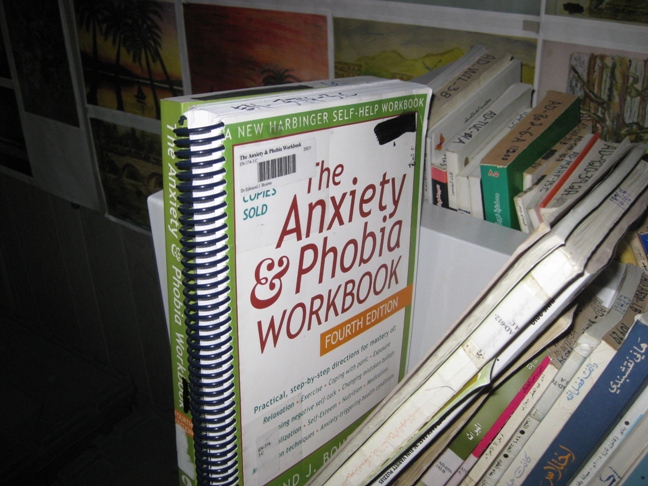
Charlie Savage has created a tumblr of detainee reading material. Dan Colman notes:
According to news reports, the library currently has 3,500 volumes on pre-approved topics. Prisoners have to order books in advance. (They can’t just wander through the stacks.) And the most popular books include Agatha Christie mysteries, the self-help manual Don’t Be Sad; The Lord of the Rings; and, of course, Harry Potter.
I’m relieved the president reiterated his support this morning for closing one of the most potent recruiters for Jihad against the US on the planet. I await his executive decision to release the innocent Yemeni prisoners to their country of origin. Or is this more bullshit/impotence? But Gitmo’s awful impact on American soft power is nothing compared to its potency as a toxin against the Constitution. Read Joe Nocera on a man captured at the age of 20, with no proof of his involvement in Jihad, and now destined to live a life sentence, if the US Congress has its way. Life-long detention without ever having committed any actual crime? That’s now the meaning of America, as represented by the Congress? Yes, it is. This is America, as recorded in a must-read diary from GTMO. In August of 2003, after days of “interrogation”, a prisoner was seized from his cell and taken out on a boat in the Caribbean:
My first thought was, they mistook me for somebody else. My second thought was to try to look around, but one of the guards was squeezing my face against the floor. I saw the dog fighting to get loose. I saw [——-] standing up, looking helpless at the guards working on me. “Blindfold the motherfucker! He’s trying to look—” One of them hit me hard across the face and quickly put goggles on my eyes, earmuffs on my ears, and a small bag over my head. They tightened the chains around my ankles and my wrists; afterward I started to bleed. All I could hear was [——-] cursing, “F-ing this and F-ing that.” I thought they were going to execute me.
The other guard dragged me out with my toes tracing the way, and threw me in a truck, which immediately took off. The beating party would last for the next three to four hours, before they turned me over to another team that would use different torture techniques. “Stop praying, motherfucker. You’re killing people,” [——-] said, and punched me hard on my mouth. My mouth and nose started to bleed, and my lips grew so big that I technically could not speak anymore. The colleague of [——-] turned out to be one of my guards; [——-] and [——-] each took one of my sides and started to punch me and smash me against the metal of the truck. One of the guys hit me so that my breath stopped and I was choking. I felt like I was breathing through my ribs. …
Inside the boat, [——-] made me drink salt water, I believe it was direct from the ocean. It was so nasty I threw it up. They put an object in my mouth and shouted, “Swallow, motherfucker!” I decided inside not to swallow the organ-damaging salt water, which choked me as they kept pouring the water in my mouth. “Swallow, you idiot!” I contemplated quickly, and decided for the nasty, damaging water rather than death.
[——-] and [——-] had been escorting me for about three hours in the high-speed boat. The goal of such trip was, first, to torture the detainee and claim that the “detainee hurt himself during transport,” and second to make the detainee believe he is being transferred to some far faraway secret prison. We detainees knew all about this; we had detainees who reported flying four hours and finding themselves in the same jail where they started.
If I had read this in my teens, I would have assumed this was a description of a Soviet Gulag or a South American fascist dictatorship. But this is America – and it tells you everything you need to know about the profound corruption in the ship of state that the man who authorized all of this was just feted by all living former presidents. As for accountability, here’s who has been held accountable: [——–].
After Medical Marijuana, Medical Psilocybin?

Greg Miller reports from the third annual Psychedelic Science meeting in Oakland, California:
[Brazilian neuroscientist Dráulio Barros de Araújo and his team] found that ayahuasca reduces neural activity in something called the default mode network, an web of interconnected brain regions that fire up whenever people aren’t focused on any specific task. It’s active when people daydream or let their minds wander, for example. The default mode network has been a hot topic in neuroscience in recent years. Scientists don’t really know what it does, but they love to speculate. One interpretation is that activity in this network may represent what we experience as our internal monologue and may help generate our sense of self.
Last year, British scientists reported that psilocybin, the active ingredient in magic mushrooms, like ayahuasca, reduces activity in the brain’s default mode network. The researchers proposed that interfering with the default network could be how psychedelic drugs cause what users often describe as a disintegration of the self, or even a sense of oneness with the universe.
That effect, compounded with “a growing sense of frustration over the lack of promising new psychiatric drugs in the pipeline,” had attendees intrigued:
Several scientists at the conference pointed to findings that activity in the brain’s default mode network is elevated in people with depression. Because psilocybin and ayahuasca seem to dampen activity in this network, perhaps they could help. It’s hard to connect those dots without a strong dose of speculation, but one idea is that the elevated activity in the default mode network reflects too much attention directed inward. People in the grips of depression, the thinking goes, are trapped in an endless cycle of critical self-examination, and a little neural desynchronization might help them reboot.
But it’s ever-so-hard to bring science to bear on these promising compounds when they are still fucking illegal. In Britain’s case, mushrooms with psilocybin were only banned eight years ago. Instead of examining the properties that could help humans, we have decided to ban them because they might cause someone somewhere a modicum of pleasure and even peace.
(Photo: Fresh Colombian magic mushrooms legally on sale in Camden market London June 2005 before such sales became a crime. By Photofusion/Universal Images Group via Getty Images.)
Why I’m Scared Of Flying
Texting While Shiite
A little insight into the world we still apparently want to control.
 The Dish
