Ask Brill Anything: Hospitals Running Up The Tab

Here he details how non-profit hospitals have become so profitable, with a follow-up explaining how difficult it was for him to decode medical bills:

While on the subject of hospital revenues, just last week a maddening new study came out indicating that hospitals make even more profit when they screw up:

The study is based on a detailed analysis of the records of 34,256 people who had surgery in 2010 at one of 12 hospitals run by Texas Health Resources. Of those patients, 1,820 had one or more complications that could have been prevented, like blood clots, pneumonia or infected incisions. The median length of stay for those patients quadrupled to 14 days, and hospital revenue averaged $30,500 more than for patients without complications ($49,400 versus $18,900). Private insurers paid far more for complications than did Medicare orMedicaid, or patients who paid out of pocket. …

The study does not imply that hospitals intentionally complicate surgeries to bring in more revenue. Most surgeries, about 95 percent, go off without a hitch. What it does suggest to the surgeon, writer and Harvard professor Atul Gawande is that hospitals now see little reason to invest in technologies that would reduce complications when the only prize at the end would be lower income.

Yesterday, Steve gave an overview of why US healthcare is so expensive. You can also go here, here and here to read our coverage of his must-read Time cover-story, “Bitter Pill: Why Medical Bills Are Killing Us”. Ask Anything archive here.
Terrorism Knows No Race

Peter Beinart notes that, despite what you might hear from certain Republicans, “the Tsarnaevs hail from the Caucasus, and are therefore, literally, ‘Caucasian.'”:

At base, the reason it’s so hard for people to accept that the Tsarnaevs are white is because, since America’s founding, being white has meant, both culturally and legally, being “one of us.” And since 9/11, in particular, being Muslim has meant the opposite. As a light-skinned Muslim, Dzhokhar Tsarnaev straddles that divide. But he straddles it in other ways too. He was a pothead, a devotee of hip hop, a lifeguard, a high school wrestler, an aspiring dentist. And yet he became, it appears, a murderer on behalf of a fanatical species of Islam. He’s a type that has reappeared again and again in our history, from every faith and in every shade: an American at war with America, both intimately familiar and frighteningly alien at the same time.

This was American-born Jihad – emboldened, according to the younger brother, by America’s wars in Iraq and Afghanistan. The neocons’ drive for yet another war on a Muslim country, Iran, will bring alienated Shiites into the loony mix. Fanatical Islam is the culprit here. But we unwittingly compounded that with neoconservatism, generating even more hatred that can then come at us from within.

This is emphatically not to argue that we should blame America first. But we have not helped ourselves by the way we responded under Bush and Cheney. Which is why it is surreal to hear some neocons seeming to believe this validates their worldview, rather than damning it.

A Brain-Damaged Bomber?

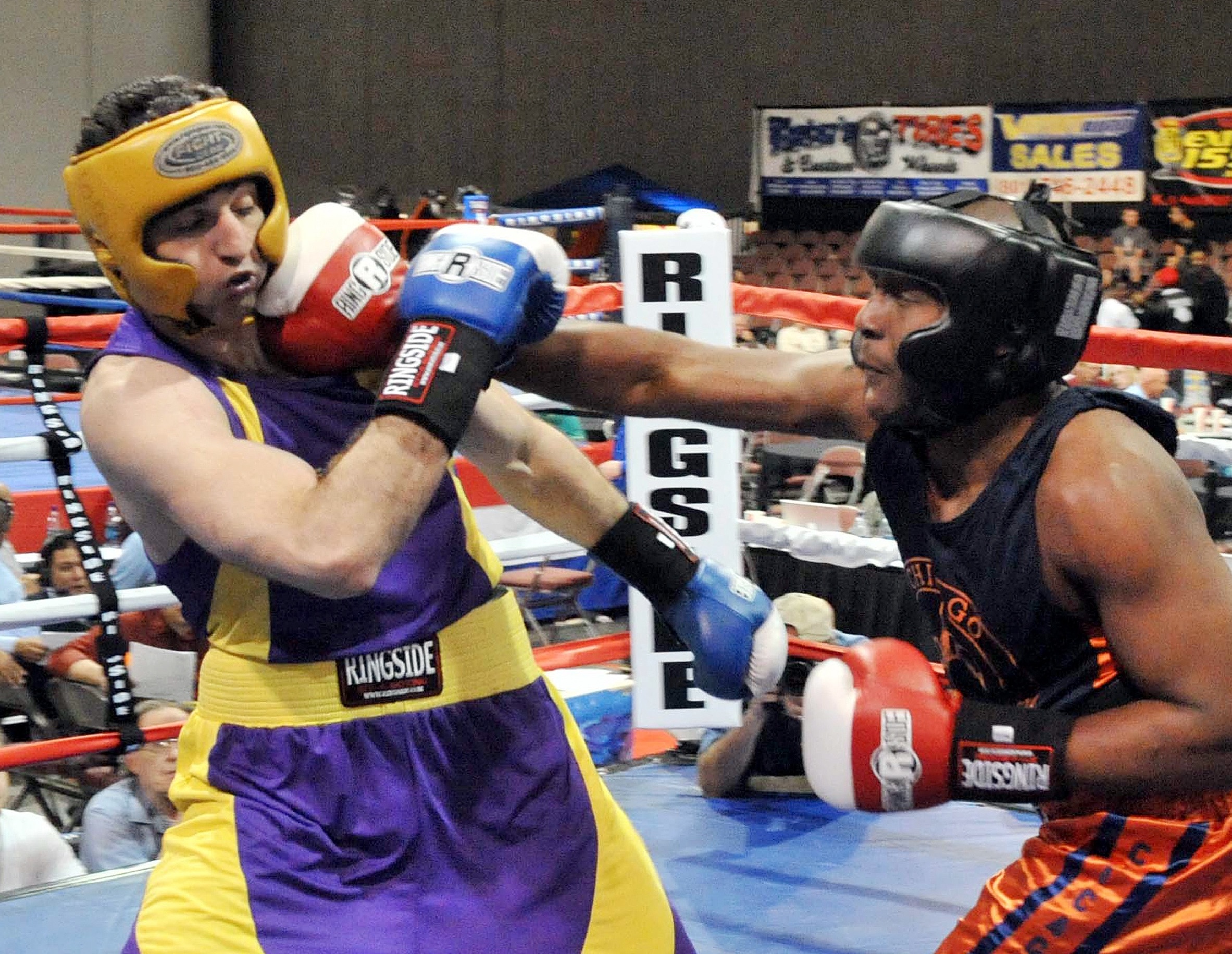
Boston Marathon Bombing Suspect Tamerlan Tsarnaev Boxing Pictures

Travis Waldron encourages medical examiners to check Tamerlan’s corpse for chronic traumatic encephalopathy (CTE), the brain disease suffered by boxers and football players who take repeated blows to the head:

[I]t’s worth exploring every angle, including the possibility that brain injuries and CTE may have compounded problems Tsarnaev was already experiencing. CTE has, after all, been found in boxers as young as 17, and it has been linked to changing behaviors, depression, and dementia. And though it may seem like a diversion to investigate its role in Tsarnaev’s personality, CTE was an immediate consideration in recent tragic deaths like the murder-suicide committed by Kansas City Chiefs linebacker Jovan Belcher and the suicide of Hall of Fame linebacker Junior Seau.

Anything but Jihad. Yes, we can explore every angle, but this is almost a parody of liberal wish-mongering. Tamerlan’s brain was damaged by religious fanaticism and fundamentalism.

(Photo: Tamerlan Tsarnaev (L) fights Lamar Fenner (R) during the 201-pound division boxing match during the 2009 Golden Gloves National Tournament of Champions May 4, 2009 in Salt Lake City, Utah. By Glenn DePriest/Getty Images)

A Home With A Smaller Footprint

Lisa Margonelli spells out the benefits of mobile homes:

An elaborate 2012 report published by ROC USA and underwritten by HUD found that mobile homes use, on average, far less energy and water than conventional homes or condos (the mobile homes in the study were 940 square feet, larger than those at Pismo Dunes). While models built before 1976, when federal regulations kicked in, sometimes have exorbitant utility bills, newer models made to Energy-Star efficiency standards can reduce the combined costs of electricity, gas, and water to well below $1,000 a year, even in the hottest and coldest parts of the country. And manufacturing the homes in factories cuts construction waste by 30 percent. The efficient layout of a mobile-home park helps conserve water and reduces storm runoff. And in some locations, residents are able to share vehicles, or get around without them, which saves money.

Digital Rehab

Virtual reality might provide a powerful tool for recovery programs:

In decades past, researchers would try to treat smokers and alcoholics using real-life triggers. Show the addicts a lighter or an empty bottle, or even a photograph of something associated with smoking and drinking, to trigger cravings, then teach them coping strategies. It seemed to work, to some degree, but it was limited. Patients, after all, could tell they were in a lab, and they might not be able to transfer the coping mechanisms to an outside environment.

That’s where virtual reality comes in. It’s still only an approximation of reality, but researchers believe it has some advantages over earlier forms of treatment. For one, the immersiveness of the environment–a created world, in which almost anything can be a trigger–helps patients better transfer what they learned in the lab to the real world, researchers say.

The Young And The Carless

Millennials are getting behind the wheel much less:

Between 2001 and 2009, the average yearly number of miles driven by 16- to 34-year-olds dropped a staggering 23 percent. The Frontier Group has the most comprehensive look yet of why younger Americans are opting out of driving. Public transportation use is up 40 percent per capita in this age group since 2001. Bicycling is up 24 percent overall in that time period. And this is true even for young Americans who are financially well off.

Derek Thompson finds that young people “have swapped student loans for mortgage and auto loans”:

They’ve traded cars for college and homes for homework. And that’s okay! Compared to cars and houses, higher education is a much safer investment. For all the media criticism about college losing its luster, you could make a good argument that it’s never been more important. While the returns to college have flattened recently, wage growth has been even weaker (or negative) among non-college grads. As a result, the “bonus” that young workers get from going to college, which economists call, the “college premium,” has tripled in the last 30 years. Today, the share of the 18-24-year-old population enrolled in school is at an all-time high 45 percent today.

Should We Sell Citizenship?

Gary Becker thinks so:

Elsewhere (see my monograph, “The Challenge of Immigration: A Radical Solution”, 2011) I use as an illustration a price of $50,000. I show that such a price would attract young, skilled, and ambitious men and women since they would gain the most from coming here. Many illegal residents would be willing to pay that price too in order to legalize their status since there are huge economic and other advantages of becoming a legal resident. A loan program analogous to the student loan program would lend money to poorer but ambitious immigrants, so that they are not kept out by the cost of entry.

Richard Posner seconds him:

Depending on the price, the option will more or less automatically open a quick path to citizenship for precisely those foreigners whose skills, matching U.S. business needs, will give them reasonable assurance of earning enough money in this country to make the exercise of the option cost-justified to them—and to us as beneficiaries of the labor of high-skilled workers.

Of course “selling” U.S. citizenship, like selling kidneys and other organs, is just the kind of sensible economic proposal that shocks people who lack an understanding of economics—and that’s almost everybody.

Visual Life Updates

Virginia Heffernan praises the image-sharing site for emphasizing our visual lives:

Now that superstylized images have become the answer to “How are you?” and “What are you doing?” we can avoid the ruts of linguistic expression in favor of a highly forgiving, playful, and compassionate style of looking. When we live only in language—in tweets and status updates, in zingers, analysis, and debate—we come to imagine the world to be much uglier than it is. But Instagram, if you use it right, will stealthily persuade you that other humans—and nature, and food, and three-dimensional objects more generally—are worth observing for the sheer joy of it. This little app has delivered a gorgeous reminder, one well worth at least $1 billion: Life is beautiful, and it goes by fast.

(Screenshot from Instagram’s blog, where the tag #WHPdearphotograph “asked participants to take an old film photograph or antique postcard from the past, hold it up against the original setting and then take a picture of it.”)