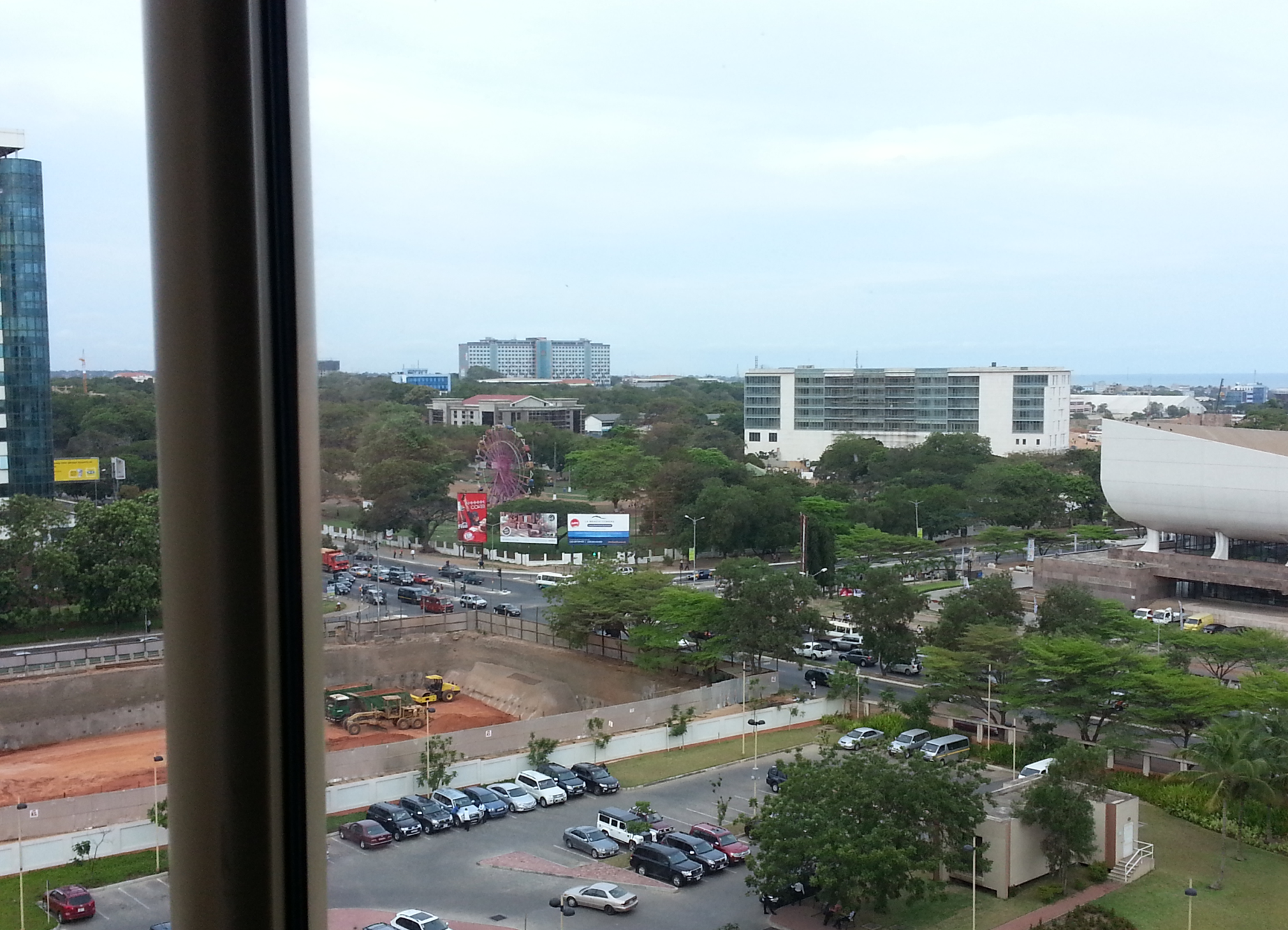
You have until noon on Tuesday to guess it. City and/or state first, then country. Please put the location in the subject heading, along with any description within the email. If no one guesses the exact location, proximity counts. Be sure to email entries to contest@andrewsullivan.com. Winner gets a free The View From Your Window book. Have at it.
Mark Mazzeti narrates the story of enigmatic West Virginian entrepeneuer Michele Ballarin, alias “Amira,” whose tried to reshape Somalia on behalf of the US government:
As she describes it, it was a casual meeting with a group of Somali Americans set up by a friend of hers from the Freemason lodge in Washington that sparked her interest in the war-racked country, and the transformation of Michele into Amira began. She started traveling to Africa, and soon the devoutly Christian woman who played the organ at her church each Sunday became entranced by the teachings of Sufism, a mystical branch of Islam once dominant on the Indian subcontinent and North Africa. Sufism had lost ground after the breakup of the Ottoman Empire had spawned more muscular forms of Islam, but it is still practiced widely in Somalia. Ballarin became convinced that promoting Sufi groups inside the country was the best way to diminish what she saw as a toxic influence of strict Wahhabism that had gained a foothold in the Horn of Africa with the help of rich Saudi donors, who sent money there to build radical schools and mosques.
Her public work in Somalia made her appear like just another rich do-gooder pushing airy-fairy development projects, but there was a darker side to her projects. When the Islamic Courts Union took control in Mogadishu in 2006, she saw an opportunity to take advantage of the vast ungoverned areas in Somalia to set up bases for a resistance movement to drive the Islamists out of power, as well as to nurture business ventures in the country. The horsewoman of Virginia would insert herself into the chaos.
Ashley Fetters is impressed with this year’s avant garde winner of the Pulitzer Prize for music, Caroline Shaw’s Partita for 8 Voices. J. Bryan Lowder walks through it:
The singers begin by speaking and then layering phrases like “to the side” and “through the middle and” while also counting dance beats (“5, 6, 7, 8”), erupting into lively, Appalachian-tinged singing only after the spoken lines have reached maximum saturation. … In the meantime, we hear the thick, crunchy, punchy chord-flashes that Shaw favors in the sarabande, punctuated by a vocal sound akin to a slowed-down udu drum. And in the best movement, the courante, Shaw creates a 9-minute evocation of angel sex, complete with strained, breathy “ohs” and “ahs,” a gorgeously orgasmic hymn section followed by a quick coda containing sighs of satisfaction.
Aaron David Miller argues that America’s unique geography “explain[s] the way Americans see the world”:
The United States is the only great power in the history of the world that has had the luxury of having nonpredatory neighbors to its north and south, and fish to its east and west. … Canadians, Mexicans, and fish. That trio of neighbors has given the United States an unprecedented degree of security, a huge margin for error in international affairs, and the luxury of largely unfettered development.
He views these circumstances as a major factor in determining US foreign policy:
U.S. nationalism was defined politically, not ethnically. Anyone can be an American, regardless of color, creed, or religion. America’s public square has become an inclusive one — and is becoming more so, not less. That’s all good news, but too often, it leads Americans to see the world on their terms and not the way it really is.
Just look at America’s recent foreign-policy misadventures. Americans’ mistaken belief that post-invasion Iraq would be a place where Sunnis, Shiites, and Kurds would somehow look to the future to build a new nation reflected this tendency. It’s the same story with the Arab Spring: From the beginning, America seemed determined to impose its own upbeat Hollywood ending on a movie that was only just getting started and would become much darker than imagined. The notion that what was happening in Egypt was a transformative event that would turn the country over to the secular liberals powered by Facebook and Twitter was truly an American conceit.
Larison disagrees, placing more of the blame on political elites.
Glen Weldon chronicles the various incarnations of Superman:
If familiarity breeds contempt, this character’s seven decades of cultural ubiquity have bred something more insidious. In writing my cultural history of the iconic superhero, I repeatedly encountered a view of the character as a stolid, unremarkable chunk of conceptual furniture. It was one place where the received wisdom of comic book obsessives (who tend to focus on edgier stuff) overlapped with that of the general public (who tend to ignore comics of any provenance). The Big Blue Boy Scout was a safe, unchanging, anodyne fixture of our popular culture. A bore.
They’re all wrong. A closer look at the character’s history reveals that in fact the entire notion of Superman exists in a state of perpetual flux. The reason he has endured for three quarters of a century is that he continually evolves to reflect the culture around him. To sample a Superman comic, radio show, television episode or film from any era is to get hit with a potent dose of the prevailing zeitgeist. There, plain to see, lie the obsessions, fears, hopes and values of the time, stripped to their essence and shoved into baby blue tights.
So how many votes did Obama lose to racism? Even before considering Stephens-Davidowitz’s study, five million votes seems too high. The idea that the president ought to have won reelection in a landslide is a little tough to swallow, and it’s wildly inconsistent with the expectations of the economic-based, fundamental models. President Bill Clinton, with a far healthier economy, won by about the same amount as Stephen-Davidowitz expected for Obama. President George W. Bush, with a modestly healthier economy, actually did worse than Obama. If anything, there’s a case that Obama outperformed the fundamentals in 2012.
Today, the mayor of West, Texas estimated that from 35 to 40 people have died in the small community of around 2700 people. Of the fourteen deaths so far accounted for, eleven were first responders. At least four were from the local volunteer Fire Dept. Some were killed rushing toward the scene of the original fire in the fertilizer plant – only to be engulfed by a fireball. A Facebook page lists some of the dead:
There’s a picture of 26-year-old Sean Collier, with the comment “You will never be forgotten.”
There’s a picture of Jerry Chapman, smiling with his red goatee, along with this caption: “Jerry Chapman was in class at the time the call went out for the initial fire at West Fertilizer Company. His friends and co-workers say he would not have missed a chance to go help people.”
There’s a picture of volunteer firefighter Joey Pustejovsky, standing next to his wife, wearing a yellow firefighter’s helmet.
One local resident posted: “Joey worked for us at Sears in the sporting goods area, always willing to help and to give the best service. My heart goes out to Kelly and his family at this time, it is just like him to be a first responder. May God give you peace.”
There’s a picture of Navarro County firefighter and West ambulance EMT trainee Perry Calvin, 37, who has been confirmed as one of the EMT personnel killed.
And there’s a picture of Dallas Fire-Rescue Capt. Kenny Harris, one of the dead, dressed in a crisp black uniform. He’s smiling.
I didn’t want the last post of this awful week to be about terrorists – but about the self-sacrifice of these American citizens. Four EMTs are still missing. Pray for them. Pray for West, Texas.
(Photo: Valley Mills Fire Department personnel view the railroad tracks near to the fertilizer plant that exploded yesterday afternoon on April 18, 2013 in West, Texas. By by Erich Schlegel/Getty Images.)
Friday on the Dish, we were up in the early hours following the shooting at Cambridge, MA that quickly moved into nearby Watertown and turned into a showdown between the perpetrators and the police. We stood by as information trickledin, until the suspects were eventuallyrevealed to be the Boston bombers, the Tsarnaev brothers. After one of them was killed and the dust settled temporarily, we hoped the policed could catch the other alive for full questioning.
As more became known about the brothers’ religious fascination, Andrew tried to figure out their homegrown brand of stoner jihadism (with reader pushback) and we started to look into what their Chechen connection might mean. We heard from a reader who knew the younger bother at large, Dzhokhar, and pointed toward his Twitter account.
By the afternoon we were askingwhether Boston and Cambridge should be put through total lockdowns to catch the remaining bomber, and continued processing the religious factor. Christopher Dickey, Eli Lake and Daniel Klaidman researched where the pair could have gotten the materials to pull off these attacks while Philip Bump explained how they became citizens.
News broke in the evening of a final standoff between Dzhokhar and the police after authorities found him in hiding in a boat parked in a Watertown resident’s backyard. Before long he was taken alive.
In commentary and analysis, Toobin doubted that we can effectively guard against this kind of lone-wolfism, Lt. Col. Robert Bateman advised against vigilante videotaping of shootouts, and Julianne Hung warned about indiscriminate blacklash against Muslims in light of a beating in Massachusetts this week. Ben Smith explained the basis of paranoia from the brothers’ parents and vocal aunt as we continued to learn details from the remarkable hero of Monday’s bombing, Jeff Bauman, who helped identify the bombers from his hospital bed.
Throughout, we factored the events into politics going forward, and of course there was a good deal of partisan mudslinging on immigration and some more on guns. We gavecredit where it was due to the MSM and new media, and kept shaming the New York Post for its nonstop atrocious coverage.
In the bigger picture, Andrew considered what this all might mean for the national psychology and terrorism (to dissent from readers), homed in on two quotes worth pondering, and reflected on the president’s remarks and the other fatal explosion that took place this week in West, Texas. Finally, we glanced at the exhaustion of a Cambridge resident in the Face of the Day and melted during a much needed Mental Health Break, as The Onion summed up America’s collective exhale from this week.
–B.J.
The rest of the week after the jump:
this high res pic is good news. super clear. someone could actually recognize this bro from this pic: twitter.com/ravisomaiya/st…
Thursday on the Dish, Andrew reflected on the meaning of the word ‘terrorism’ after Boston, shamed the New York Post for its unhinged, libelous coverage of the bombing, and chided both Obama and the right for unanimous silence on the most recent report of America’s torture regime. Elsewhere, he defended masturbation, answered readers on the perks of living in New York, and awardedboth Glen Reynolds and Kevin Williamson Malkin Award nominations for their ill-advised swipes at Gabby Giffords.
We gathered coverage of the fertilizer plant explosion in West, Texas and Dreher focused on the sacrifices of volunteer firefighters at the scene. On the Boston bombing beat, security cameras caught the actual suspects in the Faces of the Day while Tim Murphy connected skills learned Iraq to those used by EMS in the aftermath of the explosion.
In political coverage, Douthat speculated why the US experiences so few bombings, we probed the connections between location, gun ownership and suicide, and we rounded up reax to the death of the gun-control bill and the President’s remarks. Rubio took heat from right-wingers for his much-hailed immigration bill, Laura Murphy highlighted the lack of due process in deportation, and we tried to parse the legal significance of keeping one’s mouth shut under interrogation lights. Reinhart and Rogoff struck back, we took a subway ride through New York’s inequality gap, and George Packer gave voice to friends of the US trapped in Afghanistan after we leave. Finally, Noam Scheibler followed former Obama aides into the lobbying business and Dreher clarified why he doesn’t belong to the GOP as readers flooded the inbox in response to yesterday’s email from a would-be gay Republican.
In miscellanea, Adam Kirsch dove into the journal of Holocaust survivor Helga Weiss, we found out what’s keeping US soldiers awake at night, and Dishheads weighed in on one reader’s story of hydrocephalus. Melissa Holbrook Pierson described the hobby of ‘found photography,’ and we considered the message of Jackie Robinson’s new Hollywood treatment while George Soros received the Tom Sawyer treatment in the Headline of the Day. Patton Oswalt delivered a tour de force in fan-fic filibustering while six literary titans workshopped Moby Dick. We took in a strong commercial for gun legislation in the Cool Ad Watch, joined Iron and Wine for a light show in the wilderness in the MHB, and enjoyed a floral view in Washington, DC for the VFYW.
Wednesday on the Dish, Andrew tore into Bill Keller’s latest excuses for refusing to print the word ‘torture,’ reluctantly voiced potential support for Hillary in 2016, and sighed at the ongoing clout of the gun lobby. He speculated on the political intrigue behind the immigration bill, paused to listen to New Zealand’s parliament erupt into song over marriage equality, gave credit to the military men who helped fellow runners in Boston. He also talked blogging on a GigaOM panel with Andrew Ross Sorkin and Maria Popova.
We tried to keep track of today’s media derp over Boston, Alexis set vigilante investigators on Reddit straight, and we awed at the strength of those injured in the bombing and the hospitals that took them in. Later, we gathered reflections on the proper reaction to this kind of terrorism while Greenwald pleaded for more global empathy.
In other political coverage, a gay reader seriously considered throwing in with the GOP, Yglesias made a second pass over the flawed Reinhart-Rogoff report and Susan Porter doubted the effectiveness of anti-bully laws. Washington residents said yes to pot legalization as we took a trip to the marijuana farmer’s market. We tipped our hats to the news crew that won this year’s Pulitzer for national reporting, took note of Lady Thatcher’s funeral proceedings, and Jerry Coyne disapproved of patenting genomes. Daniel Pipes actually recommended we fund mass murderer Bashar al-Assad while Ford Vox encouraged a hi-tech check on health care acquired infections.
In assorted coverage, a reader and eyewitness to the Boston bombing shared a flash of levity from that day, while another shared sorrow. Readers asked Rod Dreher about the toll of cancer treatment, Thane Rosenbaum said a good word for revenge, and Tara Clancy tore it up at the Moth. Cowen ran a thought experiment if our lights went out in middle age, we scanned the Louvre for secrets and leafed through Woody Guthrie’s sole attempt at fiction.
Elsewhere, we got up close and personal in a sketchy Cool Ad Watch and remembered an old folk remedy for bed bugs. Finally, we visited Lothersdale, England in the VFYW, witnessed the power of lighting in the MHB, and stared down the barrel of a gun at the Face of the Day.
Tuesday on the Dish, Andrew zeroed in on the damning report on the Bush administration’s use of torture and took aim at Obama’s ongoing hypocrisy on Gitmo. He also urged stoicism in the face of tragedy in light of the events in Boston, remembered the skill and bravery in the work of Tim Hetherington, and allowed readers to ask Steve Brill anything.
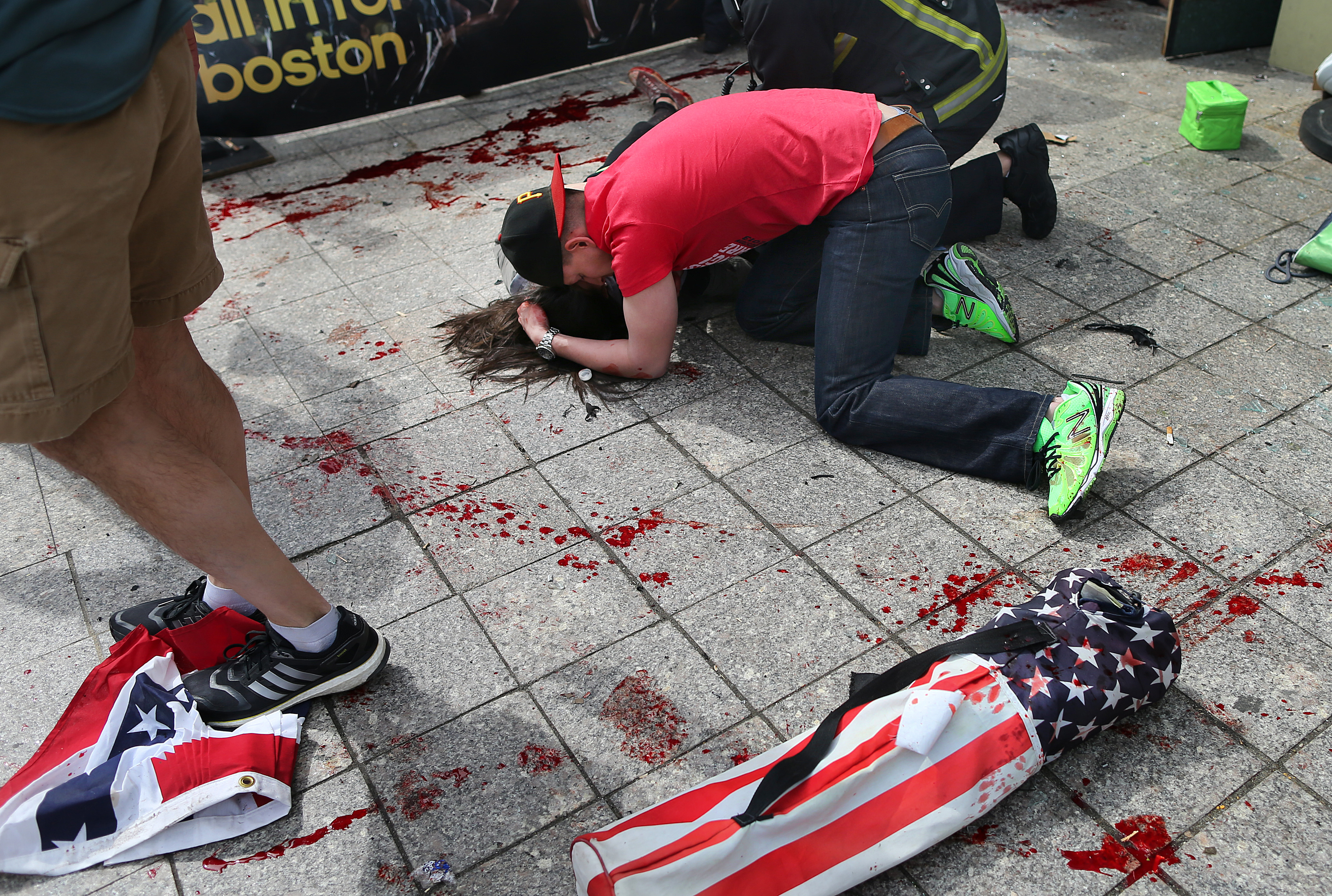
In further Boston coverage, we heard from longtime residents in the aftermath of the bombing, Madrigal spotted a resource for synthesizing all the home videos of the explosion for evidence, and we found the most affecting images from yesterday and tracked down the status of one victim in particular.
In political news, Seth Stephens-Davidowitz challenged Nate Cohn’s dismissal of racism affecting Obama’s electoral fortunes, we said goodbye to Palestinian PM Salam Fayyad, and checked in with Venezuela after fresh, post-Chávez elections. Ross Pomeroy looked through studies on the psychological effects of terrorism as we pondered why these kinds of attacks are so rare in the US and considered options other than gun control to address violence. As Felix greeted the news of gold’s price drop, we surveyed the unemployment cliff and explored the consequences of an unfortunate Excel error in the Reinhart-Rogoff report. Later, Stephanie Mencimer reported on the LDS Church backing off on LGBT rights, Jonathan Cohn diagnosed the ills of daycare and we shined a light on nonprofit fraud.
In assorted coverage, a reader shared a deep personal narrative on hydrocephalus, we took a second look at the life of Zelda Fitzgerald, and reminisced on Thatcher’s faith. Readers asked Rod Dreher about misconceptions of Dixie, we exalted the many faces of David Bowie, and C. G. P. Grey filmed an explainer of Vatican City. We located a town where WiFi and radio are banned for the sake of the residents, readers shared some expertise on nature’s odder floral fragrances and we revealed last week’s VFYW contest in Karachi, Pakistan. Finally, we gazed into the eyes of a hologram in the Face of the Day, spent a moment in Apex, Nunavut for the VFYW, and received a timely rendition of the Star Spangled Banner in the MHB.
Monday on the Dish, we rounded up coverage of the Boston Marathon bombing, from reax onTwitter to commentary and context in the blogosphere, while holding out further analysis until more information emerges. Patton Oswalt had the last word on the tragedy for today.
In other coverage, Andrew took apart Paul Wolfowitz’s retrospective of the Iraq War and pondered whether Pope Francis will drag the Church into the light of modern day. He also questioned our modern fixation on life-extending medicine despite the pain it can bring and wondered how soon news orgs will face the music of a new era. Elsewhere, Andrew responded to TNC’s thoughts on Rand Paul trip to Howard University, and shook his head at the ongoing merger of Christianity and Ayn Rand’s Objectivism in certain quarters of the GOP.
In more political news and views, Andrew Solomon expressed mixed feelings on North Dakota’s new law restricting abortion as we studied the frequency of cross-confessional marriage and cut subsidies for electric cars down to size. Readers filled in the media’s gaps on the horrific story of Kermit Gosnell as we gathered increasing commentary on the case. We met the rare souls who enjoy filling out tax forms while Heritage illustrated where your tax dollars ended up this past year. Finally, Marc Lynch rationalized the Muslim Brotherhood’s irrational track record while a reader took on Susan Jacoby’s reasons to leave religion.
In miscellanea, readers asked Rod Dreher about hometown blues, Willie Nelson spoke for the moment, in the moment, we found a reason for our ‘ums’ and ‘uhs,’ and remembered the first VFYW, in Los Angeles. Michael Wolf awed with his photographs of Hong Kong high rises as we ate breakfast overlooking the Earth and listened closely to the sound of the universe being born. Later we put away our dreams for an invisibility cloak, shopped for germs and browsed some risqué botany. Lastly, we spent a moment in Rome for the VFYW and witnessed the shock following the Boston bombing in the Face of the Day.
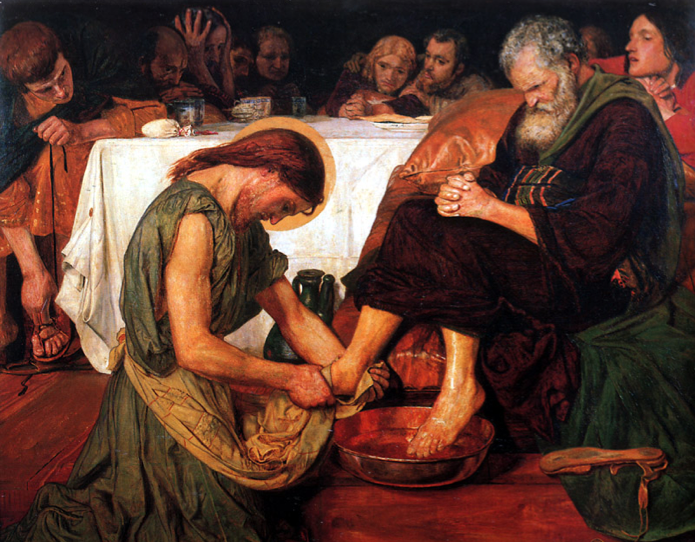
Last weekend on the Dish, we provided our usual eclectic mix of religious, books, and cultural coverage. In matters of faith, doubt, and philosophy, Marilynne Robinson remembered Dietrich Bonhoeffer, Francis Spufford thought about Jesus and self-righteousness, and Rachel Held Evans pondered the perils of sharing your faith. Eve Tushnet reflected on the religious imagery of pre-Raphaelite paintings, Karen Armstrong offered a meditation on science and religion, and Susan Jacoby explained how and why people convert to atheism. Ashley Makar reflected on what her cancer diagnosis taught her about Jesus in the Garden of Gethsemane, Erich Fromm taught us how to love, and Barry Lenser found life’s mysteries at the heart of Rod Dreher’s new book. Costica Bradatan reminded us of why failure matters, Jonathan Haidt examined the morals of business students, Priscella Long recoiled at a neuropsychologist’s experiment on human decision-making, and Leanne Ogasawara answered a timeless cocktail party question.
In literary and arts coverage, Robert Silvers divulged the muddled phrases that drive him crazy, David Yezzi provided a searing critique of contemporary poetry, and Ian Crouch wondered if the writer can truly retire. Jeff Sharlet considered the phrase “reads like a novel,” Tom Jokinen recalled Graham Greene’s dream diary, and a transgender woman appeared in the pages of DC Comics’ Batgirl. Stephen Akey praised the French poet Baudelaire for confronting our failures, Lydia Kiesling searched for the great tech novel in San Francisco, and Ann Napolitano toured Flannery O’Connor’s childhood home in Georgia. Maureen O’Connor proclaimed the death of the celebrity sex tape and a new documentary explored Stanley Kubrick’s The Shining. Read Saturday’s poem here and Sunday’s here.
In assorted news and views, DVD technology held promise for cheaper HIV testing, Evan Hughes looked back at the first stirrings of discomfort about New York’s gentrification, Oklahoma football coach Bob Stoops dismissed the need for college athletes to get paid, Jessica Freeman-Slade reviewed Rosie Schaap’s memoir, Drinking with Men, and the conversation continued about Jay-Z and Beyoncé’s trip to Cuba. MHBs here and here, FOTDs here and here, VFYWs here and here, and the latest window contest here.
A salient fact: I lived on Comm Ave between Gloucester and Hereford, a few blocks from both explosions, so I feel like I have “skin” in this story.
Why did they shut the city down? One answer: MBTA. If they had gotten on the the MBTA they could’ve been in Providence in a matter of minutes (less than 2 horus), or in a car poised at far flung T station and into the the NH or VT wilderness. The particular problem of Watertown and Cambridge is the variety of transport options available to the bombers to slink through police lines. Shutting down these options was the quickest way to limit their escape routes, same with forcing taxis off the streets.
Was this hugely inconvenient, yes. Hugely expensive, no doubt. But those that wrote that at worse they might have detained/hurt/killed no more than a few dozen innocents are misguided. What if the bombers intention was to hijack a plane? Or detonate a bomb on an Amtrak train? Also, I ask them: if this was YOUR town or city, what would you want?
I can’t imagine a better outcome of a horribly nightmarish situation for the people of Boston and surroundings. As a dyed-in-the-wool lib I can’t believe I’m going to write this, but: thank you to the local, state, and federal authorities for containing this situation before it got much worse.



 The Dish