From Decapitations To Celebrity Portraits

Laetittia Barbier traces the macabre origins of the wax museum all the way to the foot of the 18th century guillotine:

Behind the scaffolds, a 32-year-old woman undertook the gruesome labor of casting in wax the severed heads of the enemies of the [French] Revolution. The effigies were then paraded on picks in the streets as symbolic sacraments of the people’s victory. The dilligent wax manufacturer’s name was Marie Grosholz, a name she promptly changed after her wedding to become Madame Tussaud.

(Photo: “Madame Tussaud making wax likenesses of guillotine victims in Paris” at the Royal London Wax Museum by Herb Neufeld)

Are Drones Worth It?

Steve Coll takes a long view:

Drone strikes have surely thinned Al Qaeda’s ranks on the Afghanistan-Pakistan border, and reduced pressure on American forces fighting the Taliban. But has the program made America safer? Political relations between the United States and Pakistan, a nation of nearly a hundred and eighty million people, with a fast-growing nuclear arsenal, have collapsed. Today, the United States has surpassed India as the most hated nation in Pakistan. There are many causes, but drones are a major one. Just as Eisenhower failed to think through the consequences of his push-button interventionism, Obama seems unwilling to confront the possibility that drone strikes may be creating more enemies than they’re eliminating.

America’s drone campaign is also creating an ominous global precedent. Ten years or less from now, China will likely be able to field armed drones. How might its Politburo apply Obama’s doctrines to Tibetan activists holding meetings in Nepal?

The Climate Change Narrative

Daniel Kramb reviews Beacons: Stories for Our Not So Distant Future, a forthcoming collection of speculative fiction. Kramb feels that “fiction writing is one of the greatest aides we will have in our collective coming-to-terms with climate change”:

[C]ompanies and governments of all persuasions are using the adjective “green” to describe even their smallest (and often bogus) efforts to become more sustainable, loading the word with so many different meanings, it has lost almost all of them. [Author] Holly Howitt provides a dazzling twist to this: in her story, “Green people” are those living in a zone where mankind has learned to control the weather (“You press this button, it rains. You press this one, the sun shines”). The controlled environment allows them to keep growing food—to the detriment of those living in the “sandtowns” next to them, where people are perishing. “Don’t tell me you believe in being Green now?” a furious wife shouts at her pragmatic husband, who, for their newborn baby’s sake, has just accepted employment as a “weatherman.” “You can’t be that stupid. Or that shallow.”

The story poses another uneasy question: What does it really mean to care for the next generation? To give your daughter a good life (by playing the system), or to fight the injustice the system is based on (to her detriment, probably)? Tensions like this are what make climate change such a challenge for the environmental movement. The unique nature of the situation—that we have to drastically change our ways now to prevent something becoming truly terrible in the future—is one of the hardest messages to get across.

(Hat tip: 3QD)

Cities Don’t Have A Reset Button

Tim Fernholz distills lessons about urban planning from the new version of SimCity:

While playing, it’s easy to solve your early economic problems by zoning more land and collecting more taxes. But soon you run out of land, your budget is in the red, pollution is becoming a problem, and your industries are running out of workers. As the city grows and more services are demanded, density becomes your watchword. This is a true nod to the realities of urbanism, where building up is the only way to efficiently capture the economic benefits of new residents.The most important lesson of SimCity, and of the real Detroit, is that growth is the only successful urban policy. But the brilliant decisions of the past become traps as you realize how they limit new development. It makes for an engaging, obsession-creating game, and a troubling reality.

The game also allows for maneuvers that real cities do not: 

One common rap against young market urbanists today is that they are too impatient with the human realities of politics. It’s true that SimCity takes politics out of the picture, but there are moments in the game when this very absence is instructive, eerie, and conspicuous: When a poorly planned city of my design ran out of residential space—and workers—it became clear that only massive restructuring would save the city from failure. An entire neighborhood would need to be wiped out and re-zoned for the greater whole to thrive. My digital bulldozers wasted no time. Obviously, the real world doesn’t work that way.

That’s partially the point. In his 1994 critique of the SimCity’s simulated approach to politics, Starr concluded that the best simulations work to expose their assumptions. What cities need to do to survive can be a political mess.

Calculating A Fair Trial

Dana Mackenzie does the math to determine the ideal size and design of a jury:

In a very provocative 1992 paper, George Thomas, a law professor at Rutgers University, and his student Barry Pollack, now a partner at Pollack Solomon Duffy LLP in Boston, argued that the function of a jury is to serve as a proxy for society. In ancient Greece every citizen of the polis served on the jury. In the modern world this is impractical, so we settle for juries of 12. …

If you pick 12 people at random, how likely is it that they will disagree unanimously with the majority of society? Not very likely. How likely is it that they will disagree with society by a 9-to-3 majority? Thomas and Pollack crunched the numbers, and Suzuki recrunched them. And they found a surprising consistency. For every margin that the Supreme Court has allowed to stand (6- to 0, 10 to 2, 9 to 3), the probability of a disagreement between society and the jury is less than 1.5 percent. And for every margin that the Supreme Court has ruled unconstitutional (5 to 1, 5 to 0), the probability of disagreement is greater than 1.5 percent. Thus, without realizing it, the Supreme Court has consistently held that there should be less than a 1-60 chance that the jury will disagree with society. Judicial hunch meets mathematical rigor!

The Daily Wrap

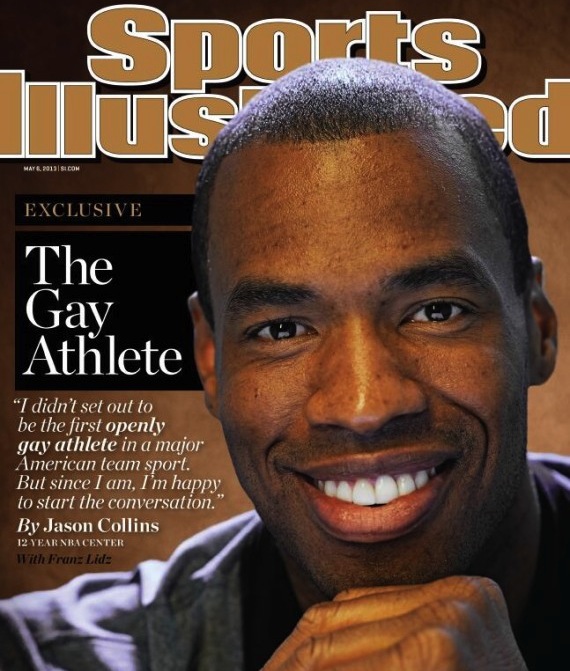
jason-collins-openly-gay-athlete-570x758

Today on the Dish, Andrew praised the words of Jason Collins and didn’t buy Charles Barkley’s explanation for why so many athletes stay in the closet. He also pondered America’s next move in Syria in light of the news of chemical weapons, echoed Joe Biden’s call for the torture report, and recognized that the struggle of our time is not against religion but its militant strains. Elsewhere, Andrew, testified to the democratic power of the Internet and sighed at the reunion of Ron Paul and his ugliest comrade, while Brian Phillips’s brush with frosty death touched off Andrew’s own personal story of a friend’s demise.

In political coverage, we parsed the politics of sequestration, gathered reax to Jason Collins’ coming out, and got a better sense of how the upper crust finds work in tough times as Matthew O’Brien despaired over Spain’s labor market. We didn’t find much in the Tsarnaev’s Svengali connection, Bostonians didn’t take kindly to Alex Jones Corps, and Pete Wehner earned an Yglesias Award nomination for calling out Palin-pathos. Rebecca Rosen found a way to bust PR copy in the news, Michael Wolff delivered a prognosis for the NYT Book Review, and Joshua Rothman provided a heuristic account of grad school. Finally, we measured the economic benefits of biodiversity as EJ Graff suggested decentralization for the Boy Scouts’ policy on gays.

In assorted coverage, Graeme Wood took on Sam Harris in jiu-jitsu, Gavin McInnes took a melodramatic trip on pot, and readers asked Rod Dreher where cancer fits into God’s design. We checked Facebook’s status updates en mass, Ann Curzan noted the linguistic significance of ‘slash,’ robots tugged at our heartstrings, and we discovered that good taste is a matter of practice.

Jay Griffiths took William Golding to task, readers wrote in their recommendations for female hitchhiker-lit, and David Mikics relayed the story of history’s final blood libel case. We read an unnerving account of a radically controlling fiancé and registered concern over modern man’s vanishing virility, while Scandinavians glugged the most coffee worldwide. We caught sight of a wounded woman following a gas blast in Prague, an older bro spun tricks for the MHB, and peeked at Pittsburgh for the VFYW.

–B.J.

Sex After 25

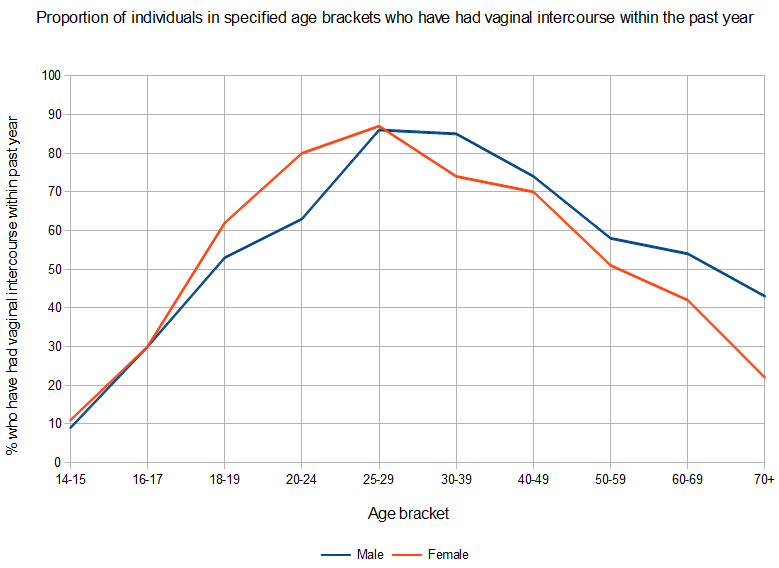
Razib Khan distills a 2010 study of American sexual behavior:

Before the age of 25 it seems that women are more likely to have sex in a given year than an equivalent age man. After the age of 25 this starts to reverse, and men are more likely to be having sexual intercourse in a given year.

In the comments section, Khan adds:

I put this post up because it seems to quantify what I’ve heard of/seen anecdotally. e.g., I have attractive (young looking) female friends in their mid-30s who are shocked all of a sudden how difficult it is to date because now they’re competing with women 10 years younger. To make things work they have to move up themselves to 45 year olds, and they’re not always willing to do so…. The converse is that to some extent immature and broke 20 year old males compete for the same women with 25 and 30 year olds who have jobs and are more seasoned.

Unrequited Empathy

A study demonstrates that people who observe affectionate treatment of robots can feel for them much as they do for fellow humans:

Affectionate interaction towards both, the robot and the human, resulted in similar neural activation patterns in classic limbic structures, indicating that they elicit similar emotional reactions.

Daniel Akst notes that, “Perhaps reassuringly, though, brain scans of people shown videos of abusive behavior were more empathetic when the victim was a human being than when the sufferer was a robot.” Natt Garun adds that the study “explains why I cared so much about poor Wall-E when he was getting crushed in the Axiom, or the adoration I have for R2D2 and its smart, resourceful ways”:

What this all means is that robots, which often have the characteristics of a living being, have the tendency to tug at our heartstrings more than just any ol’ lifeless item. ”One goal of current robotics research is to develop robotic companions that establish a long-term relationship with a human user, because robot companions can be useful and beneficial tools,” said one of the team’s researchers Rosenthal-von der Pütten.

“I Loved An Imaginary Being”

Michelle Legro recounts a cruel, cautionary tale, as told in Wendy Moore’s How to Create the Perfect Wife:

In the spring of 1769, twenty-one-year old Thomas Day received a letter informing him that his fiancée was breaking up with him. Margaret, the attractive, cultured, and spirited sister of a friend he had met the summer before, was clearly no match for the awkward, sullen, and serious Day, who had resolved at a young age to live a hermetic life with a devoted wife at his side. Margaret’s ultimate folly wasn’t that she was in every way incompatible with Day, but instead that she had been corrupted by the world by simply living in it.

Women were “universally shallow, fickle, illogical, and untrustworthy.” But Thomas Day wasn’t bitter. He had simply thought he could bend the will of a grown woman into his perfect partner. He would have to experiment with a less fully formed individual. He wrote to a friend:

There is a little Girl of about thirteen upon whose Mind I shall have in my Power to make the above mentioned Experiment … she is innocent, & unprejudic’d; she has seen nothing of the World,& is unattach’d to it.

Thomas Day used Rousseau’s novel Émile as a model:

Day poured hot wax into Sabrina’s arms; he threw her into a lake, unable to swim; and he fired unloaded pistols at her to accustom her to loud noises.

He would also test her “feminine” will by giving her a new dress, the first she ever had, and commanding her to throw it into the fire and watch it burn. The tests left Sabrina confused, angry, and willful. Her education made little sense, as did her place in Day’s household, where he continued to tell her he was training her as a housekeeper. At fourteen, an age when her “wifely” qualities should have bloomed, Sabrina was no closer to Day’s perfection. Annoyed, he packed her off to boarding school, providing her with an allowance and a dowry, but otherwise discarding her as a failure. …

How to Create the Perfect Wife is the tale of a modern Pygmalion, whose intentions, however misguided, reflected an extraordinary age of educational reform for children, male and female alike. Writing to a friend about his former fiancée Margaret before he began his lifelong quest to train a wife, he had an uncharacteristic moment of insight that would have served him in his desire for a perfect partner: “I loved an imaginary being.”