Woody Guthrie, Novelist

woody_guthrie

Larry McMurtry reviewsbook written by the legendary folk singer:

House of Earth was completed in 1947 but discovered only recently. It is a novel about farming; there aren’t many such. The one great one, Edith Summers Kelley’s Weeds, was reprinted not long ago by the persistent professor Matthew J. Bruccoli, who was given it by an astute bookseller. It’s a great book, and House of Earth isn’t, though it is powerful. It’s a serious effort to dramatize the struggles of a young couple, Tike and Ella May Hamlin, who try to make a living as farm laborers in the most unforgiving years of an equally unforgiving place: the Texas Panhandle in the 1930s.

His conclusion? Stick with Guthrie’s songs:

Woody Guthrie wrote a fair amount, in letters, diaries, in journals, and on random pieces of paper. But it is not as a writer that we revere him, or that so many of his contemporaries and peers beat a path to his door or to his hospital bed—Bob Dylan, Pete Seeger, Phil Ochs, John Mellencamp, Bruce Springsteen—and my own son and grandson now. His genius was song, and House of Earth is a bit of an oddity, though certainly a readable one. It is the apprentice work of a man who became great in his real calling, his craft, his sullen art, as the poet Dylan Thomas would say. Are we glad to have it? Sure. Would we trade any of the best songs for it? No way.

(Photo: Woody Guthrie in 1943, via Wikimedia Commons)

A Defense Of Vengeance

Multiple People Injured After Explosions Near Finish Line at Boston Marathon

In an NPR interview, Fordham University law professor Thane Rosenbaum elaborated on the thesis of his new book, Payback: The Case for Revenge:

Most people think that eye for an eye suggests bloodthirstiness. What it really means is exactness. What it essentially means – and we get this from the Old Testament and, of course, in Hammurabi’s Code – that when a moral injury is created, a debt is created, and then payback is required, but it has to be specific. It has to be proportionate. And all an eye for an eye means is a way to prevent disproportionate revenge. Disproportionate revenge are blood feuds, recycling of vengeance, the Hatfields versus the McCoys.

Through the natural history of our species, we were able to manage revenge through tribes and individuals because people knew what enough – what was enough to be satisfied. And that means that when one loses an eye, they’re entitled to receive no more than an eye, but also no less than an eye. And in our system, unfortunately, with plea bargains, we’re very often shortchanged, and we’re constantly paying back less than an eye.

In another interview, Rosenbaum argues that to under-punish “is a kind of moral violation that we should find intolerable”:

I write about the woman in Iran who was blinded by a classmate, with acid thrown in her face. Originally the sentence was that a doctor would put acid in the eyes of the person who did that—truly an eye for an eye. This woman has been blinded and disfigured for the rest of her life, and why should the other person not experience the same thing? In the end, both the court and she decided not to go through with that remedy. Some people were relieved. But I think it at least sends a message that she was entitled to that.

(Photo: A man is loaded into an ambulance after he was injured by one of two bombs exploded during the 117th Boston Marathon near Copley Square on April 15, 2013 in Boston, Massachusetts. Two people are confirmed dead and at least 23 injured after two explosions went off near the finish line to the marathon. By Jim Rogash/Getty Images)

“Why I Might Become A Gay Republican”

A reader vents during tax season:

I’ve always wondered how any self-respecting gay man (or woman) could ever support the Republican Party. But a series of recent events in my personal life momentarily made me think about it. My partner and I have a beautiful baby girl. We begged, borrow and stole (well, not the last thing) to have her via surrogacy, and she is the great joy of our life. We love being dads, and would love to have another child – a little brother and sister for our baby girl.

So, we started the process, which is about 18 months to two years until birth. The financial considerations were a huge part of it. It costs about $160,000 for a surrogacy in California, and one has to pull out all the stops to even have a chance of making it happen.

And unfortunately, our chances appear to have been kaboshed. Two weeks ago I got a call from my accountant. As a self-employed composer and writer, I always pay my estimate tax payments, and I did so last year. But I earned a lot as many of my projects came to fruition, and I unexpectedly have a very big tax bill. Unfortunately paying that bill will completely deplete all of our savings, which were meant for our second surrogacy. I’ve never minded paying tax before, but this time it hit hard. I worked extremely hard to make all that money.

At the same time I had a long chat with my partner’s niece at a family gathering. She is 22 years old, and has three children. The first was born when she was sixteen. She subsequently dropped out of high school. The State of California and the federal government gave her all sorts of benefits because she was a poor single mother, and so she decided to have some more babies.

The father of the second and third is the same, and they have built a nice little family together (he has another daughter too, by another woman). They both work full time jobs but earn very little because neither has a high school diploma. But there’s no ways they’d support their family without those government benefits. That’s what I thought …

I was astonished to learn she recently paid for a boob job, and a new iPad for her son’s birthday, and just bought her mom a TV set. She refers to her partner on Facebook as her husband, but they’re not legally married. I asked why, and she told me many of their single mother benefits would evaporate if they did.

She’s a sweet person and frankly, I don’t think she knows better. In her mind, she’s working hard to support her family. I don’t blame her given her lack of education. I blame the government for setting up benefits in such a way that they create these odd dependencies and actually inspire poor people who can’t afford it to have more children out of wedlock and NOT get married. Most of all, I’m angry because my huge tax bill is going to pay for this type of stuff, when actually I really need the money so I can have another baby in my lovely gay family.

Of course, most of the Republican Party base hates the fact I want to legally marry my partner and have more children with a surrogate. And so yes, right now I’d never ever vote for them. But if they dumped their anti-gay base, and came out with a lower taxes and responsible spending (not necessarily spending cuts) philosophy, I might well find it very tempting.

Yes, Of Course It Was Torture

[Re-posted from earlier today]

Until the CIA hands back its critique of the Senate Intelligence Committee’s report into the war crimes authorized by president Bush, we lack a report that carries institutional bipartisan weight on the interrogation practices in the era of Dick Cheney’s “dark side.” Until now, that is.
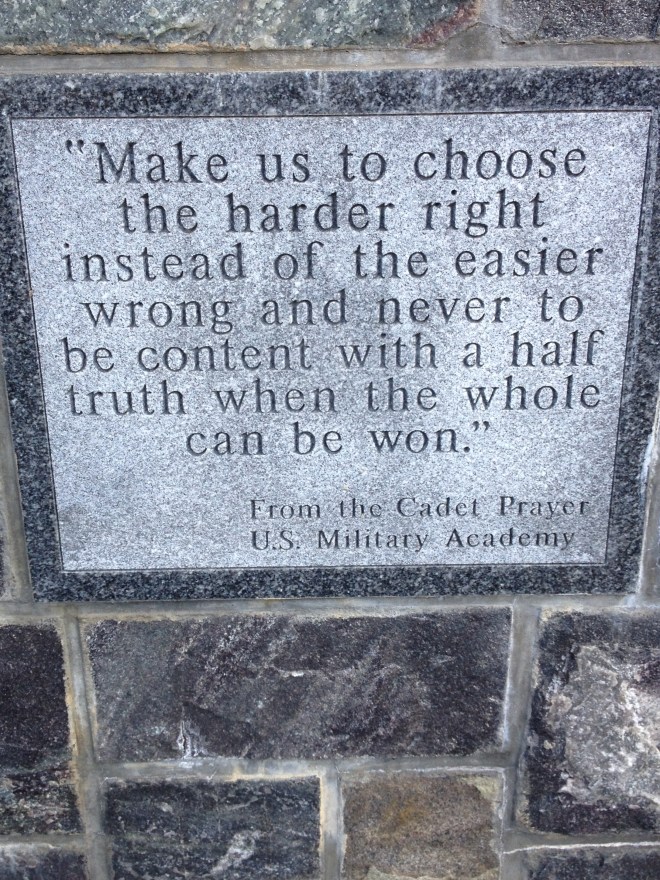
westpointplaqueThe Constitution Project’s non-partisan report on the facts – an exhaustive, yet gripping and lucid 575 pages – puts any lingering doubts to rest.

Some of the participants give it particular credibility: Asa Hutchinson was a key figure in impeaching president Clinton, an Arkansas congressman whose DEA nomination was backed by an overwhelming 98 – 1 in the Senate and who subsequently ran the largest division within Bush’s Department of Homeland Security.  Richard Epstein is one of the most doctrinaire libertarian conservatives you could hope to find. Thomas R Pickering was president George H W Bush’s ambassador to the UN, and American ambassador to both Russia and India. Judge William S. Sessions is the former Director of the FBI, under Reagan and Bush. They all signed off on the Constitution Project’s findings, which are inarguable, given the evidence provided in the report.

Those findings, to put it bluntly, are that for several years, the United States government systematically committed war crimes against prisoners in its custody, violating the Geneva Conventions, US domestic law, and international law. Many of these war crimes were acts of torture; many more were acts of cruel, inhuman and degrading treatment. All are federal crimes. None of those who authorized the war crimes has been prosecuted.

The report – which I urge you to read in full when you get the chance – dispassionately lays out all the possible legal definitions of torture (domestic and international) and then describes what the Bush administration authorized. The case is not a close one. Bush and Cheney are war criminals, as are all those involved in the implementation of these torture techniques. Perhaps the most powerful part of the case is an examination of what the US itself has condemned as torture when committed by other countries. Take one often lightly-dismissed torture technique – stress positions. The Bush administration’s own State Department has called these techniques torture:

The State Department criticized Jordan in its 2006 Human Rights report for subjecting detainees to “forced standing in painful positions for prolonged periods.” In its 2000, 2001 and 2002 reports on Iran, “suspension for long periods in contorted positions” is described as torture. In its 2001 and 2002 Human Rights report on Sri Lanka, “suspension by the wrists or feet in contorted positions” and remaining in “unnatural positions for extended periods” are described as “methods of torture.”

Flash forward to what the Bush administration authorized in one case:

While being held in this position [a prolonged standing stress position involving being shackled to a bar or hook in the ceiling by the detainee’s wrists, typically while naked, for a continual period of time, ranging from two to three days continuously, up to two or three months intermittently] some of the detainees were allowed to defecate in a bucket. A guard would come to release their hands from the bar or hook in the ceiling so that they could sit on the bucket. None of them, however, were allowed to clean themselves afterwards. Others were made to wear a garment that resembled a diaper. This was the case for Mr. Bin Attash in his fourth place of detention. However, he commented that on several occasions the diaper was not replaced so he had to urinate and defecate on himself while shackled in the prolonged stress standing position. When [prisoners fell] asleep held in this position, the whole weight of their bodies was effectively suspended from the shackled wrists, transmitting the strain through the arms to the shoulders.

The Bush administration is on record that this is torture. Now take one of the more famous techniques – waterboarding. Again, the Bush administration itself condemned the use of this barbarism when deployed by others and described it quite simply as torture:

In the section entitled Torture and Other Cruel, Inhuman, or Degrading Treatment or Punishment, the 2003 – 2007 Bush State Department Human Rights report on Sri Lanka described “near-drowning” as “torture and abuse.” In its Human Rights Reports for Tunisia from 1996 to 2004, “submersion of the head in water” is deemed “torture.” In the 2005 and 2006 Human Rights Reports for Tunisia, this practice is considered “torture and abuse.”

Domestic case law universally argues that waterboarding is unequivocally torture – and the report has a comprehensive set of cases to back it up. Dick Cheney has publicly admitted that he authorized this torture technique – and the report documents it occurred much more often than on the oft-cited “rare three” “high-value” prisoners. So Dick Cheney has conceded that he authorized acts which his own administration condemned as torture when committed by other countries, and which all international and domestic legal precedent defines as torture. One prisoner, as we know, was subjected to this torture technique 183 times.

I fully understand the immense difficulty any democracy has in holding its former war criminals to account. When such profound violations of human rights have occurred under the clear authority of the highest elected official in the land – who was re-elected after the torture was as plain as day – it remains very difficult to hold anyone accountable. The report assumes good faith on the part of all involved – and that the resort to torture was a function of a genuine, good faith attempt to keep Americans safe, after a uniquely horrifying act of terror on 9/11.

But none of that matters as a legal or ethical issue. What matters – and the law is crystal clear about this – is that torture and anything even close to torture be prosecuted aggressively. This is true especially when a government is claiming urgent national security in defense of its own crimes. The laws specifically rule out any defense on those grounds. So either we are a republic governed by the rule of law or we are not. Yes, there is discretion as to whether to prosecute any crime. But war crimes are the gravest on the books and have no statute of limitations. Prosecuting them is integral to adherence to Geneva, which itself is integral to the maintenance of the rule of law and of Western civilization itself. Either we set up a Truth Commission and find a way to pardon the war criminals, while establishing their guilt – which would at least give a brief nod to the rule of law. Or we have to take this report and the Senate Intelligence Committee’s findings as a basis for legal action for war crimes.

There is no way forward without this going back. And there is no way past this but through it.

(Photo: a plaque at West Point on the integrity of America’s armed forces through history – grotesquely betrayed by the Bush administration.)


The Daily Wrap

Explosions At 117th Boston Marathon Aftermath

Today on the Dish, Andrew zeroed in on the damning report on the Bush administration’s use of torture and took aim at Obama’s ongoing hypocrisy on Gitmo. He also urged stoicism in the face of tragedy in light of the events in Boston, remembered the skill and bravery in the work of Tim Hetherington, and allowed readers to ask Steve Brill anything.

In further Boston coverage, we heard from longtime residents in the aftermath of the bombing, Madrigal spotted a resource for synthesizing all the home videos of the explosion for evidence, and we found the most affecting images from yesterday and tracked down the status of one victim in particular.

In political news, Seth Stephens-Davidowitz challenged Nate Cohn’s dismissal of racism affecting Obama’s electoral fortunes, we said goodbye to Palestinian PM Salam Fayyad, and checked in with Venezuela after fresh, post-Chávez elections. Ross Pomeroy looked through studies on the psychological effects of terrorism as we pondered why these kinds of attacks are so rare in the US and considered options other than gun control to address violence. As Felix greeted the news of gold’s price drop, we surveyed the unemployment cliff and explored the consequences of an unfortunate Excel error in the Reinhart-Rogoff report. Later, Stephanie Mencimer reported on the LDS Church backing off on LGBT rights, Jonathan Cohn diagnosed the ills of daycare and we shined a light on nonprofit fraud.

In assorted coverage, a reader shared a deep personal narrative on hydrocephalus, we took a second look at the life of Zelda Fitzgerald, and reminisced on Thatcher’s faith. Readers asked Rod Dreher about misconceptions of Dixie, we exalted the many faces of David Bowie, and C. G. P. Grey filmed an explainer of Vatican City. We located a town where WiFi and radio are banned for the sake of the residents, readers shared some expertise on nature’s odder floral fragrances and we revealed last week’s VFYW contest in Karachi, Pakistan. Finally, we gazed into the eyes of a hologram in the Face of the Day, spent a moment in Apex, Nunavut for the VFYW, and received a timely rendition of the Star Spangled Banner in the MHB.

–B.J.

(Photo: A building on the campus of MIT in Cambridge, Mass. was lit up like an American Flag after two explosions went off near the finish line of the 117th Boston Marathon on April 15, 2013. By Matthew J. Lee/The Boston Globe via Getty Images)

Where They Can Never Hear You Now

Screen Shot 2013-04-16 at 11.14.07 PM

Joseph Stromberg visited a small town that has become a safe-haven for those supposedly suffering from electrosensitivity:

You can turn on your phone on in Green Bank, W.Va., but you won’t get a trace of a signal. If you hit scan on your car’s radio, it’ll cycle through the dial endlessly, never pausing on a station. This remote mountainous town is inside the U.S. National Radio Quiet Zone, a 13,000–square-mile area where most types of electromagnetic radiation on the radio spectrum (which includes radio and TV broadcasts, Wi-Fi networks, cell signals, Bluetooth, and the signals used by virtually every other wireless device) are banned to minimize disturbance around the National Radio Astronomy Observatory, home to the world’s largest steerable radio telescope.

For most people, this restriction is a nuisance. But a few dozen people have moved to Green Bank (population: 147) specifically because of it. They say they suffer from electromagnetic hypersensitivity, or EHS—a disease not recognized by the scientific community in which these frequencies can trigger acute symptoms like dizziness, nausea, rashes, irregular heartbeat, weakness, and chest pains.

But while these people’s symptoms may be real, the cause probably isn’t electromagnetic radiation:

[T]he best predictor for whether a hypersensitive person will experience symptoms isn’t the presence of radio frequency—it’s the belief that a device is turned on nearby. An elegant demonstration of this on a much larger scale took place in 2010, when residents of the town of Fourways, South Africa, successfully petitioned for a cell signal tower to be taken down because of the sickness caused by its radiation—even though it was later revealed that it hadn’t been switched on during the time of their complaints.

Face Of The Day

Qatar Berlin Forum 2013

A moving video image of a woman holding the Royal Dutch Shell logo is projected at the Qatar Business and Investment Forum 2013 on April 16, 2013 in Berlin, Germany. Through its oil and gas revenue, which have allowed Qatar to bring in the world’s highest income per capita as well as have one of the lowest unemployment levels in the world, the Persian Gulf country is able to invest outside of Arab countries in industries as diverse as fashion, media, petrochemicals and banking. By Adam Berry/Getty Images.

The Chávez Shadow

Kevin Lees is unimpressed by Venezuela’s new president:

[Nicolás] Maduro, it’s safe to say, is no Chávez. A former Caracas bus driver, Maduro was a loyal Chávez lieutenant from the beginning of the proclaimed Bolivarian revolution, and he served as Chávez’s dutiful foreign minister for six years prior to his elevation to the vice presidency last December. But the skills that allowed Maduro to remain in the top echelons of Chavismo didn’t lend themselves to leading a compelling campaign. His win owes more to the Chavista electoral machine, coercive mobilization tactics, a largely state-dominated media, and the resources that come from a decade of blurring the lines among Venezuela’s governing United Socialist Party (PSUV), PDVSA, and the government. Maduro was undeniably a lackluster candidate, and he wrapped himself in the legacy, and in some cases, the actual godhead, of Chávez—one plucky website tracked how many times Maduro has mentioned Chávez during the campaign (over 7,200). After saying that the United States may have caused Chávez’s terminal cancer, Maduro claimed earlier this month that a little bird spoke to him to tell him that the ghost of Chávez had blessed Maduro’s campaign.

Alejandro Tarre’s view:

Maduro inherits a country in crisis.

Venezuela has among the world’s highest inflation and crime rates, a massive fiscal deficit, and skyrocketing debt—even though it enjoyed its largest oil windfall ever during the Chávez era. It suffers from worsening power outages, crumbling infrastructure, and severe food shortages. The macroeconomic situation is so grave that Maduro was forced to devalue the currency twice before the election to improve the government’s balance sheet. Some forecasters are predicting the economy will contract and the inflation rate will hit 30 percent before year’s end. Consumption and government spending are bound to fall. Poverty will increase.

Had Maduro won with a comfortable margin—something close to the 11-point margin Chávez won over Capriles last October—he would still face steep challenges. Now he enters office with a weak mandate and contested legitimacy.

Zelda In The Spotlight

Four novels based on Zelda Fitzgerald, F. Scott’s wife, are due out this year. Abigail Grace Murdy assesses her legacy:

Confined to a mental hospital, Zelda wrote a novel about her breakdown, Save me the Waltz, which she finished in a mere two months. She sent it off to Scott’s publisher without telling him. When Scott found out, he was enraged. He had been writing a novel about her breakdown himself, Tender is the Night.

“Everything we have done is mine,” he told her. “If we make a trip…and you and I go around, I am the professional novelist, and I am supporting you. This is all my material. None of it is your material.” He insisted that she remove the overlapping sections of her novel. “What’s left of Save Me the Waltz is a jagged, unfinished book. We don’t know what it could have been,” says Sally Cline, who wrote a biography of Zelda in 2002.

Therese Anne Fowler, author of Z: A Novel of Zelda Fitzgerald, tries to set the record straight:

It is the persistent, damning mischaracterisation of Zelda as “insane” that most needs undoing. The trouble lies in the diagnosis she was given in 1930: “schizophrenia”. While today we know it to mean severe mental illness requiring delicate and often lifelong treatment with medications, therapies, and sometimes institutionalisation, in Zelda’s time it was a catch-all label for a range of emotional difficulties. It was often applied to women who suffered depression or exhaustion brought on by impossible circumstances. Zelda did suffer some mental health crises – depression, primarily – and was an uninhibited, uncensored woman who didn’t always think before she acted, but she wasn’t crazy. Unwise? Sometimes. Insane? No.

Last week marked the 93rd wedding anniversary of the Fitzgeralds. Steve King reflects on their bittersweet union: 

The Fitzgeralds’ personal life has the same sense of a long and irrecoverable springtime. The legendary champagne-and-dancing anecdotes begin with their wedding celebrations — the raucous party was forced out of two of New York’s finest hotels — and last for precisely a decade, until Zelda’s first mental breakdown in April 1930. The following letter is from April 26, 1934, Scott writing to Zelda with hopes for a new beginning even as she undergoes treatment for her third breakdown:

You and I have been happy; we haven’t been happy just once, we’ve been happy a thousand times. The chances that spring, that’s for everyone, like in the popular songs, may belong to us too — the chances are pretty bright at this time because as usual, I can carry most of contemporary literary opinion, liquidated, in the hollow of my hand — and when I do, I see the swan floating on it and — I find it to be you and you only…. Forget the past — what you can of it, and turn about and swim back home to me, to your haven for ever and ever — even though it may seem a dark cave at times and lit with torches of fury; it is the best refuge for you — turn gently in the waters through which you move and sail back….

In an echo of the closing to The Great Gatsby (April 1925), the two would be borne back ceaselessly to only the most troubling and trying aspects of their past.

Mike Springer takes the above video with a grain of salt:

We’re not sure, for example, that the clip purporting to show Zelda being “very lively in a street” is actually of her. It appears to show someone else. And one of the captions claims that Fitzgerald is pictured writing The Great Gatsby, but according to the University of South Carolina’s Fitzgerald Web site, the sentence he is writing on paper is: “Everybody has been predicting a bad end for the flapper, but I don’t think there is anything to worry about.”

The Austerity Typo?

Proponents of austerity have repeatedly cited this paper (pdf) by economists Carmen Reinhart and Kenneth Rogoff, which found slowed growth among countries with high debt-to-GDP ratios, to make the case for cuts in government spending. Mike Konczal highlights a new study that casts some serious doubts on the strength of the Reinhart-Rogoff argument:

In a new paper, “Does High Public Debt Consistently Stifle Economic Growth? A Critique of Reinhart and Rogoff,” Thomas Herndon, Michael Ash, and Robert Pollin of the University of Massachusetts, Amherst successfully replicate the results. After trying to replicate the Reinhart-Rogoff results and failing, they reached out to Reinhart and Rogoff and they were willing to share their data spreadsheet. This allowed Herndon et al. to see how how Reinhart and Rogoff’s data was constructed.

They find that three main issues stand out. First, Reinhart and Rogoff selectively exclude years of high debt and average growth. Second, they use a debatable method to weight the countries. Third, there also appears to be a coding error that excludes high-debt and average-growth countries. All three bias in favor of their result, and without them you don’t get their controversial result.

Dean Baker ponders the impact of the paper:

This is a big deal because politicians around the world have used this finding from R&R to justify austerity measures that have slowed growth and raised unemployment.

In the United States many politicians have pointed to R&R’s work as justification for deficit reduction even though the economy is far below full employment by any reasonable measure. In Europe, R&R’s work and its derivatives have been used to justify austerity policies that have pushed the unemployment rate over 10 percent for the euro zone as a whole and above 20 percent in Greece and Spain. In other words, this is a mistake that has had enormous consequences.

Tyler Cowen’s view:

The “case for austerity” didn’t rest much on R&R in the first place, rather on the notion that the bills have to be paid, dawdling on adjustment is not always so easy, and the feasible sum of international redistribution is quite low.  For this reason the UK should be relatively uninterested in immediate austerity and many nations in the eurozone periphery more interested.

Jared Bernstein’s addition to the debate:

I suspect R&R will say, assuming they acknowlege they messed up, that it still shows slower growth.  But that’s been the problem with their work from the beginning.  As I’ve written many times, riffing off of Bivens and Irons for one, if you mush everything together they way they do, you’re likely to get the causality backwards.  You’ll convince yourself that higher debt leads to slower growth when it’s more often the opposite.  Certainly in the US case, the most progress we’ve made against our debt ratios have been in periods of fast growth (and the biggest increases have been in periods of recession, slow growth, or war).

Part of Reinhart and Rogoff’s response:

The JEP paper with Vincent Reinhart looks at all public debt overhang episodes for advanced countries in our database, dating back to 1800. The overall average result shows that public debt overhang episodes (over 90% GDP for five years or more) are associated with 1.2% lower growth as compared to growth when debt is under 90%. (We also include in our tables the small number of shorter episodes.) Note that because the historical public debt overhang episodes last an average of over 20 years, the cumulative effects of small growth differences are potentially quite large. It is utterly misleading to speak of a 1% growth differential that lasts 10-25 years as small.