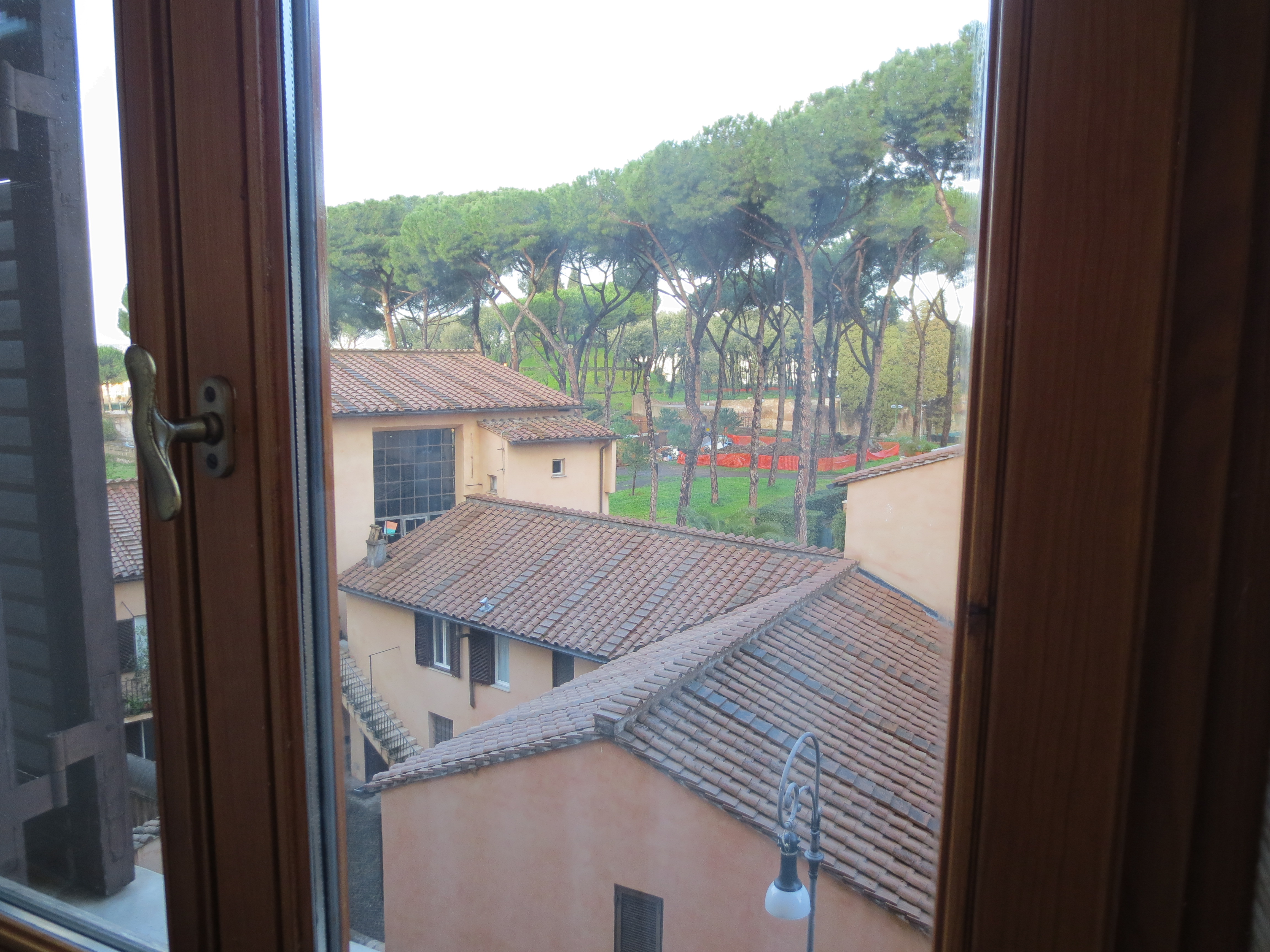
Rome, Italy, 1.59 pm
Rome, Italy, 1.59 pm
In the wake of Rand Paul’s trip to Howard, TNC provides constructive criticism:
If you are a libertarian and dismayed by the largely critical reaction to Paul’s speech, you should understand that much of it is because black liberals, like me, actually expect more of Rand Paul than we expected of Mitt Romney. Again, a lot of us have family whose politics are not very different from Rand Paul’s. These are people who don’t like foreign wars, who don’t like our incarceration rates, and don’t like our deficit.
These people are not me. But the fact that we end up voting for the same guy is a distortion of democracy. We deserve to fight it out. Having that fight doesn’t require the GOP to fully embrace Obamacare. It requires the GOP to stop attempting to limit the number of people who are voting, and start competing for them. At this moment, the GOP has a choice. It can embrace the “Gifts” logic of Mitt Romney which holds that black people will never vote for a Republican, or it can make a pitch and compete.
Expecting more is a good thing. Better still would be a franker conversation between African-Americans who see what TNC sees and Republicans actually willing to listen. Maybe Howard was just the beginning of that conversation. My only hope is that it isn’t the end.
Seamus O’Mahony, a physician, reads Hitch’s Mortality:
I am intrigued by Mortality for one main reason, which is this: Hitchens’s beliefs about his advanced cancer and its treatment were, for a man whose fame rested on his scepticism, uncharacteristically
optimistic. I hesitate to use the word delusional, as he admitted that he would be very lucky to survive, but he clearly steadfastly hoped, right to the end, that his particular case of advanced cancer might lie on the sparsely populated right side of the bell-shaped curve of outcome statistics.
He famously mocked religious folk for their faith in supernatural entities and survival of the soul after bodily death, yet the views expressed in Mortality are just as wishful and magical. “The oncology bargain (oncology is that branch of medicine which deals with the treatment of cancer),” writes Hitchens, “is that in return for at least the chance of a few more useful years, you agree to submit to chemotherapy and then, if you are lucky with that, to radiation or even surgery.” Years? I must now confess to a professional interest. I am a gastroenterologist in a large acute hospital, and I have diagnosed many patients with oesophageal cancer. “Years” is a word not generally used when discussing prognosis in Stage Four oesophageal cancer, “months”, in my experience, being a more useful one.
I’ve no watched two friends – an atheist and a Christian – go to extraordinary lengths to extend their lives against great odds. They were both relatively young – especially David at 34 when he found out. No one wanted them to go. But I wonder if all that medicine – which was, in fact, a form of poison – was worth it. David got ten more years, and two young children. But he also endured a disfiguring, disabling, brutal physical battering from the surgeries and chemo-sessions that tackling a tough brain tumor allow for. I say “allow for” because “required” is not the right word. What the chemo did to Christopher was beyond description – and what’s left of your body, even if the chemo works, can be extremely vulnerable to infections and diseases that can be worse than the cancer.
It seems odder to me for Christians to be as exercized by life-extension as the atheist. Put that down to the strange extremism of Ratzinger’s innovations on the question of “life”. But our culture’s gradual alienation from the fact of our deaths – our distancing ourselves even from the old and infirm in ways previous cultures didn’t and couldn’t – is not, in my view a healthy thing.
No one should seek to die or give in to a disease they can legitimately fight. God knows how many pills I take a day to keep the virus – and all its and their side-effects at bay. But I get to live healthily and meaningfully. The way some elaborate and cutting edge treatments all but kill the patient in order to save her troubles me. It’s a loss of perspective as well as immensely expensive for the entire system. Unquestionably, these sophisticated treatments are taking healthcare money away from the young, taking up more and more of our collective healthcare resources, and extending lives only be perpetuating continuous agony and nausea and pain for the patient and devastating consequences for families and friends.
We will all die. We should not seek it. But we should not flee from it for ever. I walked a 94-year old friend home last night in her wheelchair after a visit. She told me that she had worse and worse panic attacks. What are you afraid of? I asked. “Death,” she replied, with characteristic candor. I cannot blame her. And I cannot blame all of those who do everything and anything to avoid it. But at some point what seems to me to matter more is not the length of our lives but the content of them and the manner of our deaths.
At some point, medicine is a function of a social disease of modernity: the flight from our own mortality. But fleeing it does not defuse it. Only facing it does.
(Photo: John Moore/Getty.)
Marc Lynch tries to explain the Muslim Brotherhood’s post-revolution incompetence in Egypt:
It has become clear that the Brotherhood was more profoundly shaped by its inability to actually win power than has generally been recognized. Almost every aspect of its organization, ideology, and strategy was shaped by the limits Mubarak placed upon it. The revolution removed those boundaries — and the Brotherhood has struggled badly to adapt. Its erratic, incompetent, and often incomprehensibly alienating behavior since the revolution comes in part from having utterly lost its bearings in a new institutional environment. The chance to rule forced it to confront a whole range of contradictions that Mubarak’s domination had allowed the group to finesse.
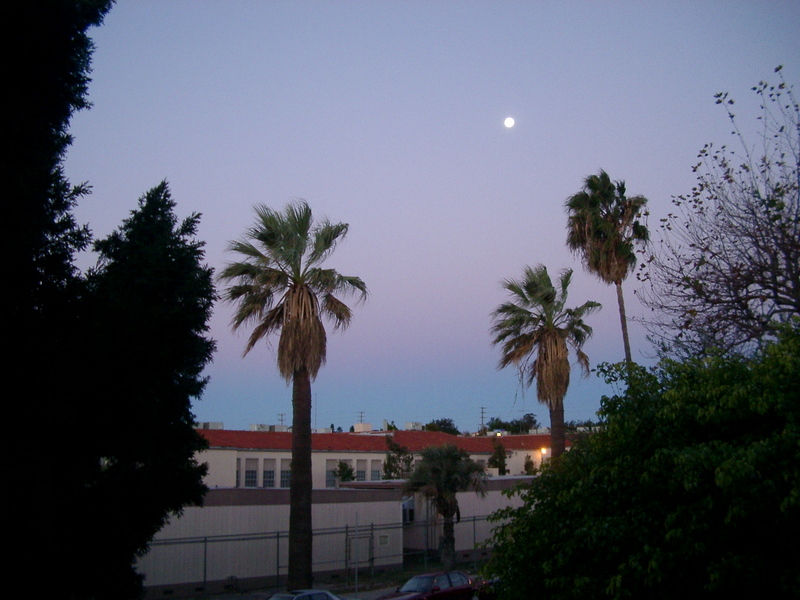
Los Angeles, California, 4.47 am.
It was posted on May 22, 2006, accompanied by the following post:
One of the strange things about having a blog, especially a one-man outfit like this one, is that, over time, you get to find out more about me, but not much about each other. Yes, you get to read some of the smartest emails on the web, but you don’t get to know who your fellow-readers are, where they live, what they do, what they see as they look out their window each morning. I get a little sense of it from the roughly 500 emails I get a day. But it’s still opaque.
Hence this idea, which may be nuts or inspired. We’ll find out. This week, get out your digital cameras, and take a picture of the view from your window. It can be your living room window, bathroom window, car-window or office view. If you’re serving in the military, or traveling, it can be just the view from where you’re standing or sitting. Email it to me, put “View From My Window” in the contents line, and I’ll post as diverse and as interesting an array of reader photos as I can all week. Just send it via the email option on the right, include the place and the time of day. By place, I mean town, state or county, and country. If you live outside America, I’d love to capture some of the exotic places I often get email from. Special treatment for those of you in the military, wherever you are. No names will be given: this blog’s rule of reader anonymity will remain. And by sending it, you give me the right to publish it. So show me – and every other reader – your world. Don’t pretty it up; just show it as it is – a glimpse through the looking glass of a blog, at the world its readers live in.
To see the resulting first week of reader photos, go to this Dish page. As you will notice, many of the initial VFYWs featured animals and rainbows, which are banned from the feature nowadays. And very few of the earliest VFYWs contain a portion of the window frame inside the photo frame – a requisite for the feature now. Money quote from the end of that week:
This feature is officially over, but I had so many sublime or touching submissions that I didn’t post I’m going to publish a few of the remainders over the coming weeks, every now and again. Please don’t send me any more. It took most of my weekend to download and organize just the hundreds I received. I now have one week’s worth of images from around the world – an astonishing display of the web’s power and diversity. When I get a minute, I’m going to find a way to gather them all together and publish them somehow – either on the web or on paper. So stay tuned.
That’s the real choice for new media. Some are beginning to see how news needs to be channeled online with a personal touch. We use the web normally for peer-to-peer interactions: emails, Facebook updates, instant messaging. To go from that world and seek news from an august “institution” is alien to the intimate nature of the medium. It won’t work. But there is an obvious alternative:
There has been much talk about the need for journalists to establish a “personal brand” that transcends their outlet. Some news personalities now play a strong role on Twitter and Facebook, but they often get little institutional support for this, and such participation and engagement remain merely part of a narrow web traffic strategy.
But what if news outlets decided to flip their model, so that the editorial staff was not subservient to the brand, but the “brand” became a platform for talent? What if news organizations confronted the reality that nearly all media will be “social media” a decade hence?
The main reason for news organizations’ resistance to this is that it reduces their power to control what they produce and whom they publish. No one gives up power willingly. Some indeed will have to have it pried from their cold, dead, newsprint-covered hands. But by then it will have become an illusion anyway.
“It won’t kill you unless you let a bale of it fall on you,” – Willie Nelson on marijuana.
I also enjoyed this exchange:
Are there ever songs you get tired of playing after all these years?
Not really. With this short-term memory, I forget what I did last night.
Sarah Posner, like Irin Carmon, argues that the press did cover the Gosnell case:
Is Gosnell’s trial getting the same level of coverage on cable as, say, the Jodi Arias trial? No. But that’s a question about the media’s priorities in general, rather than some sort of ideologically-driven fear that the pro-choice position would be exposed. Proponents of safe, legal abortion do not fear any light shed on this awful episode. To the contrary, they were some of the first to condemn Gosnell when the details of a grand jury report were made public in January 2011 and Gosnell was first charged.
Drum points out that most of the right-wing media wasn’t covering the Gosnell trial until recently:
Why hasn’t the Gosnell trial caught on nationally? Beats me. I’ve often wondered just what it is that causes some local crime stories to become media sensations and others to molder in obscurity. But the interest of the conservative press is pretty obvious, and it has little to do with the grisly nature of the case itself. After all, they’ve been well aware of the Gosnell trial all along, because both Breitbart.com and conservative pro-life sites have been covering it extensively. Despite this, they barely mentioned it themselves. Obviously, even conservative editors didn’t it consider it newsworthy on a national scale. Their outrage only kicked into high gear when they spied an opportunity to pretend that this was a story about the liberal media ignoring a grisly abortion story.
Allahpundit weighs in:
[I]f Gosnell’s actually a case study in why we need more higher-end clinics, not less, why hasn’t the media been using him to that effect since he was indicted? Why a blackout instead? You know why: Because no one who sees that picture of the baby with its neck sliced thinks, “We need to make this easier, and to make the slicing happen a bit earlier in development.” The blackout strategy was smart. It just didn’t work.
Ambers urges readers to think “about the many different ways in which the failure to catch Gosnell’s horrible practices early enough represents significant systemic failures that have little to do with abortion”:
If it were easier and more socially accepted to get safer and earlier abortions in Pennsylvania, the demand for his services wouldn’t be as high. Cutting funds for Planned Parenthood and other providers with reputations for medical excellence means that more people will seek the modern day equivalent of back-alley abortions. Also, if health care inequalities weren’t as pronounced, doctors like Gosnell would be kicked out of the market much earlier, or discovered much earlier.
Ed Krayewski’s view:
The case of Dr. Kermit Gosnell, horrific on its own, is not helpful as a stand-in or argument in the wider debate about abortion and reproductive rights (because what he did is already illegal), just as the case of Adam Lanza, horrific on its own, is not helpful as a stand-in or argument in the wider debate about personal safety and gun rights (because what he did is already illegal).
And McArdle admits that she should have paid more attention to the case:
I knew about the Gosnell case, and I wish I had followed it more closely, even though I’d rather not. In fact, those of us who are pro-choice should be especially interested. The whole point of legal abortion is to prevent what happened in Philadelphia: to make it safer and more humane. Somehow that ideal went terribly, horribly awry. We should demand to know why.
They exist:
When asked why they like doing their income taxes, 29% say that they are getting a refund, while 17% say they just don’t mind it or they are good at it; 13% say doing their taxes gives them a sense of control, while the same percentage cites a feeling of obligation – that it is their duty to pay their fair share.
Sprung outs himself as someone who gets “some satisfaction out of the process.” Among his reasons why:
A feeling of contributing: call me a dupe, but I like being a modestly productive member of society. I know some of our tax dollars are wasted — a lot, actually, in defense, and a lot in medical overpayments to doctors and hospitals and other healthcare providers, and a lot, particularly here in Jersey, in waste fraud & abuse. But you go to life with the government you have, and I don’t think that starving the beast makes it more efficient.
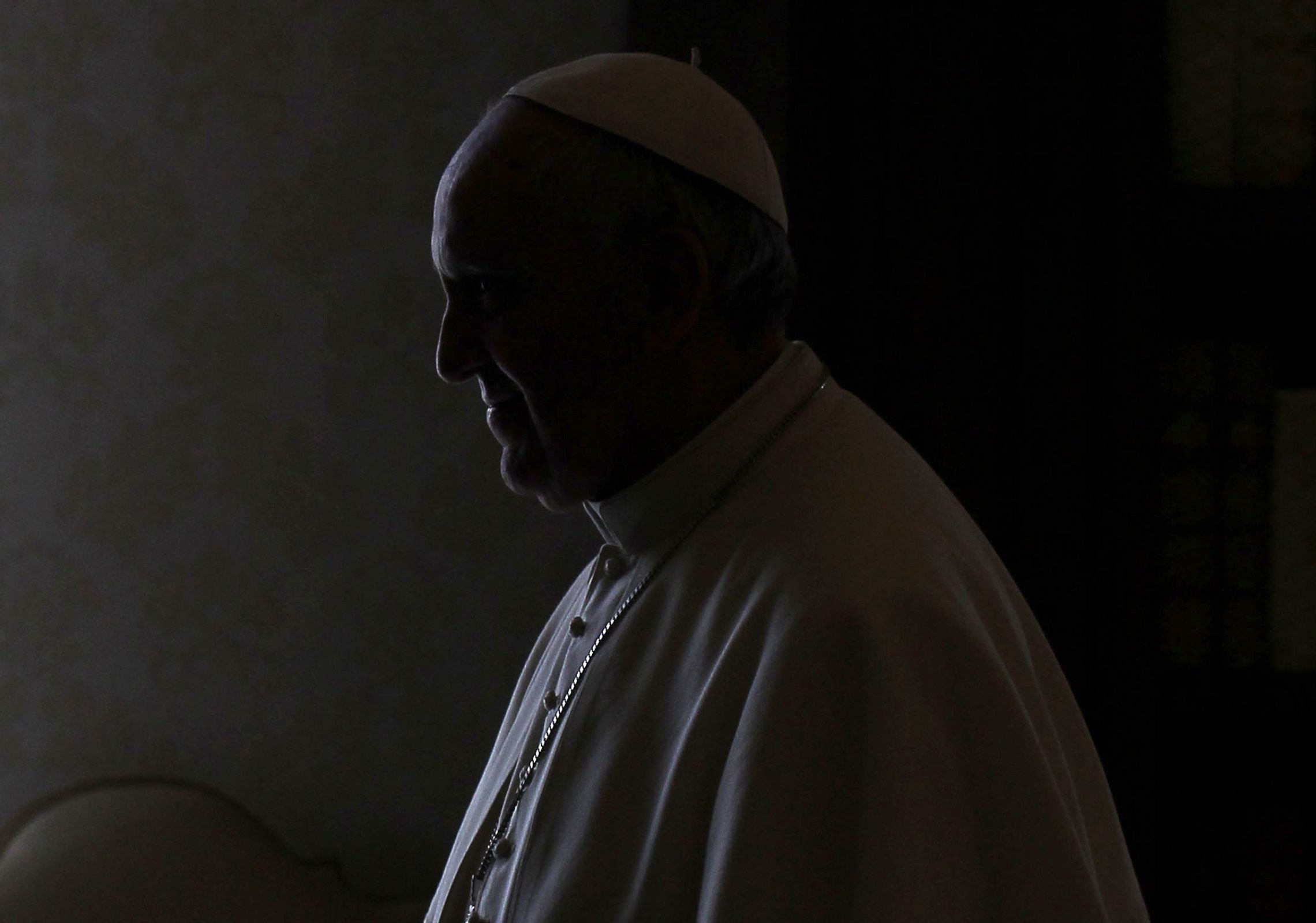
That was Hans Kung’s hope before the recent Conclave. It seemed somewhat naive to me at the time – but naivete in the face of the workings of the Holy Spirit is a good thing for Catholics to have. And we will certainly have to wait some time before we can assess whether the signs of reform become reality in any tangible fashion.
But we can say this much: almost every single action and statement from the new pontiff signals a radical departure from the past 44 years of the Wojtila-Ratzinger church. My favorite unofficial story about the new Pope was relayed to me by hearsay. But at the moment before he was to appear as the new Pope, he was allegedly presented with the papal mozzetta – the big red cape his predecessor loved to wear and an increasing must for any aspiring priest of bishop for the last decade (it had seasonal variations). He turned to the Vatican official who tried to put it on him, waved him away with one hand and said, simply, “Carnevale e finito.” The carnival is over.
Is it? That is the question. Is the Wojtila-Ratzinger era of reaction coming to an end?
You can see the theoconservative religious project from 1979 – 2013 rather as you might the neoconservative political project in the same years. After a major and arguably necessary course correction in the 1980s, by the first decade of the new millennium, the two isms had ended where isms always do: on earth. The theoconservative project ended in a collapse of the church’s moral authority inside the beadazzled Liberace outfits of its intellectual architect, Joseph Ratzinger. The neoconservative project ended in the blood and sands of Mesopotamia.
Benedict claimed he’d bring Europe back to the faith using the sublime, pristine self-evidence of a “new” natural law and the total authority of the Bishop of Rome. But after global rock-star version of the papacy under John Paul II had faded, the increasingly extremist and fastidious orthodoxy that he and Ratzinger had innovated lost altitude fast. It had been propped up by charisma, an evanescent form of authority. And when the prissy Inquisitor, Benedict XVI – with no popular appeal – inherited this mess, he gradually, gaffe after gaffe, fashion accessory after fashion accessory, disappeared beneath his meticulous vast wardrobe. He resigned for reasons we may never fully know – but after an internal dossier on church abuse – financial and sexual – had laid out his failure in stark terms. But he had ceased exercising any moral authority for most Catholics long before that.
All of that project required re-establishing the papacy as something the Second Council had explicitly disavowed: a near-dictator in theological and political and social debate. Conversations were silenced; debates ended; theologians silenced. Vatican II’s insistence on equal authority for scripture and for the laity of the church alongside the papacy were slowly downplayed, while restoring the Pope as some kind of medieval queen – down to the ermine and jewels and over-starched lace – was the objective. In his early years, John Paul II carried all before him in a sweep of drama. But he was to the papacy what Diana was to the monarchy. In the end, he was a dazzling distraction from reality, not a reinvention of it. It was under John Paul II that the rape of children became truly endemic, the cover-up the worst.
The establishment of a global council of advisers – a kind of global cabinet to counteract the Vatican bureaucracy and take the Pope down a notch or two is, in that context, a huge move:
The Italian church historian Alberto Melloni, writing in the Corriere della Sera, called it the “most important step in the history of the church for the past 10 centuries”. For the first time, a pope will be helped by a global panel of advisers who look certain to wrest power from the Roman Curia, the church’s central bureaucracy. Several of the group’s members will come to the job with a record of vigorous reform and outspoken criticism of the status quo. None has ever served in the Italian-dominated Curia in Rome and only one is an Italian: Giuseppe Bertello, the governor of the Vatican City State.
You need not have dramatic doctrinal change – and I don’t expect any on the issues that the Western laity has already moved on from. But you could have real institutional change. Here are my benchmarks: if Bergoglio closes or insists on total transparency for the Vatican Bank; if he defrocks leading bishops and cardinals who have been implicated in any way in the cover-up of child molestation, regardless of statutes of limitations; and if he allows the question of priestly celibacy to be revisited. He has chosen a collegial manner, but he is well known as a decisive man who makes up his own mind and exhibits few qualms about enforcing it.
All of this requires some patience and vigilance. But I fail to see how this new Pope could have more dramatically demonstrated that he intends to move the church away from the last forty years. Where he will lead it is anyone’s guess. But I’m merely relieved there seems to be a recognition that the Benedict path was, in many ways, a dead end. And the church must find new life again – in service to the poor, the sick, the lonely, the imprisoned and the outsider. It must get out of itself and into the world. And it’s happening.
(Photo: Pope Francis stands in the pontiff’s library on April 11, 2013 at the Vatican. By Alessandro Di Meo/AFP/Getty Images.)
 The Dish