The dialect Arab leaders choose, either classical or colloquial, matters more than one might think:
Qaddafi’s populist rhetoric was matched with popular language. His use of local dialect in political contexts made him seem closer to ordinary people, but also masked an authoritarian streak. This style, more associated with the old guard of Arab nationalist leaders like Gamal Abdel Nasser, connected Qaddafi to the politics of the 1960s. With his demise, Libya, too, has shifted toward the linguistic center.
Others are more tone deaf:
Zine el-Abidine Ben Ali, the former president of Tunisia, gave his first speech in response to popular unrest on December 28, 2010, in stiflingly literary Arabic, with full inflections and no emotion (although there is an amusing moment half-way through when a phone rings in the background for nearly a whole minute). That he recognized the alienating effect this had on listeners is clear in his attempt to tone down the formality of his subsequent speeches, although in vain.
Stefan Fatsis pans the new decision by the National Spelling Bee to force contestants to memorize definitions:
There are two reasons for the change. One is philosophical—that learning definitions will make the event more educational for its participants. The other is procedural—allowing the Bee to better accommodate its new overlord, television. Both are wrongheaded. …
It was bad enough when the Bee was moved into prime time and sometimes stretched past the bedtimes not only of the participants but also of other children (my daughter, for one) who wanted to watch. Now TV is dictating how many kids get to stick around and spell some more. If you knew the cameras were showing up to film an event designed for the children who participate, it was easy to justify watching this. The fact that the Bee is being reformatted to satisfy ESPN’s scheduling needs should make everyone a bit more squeamish.
Some contestants could always retaliate like the one seen above.
It now looks inevitable in France by next week and has just passed in Uruguay. The RNC – an outlier in the West – is reaffirming its commitment to discrimination.
A aspect of the new legislation that holds promise:
The Hadiya Pendleton and Nyasia Pryear-Yard Anti-Straw Purchasing and Firearms Trafficking Act, which is also being considered, would make it a felony to purchase a gun on behalf of someone else who is prohibited from owning it. The penalties range from 15 to 25 years.
In theory, this part of the package could be strong where the background checks are weak. The street has to get its guns from somewhere, after all. Someone with a clean record can buy 60 guns at a gun show and then begin selling them at a healthy mark-up on the street. With no records of the gun-show sales, and weak laws around private sales, the police have little ability to crack down on these suppliers.
Earlier Dish on the Senate’s gun control bill here.
Between the well-established anti-liberal trend in the South and the West’s tendency to favor challengers, any liberal Democratic challenger would have been expected to perform best in the states with low racism and struggle in the states with high racism. The performances of the prior three liberal, Democratic challengers is consistent with this hypothesis. Racism probably didn’t cost Kerry the presidency or save George H.W. Bush from an extremely close race with Michael Dukakis, yet that’s basically what the Stephens-Davidowitz’s model would suggest
Do you want to know why silencers are used in few crimes? Because they’re controlled very strictly and because they’re bulky and attract suspicion. Most gun crime is committed by relatively poor people using disposable guns that have been stolen or straw-purchased, then kept concealed someone’s pants. Silencers are hard to come by and specialized, and counterproductive when it comes to concealment. If they were easy to get, however, I suspect you’d see an uptick in their use in assassination-type crimes and home invasions.
Another:
Just wanted to take a sec because this whole debate annoys the hell out of me. This is a case where a very small number of radical gun owners are making a bad name for the rest of gun owners by blatantly misrepresenting facts.
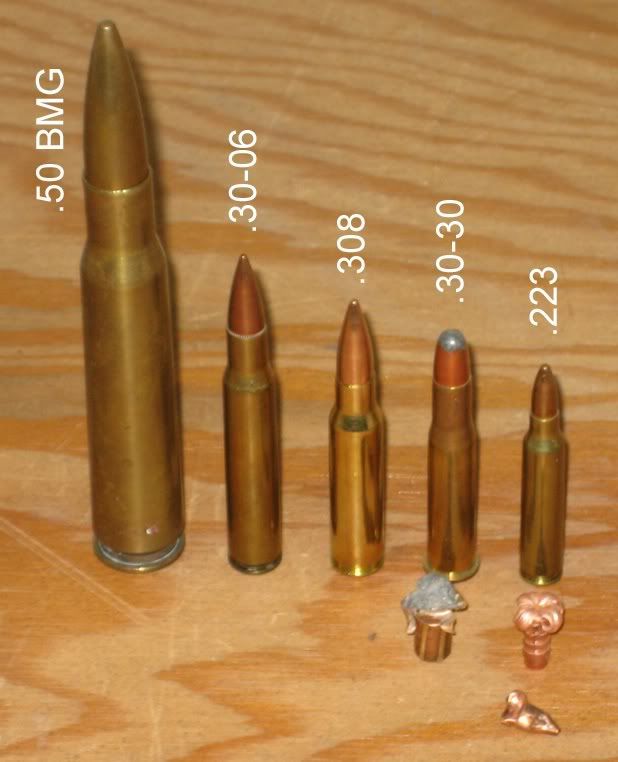
Silencers CAN make guns nearly silent. There’s a reason why every video sent around by pro-silencer groups features either weapons that shoot high velocity rounds or large caliber rounds. A 30-06, which is a very common deer rifle round, is much much larger and more powerful round than a .22, as you can see in this image. The problem is a .22 round can still easily kill a person. And a .22 pistol is not at all uncommon in violent crimes. [Above] is a video of a suppressed .22 caliber rifle. The only sound the rifle makes is from discharging and chambering a round. You could be 10 feet away and not notice the sound.
There’s no reason for people to own suppressors.
I’ve shot pests from the back yard before. My neighbors do it too. People act as though it’s a bad thing that neighbors know that they’re shooting behind their house. That’s insane! It’s a GOOD thing guns are loud. It’s a GOOD that the neighbors hear the shots. It’s terrifying to me that a neighbor could be firing weapons right next to me and I don’t know it. What if I walk over to say hi? I could walk into the line of fire without having any clue.
On the flip side, a few more readers defend suppressors:
I thought I would pass along this study (pdf), which compares the noise-reducing values of ear protection v. suppressors. As you can see, even if you wear ear protection on non-suppressed firearms, there is still a chance of hearing impairment. That danger is removed with the use of a suppressor.
Some argue that hunters do not need suppressors because they can wear ear protection. Are you kidding me? Hunters use all their senses in the field, especially hearing. How can we detect which direction the deer is coming from or how can we hear the approaching geese while wearing ear protection? How can I be aware of other concealed hunters who whistle to reveal their position for safety reasons if I’m wearing hearing protection? Those who base their opinions of suppressors or hunting off of movies or their imagination need to put a silencer on their muzzles (yes, terrible pun intended). Goldblog being one of them.
The other:
As an owner of several, I can tell you there is an important function to suppressors that’s been overlooked in the discussion so far: safety. I’m a responsible gun owner and take pride in introducing friends and family to how much fun recreational shooting can be. Many people who have gone shooting with me have taken their first shots on a suppressed weapon because it eliminates the overwhelming sound (and associated adrenaline rush) that comes with firing a gun. Shooting suppressed allows me to stress the fundamentals, make sure they hear any safety warnings without being muffled by hearing protection and don’t have to compete with the shaking hands and tunnel vision that happens when I let people start shooting unsuppressed. On a roller coaster or some other controlled environment, adrenaline can be fun. With a firearm in unfamiliar hands, not so much.
In fact, when my two young daughters are old enough, their first shots will be suppressed. I’d much rather they know how to safely operate a gun than simply be afraid of the loud noise. I’ll have them continue to shoot suppressed to protect their hearing and allow them to develop the muscle memory required to be an accurate, safe shooter.
I disagree with NRA on many issues. But on this one, more access to suppressors is a no brainer.
Conor Friedersdorf thinks Kermit Gosnell’s trial should get more attention:
Inducing live births and subsequently severing the heads of the babies is indeed a horrific story that merits significant attention. Strange as it seems to say it, however, that understates the case.
For this isn’t solely a story about babies having their heads severed, though it is that. It is also a story about a place where, according to the grand jury, women were sent to give birth into toilets; where a doctor casually spread gonorrhea and chlamydiae to unsuspecting women through the reuse of cheap, disposable instruments; an office where a 15-year-old administered anesthesia; an office where former workers admit to playing games when giving patients powerful narcotics; an office where white women were attended to by a doctor and black women were pawned off on clueless untrained staffers. Any single one of those things would itself make for a blockbuster news story.
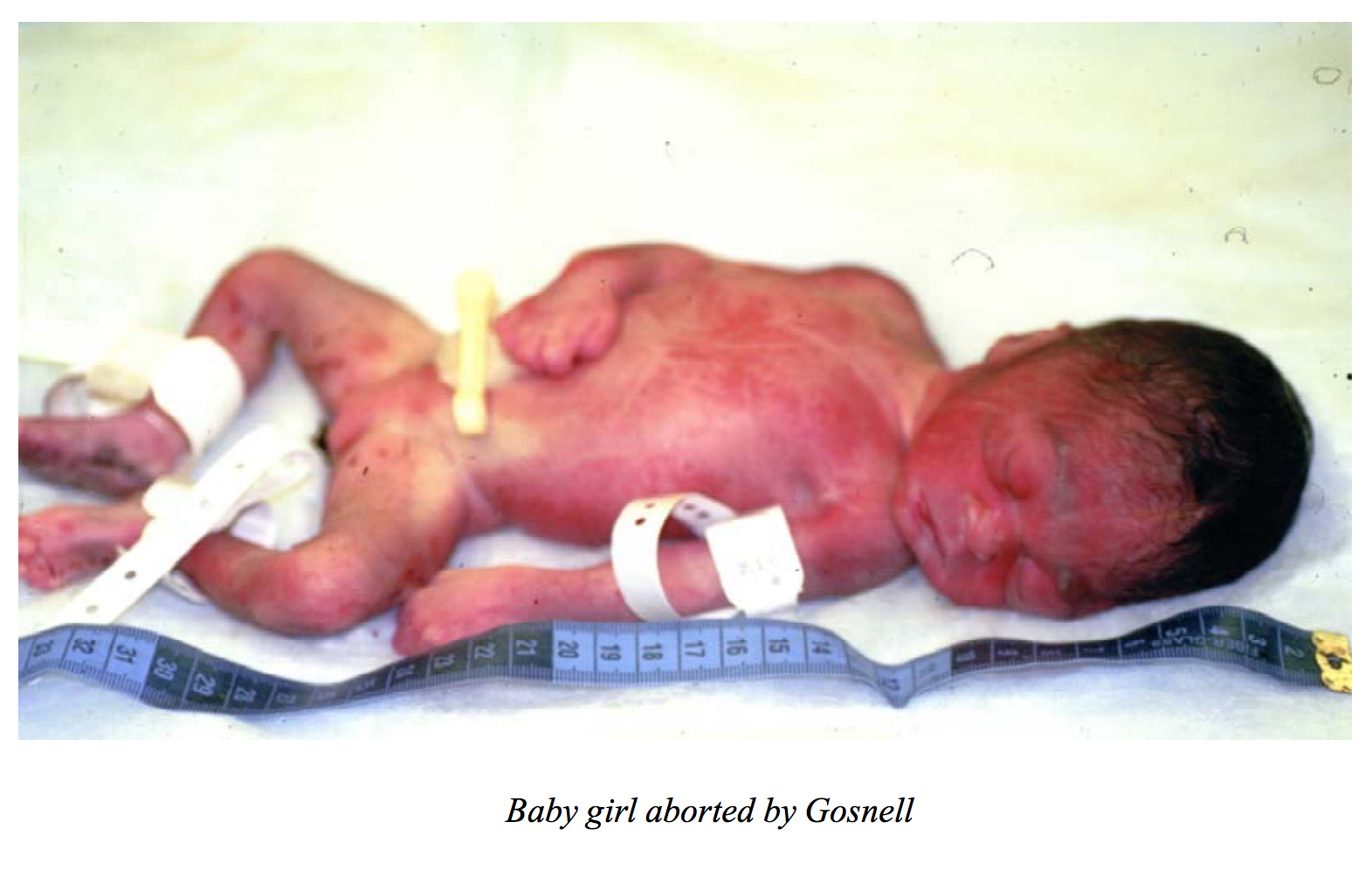
Conor’s piece is a must-read; and his examination of the Grand Jury report is what blog-journalism can do at its best. As Dish readers know, we ran a long thread on late-term abortion, but this case seems to me not about that issue as such. It is about how not to do it, rather than whether in some cases, it may be the least worst option available to a few tortured mothers. What this story is about is horrifying brutality, extreme incompetence, mass murder of innocents, and a complete, consistent and continuous failure of government oversight. That the details may have been buried by a free press because of squeamishness about portraying abortion in a bad light is worrying, to say the least.
(Image and caption from the Grand Jury Report (pdf))
“We don’t want to have a litmus test. Somebody who disagrees with me on my pro-traditional marriage stance can still be just as good as a Republican as I am. It’s just that simple,” – Haley Barbour.

 The Dish