A good way to see what the Netanyahu government wants you to believe is to read the Washington Post editorial page. Every now and again, however, the hacks screw up.
James West recalls Thatcher’s speech at the 1990 Second World Climate Conference:
[H]er speech laid out a simple conservative argument for taking environmental action: “It may be cheaper or more cost-effective to take action now,” she said, “than to wait and find we have to pay much more later.” Global warming was, she argued, “real enough for us to make changes and sacrifices, so that we do not live at the expense of future generations.”
The Iron Lady’s speech makes for fascinating reading in the context of 2013′s climate acrimony, drenched as it is in party politics. In the speech, she questioned the very meaning of human progress: Booming industrial advances since the Age of Enlightenment could no longer be sustained in the context of environmental damage. We must, she argued, redress the imbalance with nature wrought by development.
“Remember our duty to nature before it is too late,” she warned. “That duty is constant. It is never completed. It lives on as we breathe.”
David Frum reprints some of the speech as well. Thatcher cited the IPCC and her skepticism was not to be confused with the denialism now at large in America’s know-nothing rump:
The IPCC report is very honest about the margins of error. Climate change may be less than predicted. But equally it may occur more quickly than the present computer models suggest. Should this happen it would be doubly disastrous were we to shirk the challenge now. I see the adoption of these policies as a sort of premium on insurance against fire, flood or other disaster. It may be cheaper or more cost-effective to take action now than to wait and find we have to pay much more later.
While I’m at it, some other discomforting facts for today’s American right. Thatcher was a firm believer in international law – and opposed the US invasion of Grenada and Argentina’s invasion of the Falklands as a violation of that order. She was a strong supporter of nuclear deterrence and containment – as opposed to pre-emptive war. She wanted UN support for any intervention in Iraq, and inisted it be limited to restoration of the old borders. She cut taxes but, unlike the GOP under Reagan and the second Bush, she also cut spending seriously. She didn’t have any time for the loopy idea that cutting taxes would increase net revenues.
She inherited and handed over a fully socialized medical system, and, while tearing apart the government’s control of the economy, did not undo the welfare state in any profound way. “The National Health Service Is Safe With Us” was her constant refrain. Her policies on healthcare make Obama’s modest private sector-based reform look positively right-wing. She loathed Europe but signed the Maastricht Treaty, and deepened British ties to the Continent. She was the first Cold Warrior to respond to Gorbachev. In all this, she remains pragmatically alien to the current Southern-based GOP. And her undemonstrative Methodism was never worn on her sleeve.
Like Reagan, in other words, she could never be a contender in today’s GOP. She was far too conservative, in the proper sense of that word. She preferred order to revolution – and her own revolution was about the restoration of civic order, not its dissolution.
A new study published in the Proceedings of the National Academy of Sciences finds that after adjusting for demographic factors and underlying health, self-reported feelings of lonesomeness have no significant connection to mortality among the elderly, but actual social isolation increases the likelihood of death by a stunning 26 percent.
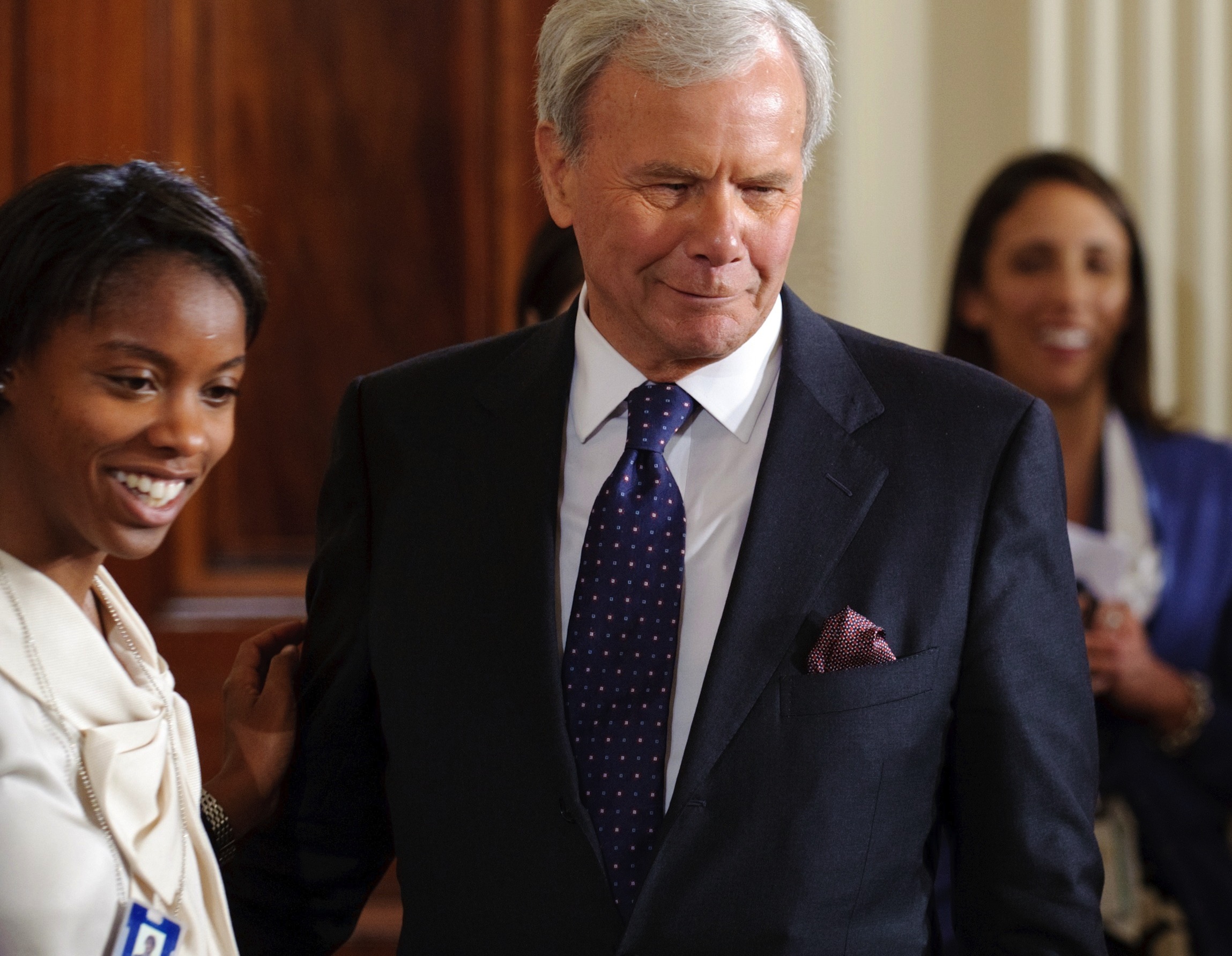
Alas, we live in a time of few princes, and nearly as few dandies. Prince Charles counts as both, and Antongiavanni makes a case study out of him more than once. He also draws lessons from the dress of American newscasters and presidents. “Brokaw is the most elegant,” he observes of the former group. “Rather’s clothes fit well, but he is so slavish in aping his hero Edward R. Murrow — even patronizing the same Savile Row tailor — that he cannot be said to have any style of his own.” President Johnson, envious of Kennedy, “sought out a London tailor whom he told to make him ‘look like a British diplomat.’” Of Carter, Antongiavanni writes only that “it is one thing to wear Hawaiian shirts in Key West or jeans and cowboy boots when splitting wood, and another to address the people from the Oval Office in a sweater.” …
Newscasters’ jobs demand deliberate dress, and our political leaders, whether elected or royal, act as media figures in essentially the same mode. David Letterman favors a versatile form of double-breasted jacket, but one that is “difficult to tailor, and thus no longer favored by the industry.” Alex Trebek also wears double-breasted jackets, yet “acquires his clothes through a promotional deal with a third-rate manufacturer.”
Other “eminent men, such as Kelsey Grammer, David Hyde Pierce, Jon Stewart and Matt Lauer, have shown that it is possible to dress fashionably without getting carried away.” Coming to Conan O’Brien’s lack of not just double-breasted jackets, but pocket squares, patterns, or even stripes, Antongiavanni remarks that “people expect those with more money, more fame, and more delightful jobs than themselves to be more stylish; and when they are not, they do not respect them, for they consider that so much opportunity to cut loose has been squandered.”
(Photo: NBC News special correspondent Tom Brokaw arrives for an event launching a ‘national initiative to support and honor Americaâs service members and their families’ April 12, 2011 in the East Room of the White House. By Mandel Ngan/AFP/Getty Images.)
Seth Stephens-Davidowitz estimates (pdf) that “racial animus in the United States appears to have cost Obama roughly four percentage points of the national popular vote in both 2008 and 2012.” Bouie wonders what this might mean for 2016:
If this is correct, and Obama underperformed by roughly four points in 2008 and 2012, then there’s a chance that the Democratic brand is stronger than we think. We’ll see in 2016, but a “threepeat” for the Democratic Party might be more likely than we think, given the potentially wider support for a white Democratic nominee for president.
As part of a larger look at the business strategy behind paperbacks, Nichole Bernier explains the logic behind new covers:
A look at a paperback’s redesign tells you a thing or two about the publisher’s mindset: namely, whether or not the house believes the book has reached its intended audience, and whether there’s another audience yet to reach. Beyond that, it’s anyone’s Rorschach. Hardcovers with muted illustrations morph into pop art, and vice versa. Geometric-patterned book covers are redesigned with nature imagery; nature imagery in hardcover becomes photography of women and children in the paperback. Meg Wolitzer, on a panel about the positioning of women authors at the recent AWP conference, drew knowing laughter for a reference to the ubiquitous covers with girls in a field or women in water. Whether or not publishers want to scream book club, they at least want to whisper it.
About the example seen above:
When Jenna Blum’s first novel, Those Who Save Us, came out in hardcover in 2004, Houghton Mifflin put train tracks and barbed wire on the cover. Gorgeous, haunting, and appropriate for a WWII novel, but not exactly “reader-friendly,” Blum recalls being told by one bookseller. The following year, the paperback cover — a girl in a bright red coat in front of a European bakery — telegraphed the novel’s Holocaust-era content without frightening readers away.
“The paperback cover helped save the book from the remainder bins, I suspect,” Blum says. Armed with her paperback, Jenna went everywhere she was invited, which ended up tallying more than 800 book clubs. Three years later, her book hit the New York Times bestseller list.
“Often the hardcover is the friends-and-family edition, because that’s who buys it, in addition to collectors,” she says. “It’s imperative that a paperback give the novel a second lease on life if the hardcover didn’t reach all its intended audience, and unless you are Gillian Flynn, it probably won’t.”
As the saying goes, the first step toward recovery is to acknowledge the problem.
The problem in 2012 — as in 2008, as in the near-death experience of 2004, as in the popular vote loss of 2000, as in the loss of 1996, as in the loss of 1992 — was the GOP’s failure to offer an economic program relevant to the problems of middle-class Americans. The party’s present three front-runners would not only repeat that failure, but double down on that failure.
The Republican Party desperately needs renewal, its early presidential front-runners are characterized by their rejection of change.
Relatedly, Jonathan Bernstein argues that the GOP is broken. One reason why:
Winning parties have a tendency to overlearn the lessons of their campaigns; winning candidates become role models for the party in the future. And the Republican Party, which has produced many impressive and honorable politicians over the years, has been unlucky in its winners — especially Richard Nixon and Newt Gingrich, but also in many ways Ronald Reagan. The lessons they learned from those politicians and from the 1968, 1980 and 1994 victories have reinforced the worst instincts of party actors (even though the victories actually mainly had to do with economic and other fundamentals that had nothing to do with the lessons “learned”).
Paul Collins surveys the history of animals for hire. One of the more disturbing examples:
During the Second World War, the Soviet Union resorted to training dogs to wear explosives that would detonate when they ran up to German tanks. It is unclear whether the “anti-tank dog” program succeeded, except perhaps at being horrifying. But that disgust is instructive: animals are killed all the time in war, yet we cringe at sending one to obliterate itself, oblivious to any understanding or possibility of consent. We cannot help but view it as creatures who do understand the motive and causation of a suicide vest.
According to Wikipedia, the Soviet suicide-dog program was extremely ineffective:
In the field, the dogs refused to dive under moving tanks. Some persistent dogs ran near the tanks, waiting for them to stop but were shot in the process. Gunfire from the tanks scared away many of the dogs. They would run back to the trenches and often detonated the charge upon jumping in, killing Soviet soldiers. To prevent that, the returning dogs had to be shot, often by their controllers and this made the trainers unwilling to work with new dogs. …
Out of the first group of 30 dogs, only four managed to detonate their bombs near the German tanks, inflicting an unknown amount of damage. Six exploded upon returning to the Soviet trenches, killing and injuring soldiers. Three dogs were shot by German troops and taken away, despite furious attempts by the Soviets to prevent this, which provided examples of the detonation mechanism to the Germans. A captured German officer later reported that they learned of the anti-tank dog design from the killed animals, and considered the program desperate and inefficient. A German propaganda campaign sought to discredit the Soviet Army, saying that Soviet soldiers refuse to fight and send dogs instead.
One a related note, last fall This American Life featured US military dogs on the front-lines of WWII.
(Video: What appears to be a Soviet propaganda film about the anti-tank dogs)
Cynthia Haven dug up a 1996 David Foster Wallace review of the first four volumes of Joseph Frank’s behemoth biography of the Russian author. An excerpt:
[Dostoevsky’s] concern was always what it is to be a human being – i.e., how a person, in the particular social and philosophical circumstances of 19th-century Russia, could be a real human being, a person whose life was informed by love and values and principles, instead of being just a very shrewd species of self-preserving animal. …
So, for me anyway, what makes Dostoevsky invaluable is that he possessed a passion, conviction, and engagement with deep moral issues that we, here, today, cannot or do not allow ourselves. And on finishing Frank’s books, I think any serious American reader/writer will find himself driven to think hard about what exactly it is that makes so many of the novelists of our own time look so thematically shallow and lightweight, so impoverished in comparison to Gogol, Dostoevsky, even lesser lights like Lermontov and Turgenev. To inquire of ourselves why we – under our own nihilistic spell – seem to require of our writers an ironic distance from deep convictions or desperate questions, so that contemporary writers have to either make jokes of profound issues or else try somehow to work them in under cover of some formal trick like intertextual quotation or juxtaposition, sticking them inside asterisks as part of some surreal, defamiliarization-of-the-reading-experience flourish.
Update from a reader:
Just wanted to let you know that Cynthia Haven didn’t “dig up” DFW’s review of Joseph Frank’s biography of Dostoevsky. It’s in his book of essays, Consider the Lobster.
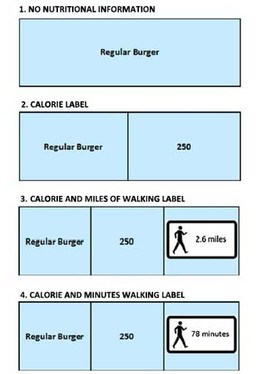
Increasingly, researchers are showing there’s a better way than just calorie postings to encourage eaters to make healthier decisions: by informing consumers how much exercise it would take to burn a meal off.
A study by researchers at UNC’s medical school, published in the journal Appetite, showed the kind of choices people make when randomly presented with different types of menus with differing levels of nutritional information: one with no nutritional info, one with calorie info, one with calories plus the minutes of walking required to burn the calories, and a fourth with calories plus the distance required to burn off the calories.
“People who viewed the menu without nutritional information ordered a meal totaling 1,020 calories, on average, significantly more than the average 826 calories ordered by those who viewed menus that included information about walking-distance,” writesScientific American.

healthier decisions: by informing consumers how much exercise it would take to burn a meal off.
 The Dish