All considered –after resignation, retirement, primary losses and general election losses – Basinger’s data show that 60 percent of scandal-tainted incumbents ultimately find themselves back in Congress.
Not all scandals are created equal, of course. They vary in scope and importance, as well as the amount of attention they receive. A widely publicized scandal about clear financial or criminal wrongdoing likely will be more difficult for an incumbent to overcome than an obscure technical violation involving Federal Election Commission paperwork.
But the overall patterns suggest that American voters are a fairly forgiving, or at least forgetful, people.
Month: April 2013
Thatcher, Liberator
[Re-posted from earlier today.]
I remember reading an article in the Washington Monthly back in the late 1980s by one of the smugger liberal British columnists, Polly Toynbee. It captured part of the true derangement that Margaret Thatcher brought out in her political foes. It was called simply: “Is Margaret Thatcher A Woman?” It’s still online. It was a vicious attack on her having any feminist credentials. It included this magnificent lie:
She has experienced nothing but advantage from her gender.
Toynbee’s case is worth hearing out, but it’s an instant classic of the worst British trait: resentment of others’ success. No culture I know of is more brutally unkind to its public figures, hateful toward anyone with a degree of success or money, or more willing to ascribe an individual’s achievements to something other than their own ability. The Britain I grew up with was, in this specific sense, profoundly leftist in the worst sense. It was cheap and greedy and yet hostile to anyone with initiative, self-esteem, and the ability to make money.
The clip below captures the left-liberal sentiment of the time perfectly. Yes: the British left would prefer to keep everyone poorer if it meant preventing a few getting richer. And the massively powerful trade union movement worked every day to ensure that mediocrity was protected, individual achievement erased, and that all decisions were made collectively, i.e. with their veto. And so – to take the archetypal example – Britain’s coal-workers fought to make sure they could work unprofitable mines for years of literally lung-destroying existence and to pass it on to their sons for yet another generation of black lung. This “right to work” was actually paid for by anyone able to make a living in a country where socialism had effectively choked off all viable avenues for prosperity. And if you suggested that the 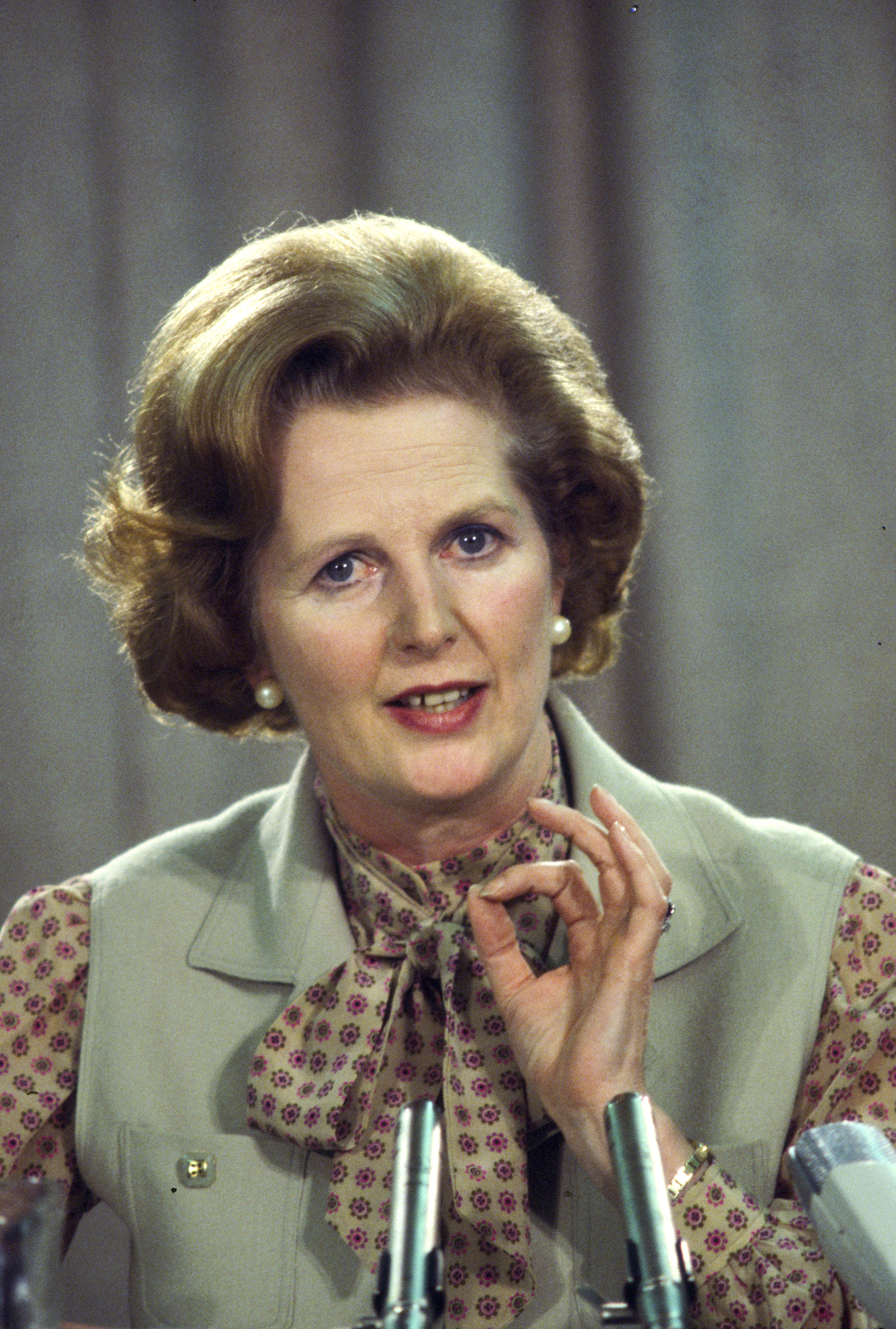 coal industry needed to be shut down in large part or reshaped into something commercial, you were called, of course, a class warrior, a snob, a Tory fascist, etc. So hard-working Brits trying to make a middle class living were taxed dry to keep the life-spans of powerful mine-workers short.
To put it bluntly: The Britain I grew up in was insane. The government owned almost all major manufacturing, from coal to steel to automobiles. Owned. It employed almost every doctor and owned almost every hospital. Almost every university and elementary and high school was government-run. And in the 1970s, you could not help but realize as a young Brit, that you were living in a decaying museum – some horrifying mixture of Eastern European grimness surrounded by the sculptured bric-a-brac of statues and buildings and edifices that spoke of an empire on which the sun had once never set. Now, in contrast, we lived on the dark side of the moon and it was made up of damp, slowly degrading concrete.
I owe my entire political obsession to the one person in British politics who refused to accept this state of affairs. You can read elsewhere the weighing of her legacy – but she definitively ended a truly poisonous, envious, inert period in Britain’s history. She divided the country deeply – and still does. She divided her opponents even more deeply, which was how she kept winning elections. She made some serious mistakes – the poll tax, opposition to German unification, insisting that Nelson Mandela was a terrorist – but few doubt she altered her country permanently, re-establishing the core basics of a free society and a free economy that Britain had intellectually bequeathed to the world and yet somehow lost in its own class-ridden, envy-choked socialist detour to immiseration.
I was a teenage Thatcherite, an uber-politics nerd who loved her for her utter lack of apology for who she was. I sensed in her, as others did, a final rebuke to the collectivist, egalitarian oppression of the individual produced by socialism and the stultifying privileges and caste identities of the class system. And part of that identity – the part no one ever truly gave her credit for – was her gender. She came from a small grocer’s shop in a northern town and went on to educate herself in chemistry at Oxford, and then law. To put it mildly, those were not traditional decisions for a young woman with few means in the 1950s. She married a smart businessman, reared two children and forged a political career from scratch in the most male-dominated institution imaginable: the Tory party.
She relished this individualist feminism and wielded it – coining a new and very transitive verb, handbagging, to describe her evisceration of ill-prepared ministers or clueless interviewers. Perhaps in Toynbee’s defense, Thatcher was not a feminist in the left-liberal sense: she never truly reflected on her pioneering role as a female leader; she never appointed a single other woman to her cabinet over eleven years; she was contemptuous toward identity politics; and the only tears she ever deployed (unlike Hillary Clinton) were as she departed from office, ousted by an internal coup, undefeated in any election she had ever run in as party leader.
Indira Gandhi and Golda Meir preceded her; but Thatcher’s three election victories, the longest prime ministership since the 1820s, her alliance with the US in defeating the Soviet Union, and her liberation of the British economy place her above their achievements. What inspires me still is the thought of a young woman in a chemistry lab at Oxford daring to believe that she could one day be prime minister – and not just any prime minister, but the defining public figure in British post-war political history.
That took vision and self-confidence of a quite extraordinary degree. It was infectious. And it made Thatcher and Thatcherism a much more complicated thing than many analyses contain.
Thatcher’s economic liberalization came to culturally transform Britain. Women were empowered by new opportunities; immigrants, especially from South Asia, became engineers of growth; millions owned homes for the first time; the media broke free from union chains and fractured and multiplied in subversive and dynamic ways. Her very draconian posture provoked a punk radicalism in the popular culture that changed a generation. The seeds of today’s multicultural, global London – epitomized by that Olympic ceremony – were sown by Thatcher’s will-power.
And that was why she ultimately failed, as every politician always ultimately does. She wanted to return Britain to the tradition of her thrifty, traditional father; instead she turned it into a country for the likes of her son, a wayward, money-making opportunist. The ripple effect of new money, a new middle class, a new individualism meant that Blair’s re-branded Britain – cool Britannia, with its rave subculture, its fashionistas, its new cuisine, its gay explosion, its street-art, its pop music – was in fact something Blair inherited from Thatcher.
She was, in that sense, a liberator. She didn’t constantly (or even ever) argue for women’s equality; she just lived it. She didn’t just usher in greater economic freedom; she unwittingly brought with it cultural transformation – because there is nothing more culturally disruptive than individualism and capitalism. Her 1940s values never re-took: the Brits engaged in spending and borrowing binges long after she had left the scene, and what last vestiges of prudery were left in the dust.
Perhaps in future years, her legacy might be better seen as a last, sane defense of the nation-state as the least worst political unit in human civilization. Her deep suspicion of the European project was rooted in memories of the Blitz, but it was also prescient and wise. Without her, it is doubtful the British would have kept their currency and their independence. They would have German financiers going over the budget in Whitehall by now, as they are in Greece and Portugal and Cyprus. She did not therefore only resuscitate economic freedom in Britain, she kept Britain itself free as an independent nation. Neither achievement was inevitable; in fact, each was a function of a single woman’s will-power. To have achieved both makes her easily the greatest 20th century prime minister after Churchill.
He saved Britain from darkness; she finally saw the lights come back on. And like Churchill, it’s hard to imagine any other figure quite having the character, the will-power and the grit to have pulled it off.
(Photo: Prime Minister Margaret Thatcher speaks at a political conference during the early 1980s in London, England. By Tim Graham/Getty Images)
The Daily Wrap
Today on the Dish, Andrew returned from vacation to reflect at length on the death of his hero and idol Margaret Thatcher. He measured the scorn of her enemies, contemplated the fruits of her legacy, and praised the strength and savvy that made her the first woman to become Prime Minister. Also, readers asked Andrew if he regrets his attacks on leftists over Iraq. On an even more personal note, he eulogized as his dear friend David Kuo who died last week.
Meanwhile, we rounded up reax to the death of Lady Thatcher, as well as a batch of her one-liners. On the home front we gathered analysis on Obama’s new budget proposal while the administration’s FDA scored a win in the contraception battles, and Josh Marshall suspected that money talks in the struggle for marriage equality. And on the foreign beat, Osnos parsed China’s stance on North Korea as Pat Buchanan gritted his teeth at America’s presence over the border.
In miscellanea, we let more readers ask Rod Dreher anything, considered whether the advantages of a college degree are shrinking and tallied up the lives saved by nuclear plants. Readers caught up with the debate over randier sex and learned that sometimes in space, no one can see you cry. Owen King pondered book titles that might have been, Nathan Bransford expected books to end up over our eyelids and we browsed the prints left on Americans over the years. Brian Jay Stanley took on a new dimension of life in fatherhood as we imagined what it would mean to lose a twin and surveyed the punishment of deserters throughout history.
We explored the history of verminous myth, got real about CPR, came across a spoiler firewall, and considered whether stupid is as stupid says. We peered out at Tokyo, Japan for the VFYW, spent a moment with a few fans at Fenway in the Face of the Day, and slow-jammed alongside snails in the MHB.
–B.J.
Nailed By Love
After the recent birth of his daughter, Brian Jay Stanley distills a touching truth about vulnerability:
How can I be dependent on a being who, six months ago, did not exist? I did not need her when I did not have her. But she has entered my life as a nail enters a block of wood, simultaneously creating a hole and filling it. Remove the nail, and the hole remains. Love completes unhappy people, but uncompletes happy people, because love means we can no longer be happy alone.
A Cathedral Of Air

Christopher Jobson is awed by Big Air Package, seen above, the latest project from the artist Christo:
Big Air Package is the largest ever inflated envelope without aid of a skeleton (Gasometer Oberhausen bills it as “the largest indoor sculpture in history”) and reaches 90 meters high, with a diameter of 50 meters and a volume of 177,000 cubic meters. The work was conceived in 2010 and is Christo’s first major work after the passing of his wife and artistic partner Jeanne-Claude in 2009. … Christo says that “when experienced from the inside, that space is almost like a 90-meter-high cathedral,” which is easy to see just looking at these incredible images.
Arno Frank spoke to the 77-year-old artist about wrapping up the final projects he started with his wife:
“Everything that exists must disappear. Now, our art is something that basically cannot be owned, cannot be purchased, cannot be kept. It is ephemeral, and therefore it is free — and it is beautiful.” Is that all it is, just beauty? Christo furrows his brow, as if not understanding the question. No, nothing more. What should it be? Then he smiles indulgently and says with a shrug: “Now it is there. Soon it will be gone.” And that’s all.
(Big Air Package, Gasometer Oberhausen, Germany, 2010-13. By Christo. Photo: Wolfgang Volz © 2013 Christo)
Inked In America

In 2012, tattooed women outnumbered tattooed men for the first time in US history. Steven Heller reviews the recently re-released Bodies of Subversion: A Secret History of Women and the Tattoo by Margot Mifflin:
In the early 20th century, tattoos were stigmatized (even illegal in some jurisdictions) because of their association with raunchy male imagery. Middle-class women who were tattooed knew they would be considered “loose” or seedy if they showed their marks. By the ’60s and ’70s, tattooing became more directly linked to the counterculture, and remained so until the 2000s. Now tattoos are not as subversive or associated with “bad” women—instead, they have become fashion accessories of the most indelible kind.
Although “not all tattooed women were considered freaks—tattooed society women wore discreet decorative tattoos, which were trendy in the late 19th century, first in London, then in New York,” heavily inked women were considered “a violation of nature.” Something similar could be said for men, but women were decidedly less accepted because “they were more explicitly associated with nature through motherhood and female intuition and other feminine intangibles that disqualified them from having much influence in culture.” The circus and carnival freak-show ladies were also guilty of transgression because they showed bare skin in public.
Regarding the woman seen above:
Mifflin refers in her book to Olive Oatman, “a tragically bicultural American” who was orphaned after her family was killed by Southwest Indians in the 1850s, then adopted and raised by Mohave Indians who gave her a chin tattoo as a mark of tribal acceptance. After she was ransomed back to the whites at age 19, she was stranded between the two cultures and the tattoo marked her as a Mohave and functioned as a kind of ethnic barrier. “It’s somehow fitting,” Mifflin said, “In light of our colonial past and our multicultural present, that the first American tattooed woman was a white Indian. She literally embodied the two cultures on which the country was founded.”
Check out more images from the new edition here.
Face Of The Day

Matt McClelland, of Warwick, R.I., left; and Keith Couto, of Rumford, R.I.; dig in to Kayem Italian sausages before the game. They have been season-ticket holders for 14 years and the sausages are a tradition. ‘We’ve been looking forward to sausage sandwiches and beers all morning!’ said Couto. Red Sox fans crammed into Yawkey Way in front of Fenway Park before the start of the Red Sox home opener against the Baltimore Orioles. By Dina Rudick/The Boston Globe via Getty Images.
Spoiler Protection
A cool new example:
The fansite Tower of the Hand has developed a unique, and uniquely user-friendly, approach to spoilers: a “scope” system in which readers select the point they’ve reached in the series (book or show) using a toggle bar that hides or reveals information in the article they’re visiting according to their selection. By tagging different sections of each article according to the corresponding source material—”Book 1,” “Book 2,” and so on—site co-founders John Jasmin and Alex Smith are able to customize their reference materials, reviews, and essays to the needs of each individual reader.
Crying In Space
Trickier than you think:
A Win For Emergency Contraception
Last Friday a judge ruled that the morning-after pill must be provided over the counter to women of all ages, a policy that the Obama administration’s FDA has fought. Scott Lemieux explains the case:
The opinion by Reagan-appointed District Court judge Edward Korman … makes a compelling legal case that the override of the FDA was illegal. The crucial factor underlying Korman’s opinion is the question of whether the executive branch followed the appropriate procedures. Congress, for better or worse, has the broad authority to regulate the availability of drugs. If it chose to ignore the scienitific evidence and perversely choose policy goals that would make unwanted teen pregancies more common, it is probably free to do so. The executive branch, however, does not have the same discretion to make policy choices in this case. As Korman notes, under longstanding precedent “an irrational departure” from established agency procedures may be subject to overturning as being “arbitrary and capricious.” The power to make the relevant policies were delegated by Congress to the FDA, and the scienitific judgments of the professionals at the FDA can be overriden by the political appointees of the executive branch only on scienitific grounds.
Amanda Hess adds her two cents:
Reproductive health has always been a point of political posturing. But one of the more interesting lessons of the 14-year fight over Plan B is how seamlessly political obstruction translated from a conservative administration to an ostensibly progressive one—President Bush’s move appealed to his base, and President Obama’s move appealed to Bush’s base, too. By the time [National Women’s Liberation] filed this latest suit—and won—Obama was already cleared for another four years. Within a month, the United States will finally offer medicine to women and girls because it makes medical sense.
 The Dish