It’s very common:
In certain situations, the data show, more people are killed trying to rescue others than are killed in the initial accident. The Occupational Safety and Health Administration recently examined reports for fatal, confined-space accidents and found that when multiple deaths occurred, the majority of the victims were rescuers. The National Institute for Occupational Safety and Health previously reported that rescuers account for more than 60 percent of confined-space fatalities.
OSHA defines confined spaces as those with limited or restricted entrances or exits, places that are not designed for continuous occupancy. They include, for instance, underground vaults, tanks, storage bins, manholes, pits, silos, and pipelines.
Meanwhile, Dan Hopkins examines the political consequences of disasters. Bottom line:
We reward spending to respond to disasters by backing incumbents more strongly, but we shrug when it comes to spending to get us ready for a disaster down the road. [Researchers Andrew Healy and Neil Malhotra] also estimate that a dollar spent on disaster preparedness reduces subsequent damage by $15, making such investments highly cost-effective.
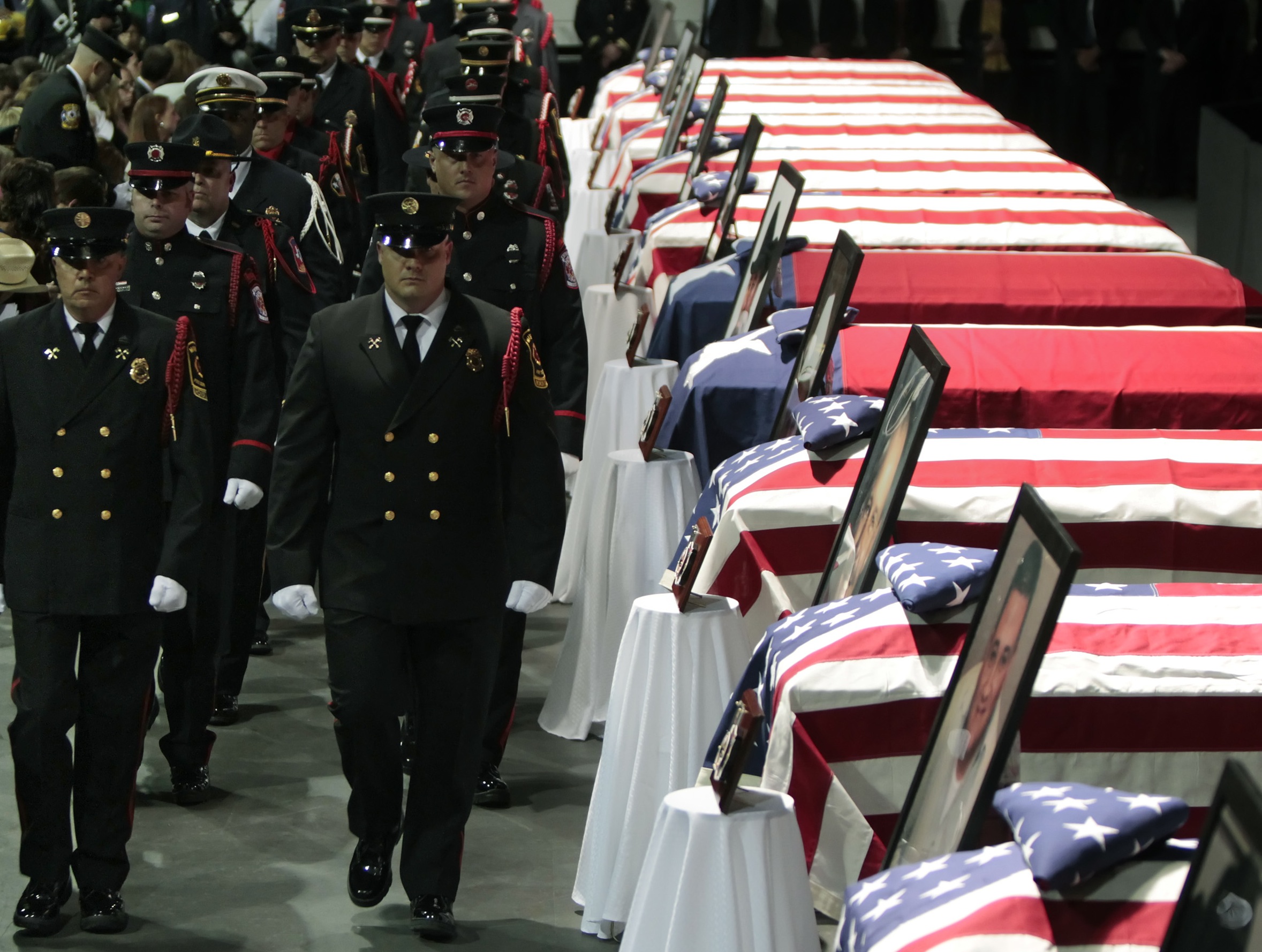
(Photo: A firefighter honor guard marches past the caskets of the 12 fallen volunteer firefighters at the West memorial service held at Baylor University in Waco, Texas on April 25, 2013. The memorial service honored the volunteer firefighters that lost their lives at the fertilizer plant explosion in West, Texas. By Erich Schlegel/Getty Images)
 The Dish