Where’s The Ceiling On Clean Energy?

Village Relies Only On Alternative Energy Sources

Peter Bronski takes on skeptics who question the possibility of “high renewable” energy future:

Such skeptics often point to a number of familiar criticisms: that high penetrations of renewables are not possible; that such a future requires major technological innovation; that it requires unreasonable amounts of energy storage to balance variable wind and solar; that it requires massive build-out of transmission infrastructure, biomass generation capacity, large-scale hydro, or all of the above; that it requires major investment that simply isn’t there; that it is uncompetitively costly (at least without large subsidies); that variable renewables will undermine the reliability of grid power. Couple such skepticism with IEA’s recent report noting that renewables have yet to make a serious dent in the carbon intensity of the global energy system—on which fossil fuels seem to have a strangle hold—and it’d be easy to side with the skeptics, but they are wrong.

Renewables’ track record shows that they continue to outpace skeptics’ expectations.

“People thought that maybe renewables would get to two percent. When they did that, people said maybe five percent. Then 10 percent,” says Hutch Hutchinson, managing director at [the Rocky Mountain Institute]. “Renewables have been fighting and scratching the entire way. Now, there’s good analytical evidence that with some creativity and customary levels of reinvestment in our energy system, we can get to a high renewables future.”

Bronski insists that the energy industry needs to change its mindset:

“Renewable energy futures are no longer a matter of technology—we have all the technologies we need—and are no longer a matter of economics either,” says REN21’s [Eric] Martinot. “We’re just not making the cost comparisons in the right way. It’s our way of thinking and our power industry structure that makes renewable energy seem more expensive, not the technology itself.” That power industry structure includes hefty and durable fossil fuel subsidies, which amount to $1.9 trillion per year or more, according to a report from the International Monetary Fund earlier this year. Those fossil fuel subsidies far outweighed the smaller and more transient subsidies offered to renewables, according to the International Energy Agency’s World Energy Outlook 2012.

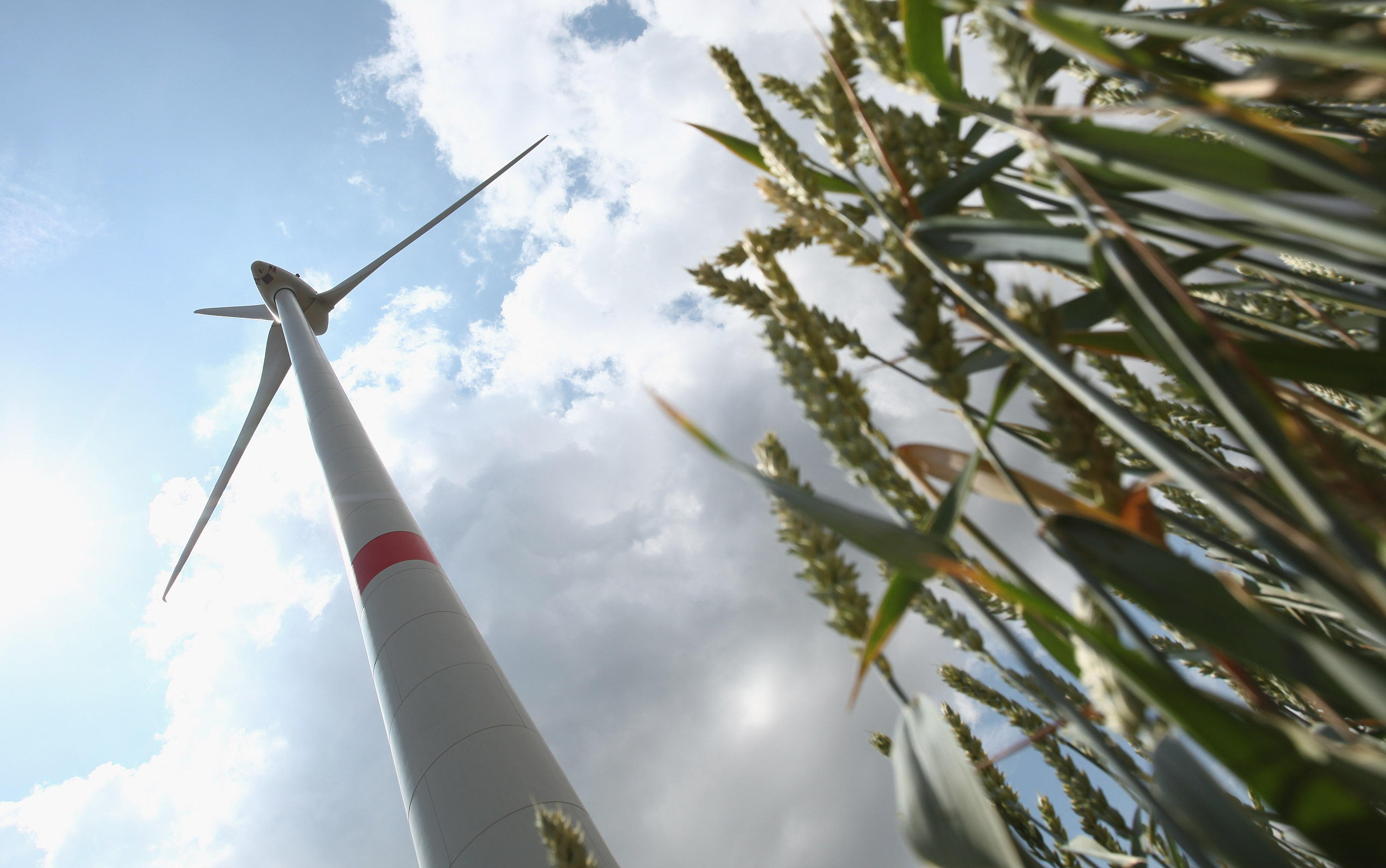
(Photo: A 2 MW wind turbine of German alternative energy producer Energiequelle GmbH spins in a field of wheat on June 20, 2011 near Feldheim, Germany. The country is investing heavily in renewable energy sources as part of its plan to abandown nuclear energy by 2022. By Sean Gallup/Getty Images.)
Does Immigration Need To Be Offset?

Ron Unz thinks that “principled liberals and conservatives should both demand that any immigration reform proposal also include a sharp rise in the federal minimum wage”:

The reason is simple. Any increase in the supply or job mobility of willing workers will tend to benefit Capital at the expense of Labor, stifling any growth in working-class wages, especially given our high unemployment rates. The last 40 years have seen a huge increase in immigration, and it is hardly coincidental that median American wages have been stagnant or declining throughout most of this same period. A large boost in the minimum wage, perhaps to $12 an hour or more, would be the best means of reversing our current economic race to the bottom.

Cowen, on the other hand, doesn’t see unskilled immigration as threat:

In my view the evidence (and here) suggests that the negative wage pressures on unskilled labor, to the extent they have international origins at all (as opposed to TGS or automation or political factors), come more from outsourcing and trade than from immigration.  So if you limit low-skilled immigration, outsourcing likely will go up, as it would be harder to find cheap labor in the United States.  The United States will lose the complementary jobs as well, such as the truck driver who brings cafeteria snacks to the call center.  Conversely, if you increase low-skilled immigration, you will also get more investment in the United States and more complementary jobs as well and possibly some increasing returns from clustering and maybe more net tax revenue too.  On top of that the individuals themselves have greater choice as to where to spend their lives and build their careers.

Bringing A Super PAC To A Gun Fight

Michael Bloomberg is targeting Democrats who voted against gun control:

Senate Democrats up and down the caucus, from West Virginia’s Joe Manchin to Majority leader Harry Reid of Nevada, have been trying to warn Bloomberg off his strategy of running ads that attack vulnerable Democrats over gun control votes. And it’s not because they disagree with what Bloomberg is after—a new law to require background checks for guns bought online or at gun shows. Rather, they think keeping the Senate in Democratic hands in 2014 is more important than any single Senator’s vote on guns.

How Alec MacGillis understands Bloomberg’s actions:

What Bloomberg has embarked upon now is nothing less than the construction of a mirror image to the NRA. There is plenty of latent public support for gun control, his logic goes, but politicians only see a risk in voting for it. He wants to reverse that calculation.

To that end, Bloomberg created a Super PAC, Independence USA. In 2012, it spent $10 million on ads supporting pro-gun-control candidates running against NRA-friendly opponents in districts where polling suggested such a stance should be a liability. This investment was credited with unseating Democratic Representative Joe Baca of California. In the past year, Mayors Against Illegal Guns, which now has 975 mayors, has expanded from 15 paid staff to more than 50, with lobbyists in Washington and field organizers around the country who will likely be deployed to states with legislative fights looming. The organization is also developing its own candidate rating system.

Above all, Bloomberg is planning to hit the airwaves on a scale Washington has not fully grasped. “He described his effort last year as putting his toe in the water,” says Wolfson. Bloomberg plans to spend heavily in the 2014 midterms to support Louisiana’s Mary Landrieu and North Carolina’s Hagan, both of whom voted for background checks.11 And he plans to spend very heavily against the Democrats up for reelection who voted against the bill—Alaska’s Mark Begich and Arkansas’s Mark Pryor.

Obamacare Can Work? Ctd

Despite the recent announcement of low premiums for Californians under Obamacare, Sarah Kliff isn’t celebrating yet:

California’s health-care marketplace isn’t like those being set up elsewhere in the country. When California created the country’s first-ever health insurance exchange, way back in November 2010, it made a very significant policy decision. The state decided that it would act as an “active purchaser” that would select a small number of health plans allowed to sell on the California exchange. Health plans would have to do more than meet a set of requirements in the Affordable Care Act. They would need to be selected by the California exchange’s board to compete in the marketplace. …

In an active purchaser exchange, health plans know that they’re competing against others for the chance to access millions of customers with tax subsidies. That could easily effect the bids that they submit, the ones they hope will get them into the new marketplace. That’s the dynamic in California, but not in most other states. That makes it a bit difficult to generalize what the state’s insurance rates say about what will happen elsewhere, where this downward pressure doesn’t exist.

Lanhee Chen, Romney’s former policy director, argues that the California’s rates aren’t as favorable as they first appear:

The only way Covered California’s experts arrive at their conclusion [that individual health insurance premiums in 2014 may be less than they are today] is to compare apples to oranges — that is, comparing next year’s individual premiums to this year’s small employer premiums.

They’re making this particular comparison, they explain, because they believe that the marketplace for individually purchased insurance will look like the marketplace for small employer-purchased insurance next year. For example, the state already requires insurers to issue policies to all comers in the small employer market. Premiums are therefore higher today for small employers than for individuals purchasing coverage on their own.

What this means, however, is that Covered California is creating for itself a very favorable and already higher baseline from which to compare next year’s individual health insurance premiums. That’s how they’re able to create the appearance that Obamacare’s reforms will lower individual premiums.

Meanwhile, Yglesias thinks Obamacare’s Cadillac tax on high-cost healthcare plans is beginning to pay off:

Conservative ACA critics in their scorched earth campaign against Obamacare have been insisting that this, like every promising cost-control measure in the law, is doomed to failure and/or will never be implemented. The story today about actual employer and insurer response to the Cadillac tax indicates that, no, it is beginning to have an impact. Note that this is not the first piece of good news about health care spending aggregates, and that by and large we should expect the press’ understandable and inevitable negativity bias to underestimate Obamacare.

Cohn argues that this is a tax conservatives should support. Previous Dish on California’s low ACA premiums here and here.

The View From Your Weirder Windows

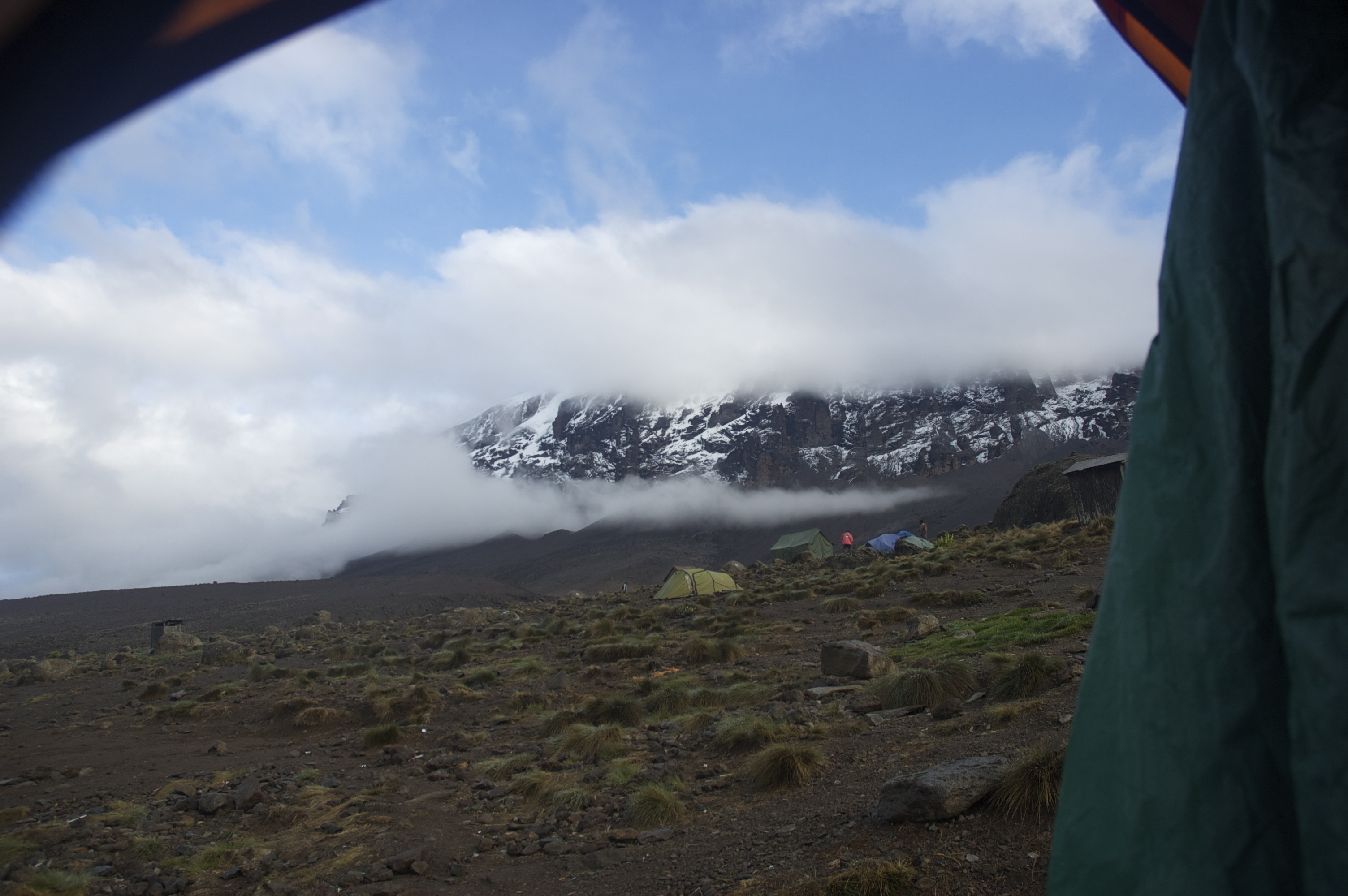
Karanga Campsite, Machame Route, Kilimanjaro, Tanzania

Karanga Campsite, Machame Route, Kilimanjaro, Tanzania

OLYMPUS DIGITAL CAMERA

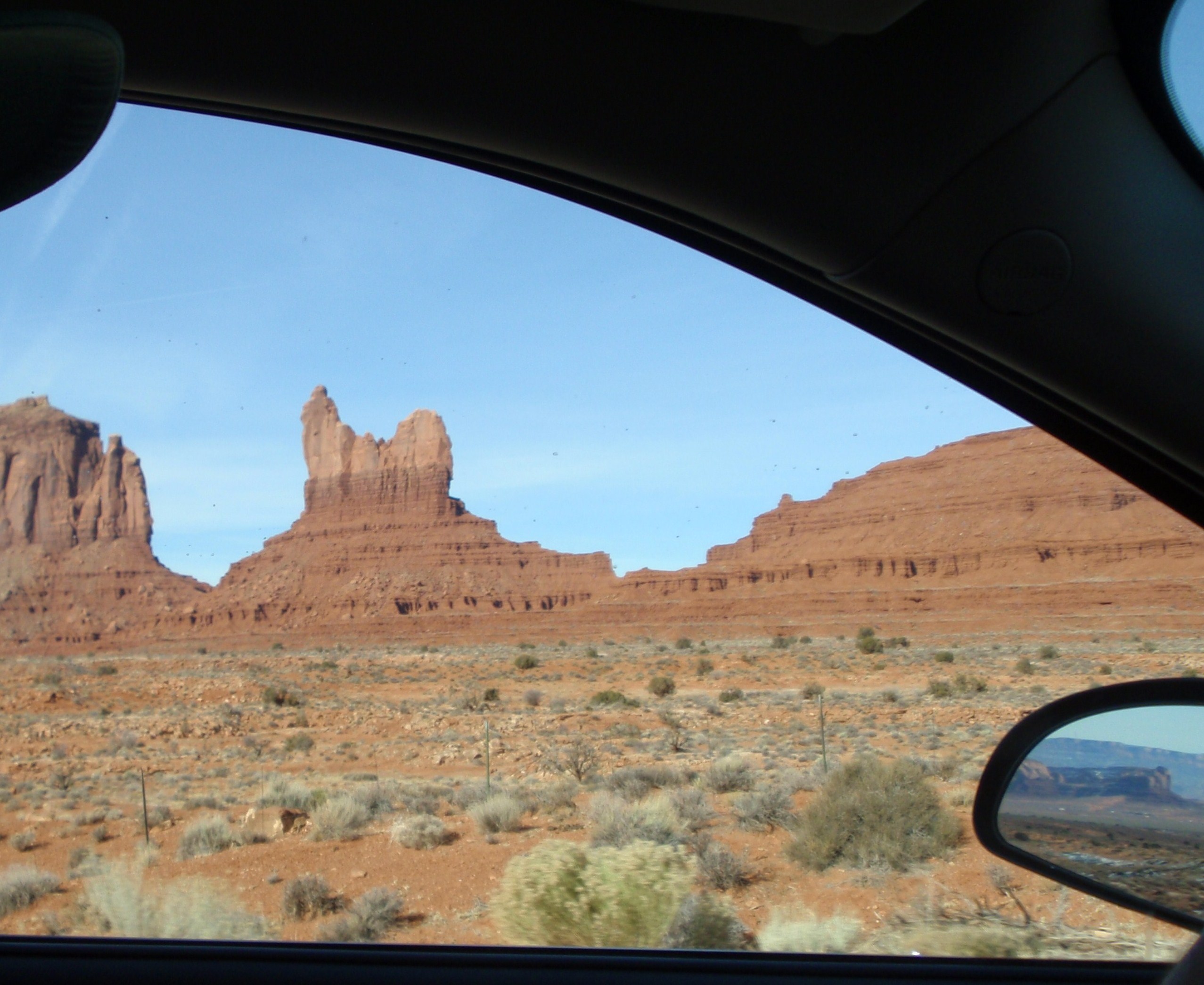
Monument Valley, on the Utah-Arizona state line

RichmondKy13113930am

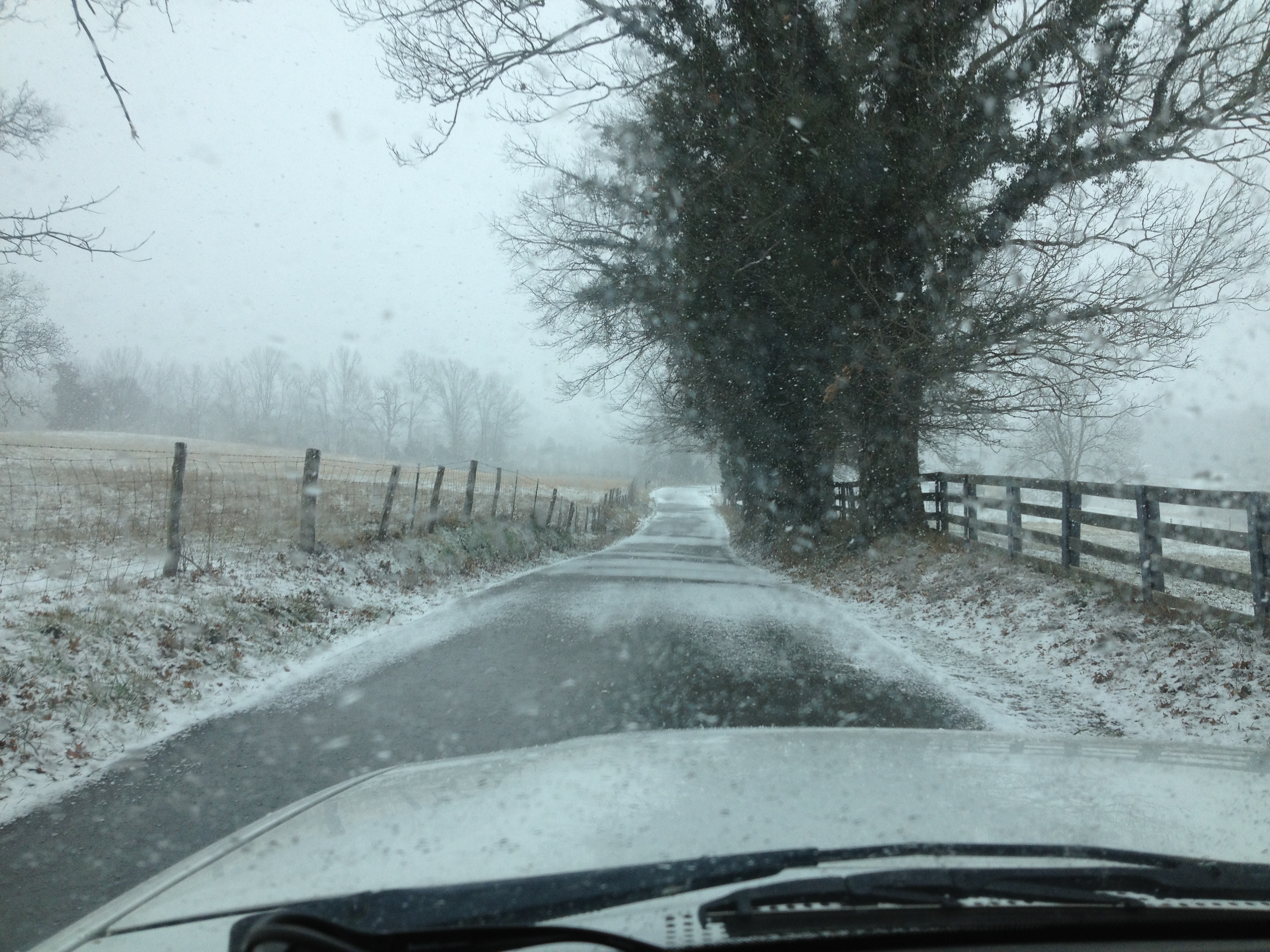
Richmond, Kentucky, 9.30 am

DSC_4015

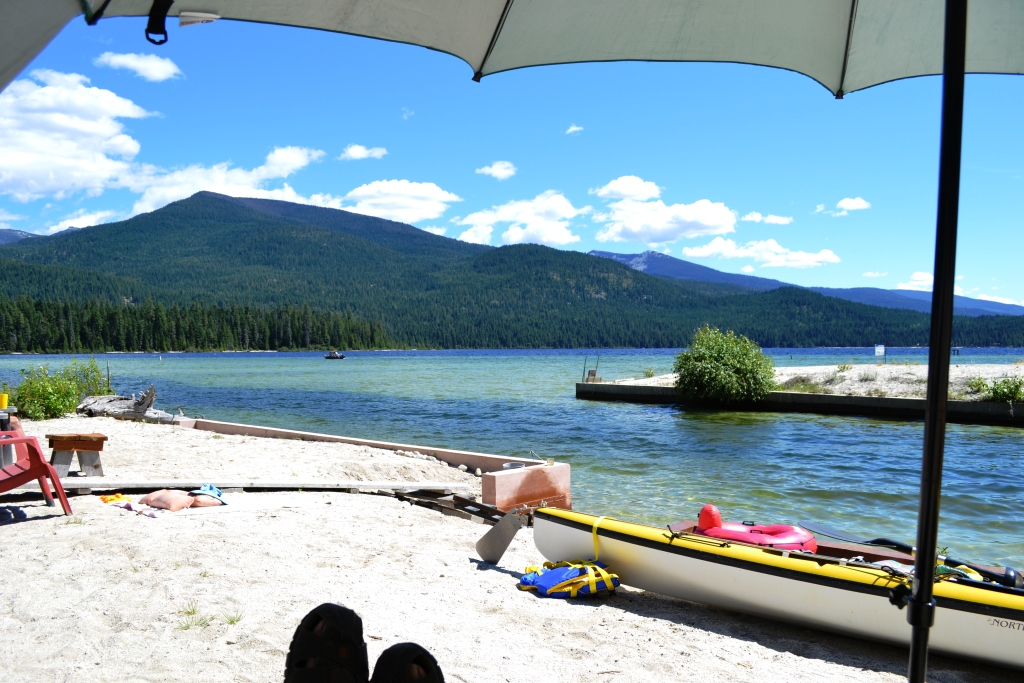
Priest Lake, Idaho, 12 pm

IMG_20120919_071155

“Istanbul, from the morning ferry to Bandimir”

IMG_1464

Off the coast of Nigeria, 6.45 pm

Previous installment here.

Caring For Concision

Lydia Davis, famed for writing stories as short as a few words, has won this year’s Man Booker International Prize. Adam Sherwin offers some examples of Davis’ works:

Index Entry

Christian, I’m not a

Getting to Know Your Body

If your eyeballs move, this means that you’re thinking, or about to start thinking.

If you don’t want to be thinking at this particular moment, try to keep your eyeballs still.

The Outing

An outburst of anger near the road, a refusal to speak on the path, a silence in the pine woods, a silence across the old railroad bridge, an attempt to be friendly in the water, a refusal to end the argument on the flat stones, a cry of anger on the steep bank of dirt, a weeping among the bushes.

All taken from The Collected Stores of Lydia Davis, published by Penguin Books.

Judge Christopher Ricks wonders how to categorize her work:

“Should we simply concur with the official title and dub them stories? Or perhaps miniatures? Anecdotes? Essays? Jokes? Parables? Fables? Texts? Aphorisms, or even apophthegms? Prayers, or perhaps wisdom literature? Or might we settle for observations?”

… Davis herself has said that she is happy to stick with “story” as a categorisation for her work. “When I first began writing seriously, I wrote short stories, and that was where I thought I was headed. Then the stories evolved and changed, but it would have become a bother to say every time, ‘I guess what I have just written is a prose poem, or a meditation’, and I would have felt very constrained by trying to label each individual work, so it was simply easier to call everything stories,” she told the Observer in 2010.

And “even if the thing is only a line or two, there is always a little fragment of narrative in there, or the reader can turn away and imagine a larger narrative,” she said.

A recent profile provides further insight into her logic:

When she was asked her why she writes “short fiction” she invoked the Scottish poet Edwin Morgan and his homage to Zukofsky, the point being that the title of his poem is three words and the poem itself is only one word, “the.”

Obscenity In The Ear Of The Beholder

Did you know that the 1963 song “Louie Louie,” famous for its garbled lyrics, inspired a two-year FBI investigation?

Part of the FBI’s job is to fight obscenity, and in the FBI’s files on the case, they explain that someone from Sarasota High School complained that the lyrics to the song were obscene. “The lyrics are so filthy that I can-not enclose them in this letter,’” the complaint read. “We all know there is obscene materials available for those who seek it,” it went on, “but when they start sneaking in this material in the guise of the latest teen age rock & roll hit record these morons have gone too far.”

The alleged obscene lyrics and the actual lyrics are here. How the FBI handled the case:

[R]ather than attempting to figure out where the different, dirty versions of the lyrics came from, the FBI spent two years analyzing the song. They even played it at different speeds to see if they were missing some hidden obscene message. And in all that time, the bureau never once contacted Jack Ely, the man who sang the words of the song in the first place. At the end of the two years, the FBI didn’t even exonerate “Louie Louie,” they simply said that “the lyrics of the song on this record was not definitely determined by this Laboratory examination, it was not possible to determine whether this recording is obscene.”

When Rescuers Become Victims

Victims Of Texas Fertilizer Plant Explosion Memorialized

It’s very common:

In certain situations, the data show, more people are killed trying to rescue others than are killed in the initial accident. The Occupational Safety and Health Administration recently examined reports for fatal, confined-space accidents and found that when multiple deaths occurred, the majority of the victims were rescuers. The National Institute for Occupational Safety and Health previously reported that rescuers account for more than 60 percent of confined-space fatalities.

OSHA defines confined spaces as those with limited or restricted entrances or exits, places that are not designed for continuous occupancy. They include, for instance, underground vaults, tanks, storage bins, manholes, pits, silos, and pipelines.

Meanwhile, Dan Hopkins examines the political consequences of disasters. Bottom line:

We reward spending to respond to disasters by backing incumbents more strongly, but we shrug when it comes to spending to get us ready for a disaster down the road. [Researchers Andrew Healy and Neil Malhotra] also estimate that a dollar spent on disaster preparedness reduces subsequent damage by $15, making such investments highly cost-effective.

(Photo: A firefighter honor guard marches past the caskets of the 12 fallen volunteer firefighters at the West memorial service held at Baylor University in Waco, Texas on April 25, 2013. The memorial service honored the volunteer firefighters that lost their lives at the fertilizer plant explosion in West, Texas. By Erich Schlegel/Getty Images)

Vision Without Revisions

In a 1968 interview, Jack Kerouac advocated a spontaneous, confessional writing ethos that has little time for fussy editing or punctuation:

By not revising what you’ve already written you simply give the reader the actual workings of your mind during the writing itself: you confess your thoughts about events in your own unchangeable way . . .

Well, look, did you ever hear a guy telling a long wild tale to a bunch of men in a bar and all are listening and smiling, did you ever hear that guy stop to revise himself, go back to a previous sentence to improve it, to defray its rhythmic thought impact. . . . If he pauses to blow his nose, isn’t he planning his next sentence? And when he lets that next sentence loose, isn’t it once and for all the way he wanted to say it? Doesn’t he depart from the thought of that sentence and, as Shakespeare says, “forever holds his tongue” on the subject, since he’s passed over it like a part of a river that flows over a rock once and for all and never returns and can never flow any other way in time?

Incidentally, as for my bug against periods, that was for the prose in October in the Railroad Earth, very experimental, intended to clack along all the way like a steam engine pulling a one-hundred-car freight with a talky caboose at the end, that was my way at the time and it still can be done if the thinking during the swift writing is confessional and pure and all excited with the life of it. And be sure of this, I spent my entire youth writing slowly with revisions and endless rehashing speculation and deleting and got so I was writing one sentence a day and the sentence had no FEELING. Goddamn it, FEELING is what I like in art, not CRAFTINESS and the hiding of feelings.

Previous Dish on Kerouac here, here and here.